No single accuracy percentage covers every AI detector, type of writing, and use case. A tool can do well on one test set and still make a serious mistake on the next document. The question to ask is: what evidence supports this result for the kind of writing you’re checking?
Here we’ll use a short scorecard, actual Clever AI Detector screenshots, and some questions to ask before trusting an impressive number. The examples are deliberately small. They’re here to help you read results; they don’t create a new benchmark or rank competing products.
The quick scorecard
Look for an evaluation that tells you where its texts came from, defines its labels and decision threshold, and tests material similar to yours. It needs to count mistakes in both directions. Check how it handles edited, translated, mixed-authorship, and unfamiliar text too.
Be careful with a handful of favorable screenshots or a review that calls every high percentage “accuracy.” A green result isn’t proof of human authorship. Price doesn’t settle reliability either: a free tool can be useful, and a paid one can still get a result wrong.
Clever AI Detector is convenient for learning this distinction because its checks and sentence signals were available without an account or payment in our test. The free access removes a practical obstacle to inspecting the result; it does not remove the need to interpret it carefully.
Does an 83% AI score mean 83% accuracy?
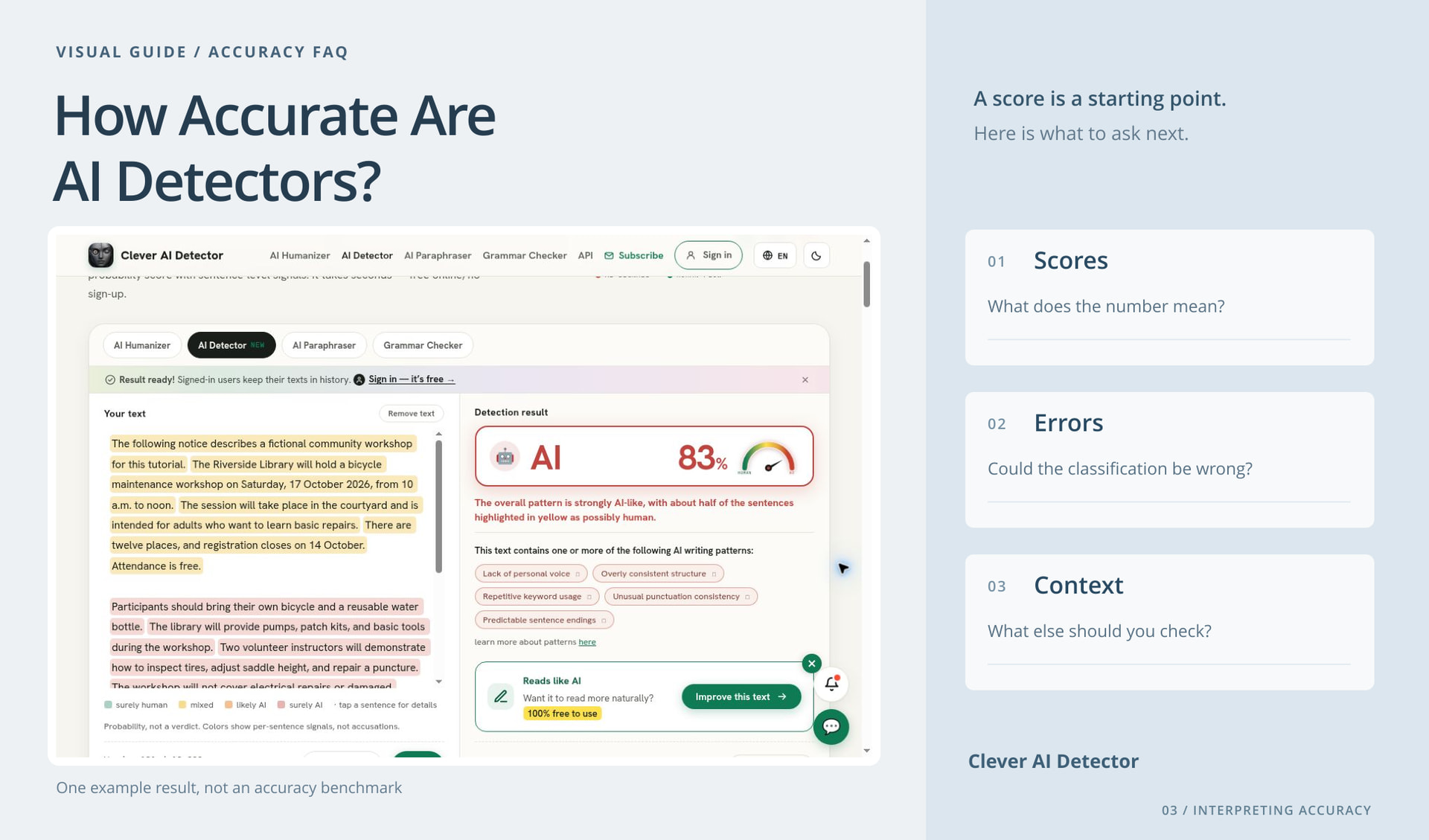
No. Our 181-word AI-authored fictional workshop notice returned AI 83% and fourteen analyzed sentences. That is the service’s output for one input. Accuracy is an evaluation statistic calculated across labeled cases, with a rule for deciding which classifications count as correct.
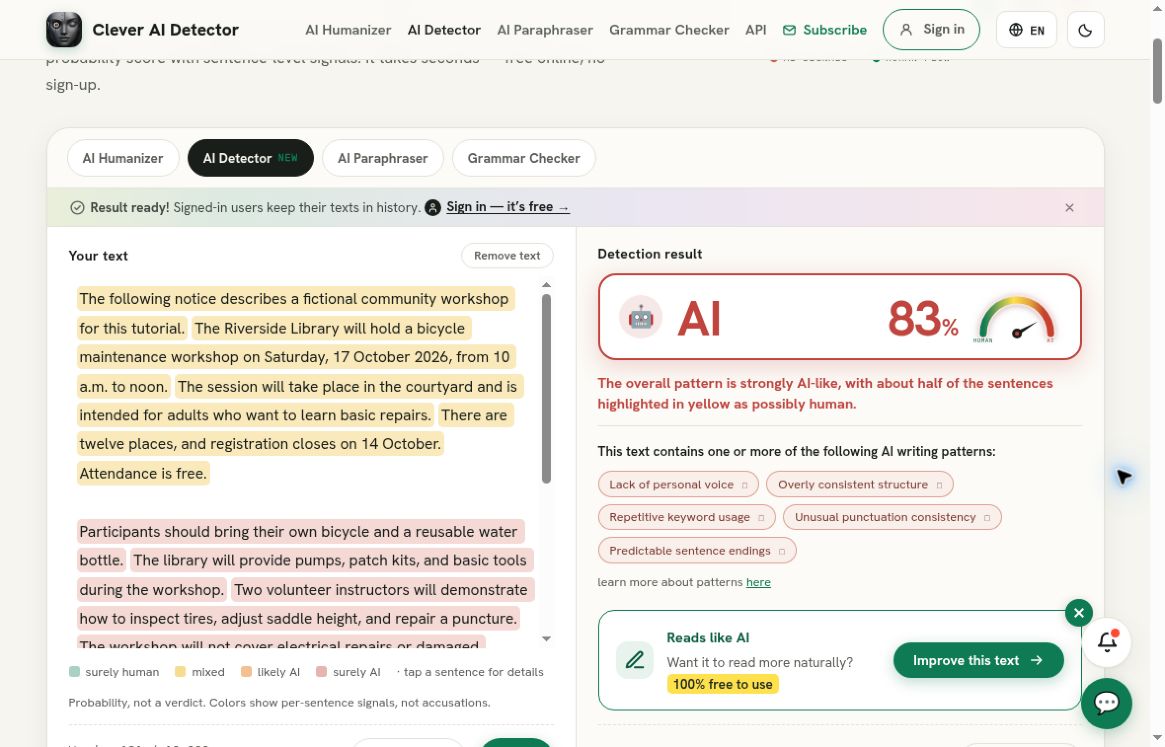
Figure 1. This is a document score, not a measured accuracy rate for Clever AI Detector.
The percentage doesn’t tell you what fraction of the words AI wrote. A draft might combine human research, AI drafting, several revisions, and a human final edit. You can’t recover that whole sequence from a single score.
Clever AI Detector describes its number as a probability. To treat that number as a well-calibrated real-world authorship probability, you would need validation on relevant known-origin examples. A confident interface is not that validation. Guo and colleagues’ On Calibration of Modern Neural Networks (2017) is useful background on the distinction between confidence and observed correctness.
Which mistakes should I count?
A false positive occurs when human writing is classified as AI-generated under the evaluation’s labeling rules. A false negative occurs when AI-generated writing is classified as human. Neither rate is meaningful without knowing what counted as human, AI-generated, and a positive result.
Accuracy divides correct classifications by all tested cases. Recall, also called sensitivity, asks what share of the AI-generated cases was detected. The false-positive rate asks what share of human cases was wrongly flagged. Precision asks what share of the flagged cases really belonged to the AI-generated class.
These measures answer different questions. Google for Developers’ classification guidance explains their denominators and the effect of decision thresholds. Our arithmetic below is an original illustration, not a measurement of Clever AI Detector or another brand.
Can a detector be 94.5% accurate and still make many wrong accusations?
Yes, in this hypothetical example. Imagine 1,000 documents: 100 are AI-generated and 900 are human-written. Suppose a detector catches 90 of the generated documents and incorrectly flags 45 human documents.
Hypothetical counts only; not a product test.
| Known origin | Flagged as AI | Not flagged | Total |
|---|---|---|---|
| AI-generated | 90 | 10 | 100 |
| Human-written | 45 | 855 | 900 |
| Total | 135 | 865 | 1,000 |
It has 90 true positives, ten false negatives, 45 false positives, and 855 true negatives. That produces 94.5% overall accuracy: 945 correct classifications out of 1,000. Yet only 90 of its 135 flags are correct, so precision is about 66.7%. Roughly one in three flagged documents is human-written in this scenario.
How common generated writing is in the material being checked matters. A balanced benchmark may describe a different mix from the documents an editor or teacher sees. Before acting on a flag, ask about false positives and the document’s context as well as overall accuracy.
What did the real examples show?
We prepared the workshop notice before running the tutorial and retained the original. Its AI involvement is known from that preparation. A single Normal-mode pass through Clever AI Humanizer produced a 238-word version. When that exact output was checked, Clever AI Detector displayed Human 95%, corresponding to a reported AI probability of 5%.
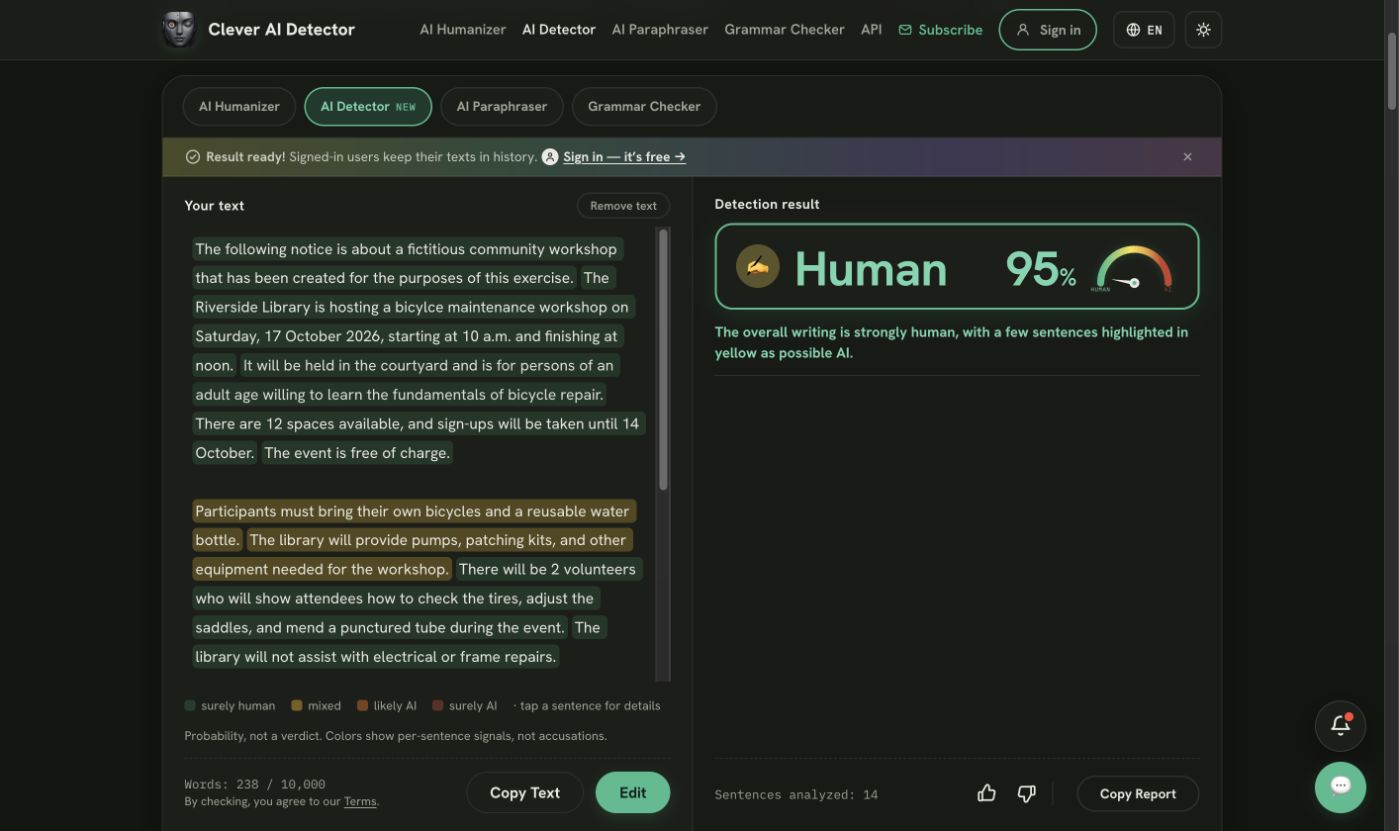
Figure 2. The actual product rewrite received Human 95%. This does not turn its known AI-assisted production history into human-only authorship.
The rewrite still needed editing. It contained a spelling error and changed details about the weather trigger and repair exclusions. A separate 165-word tutorial revision, deliberately corrected by an AI assistant, restored the intended facts and tightened the wording. One check of that version returned Likely AI 78%, again with fourteen analyzed sentences.
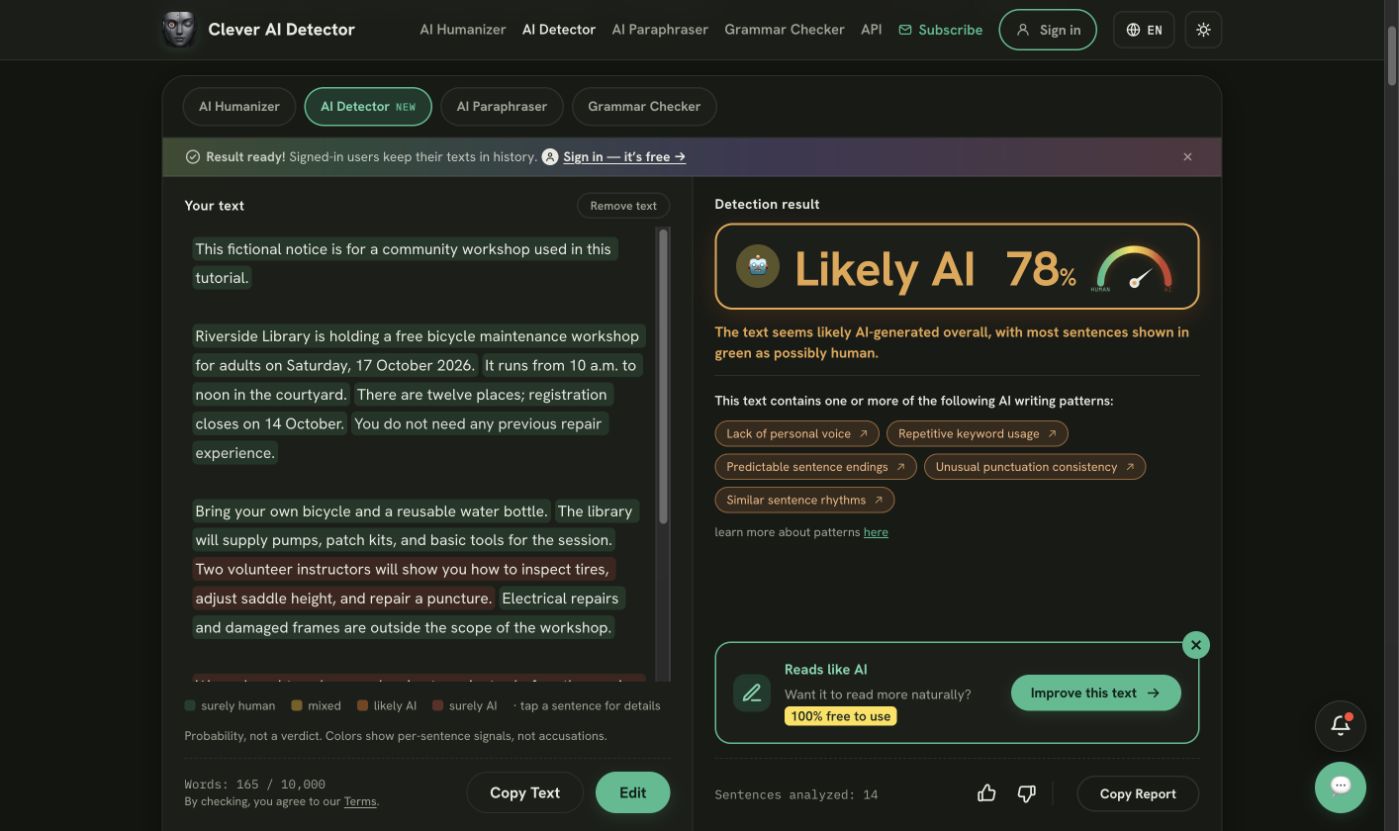
Figure 3. The fact-preserving editorial revision received Likely AI 78%. It was not repeatedly regenerated to chase a lower score.
The version we could defend more confidently for its meaning got the higher AI-like score. That doesn’t mean the detector is always wrong or the rewrite is always right. It gives us a reason to check facts, readability, writing history, and the detector’s assessment separately.
These three versions are related samples, not three independent draws from a representative population. We did not select favorable reruns or calculate a population-level success rate from them. Two cloud humanizer attempts also failed verification; the completed rewrite came from a subsequent local-browser session. The record includes the friction as well as the successful result.
What makes a good human control?
A human control needs provenance beyond somebody saying that it sounds human. We used a 274-word passage from Lewis Carroll’s Alice’s Adventures in Wonderland, published in 1865. Clever AI Detector displayed Human 99%, with seven analyzed sentences.
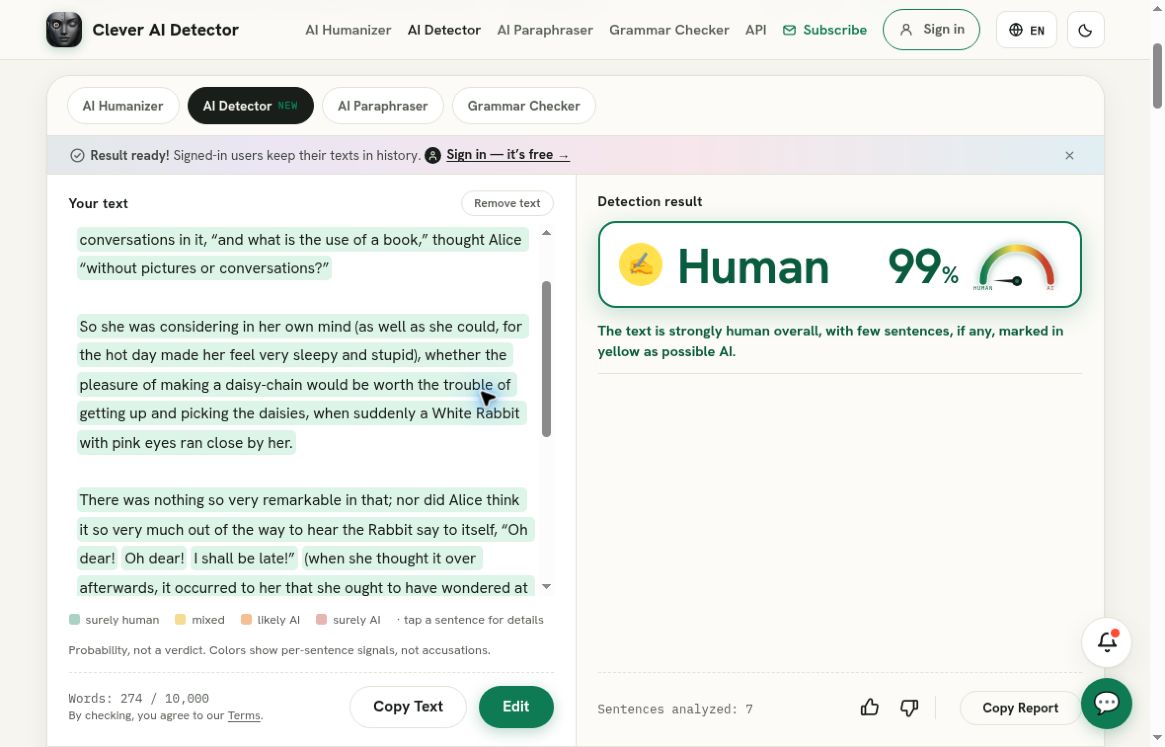
Figure 4. Known historical authorship supports the control independently of the detector’s favorable result.
It’s one widely circulated literary excerpt. It can’t tell us the false-positive rate for modern student work, technical reports, or second-language writing. To study those uses, we’d need many contemporary human samples that fit the task, with permission to use them and careful labels.
Our earlier AI-copyedited version of the passage also returned Human 99%. It belongs in a mixed-provenance category. Counting it as an untouched human sample would make the evaluation look cleaner while weakening its meaning.
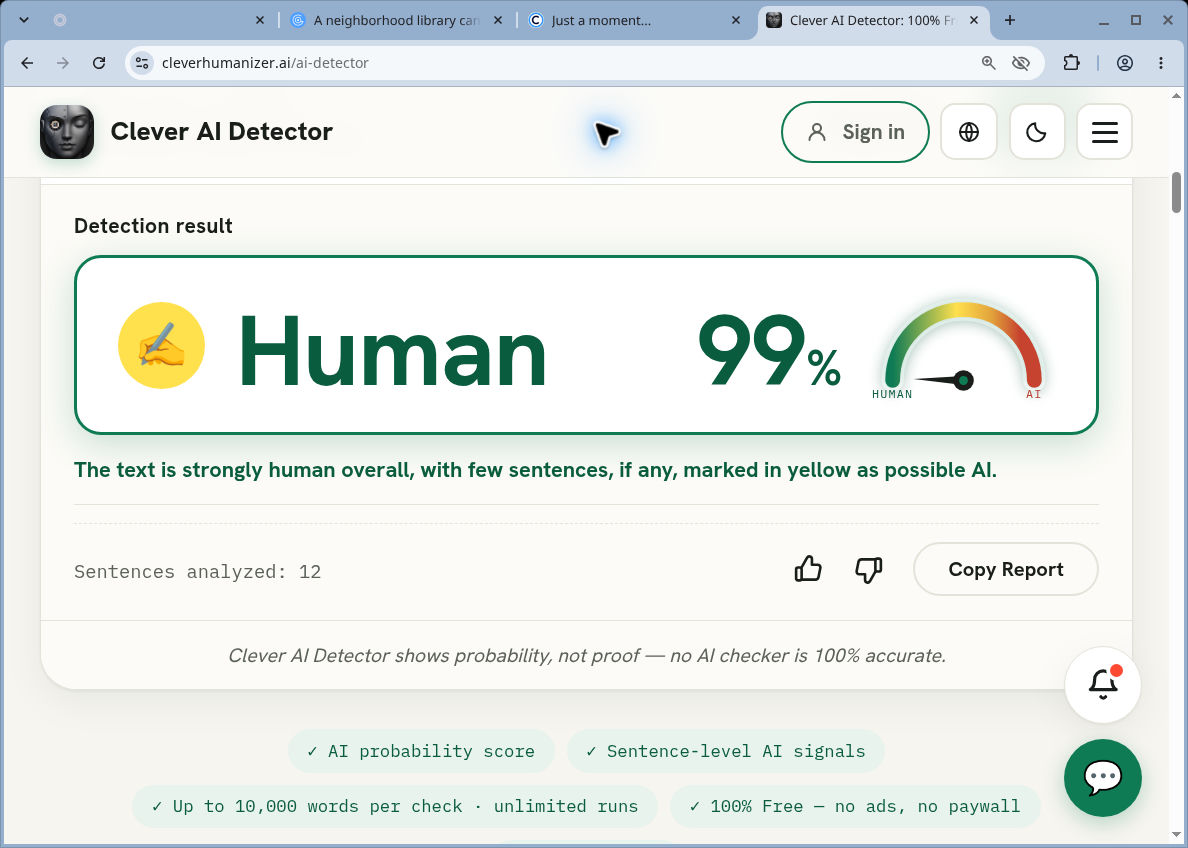
Figure 5. An October 2, 2026 comparison shows why a production record can be more informative than a binary-looking label.
Are sentence highlights more reliable than the main score?
They offer more detail, but detail is not an automatic reliability guarantee. In our workshop notice, a sentence about bringing a bicycle and water bottle showed 97% AI probability while the complete document showed 83%. That sentence was ordinary event information; the high signal did not make it inaccurate or unusable.
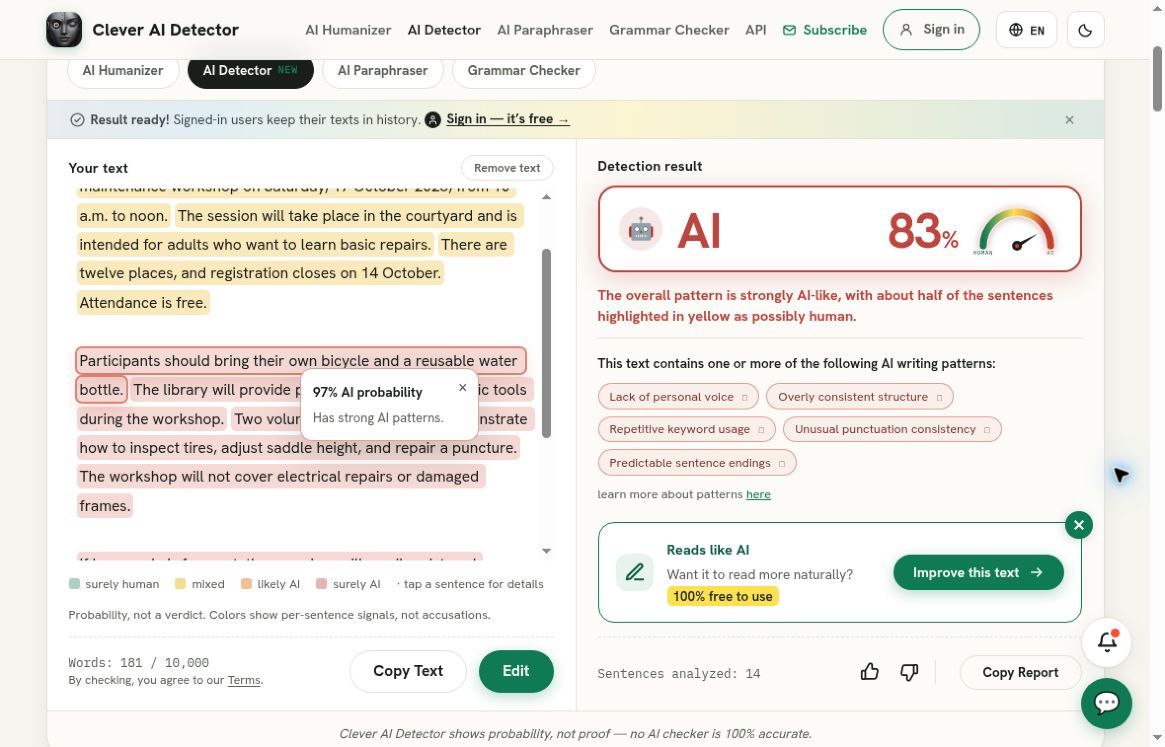
Figure 6. Sentence-level and whole-document numbers refer to different outputs. We did not establish an averaging rule between them.
Use the highlights to find passages worth a closer look. Don’t cut a necessary qualification or invent a personal story just because a sentence turns red. A clear instruction about what to bring still has a job to do for the reader.
What does research say about broader reliability?
Research provides reasons for caution, with important boundaries. Liang and colleagues’ GPT detectors are biased against non-native English writers (2023) reported disproportionate flags for the particular non-native essay collection and seven tools they evaluated. That is evidence of a fairness risk in that setting, not a claim that every current detector behaves identically.
Dugan and colleagues’ RAID benchmark (2024) tested changes in models, domains, generation settings, and altered text. Its robustness findings explain why a result from one setting should not be casually transferred to another. Wang and colleagues’ M4 study (2024) likewise examined difficulties with unseen domains and generators.
Historical results also need dates. OpenAI withdrew its own 2023 classifier after describing limited performance. That episode is a cautionary example about evaluation, not a measurement of present-day Clever AI Detector.
What should I do with a score today?
Save the exact text you checked along with the result, and verify its facts separately. If authorship matters, look at drafts, notes, citations, revision history, and the writer’s explanation. Give the person a fair chance to respond before making a decision with consequences for them.
If you are editing, Clever AI Humanizer can provide a free alternative draft to inspect. Its side-by-side view is especially useful for catching changed details, as our separate library-proposal example demonstrates. The successful rewrite omitted a six-month trial duration, which a polished sentence alone could easily conceal.
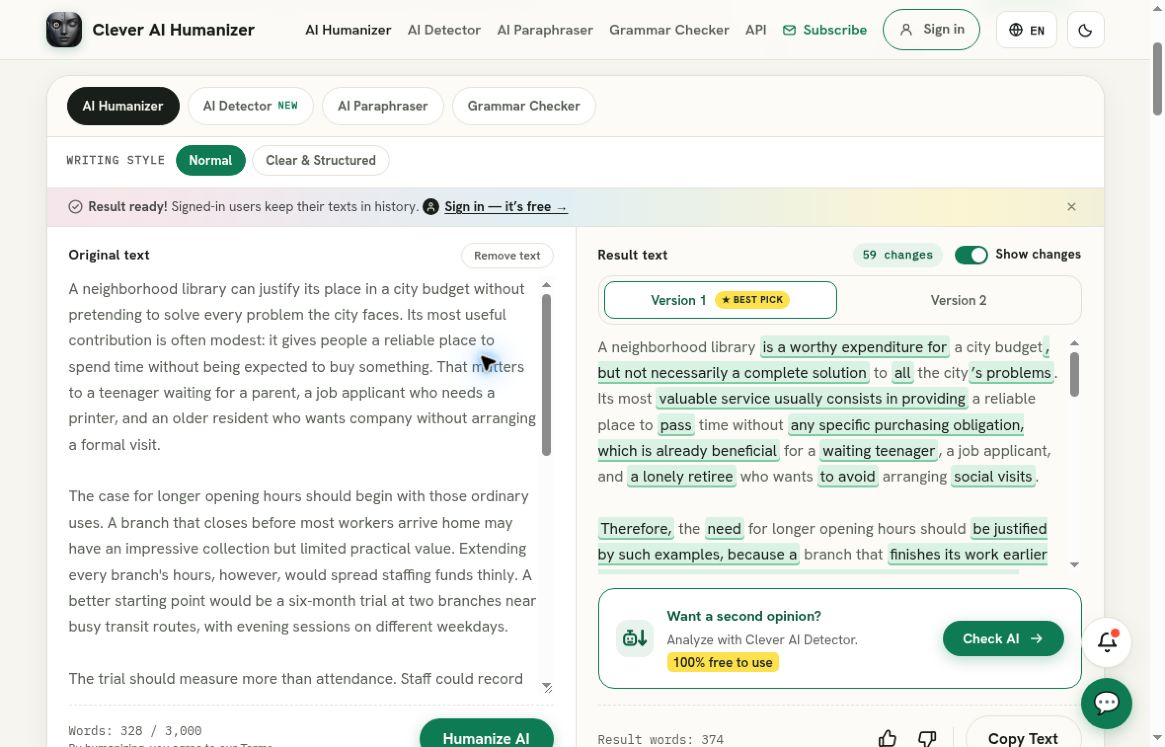
Figure 7. Separate October 3, 2026 example: compare meaning as carefully as style, regardless of the detector score.
Use a detector result to work out what to examine next. It doesn’t spare you from checking evidence, treating the writer fairly, or doing the editing needed to make a document trustworthy.
Exact fictional source notice used in the screenshots
The following notice describes a fictional community workshop for this tutorial. The Riverside Library will hold a bicycle maintenance workshop on Saturday, 17 October 2026, from 10 a.m. to noon. The session will take place in the courtyard and is intended for adults who want to learn basic repairs. There are twelve places, and registration closes on 14 October. Attendance is free.

Participants should bring their own bicycle and a reusable water bottle. The library will provide pumps, patch kits, and basic tools during the workshop. Two volunteer instructors will demonstrate how to inspect tires, adjust saddle height, and repair a puncture. The workshop will not cover electrical repairs or damaged frames.

If heavy rain is forecast, the organizer will email registered participants by 5 p.m. on Friday with a cancellation notice. There is no indoor alternative. Participants do not need previous repair experience. They should wear closed-toe shoes and arrive ten minutes before the session begins. The purpose is to help people carry out a few routine checks with greater confidence, rather than to certify anyone as a bicycle mechanic.