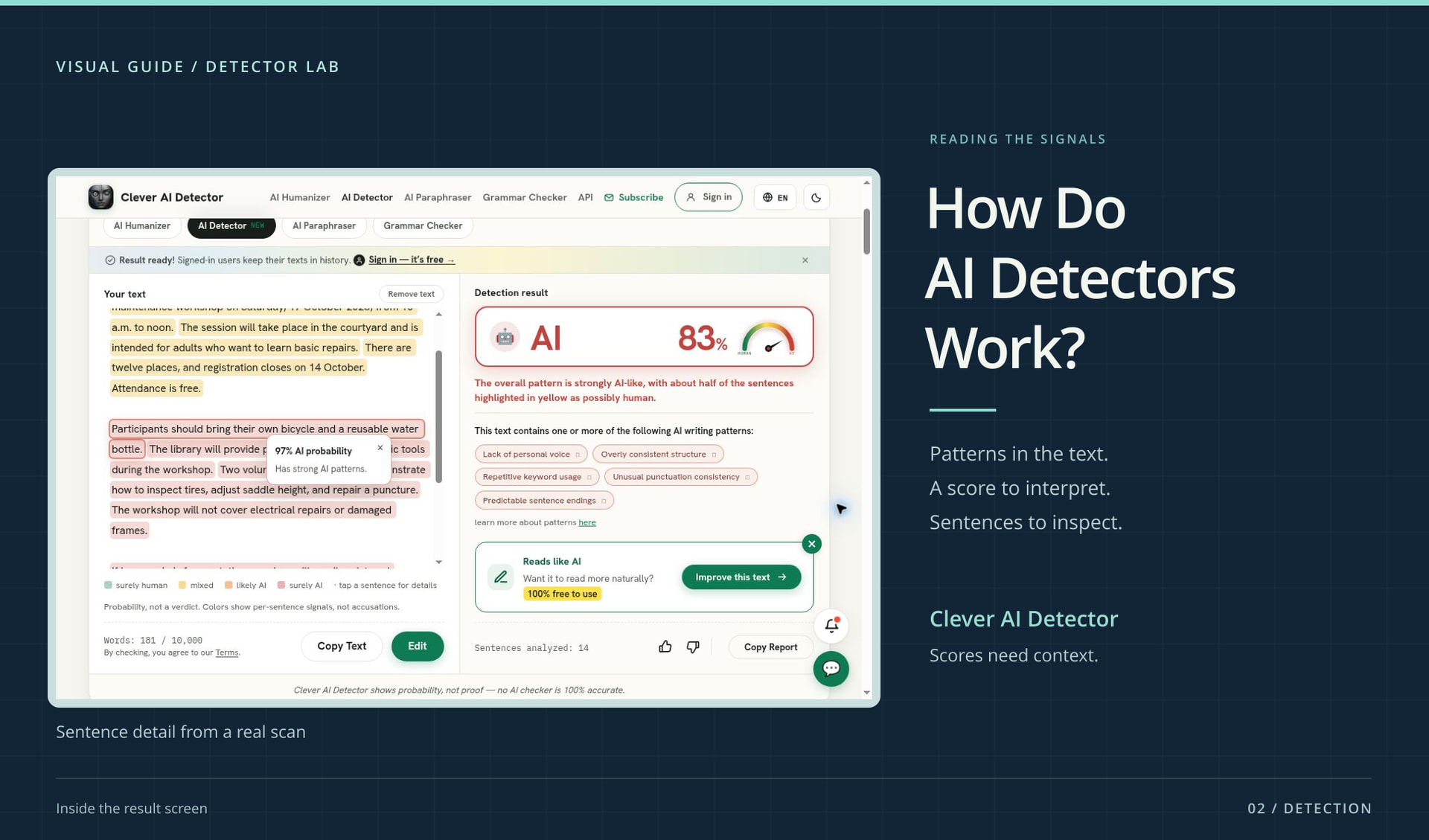
An AI detector starts with the text you give it and looks for signals associated with generated writing. It usually can’t watch the original writing session, ask the author questions, or recover the full revision history. That’s an important limit to keep in mind as you read a result.
We’ll follow a real result using Clever AI Detector, a fictional workshop notice, and a public-domain passage with known human provenance. Start at the input box, then open the sentence highlights. At each step, ask what the interface actually shows and how much you can reasonably conclude from it.
The practical benefit of Clever AI Detector is that this exploration is free: the observed checks required neither an account nor payment. You can inspect the actual signals before deciding how much weight they deserve.
Case file 1: preserve the evidence before checking
Our first sample was an AI-authored notice created specifically for this tutorial. It describes a fictional bicycle-maintenance workshop at Riverside Library: twelve adult participants, a registration deadline, a two-hour session, and a rain-cancellation procedure. These details make the text useful for a writing demonstration without transmitting anyone’s private information.
Keep a copy of the original outside the detector, and give each revision its own filename or version number. It’s easy to end up comparing one draft’s score with another draft’s wording. Note when you ran the check and which tool you used. A screenshot may capture only part of a longer document, so keep the text too.
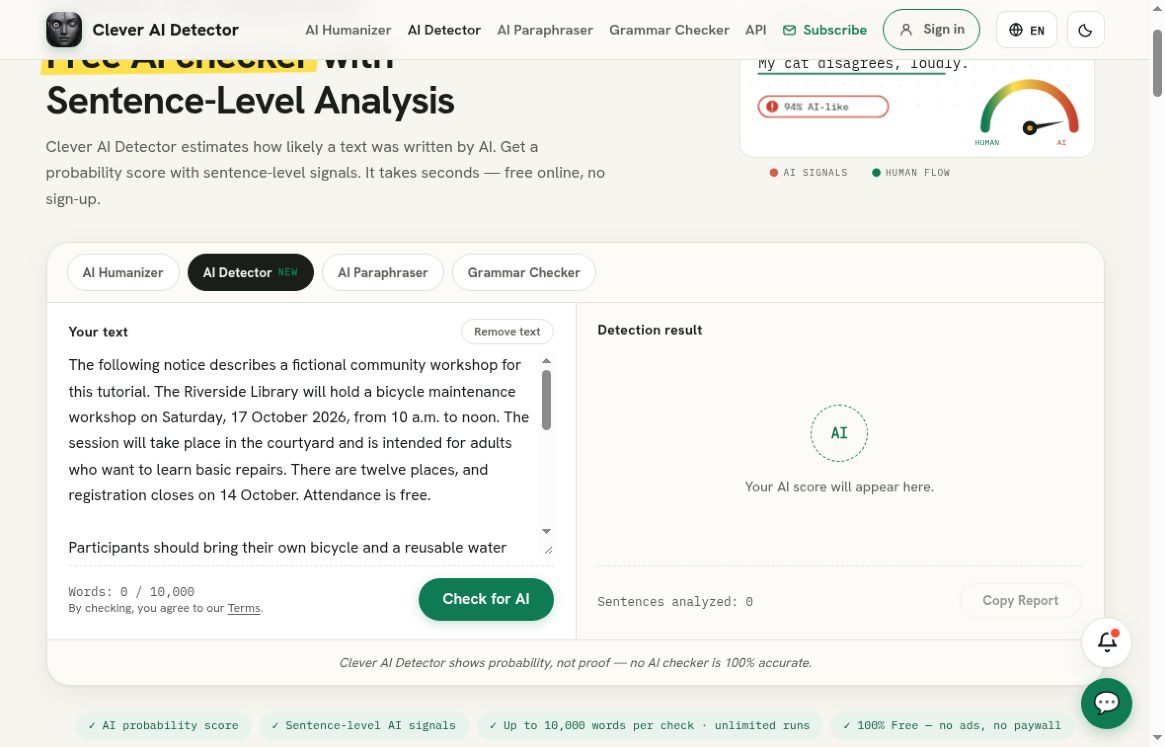
Figure 1. The original sample is visibly entered before the check. The counter had not refreshed in this early capture; the completed result records 181 words.
On the checked product page, Clever AI Detector specifies English and Spanish text between 80 and 10,000 words. Its minimum is an input requirement for this service, not a universal boundary at which every detector becomes reliable. Use a complete relevant passage rather than padding a short sentence with unrelated text.
Click Check for AI and wait for the finished result. The progress percentage only tells you how far processing has got; it isn’t an early judgment about who wrote the text.
Case file 2: read the label before the number
The original workshop notice returned AI 83%, with fourteen analyzed sentences. This is the result for that particular text in this session. It does not establish that Clever AI Detector is 83% accurate, that 83% of the words came from AI, or that the author used a specific model.
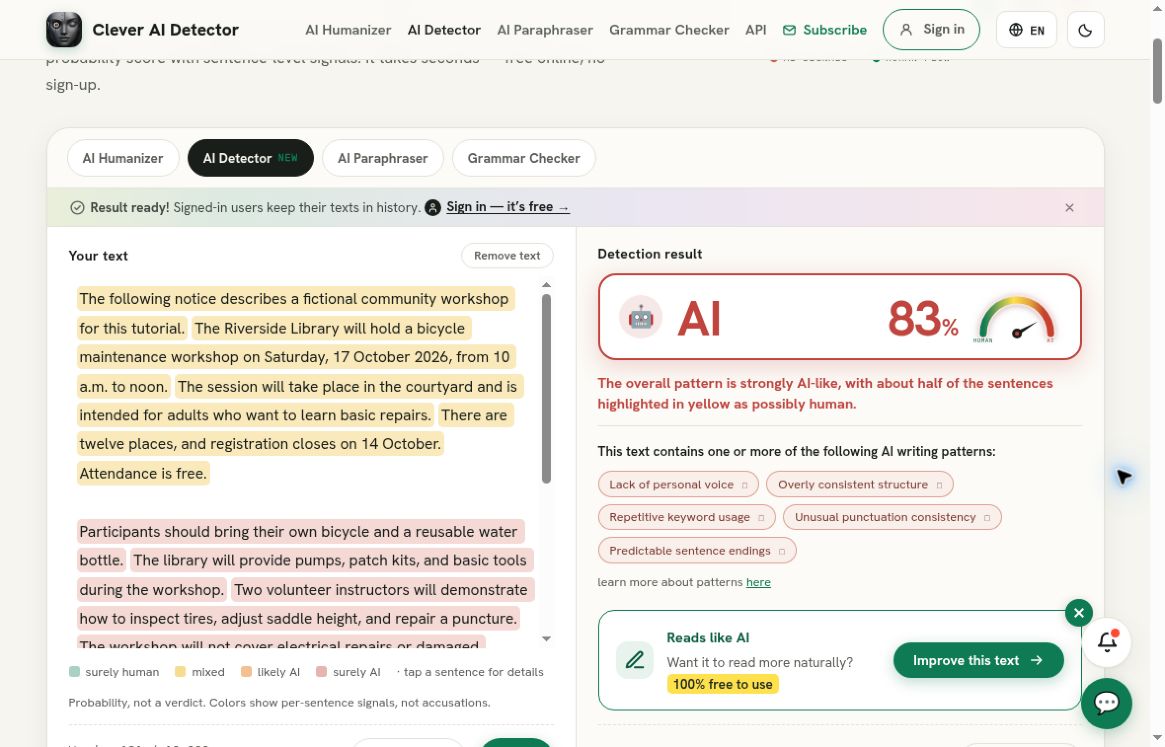
Figure 2. The full-text display pairs the AI label with an 83% score. Keep both parts together when recording it.
Clever AI Detector calls its output a probability. A percentage format, however, does not independently establish calibration. Calibration asks whether comparable predictions match observed outcomes at the expected frequency on a relevant labeled dataset. Guo and colleagues’ 2017 paper, On Calibration of Modern Neural Networks, explains why confidence and correctness can diverge. It was not a validation of Clever AI Detector.
For this document, you can say the service found a strongly AI-like pattern. We know where the sample came from because we recorded its creation. The number on the gauge doesn’t supply that history.
Case file 3: open a sentence and ask a narrower question
The result also highlights individual sentences. In our example, the instruction to bring a bicycle and a reusable water bottle received a 97% AI probability tooltip. Other sentences received lower values. This lets a reviewer locate the text associated with a signal instead of staring at a single document-level score.
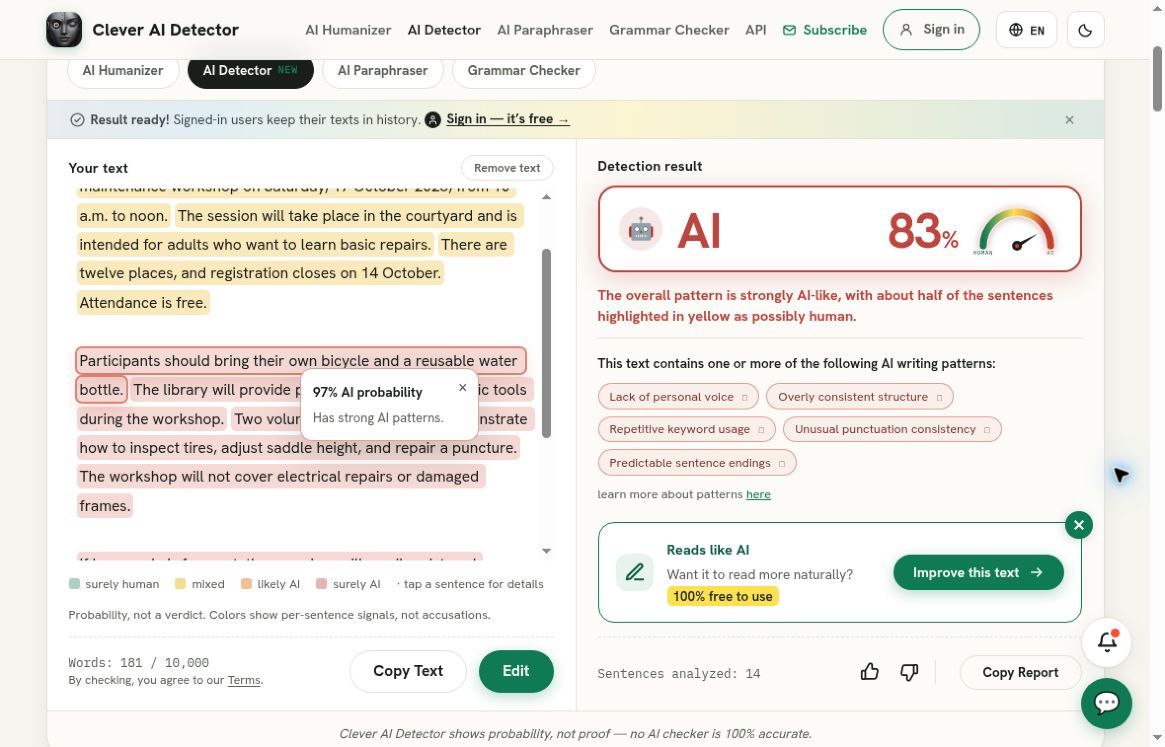
Figure 3. The selected sentence’s 97% signal differs from the whole document’s 83% display.
There’s nothing inherently wrong with that instruction in an event notice. The highlight doesn’t reveal a hidden author, make the sentence false, or show that a person couldn’t have written it. Read it in context before deciding there’s something to fix.
You’ll also see reasons such as consistent structure and repetitive wording. Those are the service’s labels for explaining the result. They don’t let us inspect model weights or training examples, or reproduce the exact calculation behind the classification.
What might be happening behind a detector?
Different detector designs use different evidence. One common approach is supervised classification: a system learns to distinguish labeled examples of generated and human writing, then applies the learned distinction to new text. The quality and relevance of those examples matter. A useful distinction on one collection of essays may transfer poorly to another genre.
Other research methods use a language model’s own probability estimates. Mitchell and colleagues’ DetectGPT paper from 2023 examines how a passage’s log probability changes around perturbed versions. That is a particular research method with specific access requirements. It is not a documented description of Clever AI Detector’s implementation.
Watermarking is another route. In A Watermark for Large Language Models from 2023, Kirchenbauer and colleagues describe a signal introduced during generation and tested afterward. This requires the corresponding generation and detection scheme. Ordinary copied text does not automatically contain such a watermark, and a watermark test’s statistical significance is not itself an authorship probability.
These examples explain why “detectors just count difficult words” is too crude. Predictability, learned text patterns, and specially embedded signals are different kinds of evidence. We have not independently inspected Clever AI Detector’s proprietary architecture, so the screenshots demonstrate its public behavior, not its internal method.
Case file 4: compare a known human passage
A second check used the opening passage of Lewis Carroll’s Alice’s Adventures in Wonderland, first published in 1865. The 274-word excerpt returned Human 99%, with seven analyzed sentences. Notice the direction of the display: the percentage is now paired with Human.
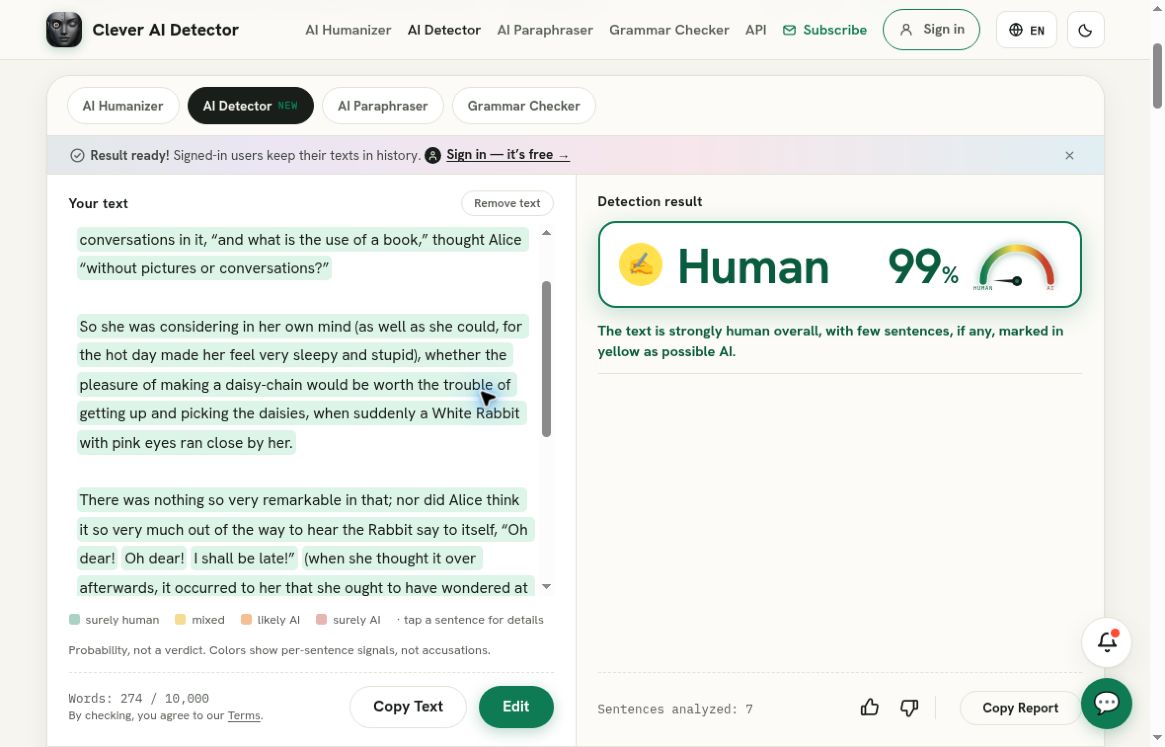
Figure 4. The same interface changes the score’s orientation when it displays a Human verdict.
The passage makes a helpful control because its authorship has an independent historical record. But it’s also old, famous literary prose. It can’t represent every modern email, student essay, translation, or technical report. Two successful demonstrations aren’t enough to establish a general accuracy rate.
The distinction matters especially when AI has edited a human original. In our earlier comparison, a lightly AI-copyedited version of the same passage also displayed Human 99%. That reading does not erase the editing step. A binary-looking interface can simplify a much messier writing history.
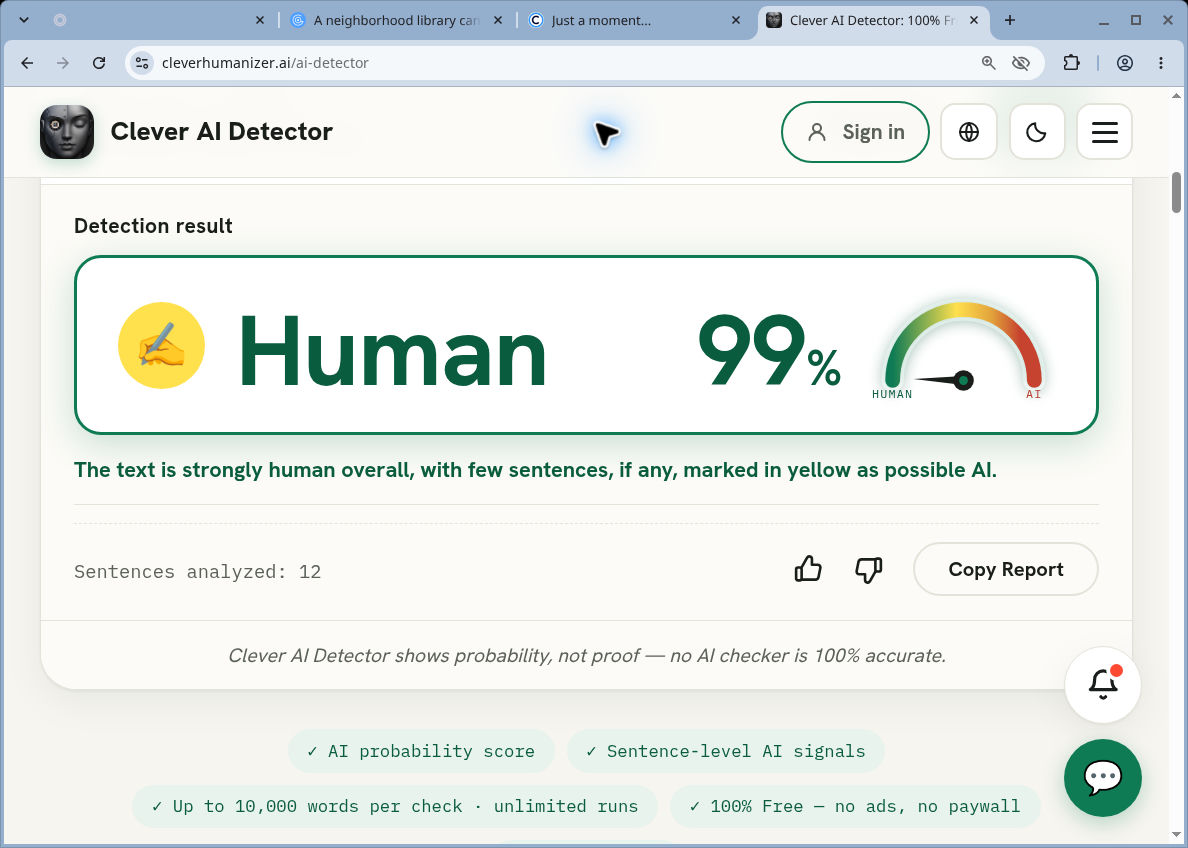
Figure 5. Earlier mixed-provenance example, captured on October 2, 2026. Its human source and AI copyediting are both part of the record.
Case file 5: reconcile local and global signals
Do not calculate a document score by counting highlighted sentences. In the earlier AI-authored narrative, two different views appeared:
- Document verdict: Likely AI 74%.
- Sentence view: most sentences highlighted as possibly human.
No simple averaging formula was established in this inspection.
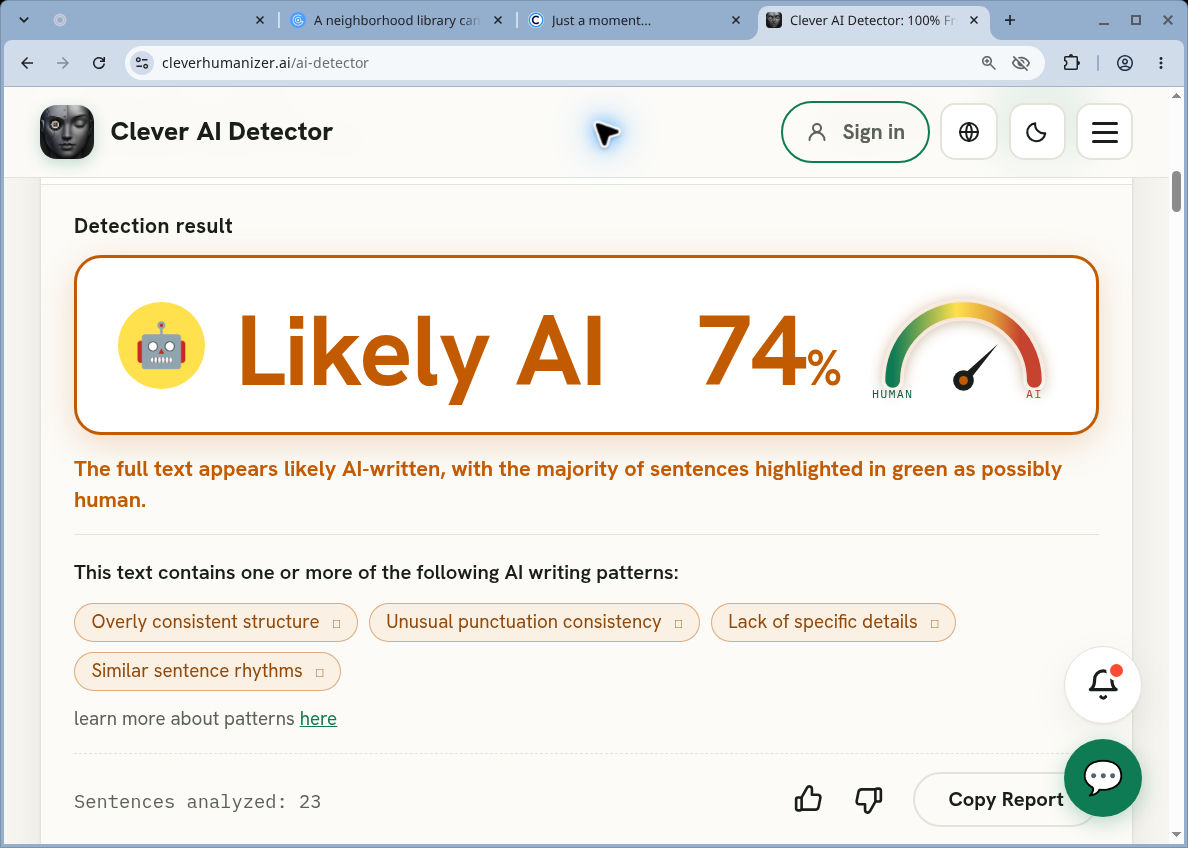
Figure 6. Earlier narrative example, October 2, 2026: the whole-text assessment and local highlights do not tell an identical story.
If the views seem to disagree, save both. Then ask which question each one addresses. “This sentence resembles a learned pattern” makes a narrower claim than “this entire document has this origin.” Neither view can give you the complete story of how the text was written.
Close the case with a useful next action
If the real problem is stiff writing, Clever AI Humanizer offers a separate editing workflow. In an earlier free, anonymous run, it produced a 374-word rewrite of a 328-word library proposal. The side-by-side view made changes easy to inspect, but the rewrite omitted a six-month duration and changed a survey detail. A lower detector score would not repair those facts. A separate 92-word sample did not return output despite two recoveries, and our fresh workshop sample failed cloud verification twice before a successful local-browser run. These are observed session limits, not a claim that the service always fails.
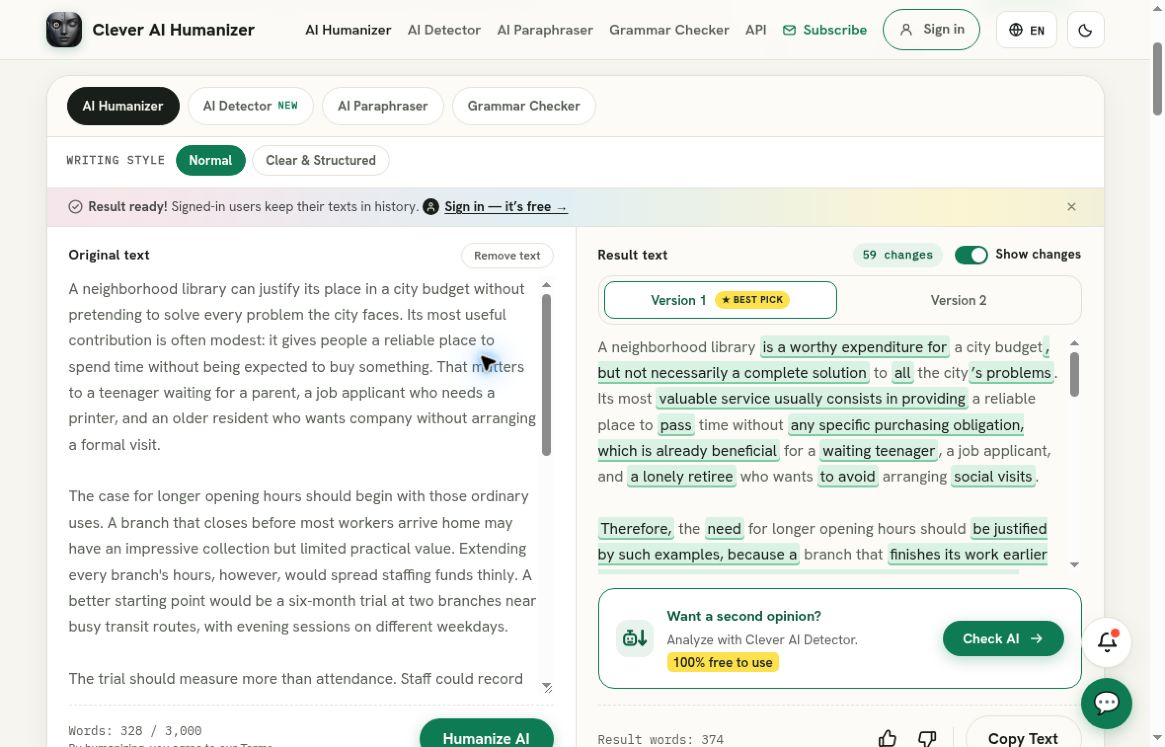
Figure 7. A separate October 3, 2026 editing example. The visible comparison supports a meaning audit, not an authorship verdict.
For an authorship concern, look for drafts, notes, sources, version history, and a fair opportunity for the writer to explain their process. For an editing concern, check clarity, factual fidelity, and whether the wording serves its audience. For either task, save the result with its exact text and date.
Clever AI Detector’s free sentence view gives you a specific passage to look at. Finish by recording your judgment with the context and source history that support it. The detector can contribute a signal, but that signal needs the rest of the evidence around it.
Exact fictional source notice used in the screenshots
The following notice describes a fictional community workshop for this tutorial. The Riverside Library will hold a bicycle maintenance workshop on Saturday, 17 October 2026, from 10 a.m. to noon. The session will take place in the courtyard and is intended for adults who want to learn basic repairs. There are twelve places, and registration closes on 14 October. Attendance is free.

Participants should bring their own bicycle and a reusable water bottle. The library will provide pumps, patch kits, and basic tools during the workshop. Two volunteer instructors will demonstrate how to inspect tires, adjust saddle height, and repair a puncture. The workshop will not cover electrical repairs or damaged frames.

If heavy rain is forecast, the organizer will email registered participants by 5 p.m. on Friday with a cancellation notice. There is no indoor alternative. Participants do not need previous repair experience. They should wear closed-toe shoes and arrive ten minutes before the session begins. The purpose is to help people carry out a few routine checks with greater confidence, rather than to certify anyone as a bicycle mechanic.