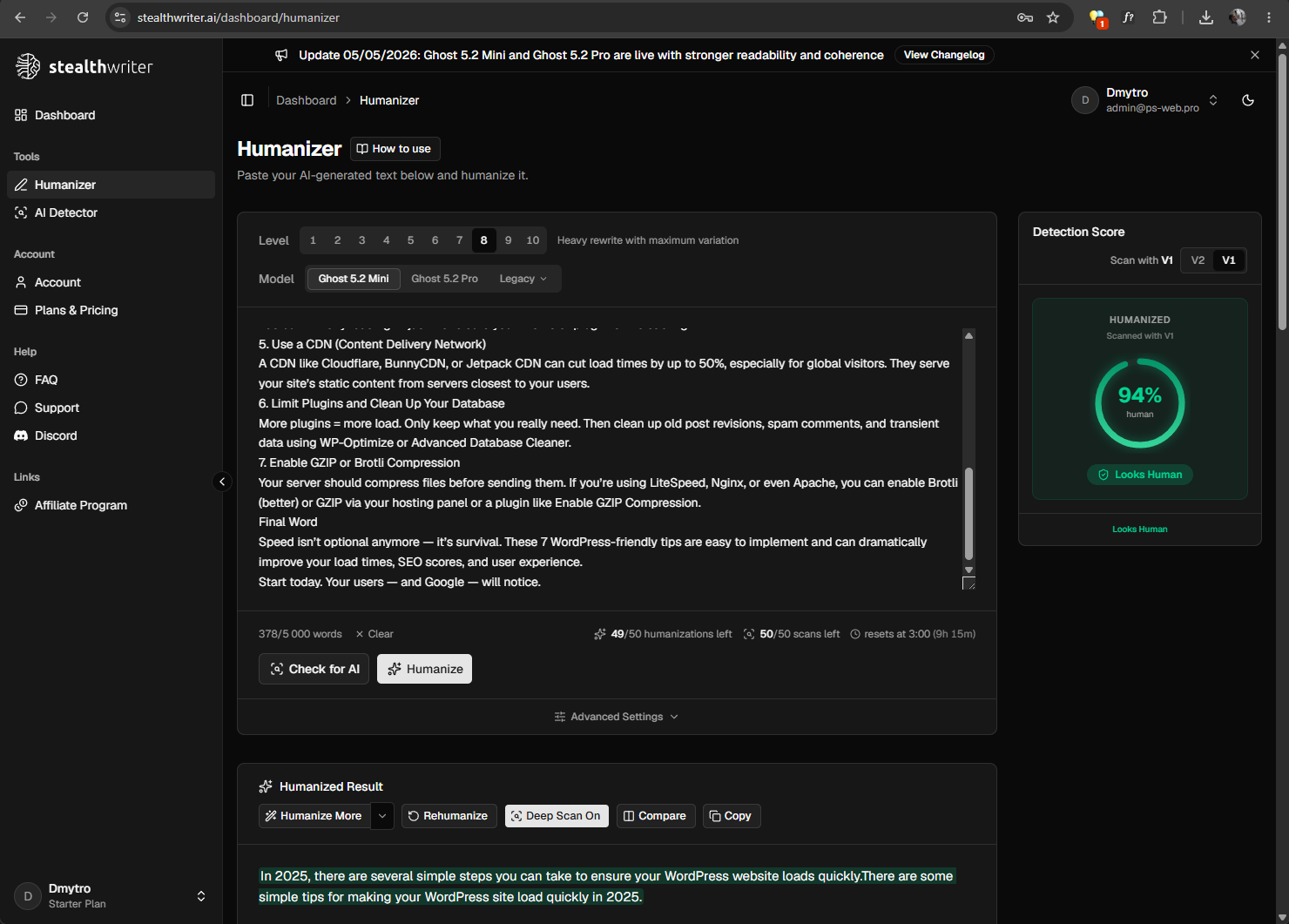
StealthWriter AI is supposed to be an SEO-focused AI humanizer capable of converting AI-generated content into human-like text that scores “100% human” on detection tests. It offers multiple humanization models (Ghost Mini and Ghost Pro), adjustable intensity levels from 1 to 10, and a number of style presets. As such, it’s certainly more sophisticated than your average AI humanizer, but that alone doesn’t guarantee it can actually fool modern AI detectors or produce text that reads naturally.
How I test: I generated three AI content samples using the latest ChatGPT model, each covering AI humanization topics. I established baseline detection scores by running the original AI-generated texts through both GPTZero and ZeroGPT, then processed each sample using StealthWriter AI. I tested using the Ghost 4.6 Mini model at both Level 8 and Level 10 humanization intensity with the “Don’t Change” style setting. I re-tested the humanized outputs through both detection platforms to measure effectiveness, and I manually evaluated grammar quality and readability of all humanized text. You can find the raw test data for this review here.
| Pros | Cons |
|---|---|
| Maintains original text length | GPTZero flagged all outputs at 100% AI detection |
| Multiple humanization models and intensity levels | Requires account creation to test |
| Many style presets available | Expensive compared to competitors |
| ZeroGPT scores were relatively promising | Built-in detector is unreliable |
| Claims not to sell personal data | Strict no-refund policy |
How Well Did StealthWriter AI Perform?
To test StealthWriter’s performance, I had to create a free user account (many competitors let you test immediately). The free tier provides 10 daily humanizations with a maximum of 1,000 words per request, which is enough to evaluate the tool but not enough for sustained use.
StealthWriter offers two main humanization engines: Ghost Mini (available on all tiers) and Ghost Pro (reserved for paying subscribers). Since I tested the free version, my evaluation was limited to Ghost Mini. I ran all three text samples through two different intensity settings to see whether cranking up the humanization level would improve results.
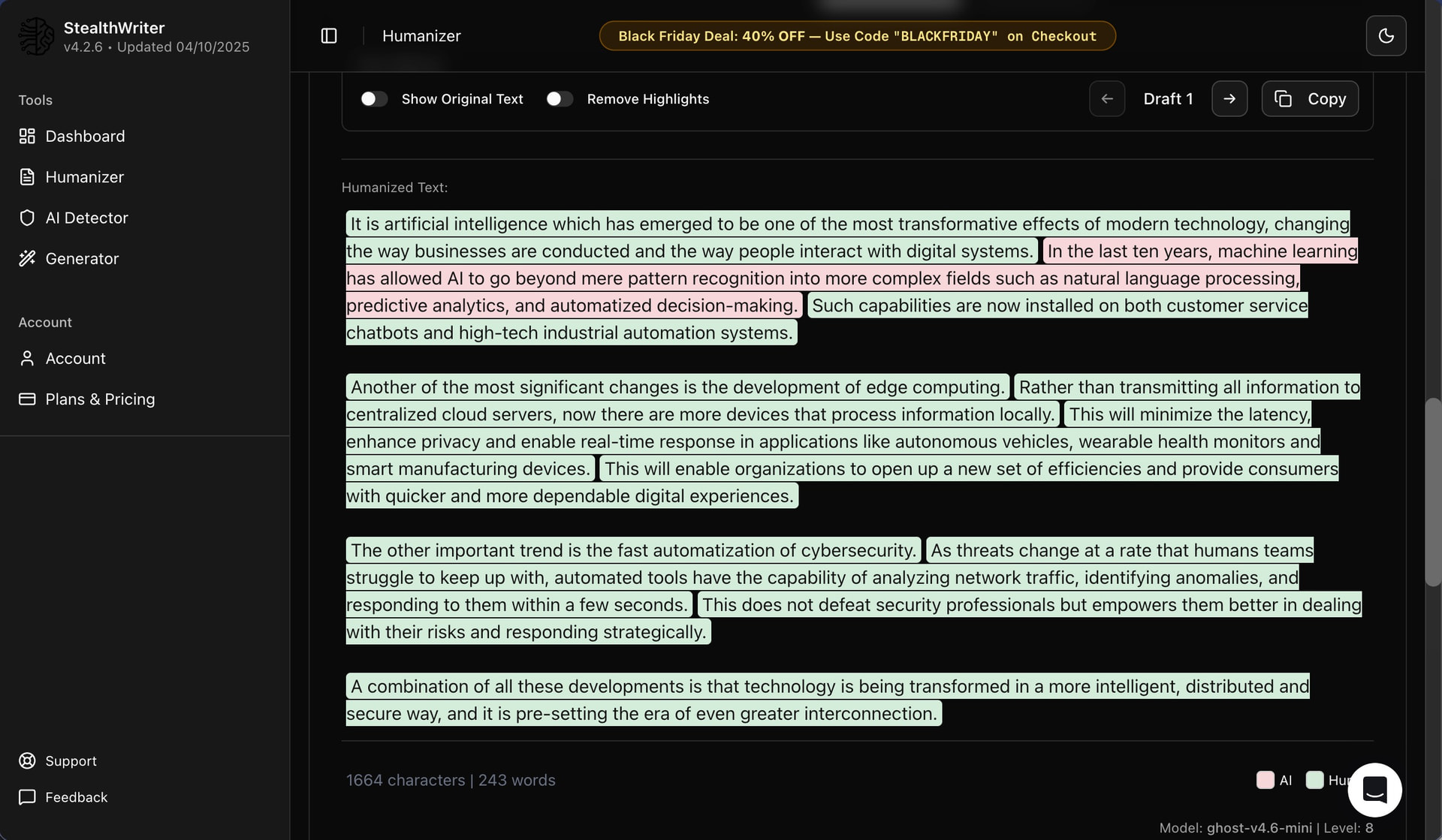
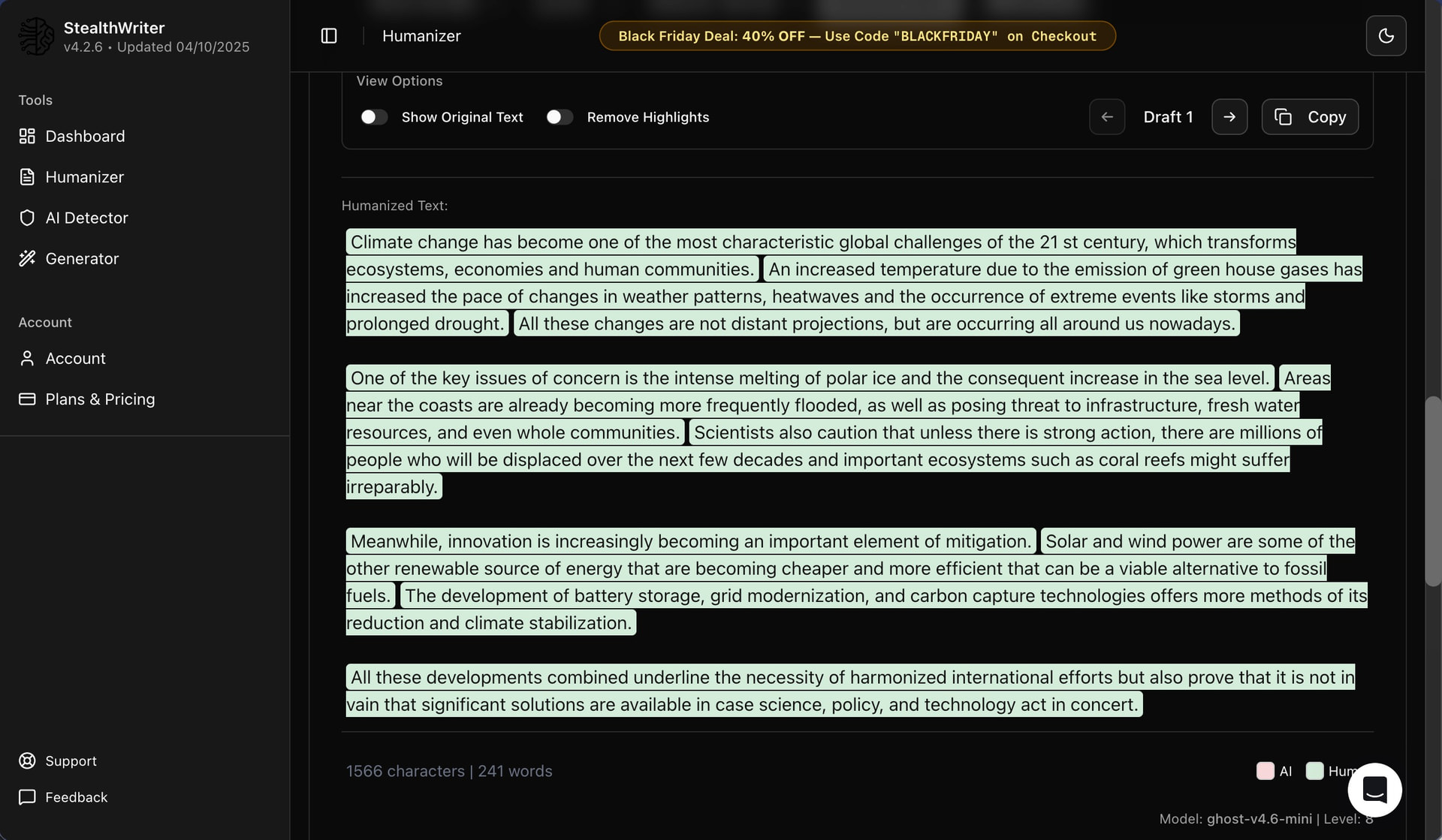
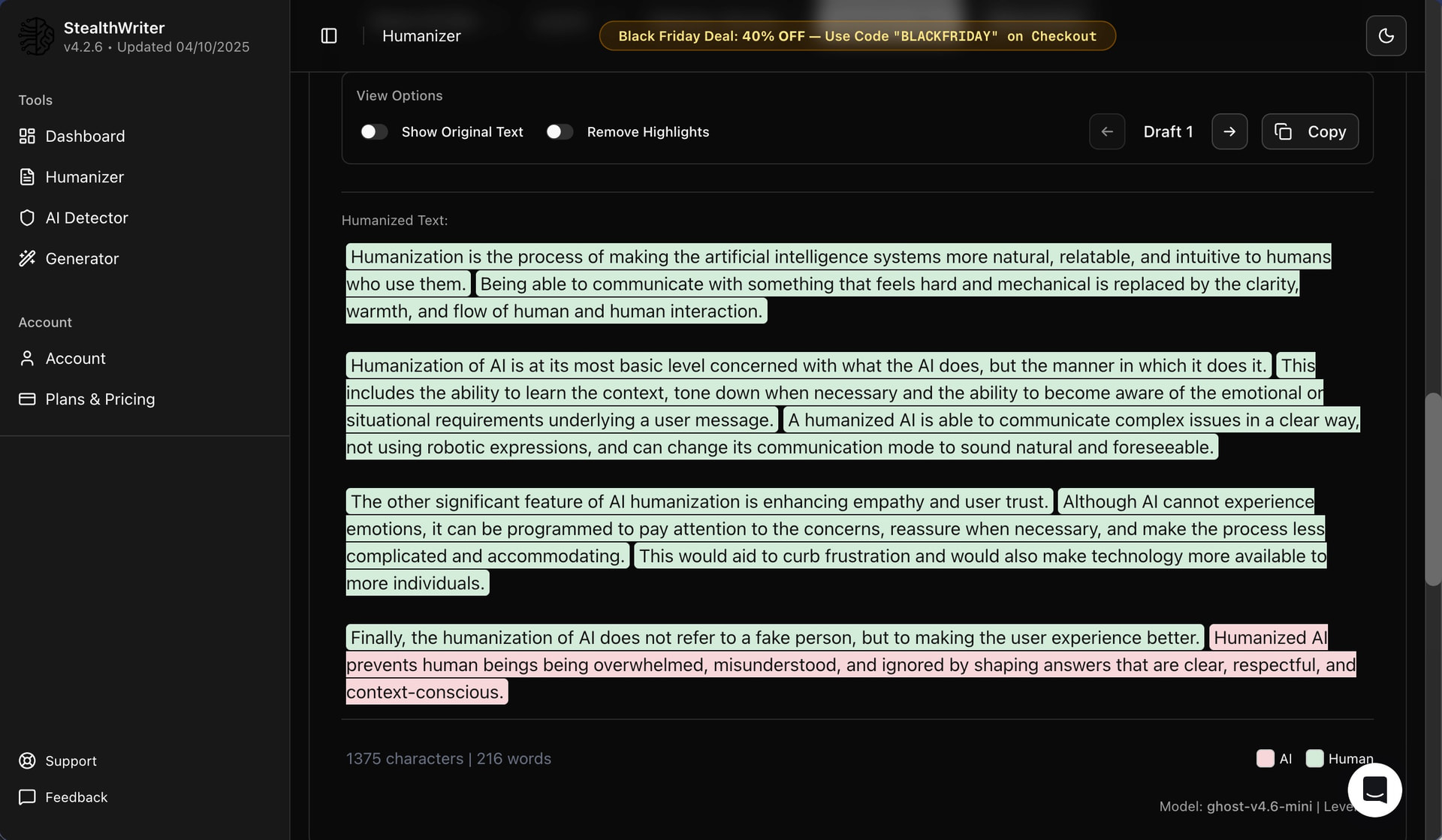
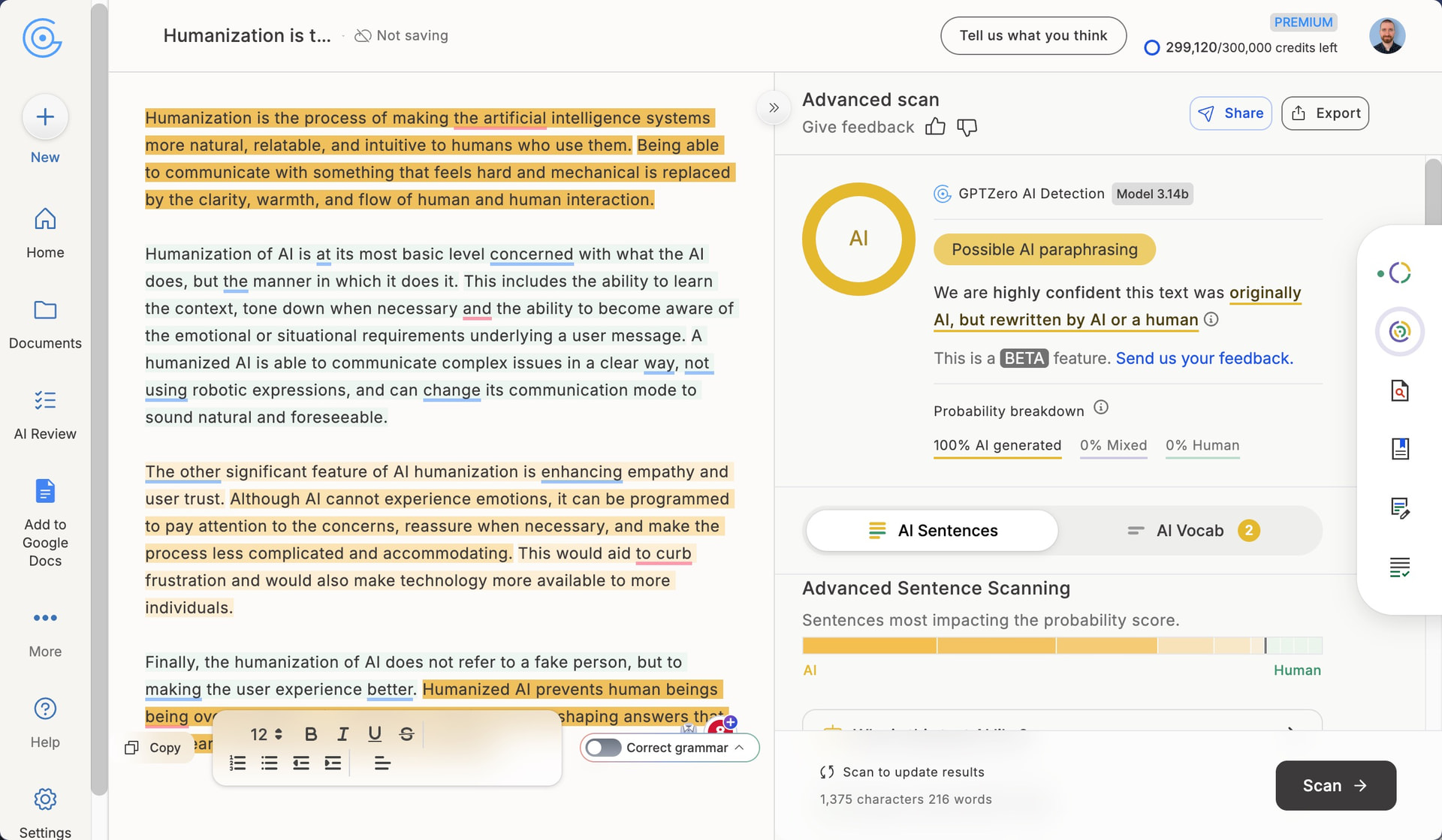
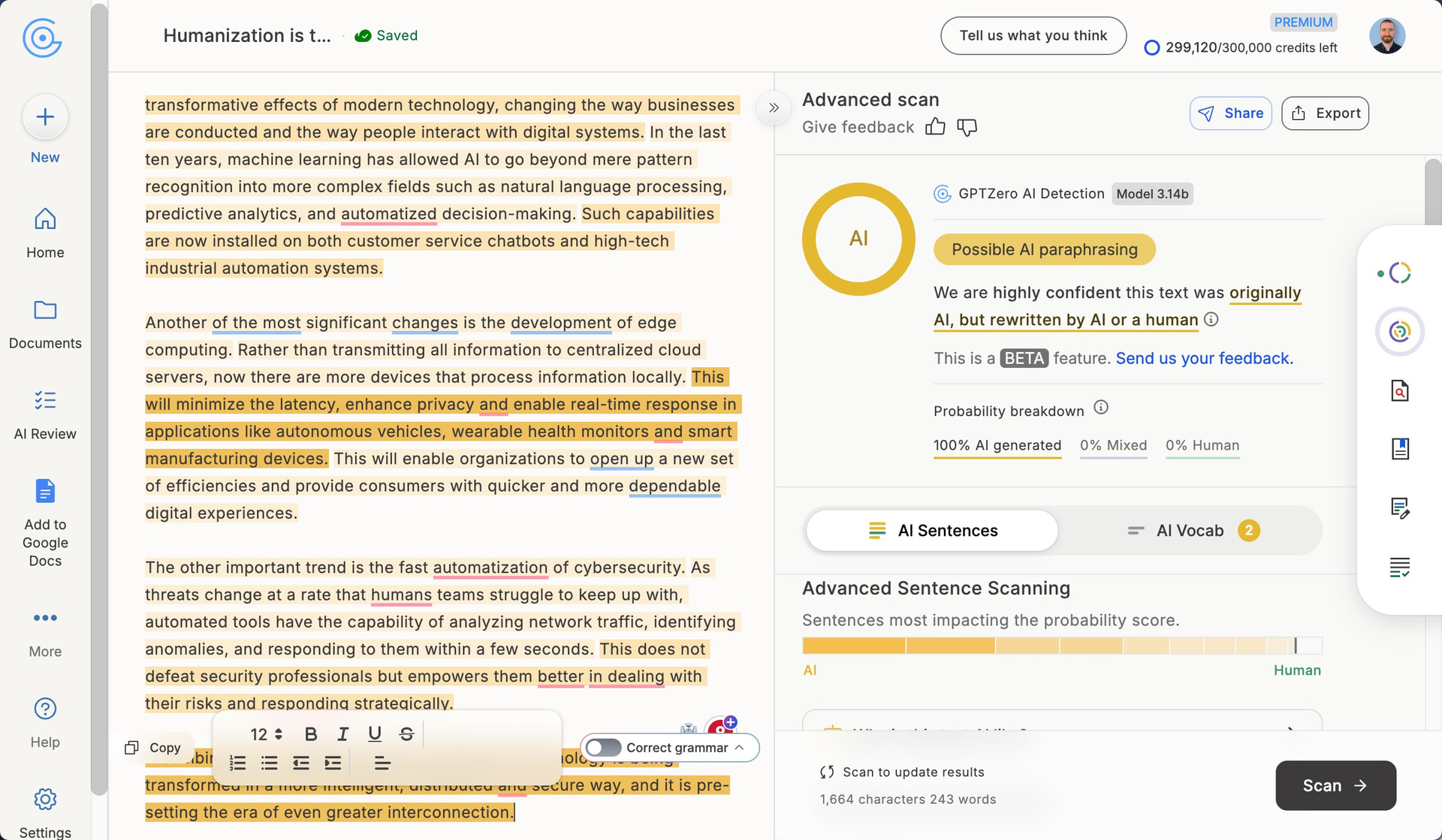
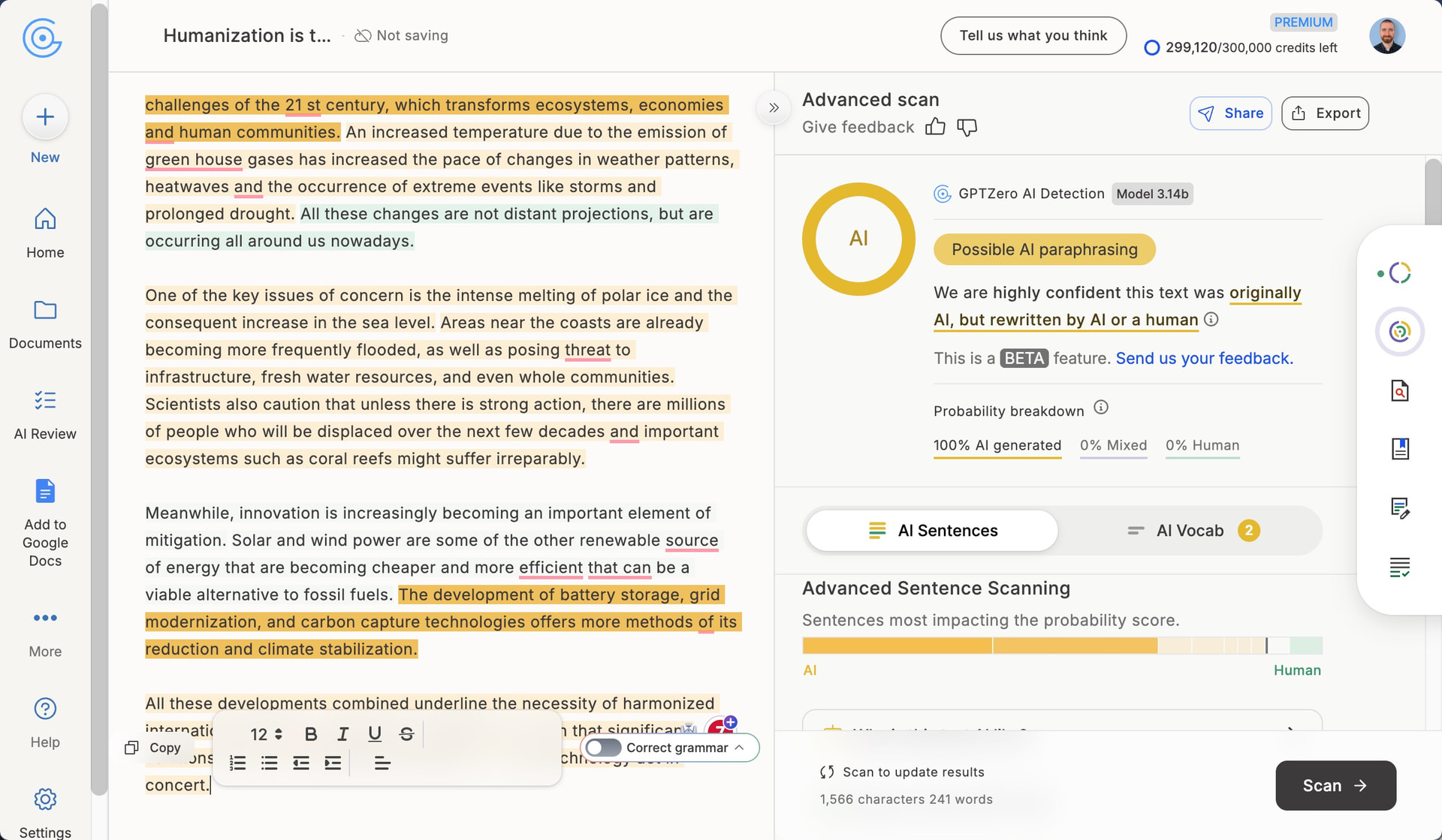
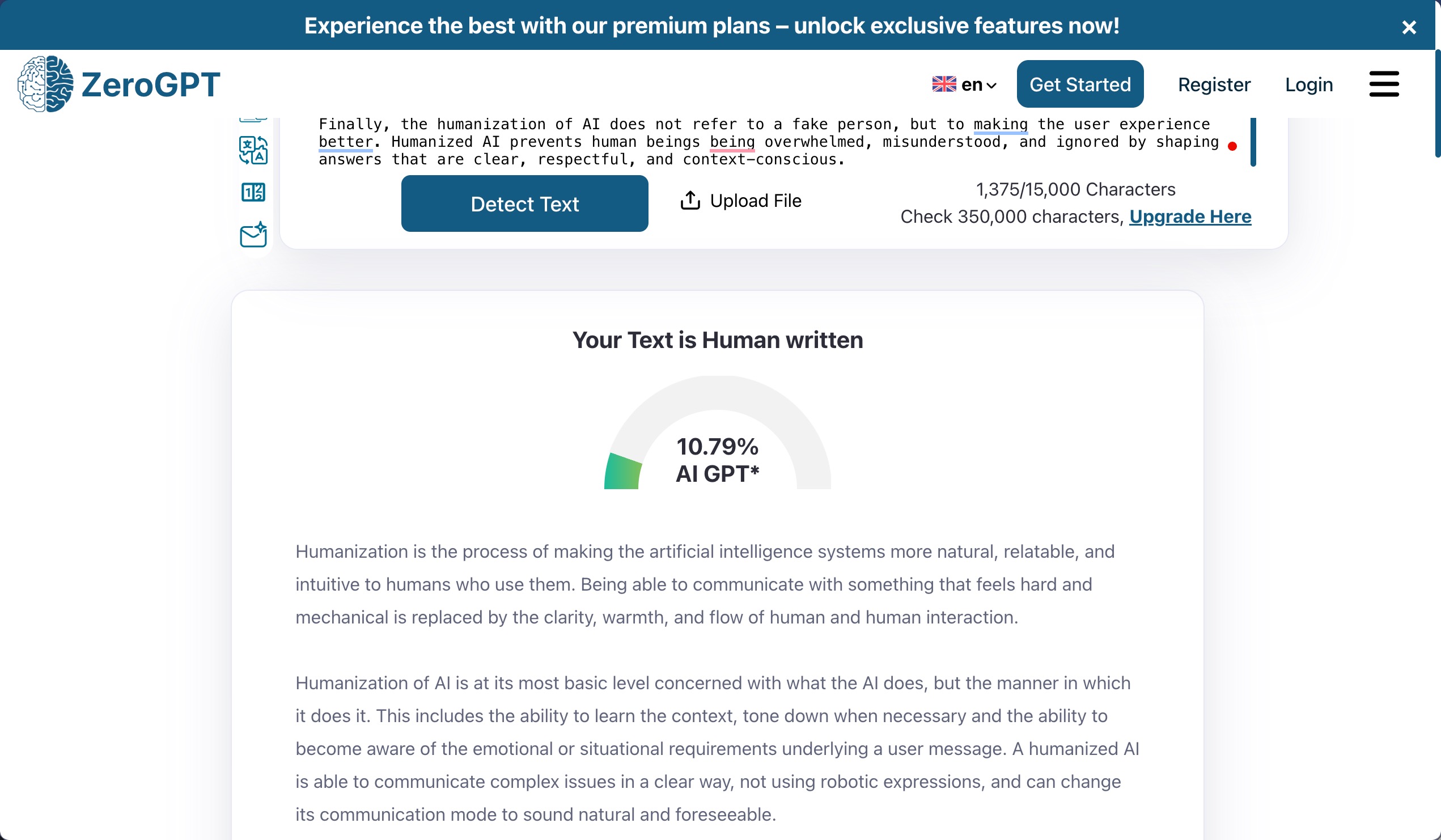

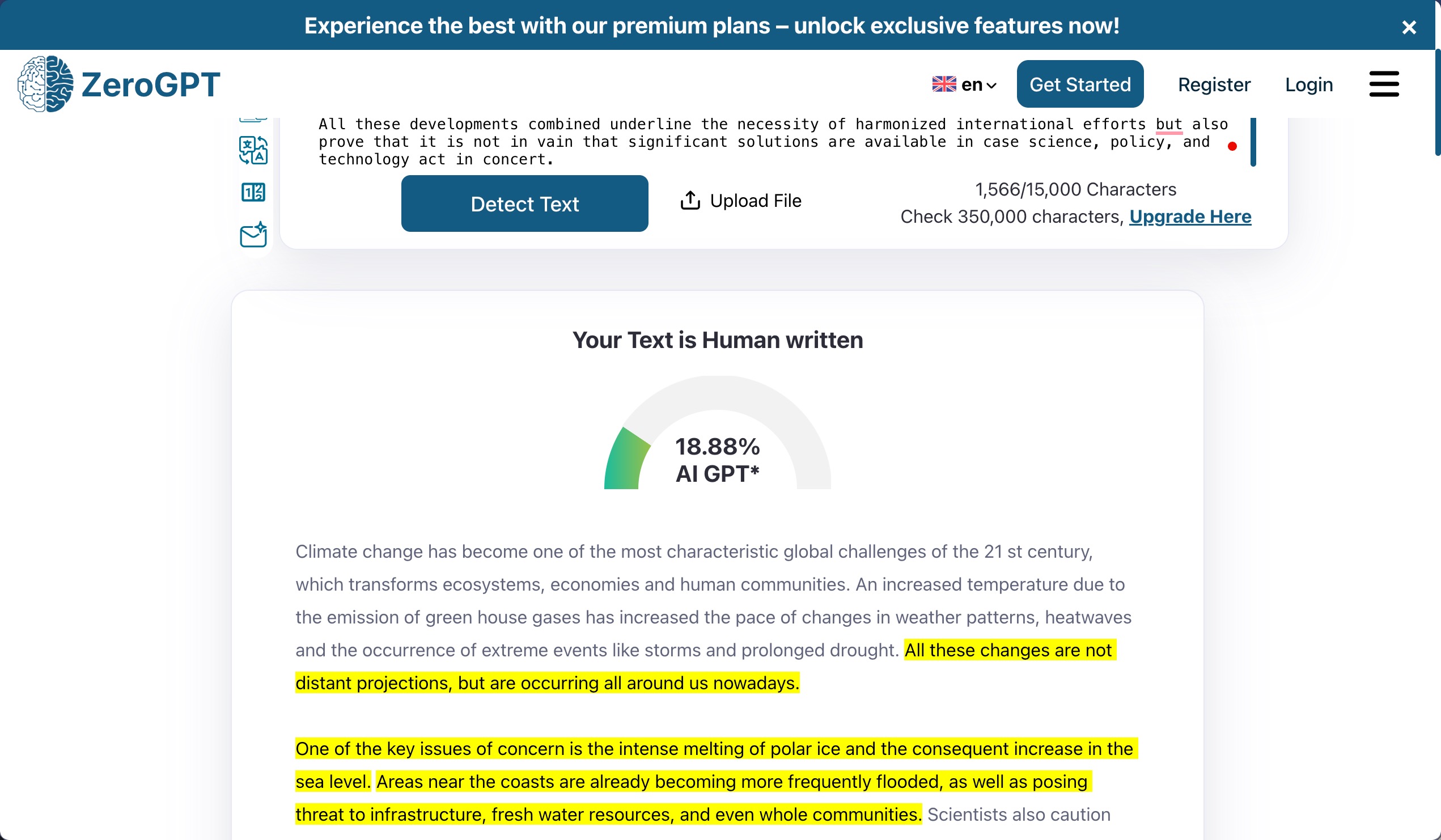
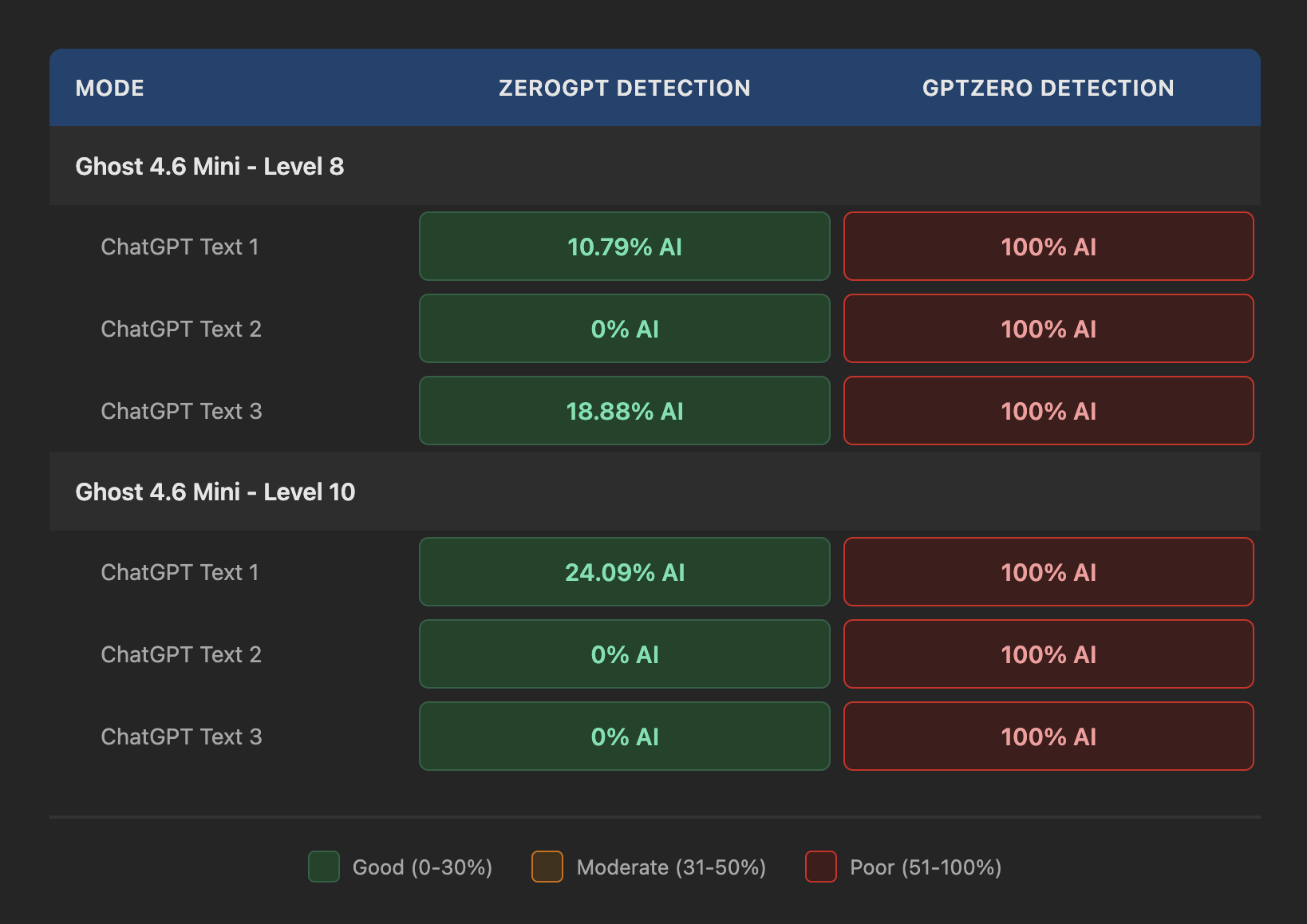
At Level 8 intensity, ZeroGPT returned relatively promising scores: 10.79% on the first text, 0% on the second, and 18.88% on the third. However, the excitement ended when I checked GPTZero, which flagged every single output at 100% AI detection without exception.
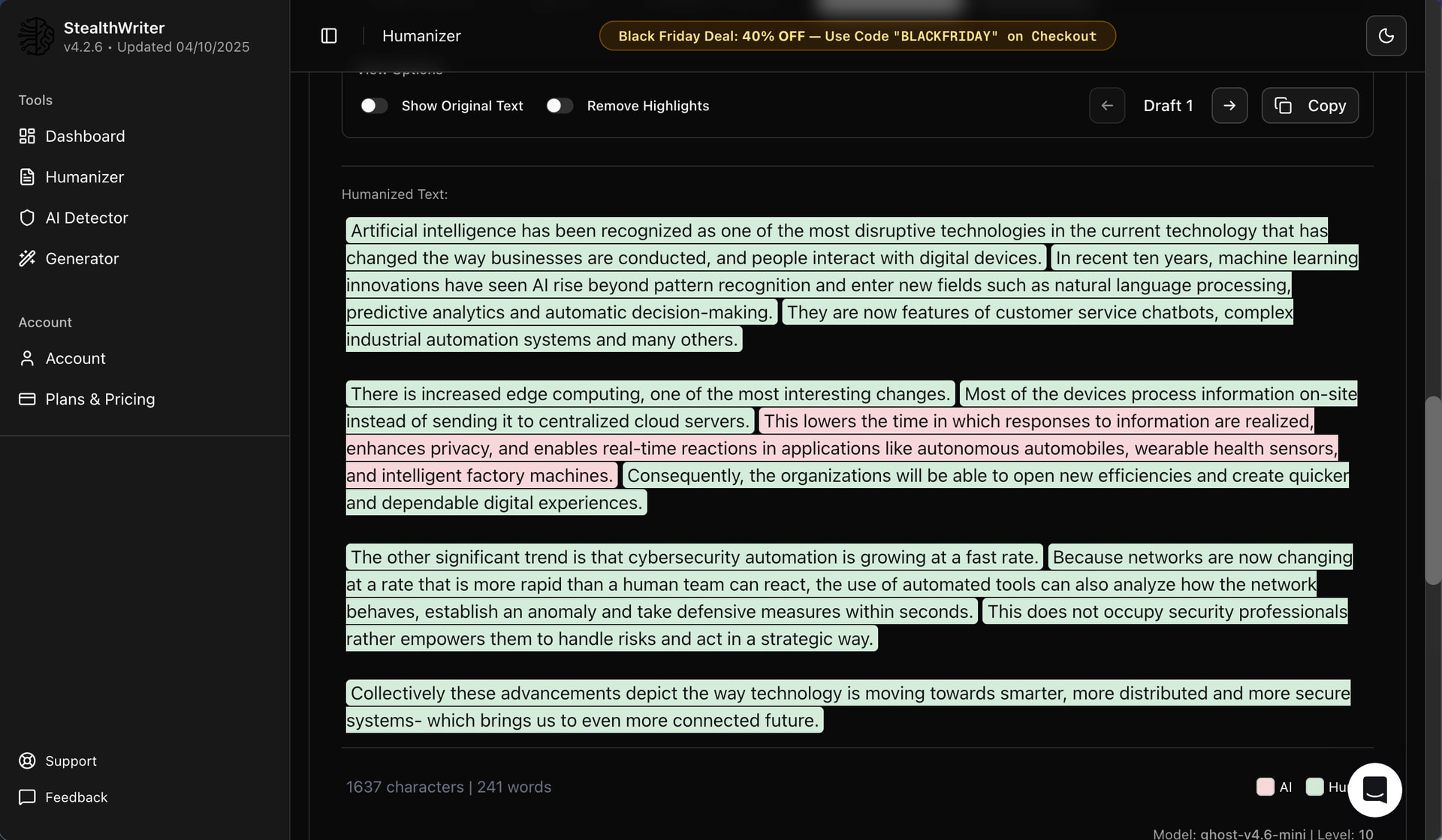
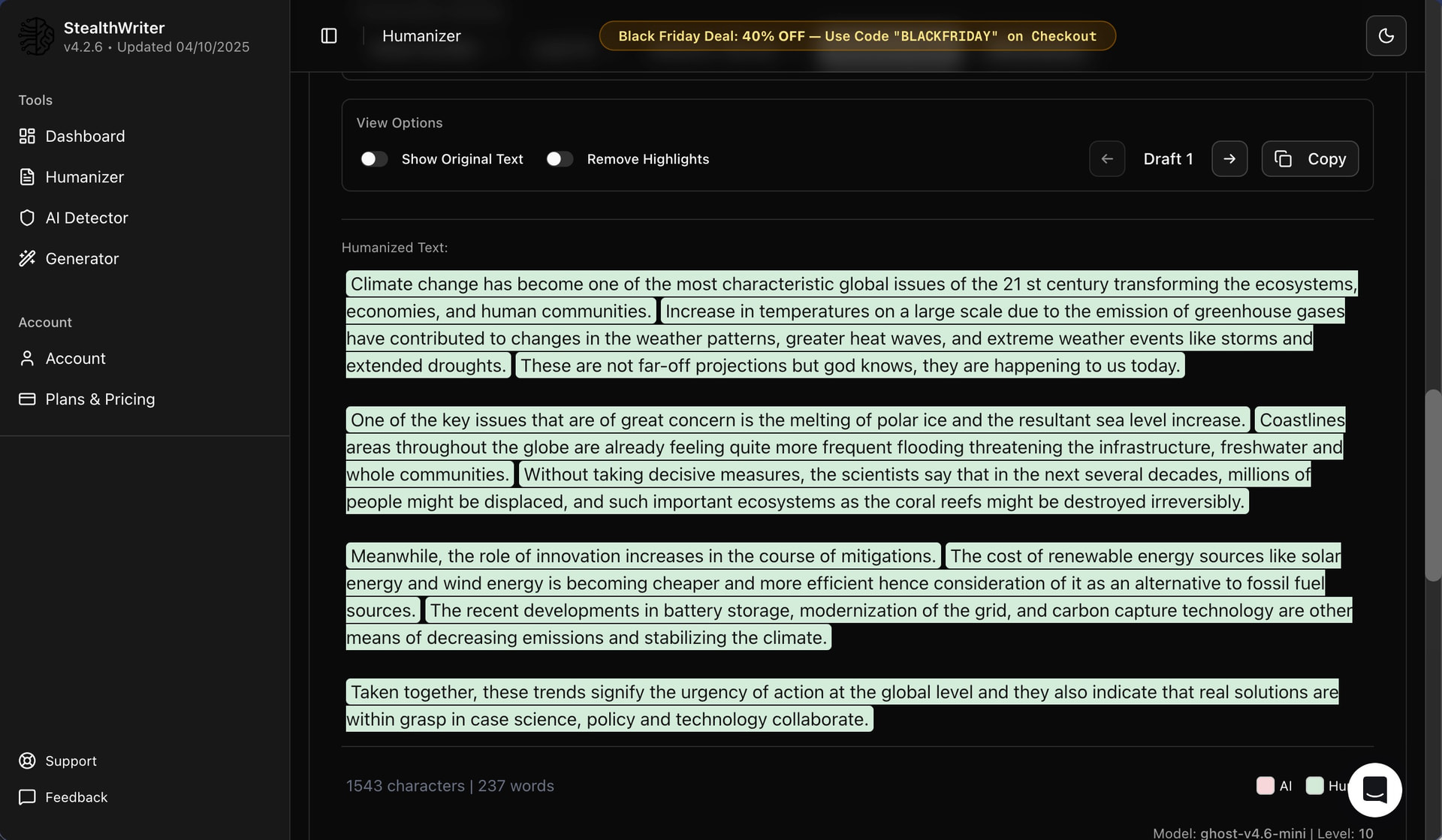
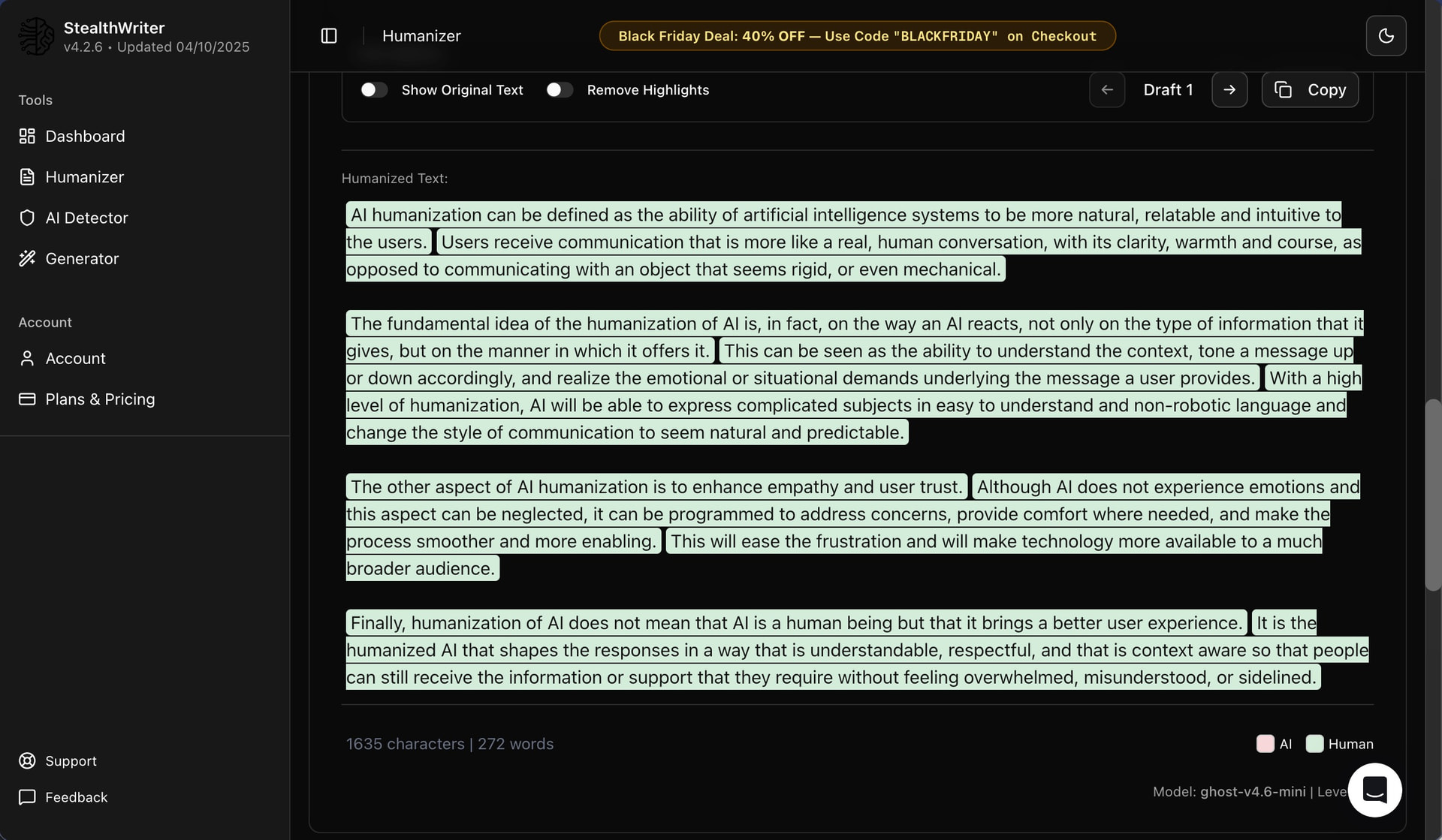
I then pushed the intensity to Level 10 (the maximum available) hoping for better results. When tested using ZeroGPT, the first text actually performed worse at 24.09% (compared to 10.79% at Level 8), while the third text improved from 18.88% to 0%. The second text remained at 0% across both settings. Unfortunately, GPTZero continued to detect all three outputs at 100% AI regardless of intensity level.
I should note again that the paid Ghost Pro model might perform differently, but I wasn’t able to test it without subscribing. You might also be able to achieve better results by playing with the Style setting.
One thing I can praise, though, is the fact that StealthWriter reliably maintains the original text length. My test samples stayed within a few dozen words of their original word counts after humanization, which is a welcome change from tools like UnAIMyText and Aihumanize.io that inflate outputs by 40-50%.
How Well Does StealthWriter AI Maintain Writing Quality?
StealthWriter’s humanization process produces text that avoids the catastrophic errors of some competitors, but it introduces enough awkward phrasing and grammatical issues to require noticeable editing before publication.
Level 8 Intensity
Writing Quality Score: 7/10
At the lower intensity setting, the outputs remained mostly coherent but contained several problems that would catch any editor’s attention.
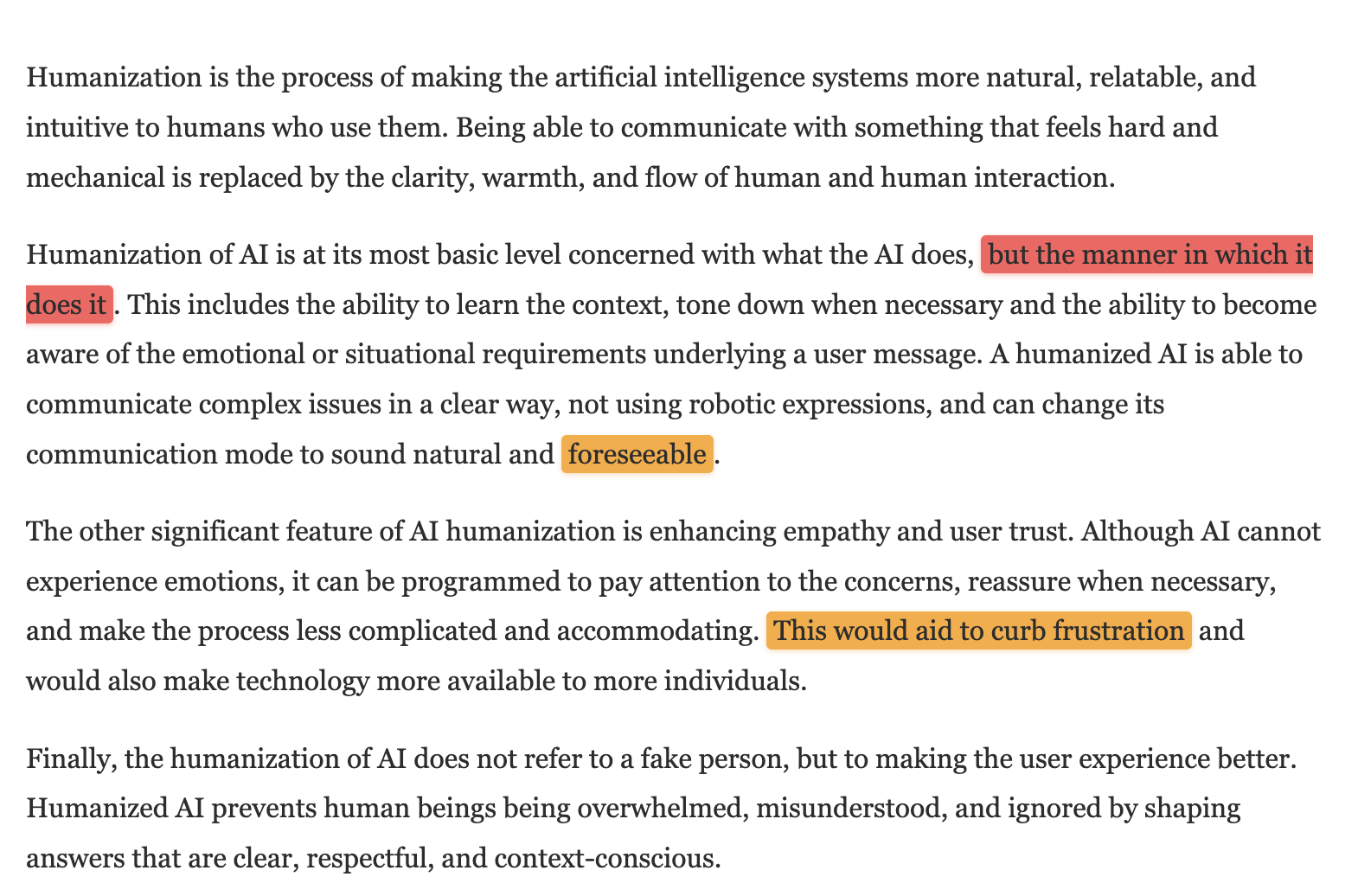
The first text included the grammatically broken sentence “Humanization of AI is at its most basic level concerned with what the AI does, but the manner in which it does it.” Something is clearly missing between “does” and “but.” The same text used “foreseeable” when “predictable” was the intended meaning, and contained the awkward phrase “This would aid to curb frustration” (should be “help curb” or “help reduce”).

The second text opened with “It is artificial intelligence which has emerged to be one of the most transformative effects of modern technology,” which could easily be simplified to “Artificial intelligence has emerged as one of the most transformative forces in modern technology.” I also noticed the odd word choice “Such capabilities are now installed on both customer service chatbots,” where “installed on” doesn’t quite fit when discussing software capabilities.
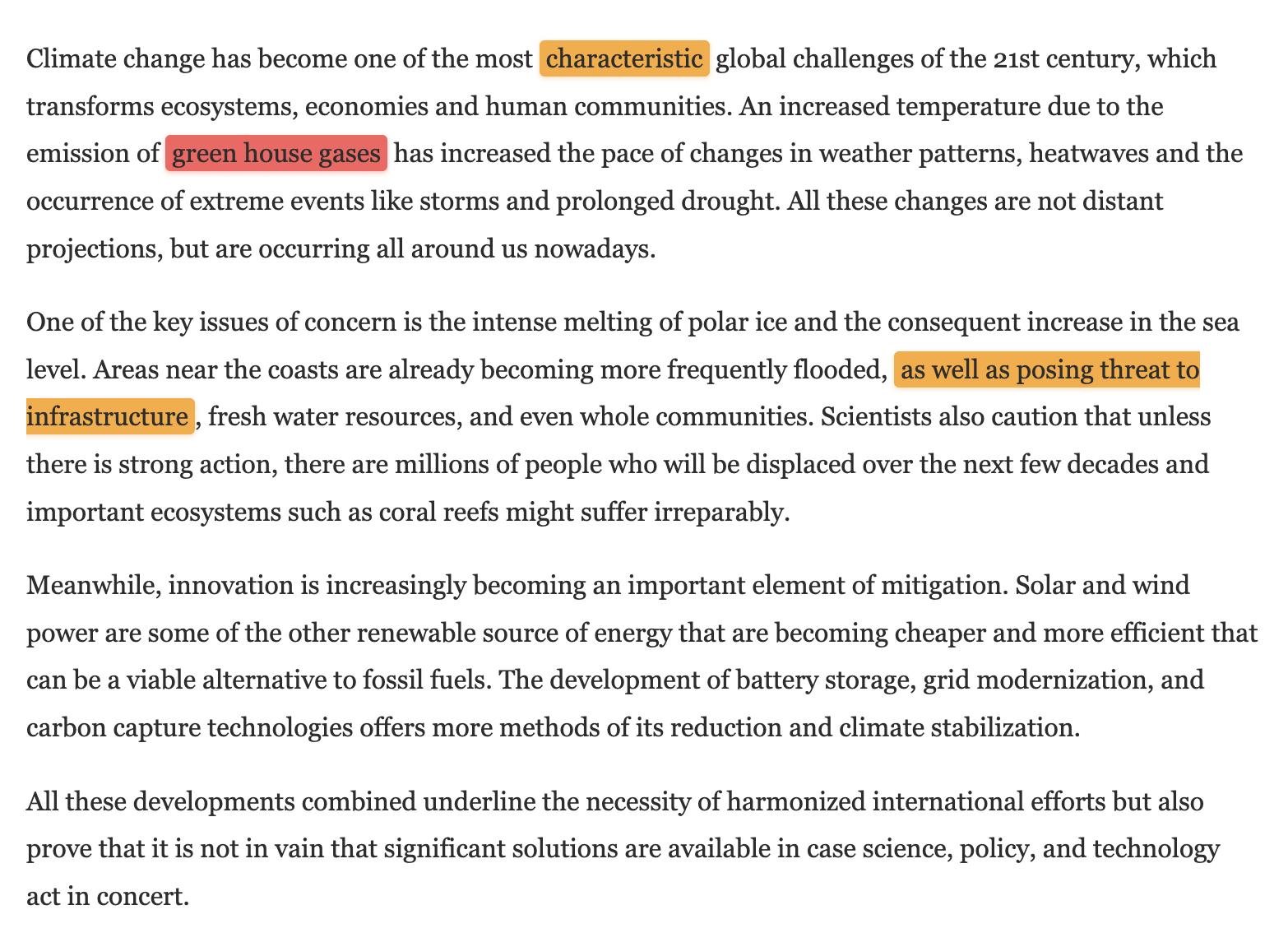
The third text contained the word choice error “Climate change has become one of the most characteristic global challenges,” where “characteristic” should be “defining” or “pressing.” It also split “greenhouse” into two words (“green house gases”) and dropped an article in “as well as posing threat to infrastructure” (should be “posing a threat”).
Level 10 Intensity
Writing Quality Score: 6.5/10
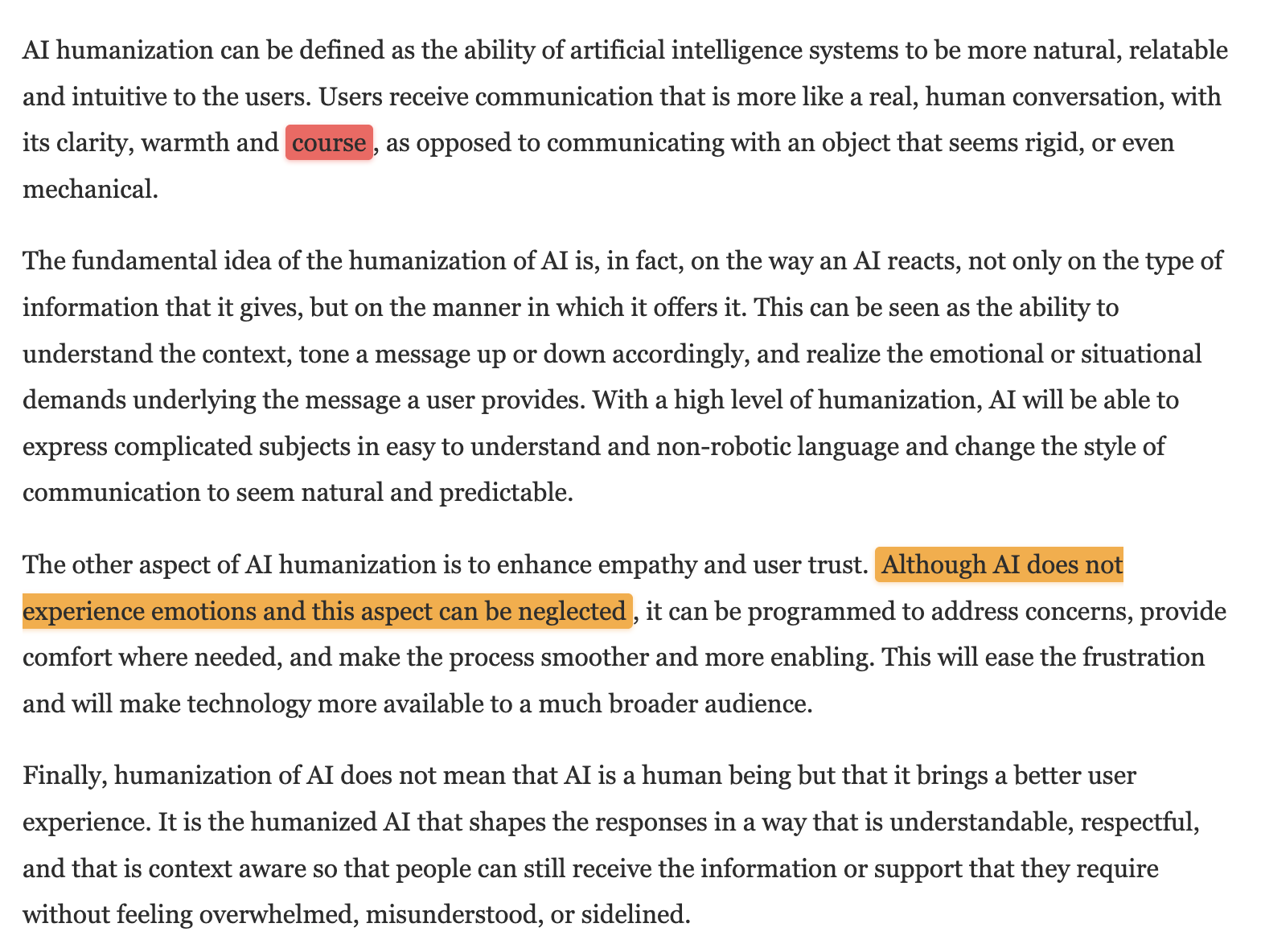
Pushing to maximum intensity introduced more noticeable problems. The first text contained the phrase “with its clarity, warmth and course,” where “course” was probably an unfortunate substitution for “flow”). The same text also included the awkward “Although AI does not experience emotions and this aspect can be neglected,” which leaves the reader wondering what “this aspect” refers to.

The second text repeated “technology” in “one of the most disruptive technologies in the current technology” and used the unusual phrasing “In recent ten years” instead of the natural “In the last ten years.” It also produced the overcomplicated construction “This lowers the time in which responses to information are realized,” which is a convoluted way to say “This reduces response times.”
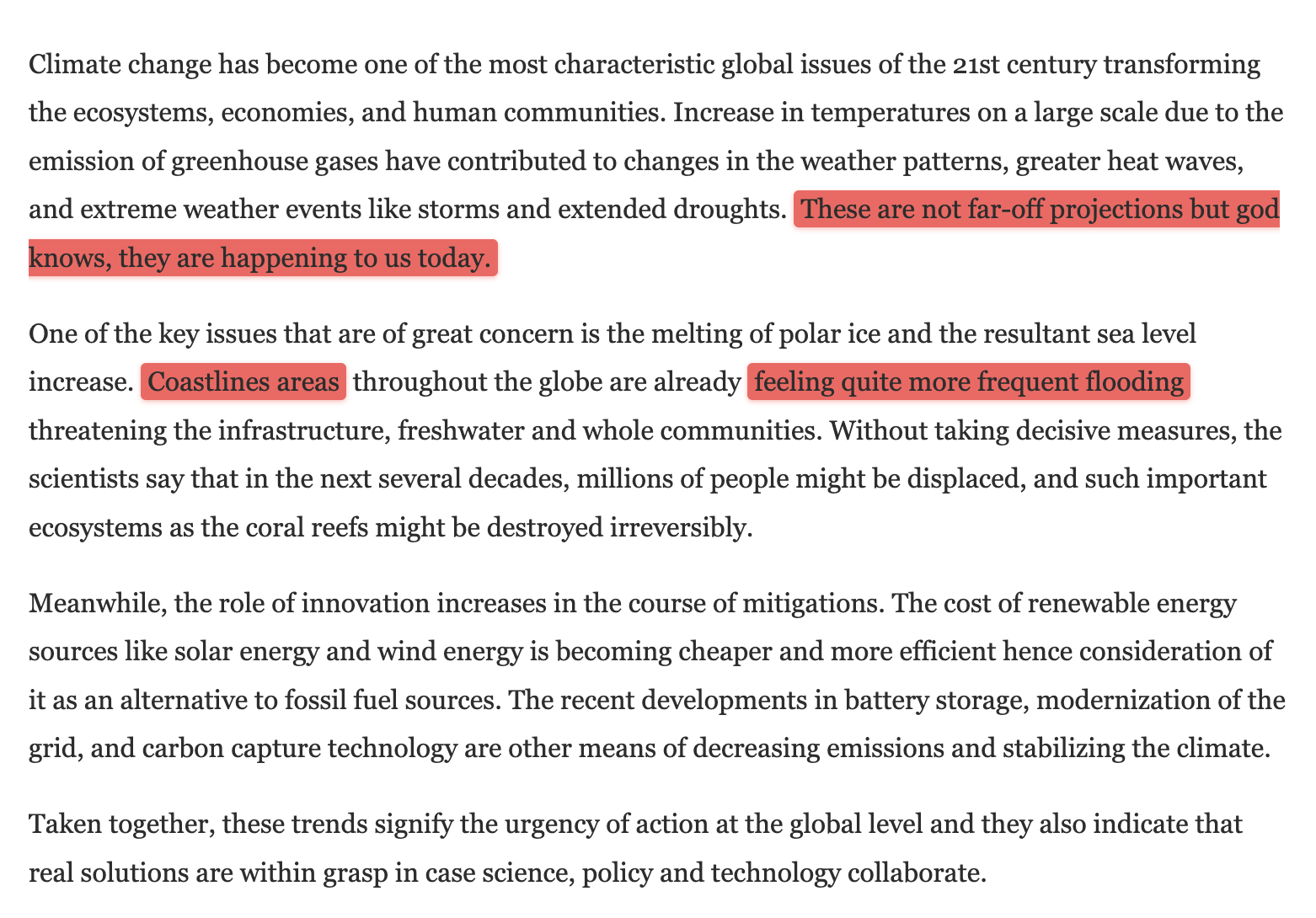
The third text contained the casual interjection “god knows,” which is wildly inappropriate for a text discussing climate science and feels like the humanizer attempted to inject conversational tone without understanding context. The same text also produced “Coastlines areas” (should be “Coastal areas”) and the grammatically broken phrase “feeling quite more frequent flooding.”
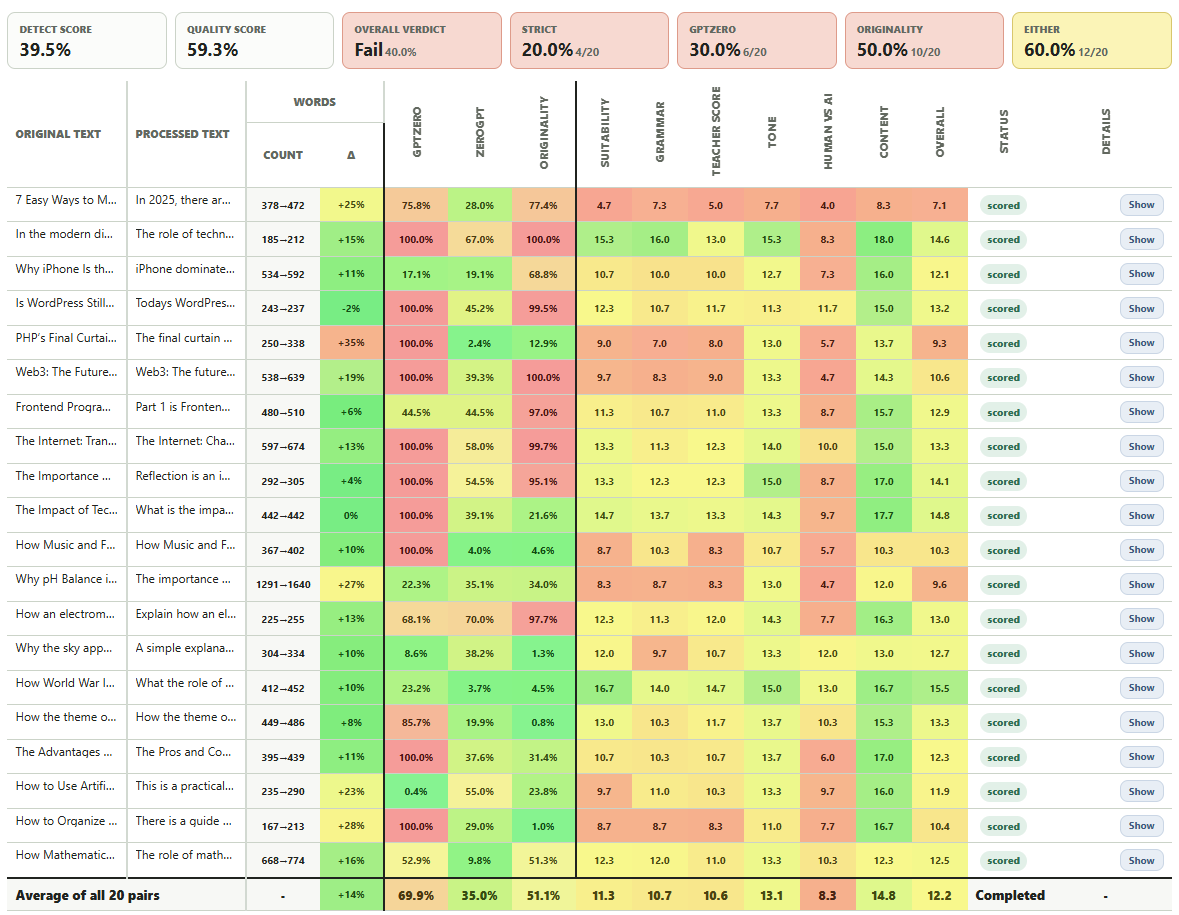
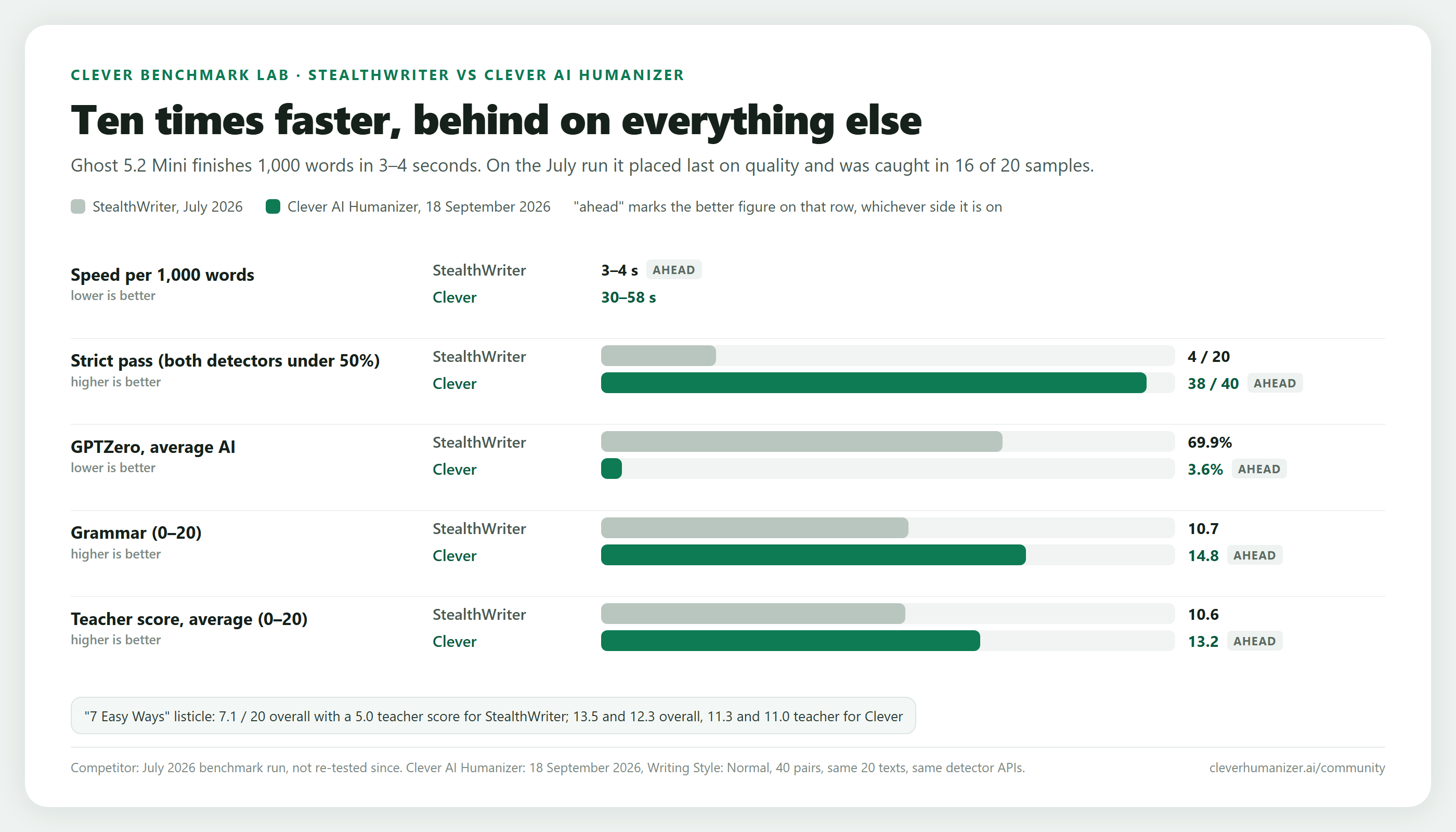
Cranking the dial higher introduces more errors without meaningfully improving detection scores on the detector that matters most. StealthWriter gives you ten intensity levels and multiple style presets, yet none of the combinations I tried could budge GPTZero from 100%. All those controls create an illusion of fine-tuning when the underlying engine is not equipped to handle what GPTZero actually looks for. I have reviewed humanizers with no customization whatsoever that produced better detection outcomes, and the one that stands out most is the tool I covered in my Clever AI Humanizer review. One button, no sliders, no style presets, and it still outperformed StealthWriter on both detectors while keeping writing quality at 8/10 and costing nothing.
How Much Does StealthWriter AI Cost?
StealthWriter offers four pricing tiers with annual billing that effectively gives you two free months:
| Plan | Monthly Price | Yearly Price | Ghost Mini | Ghost Pro | Words/Request |
|---|---|---|---|---|---|
| Free | $0 | $0 | 10 daily | Not included | 1,000 |
| Basic | $20 | $200/year | Unlimited | 20 daily | 2,000 |
| Standard | $35 | $350/year | Unlimited | 50 daily | 3,000 |
| Premium | $50 | $500/year | Unlimited | Unlimited | 5,000 |
The free tier’s 10 daily humanizations with a 1,000-word cap is enough for evaluation purposes, and it might also be all you need to humanize a single essay or some other document. Of course, it’s far too restrictive for regular content production.
The pricing structure places StealthWriter at the higher end of the AI humanizer market. For comparison, Aihumanize.io offers unlimited humanizations for $40/month on their top tier, while HumanizeAI.io’s Elite plan costs just $7/month with annual billing. Free alternatives like UnAIMyText and Decopy AI Humanizer offer unlimited usage without any payment, but their quality unfortunately leaves much to be desired.
All tiers include access to StealthWriter’s built-in AI detector for verifying your results, and the company advertises “priority support” across all plans (including free). However, I wouldn’t place much trust in the built-in detector. During my testing, it marked all humanized outputs as fully human-written, yet GPTZero flagged those same texts at 100% AI detection, which suggests StealthWriter’s detector is overly lenient and probably on par with ZeroGPT in terms of reliability.
Does StealthWriter AI Respect User Privacy?
According to StealthWriter’s privacy policy and terms of service, the service (operated by AiVantage LLC) collects the following data:
-
Personal Information: Name, email address, and contact details
-
Usage Data: IP address, browser type, device information, and pages visited
-
Content Data: Text input for AI processing
-
Tracking Data: Essential cookies, analytics cookies, preference cookies, and marketing cookies for targeted advertising
The inclusion of “Content Data” in the collection list is concerning because the privacy policy doesn’t explicitly state how long is the data stored. Instead, the data retention section vaguely states that AiVantage LLC will store the data for as long as necessary to “fulfill the purposes outlined in this policy.” The good news is that StealthWriter explicitly states they do not sell personal information to third parties.
Should you ever need legal recourse), you should know that the privacy policy lists a US address in Sheridan, Wyoming, but the terms of service specify that disputes fall under UAE jurisdiction (“the laws of the United Arab Emirates, where AiVantage LLC is registered and operates”).
One situation that might make you consider legal action is a denied refund request. The terms of service contain a notably strict refund policy: “Refunds will not be provided for any subscription plan that has been initiated or renewed.” It also states that if you forget to unsubscribe before renewal, that’s your problem.
Interestingly, StealthWriter is the only AI humanizer I’ve reviewed so far that takes a strong stance against academic dishonesty by reserving the right to terminate accounts engaged in academic misconduct.