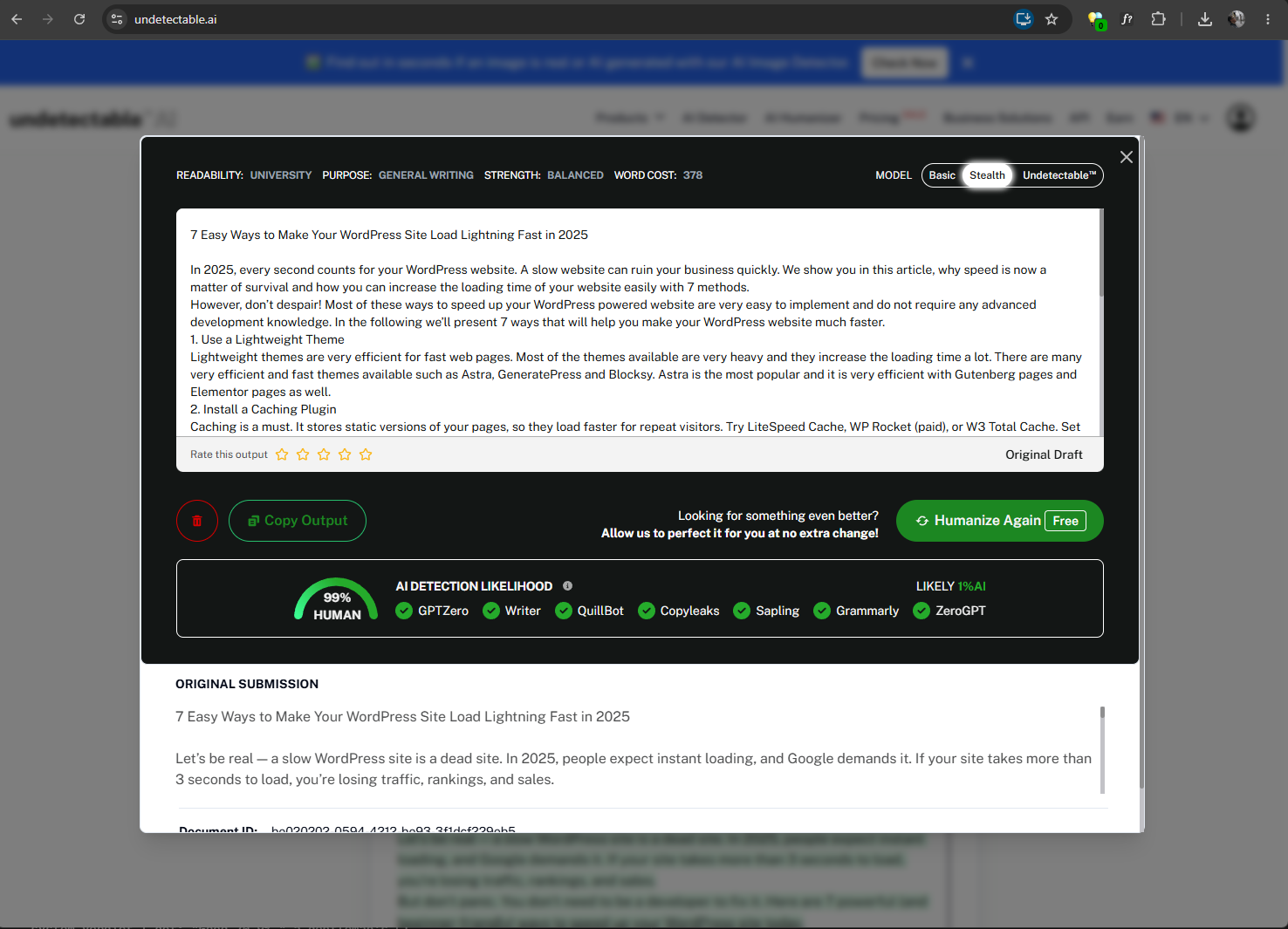
Undetectable AI attracted my attention because it boasts over 21 million users and endorsements from major publications like Forbes, Business Insider, and Mashable. The AI humanizer also offers an impressive range of customization options including multiple humanizer models, five reading levels, , nine output purposes ranging from general writing to legal material, and adjustable “Human Level” settings that promise to fine-tune how aggressively the tool transforms your text. But does it hold up to independent testing? Let’s find out!
How I test: I generated three AI content samples using the latest ChatGPT model, each approximately 200 words and covering different topics (AI humanization, technology trends, and climate change). I established baseline detection scores by running the original AI-generated texts through both GPTZero and ZeroGPT, then processed each sample using Undetectable AI. To evaluate how different settings affect performance, I ran all three samples twice: first with the “More Human” level (recommended for strict AI detectors) and then with the “More Readable” level (suggested for blogs and marketing content). I re-tested all humanized outputs through both detection platforms to measure effectiveness across different configurations. I also manually evaluated the grammar quality and readability of all humanized text. You can find the raw test data for this review here.
| Pros | Cons |
|---|---|
| Strong detection evasion even on free tier | Serious writing quality issues |
| Extensive customization options | Refund requires below 75% human score within 30 days |
| Flexible slider-based pricing | Extensive personal data collection including income and education level |
| 50% discount on annual plans | Annual subscriptions forfeit if company ceases operations |
| Money-back guarantee for flagged content | |
| Unlimited AI detection scans on paid plans | |
| Premium models promise even better results |
How Well Did Undetectable AI Perform?
I was limited to the free Basic Public model (the Stealth and Undetectable models are locked behind the paywall). Whenever you use the Basic Public model, the interface displays a warning with each output stating “AI detectors might still flag your text with the Basic Public Model,” which sets realistic expectations for free tier users.
Despite the warning, the humanizer delivered impressive scores that outperform many paid competitors I have reviewed.
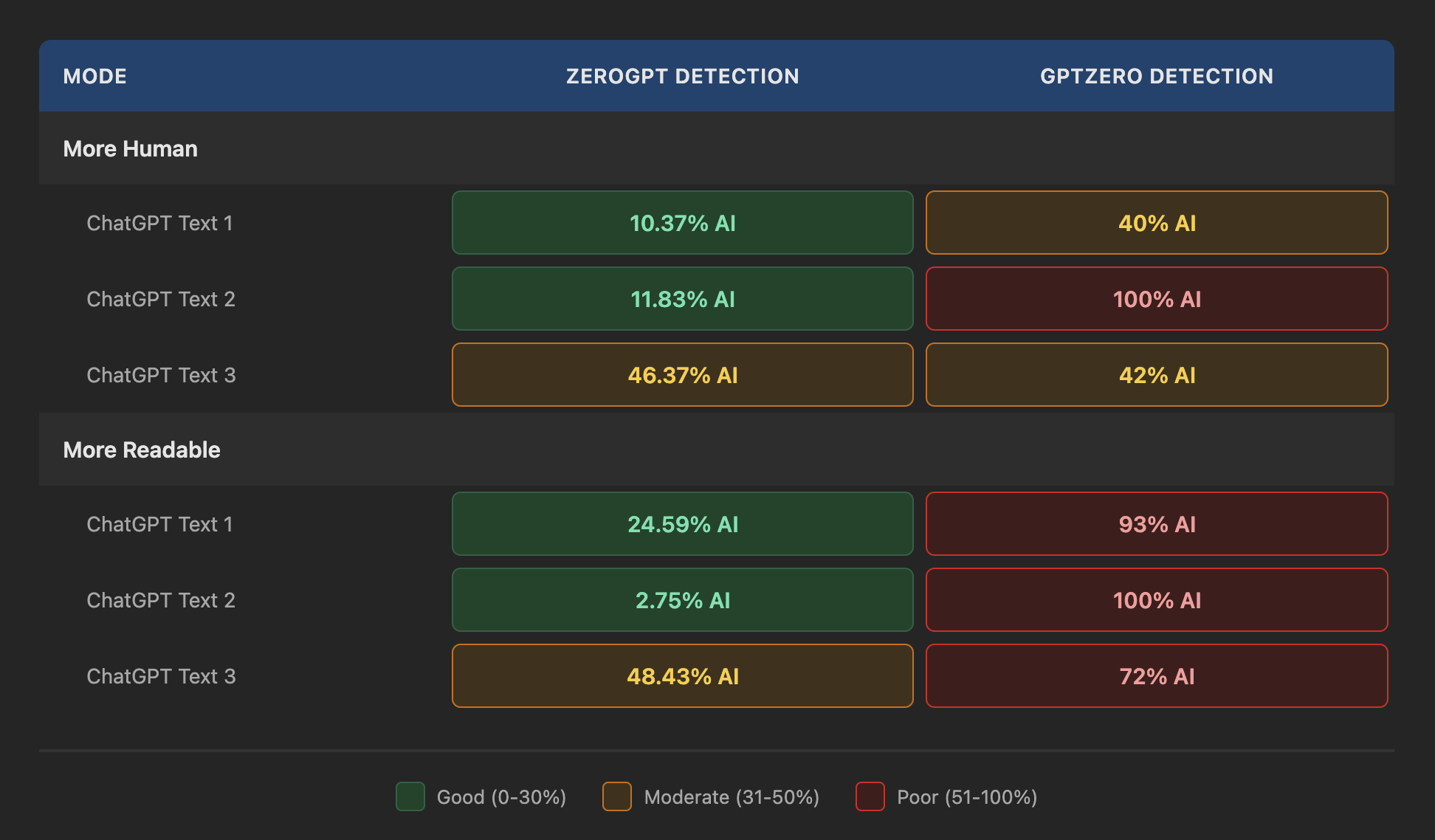
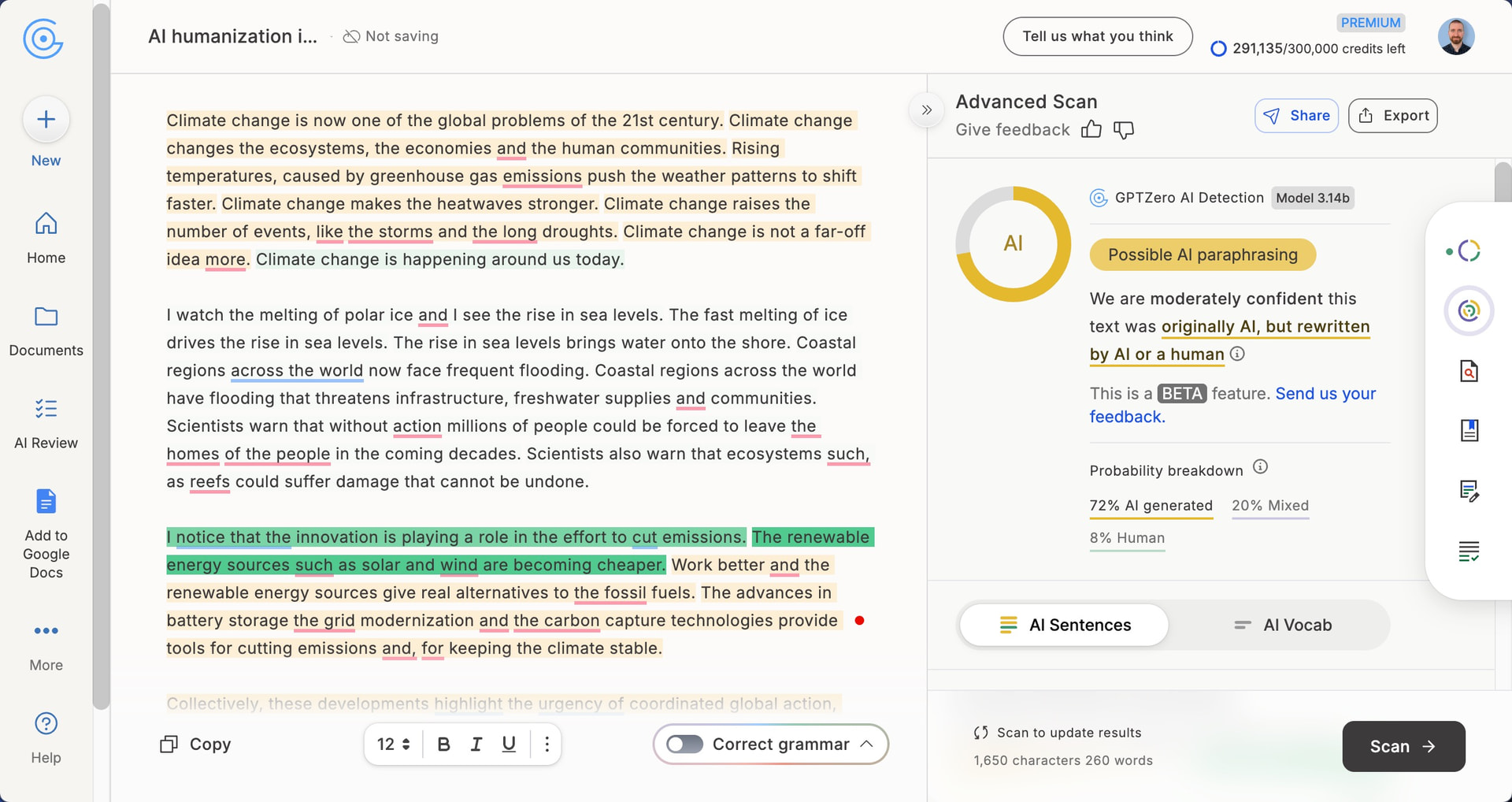
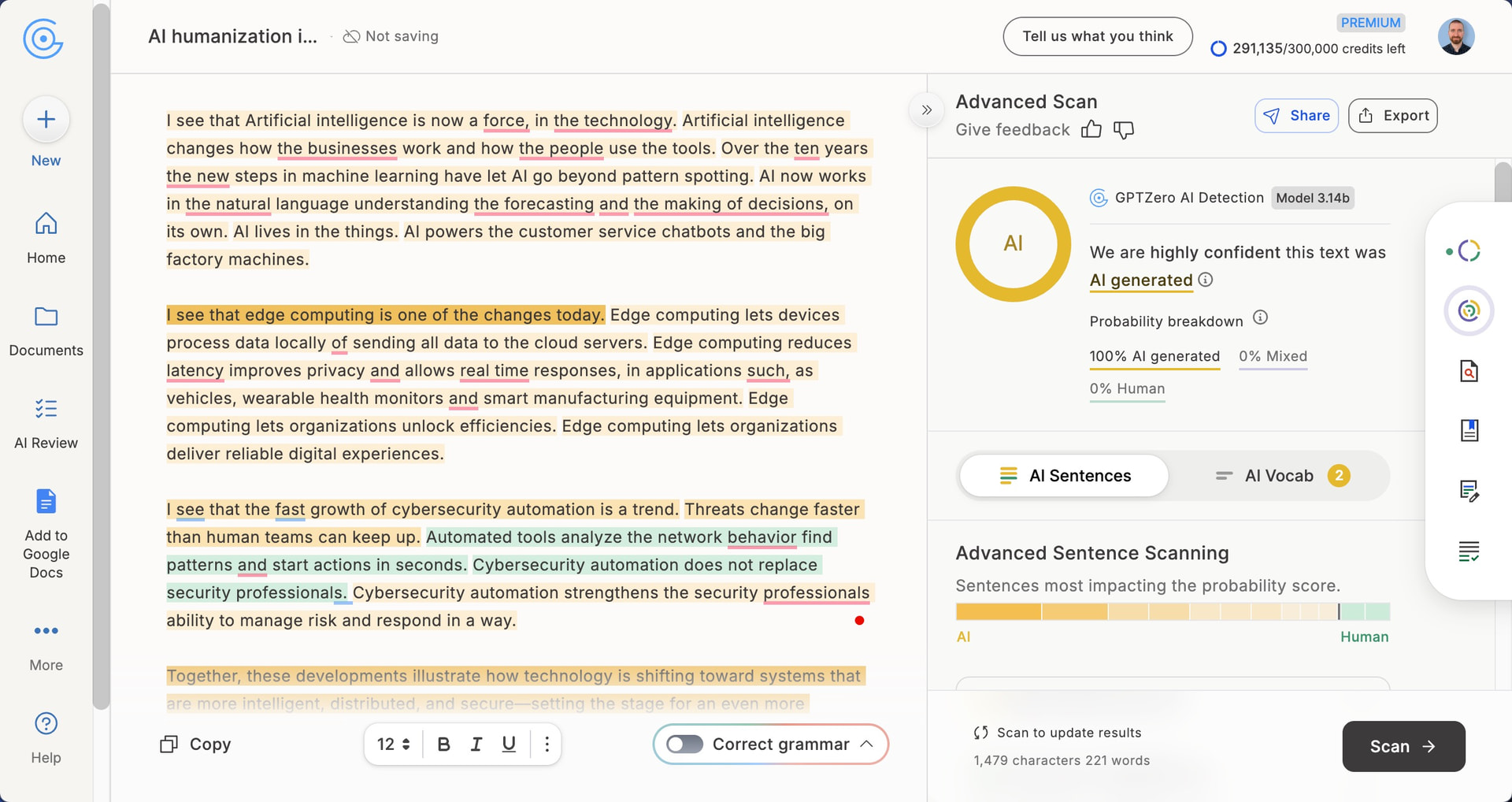
The “More Human” setting produced the strongest overall results. The first text achieved just 10.37% AI detection on ZeroGPT and 40% on GPTZero. The second text scored an excellent 11.83% on ZeroGPT, though GPTZero flagged it at 100%. The third text landed at 46.37% on ZeroGPT and 42% on GPTZero. Two out of three samples achieved sub-50% detection on both platforms.
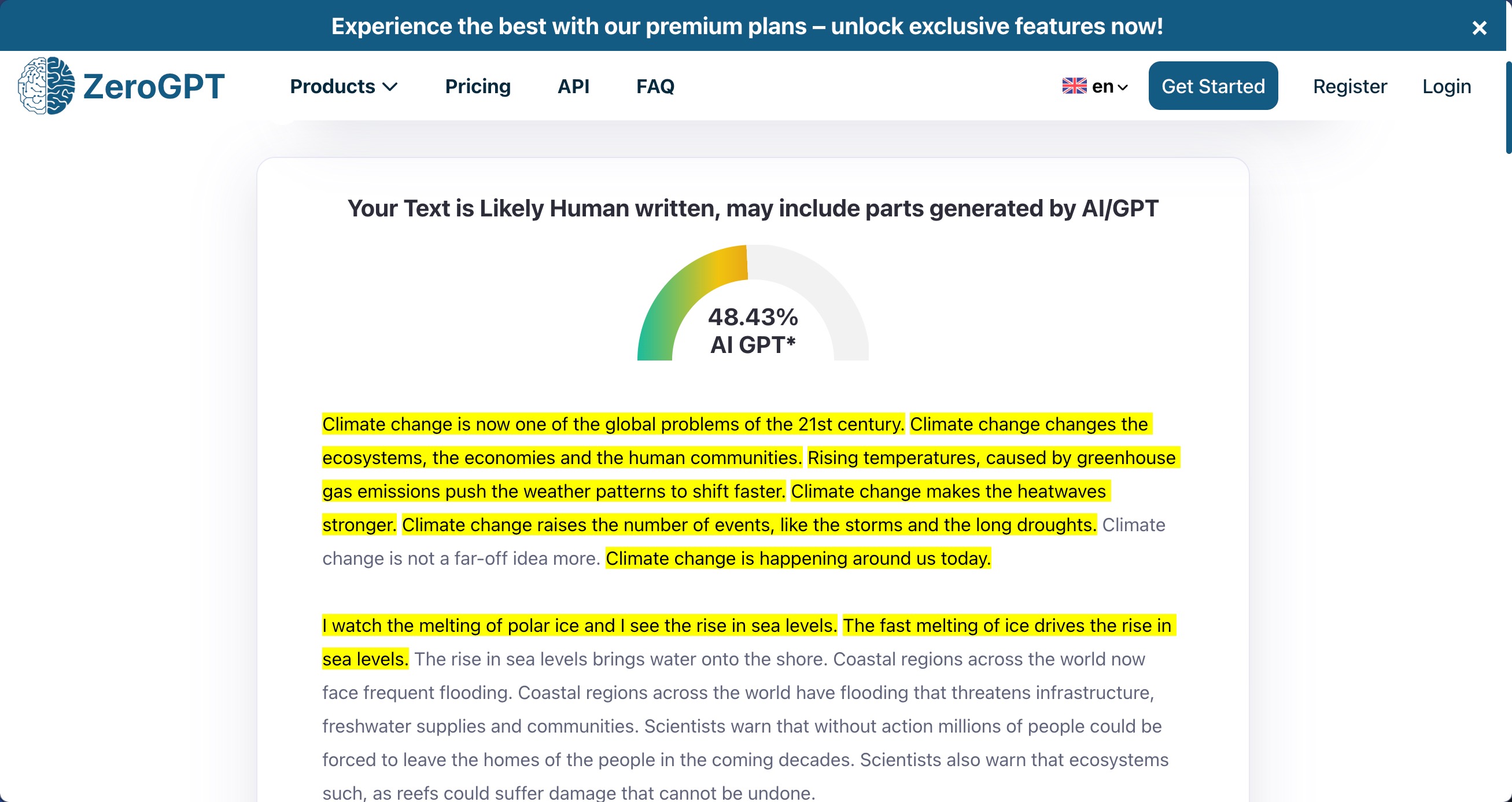
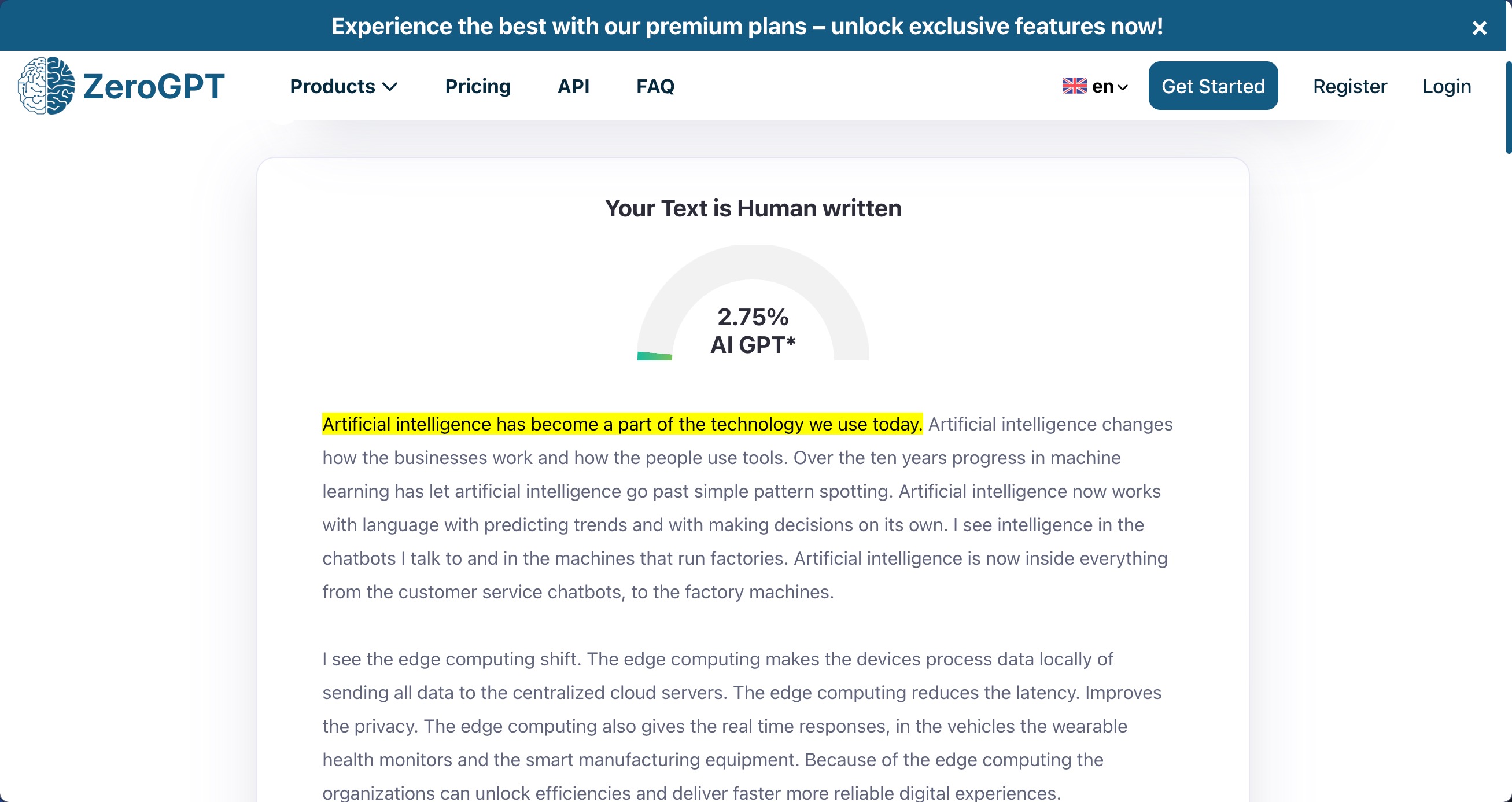
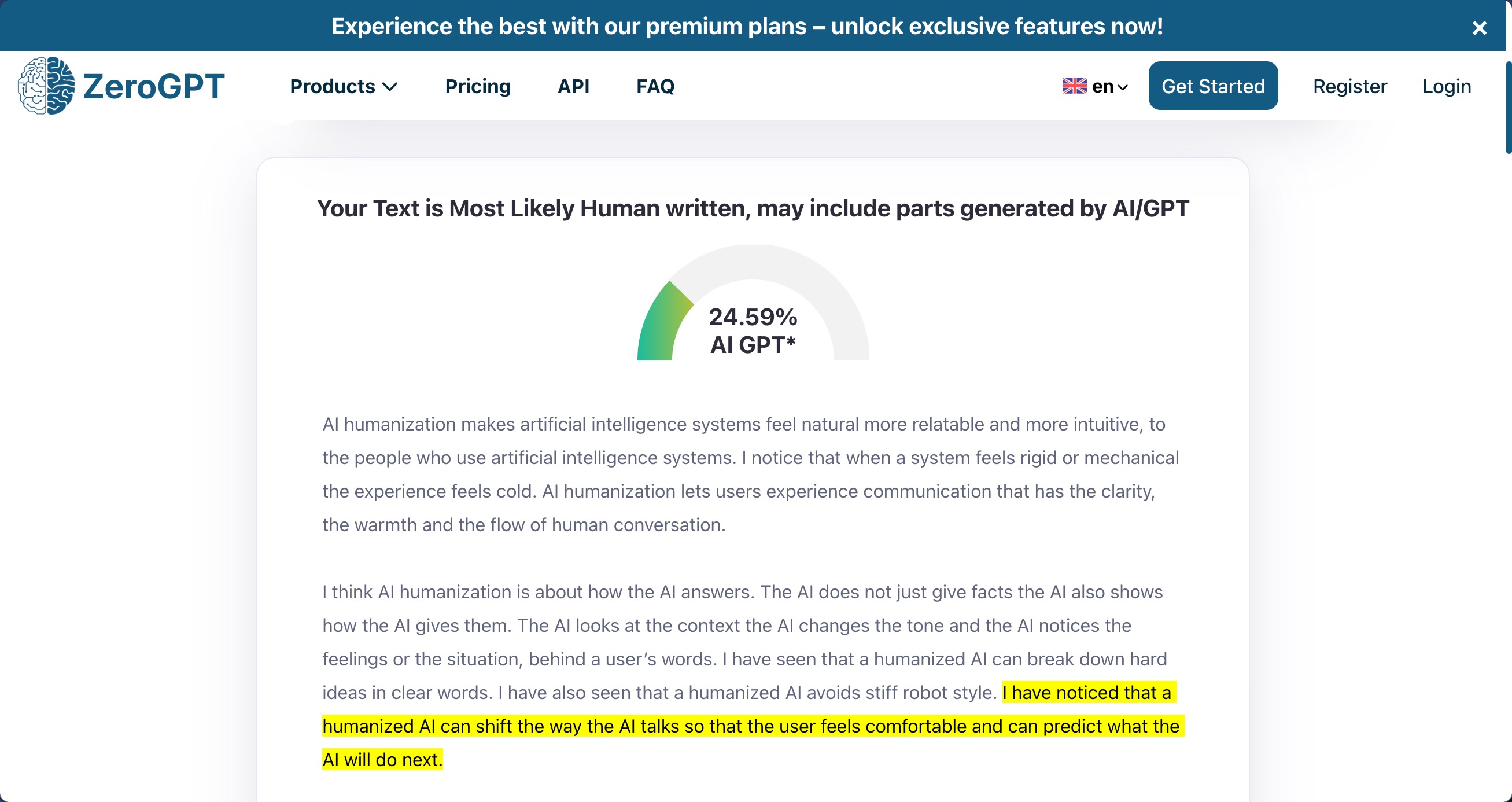
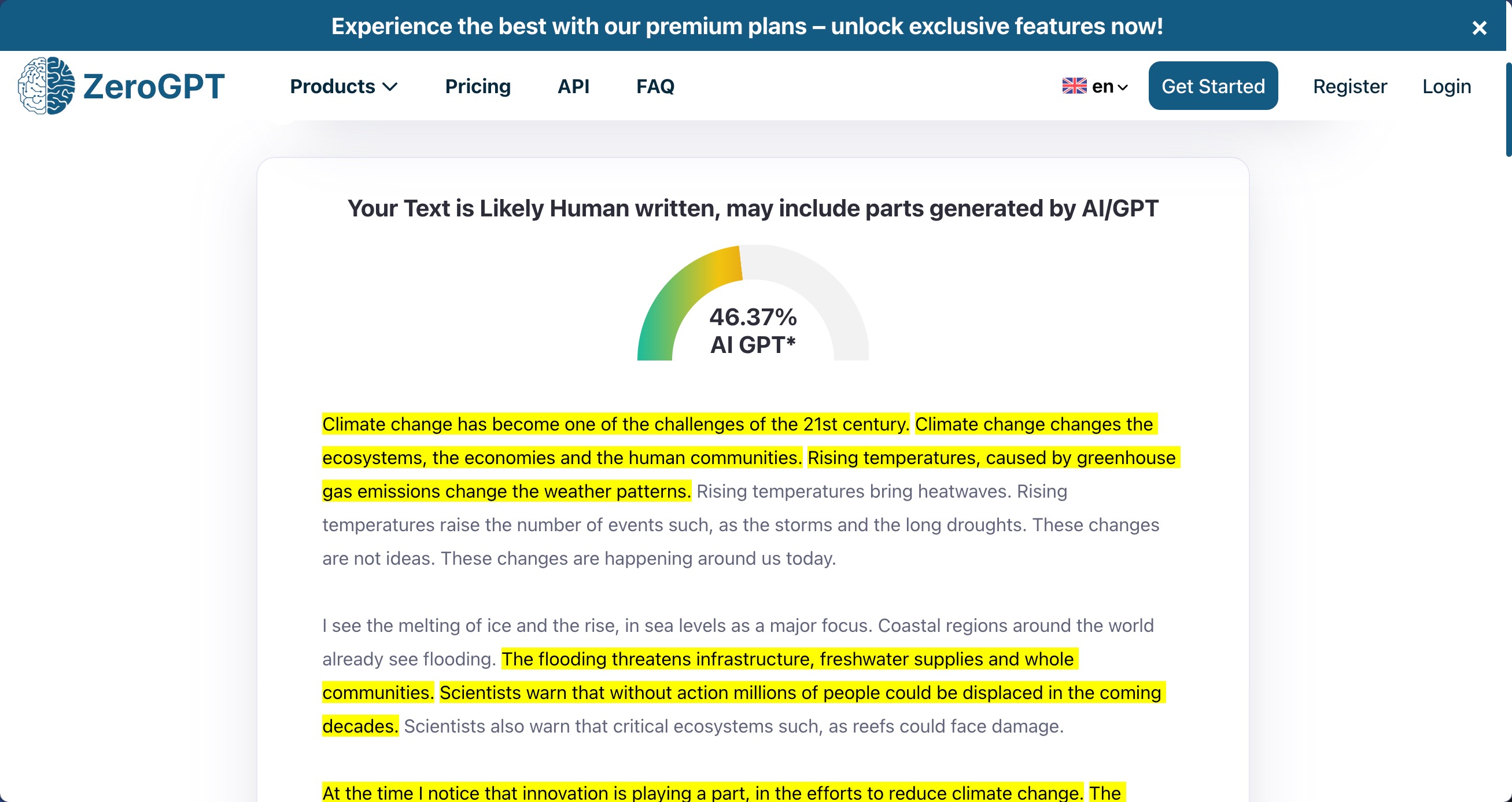
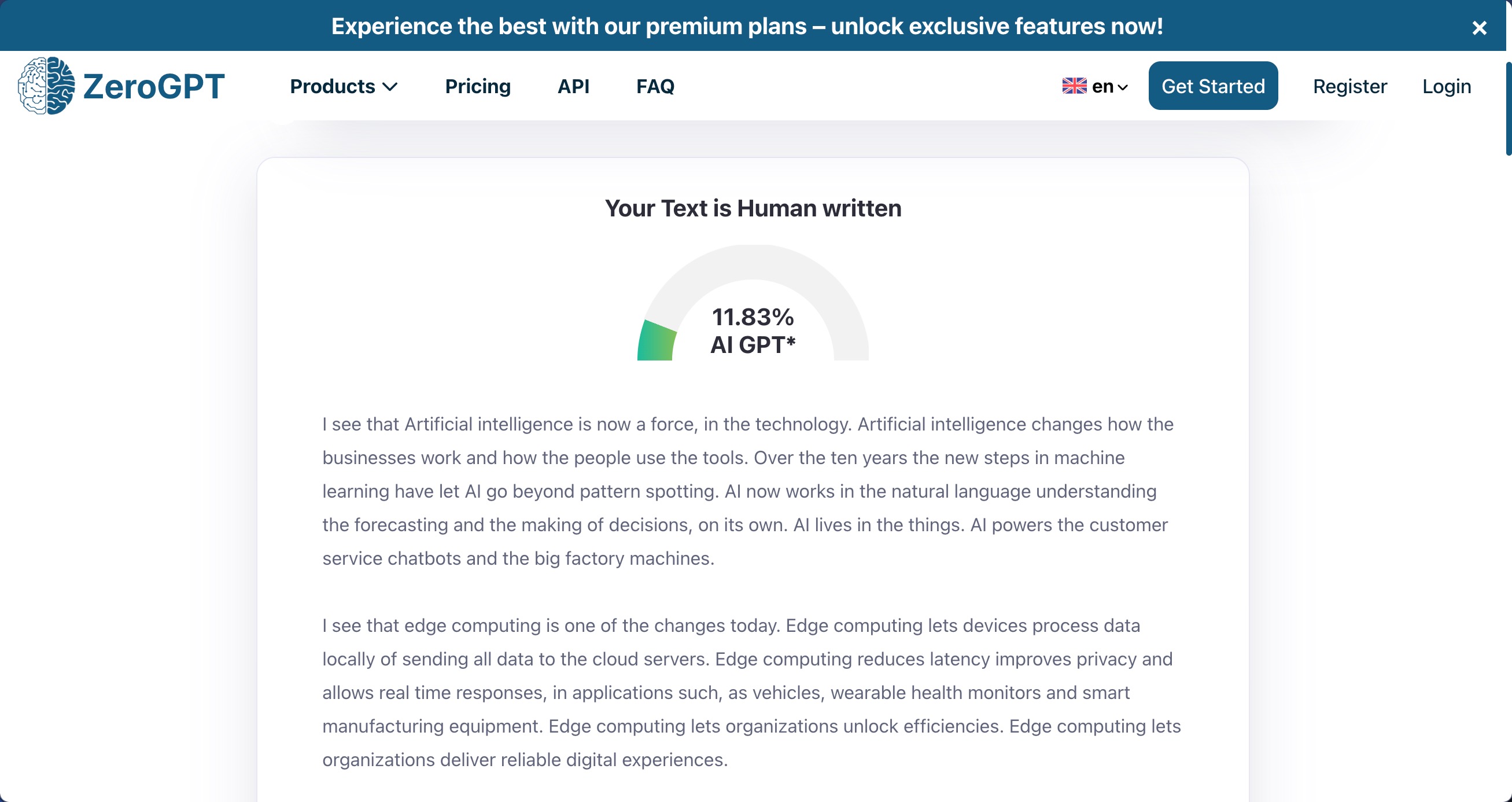
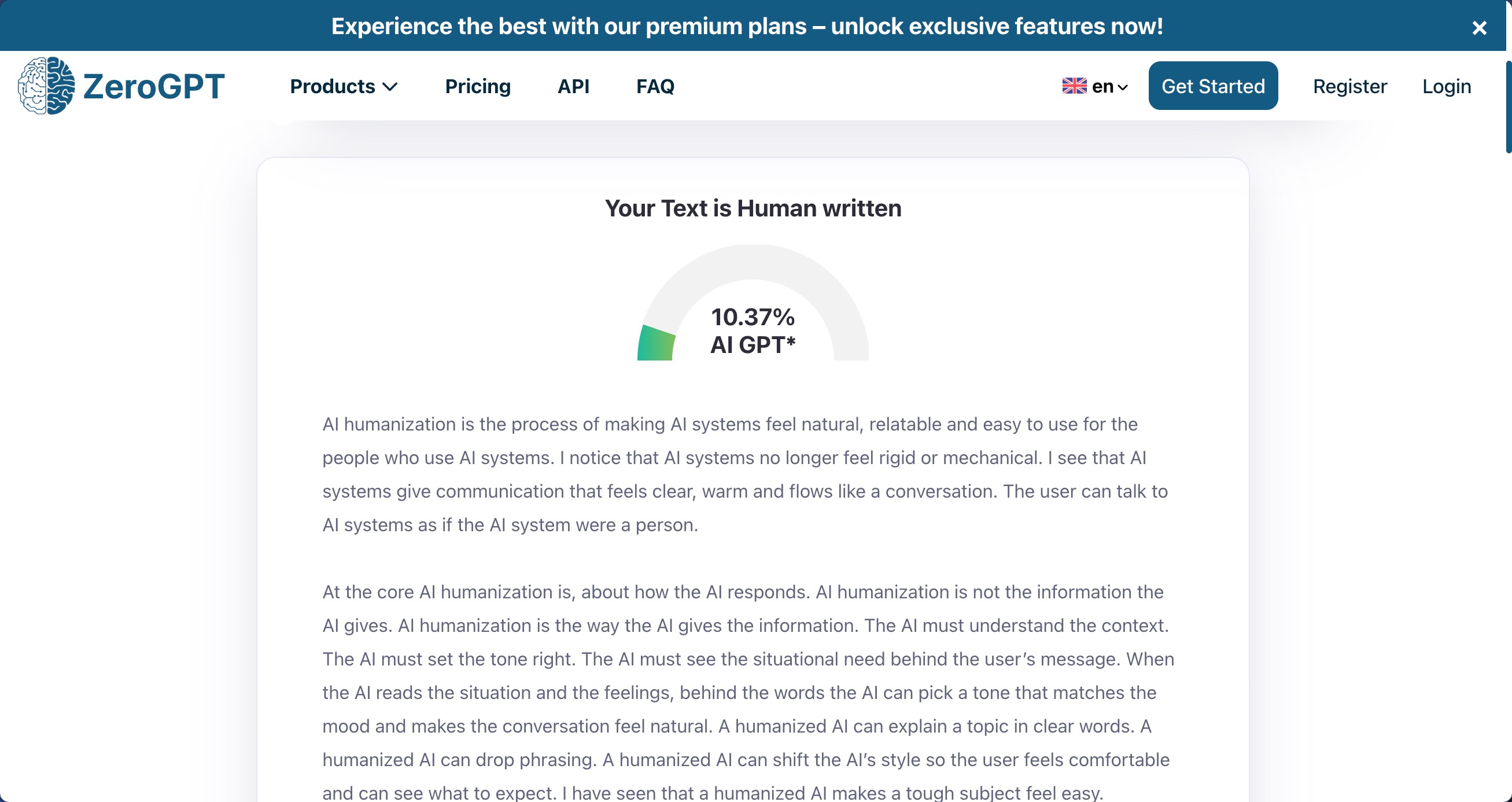
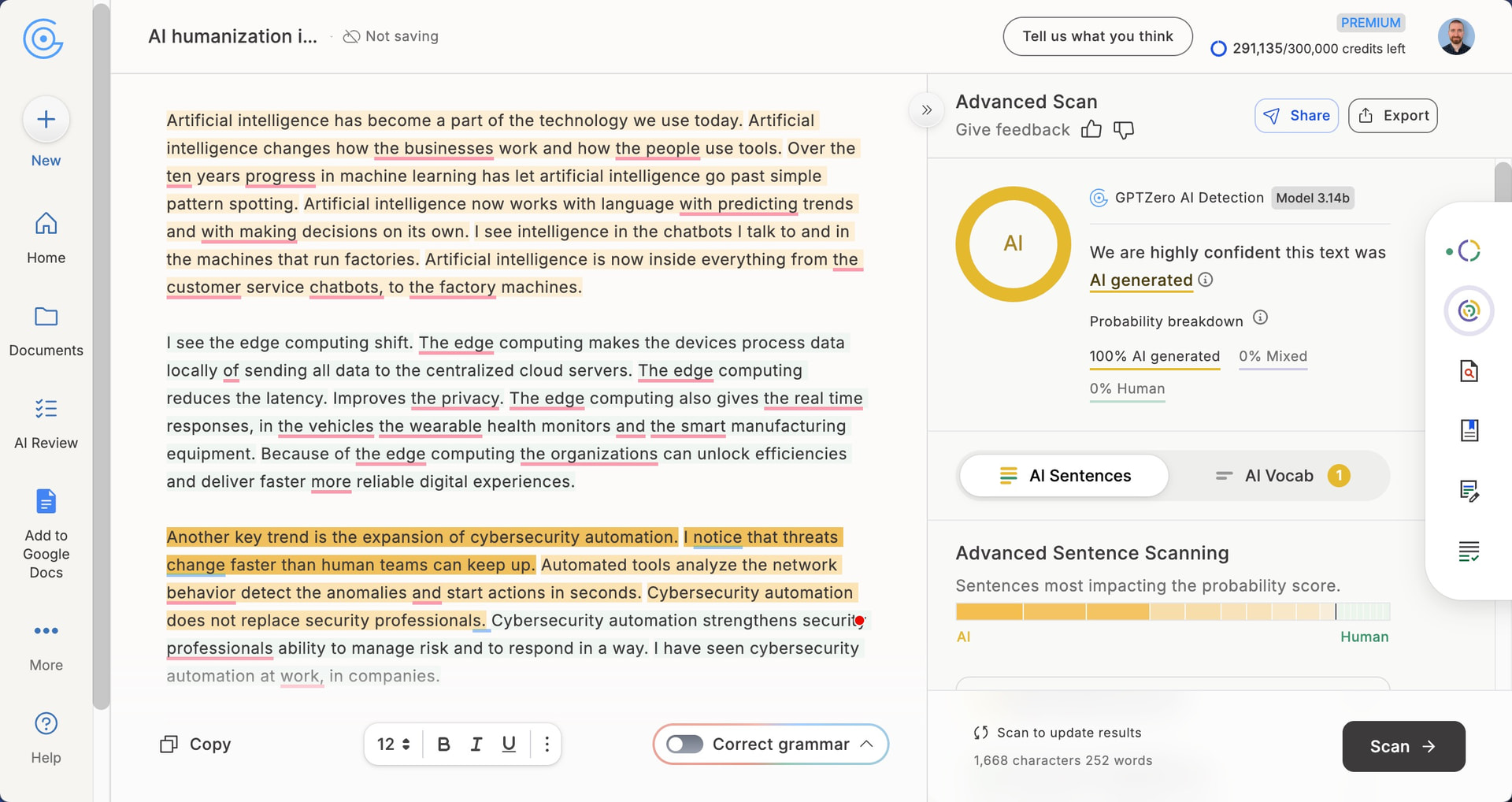
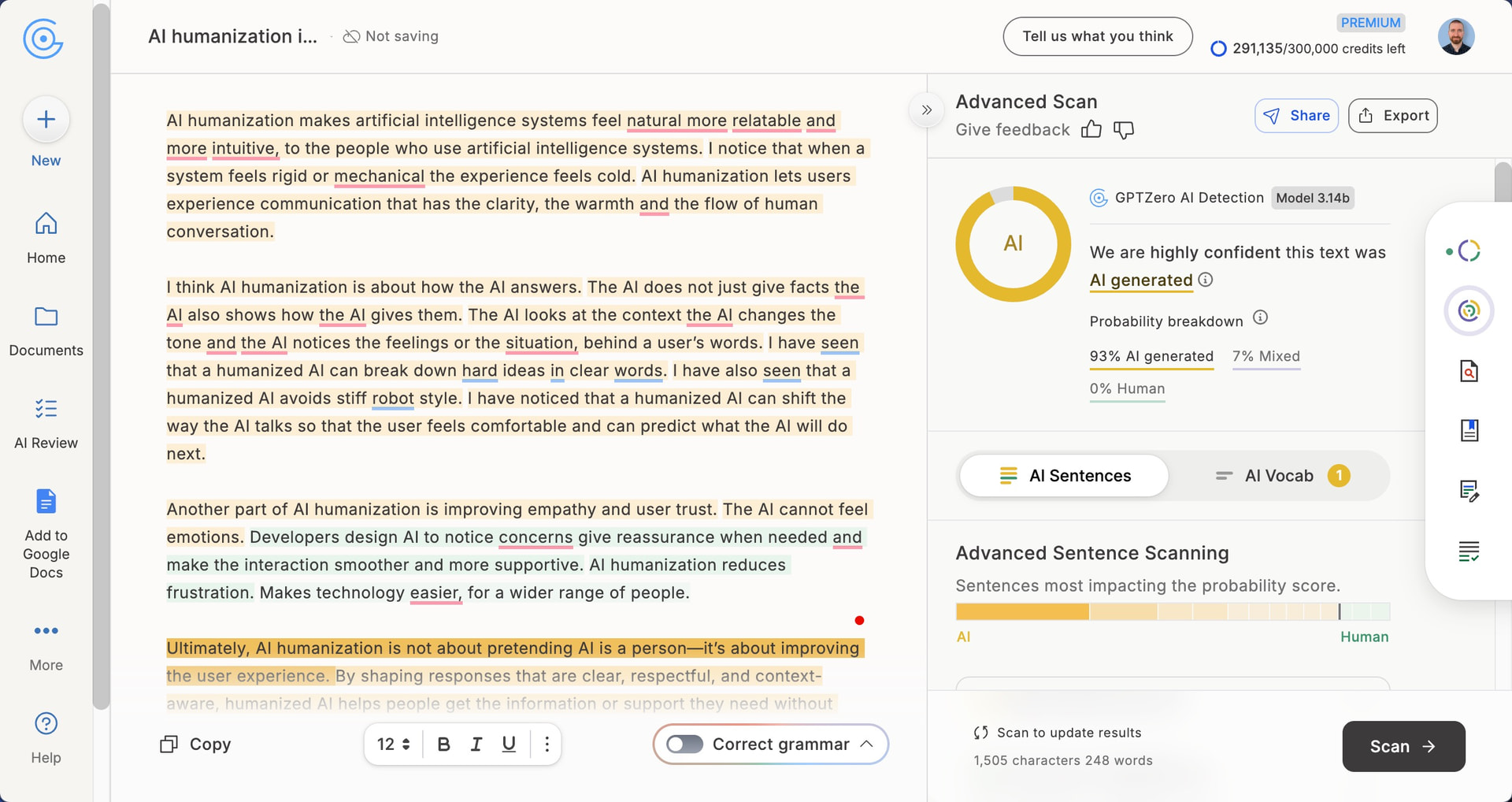
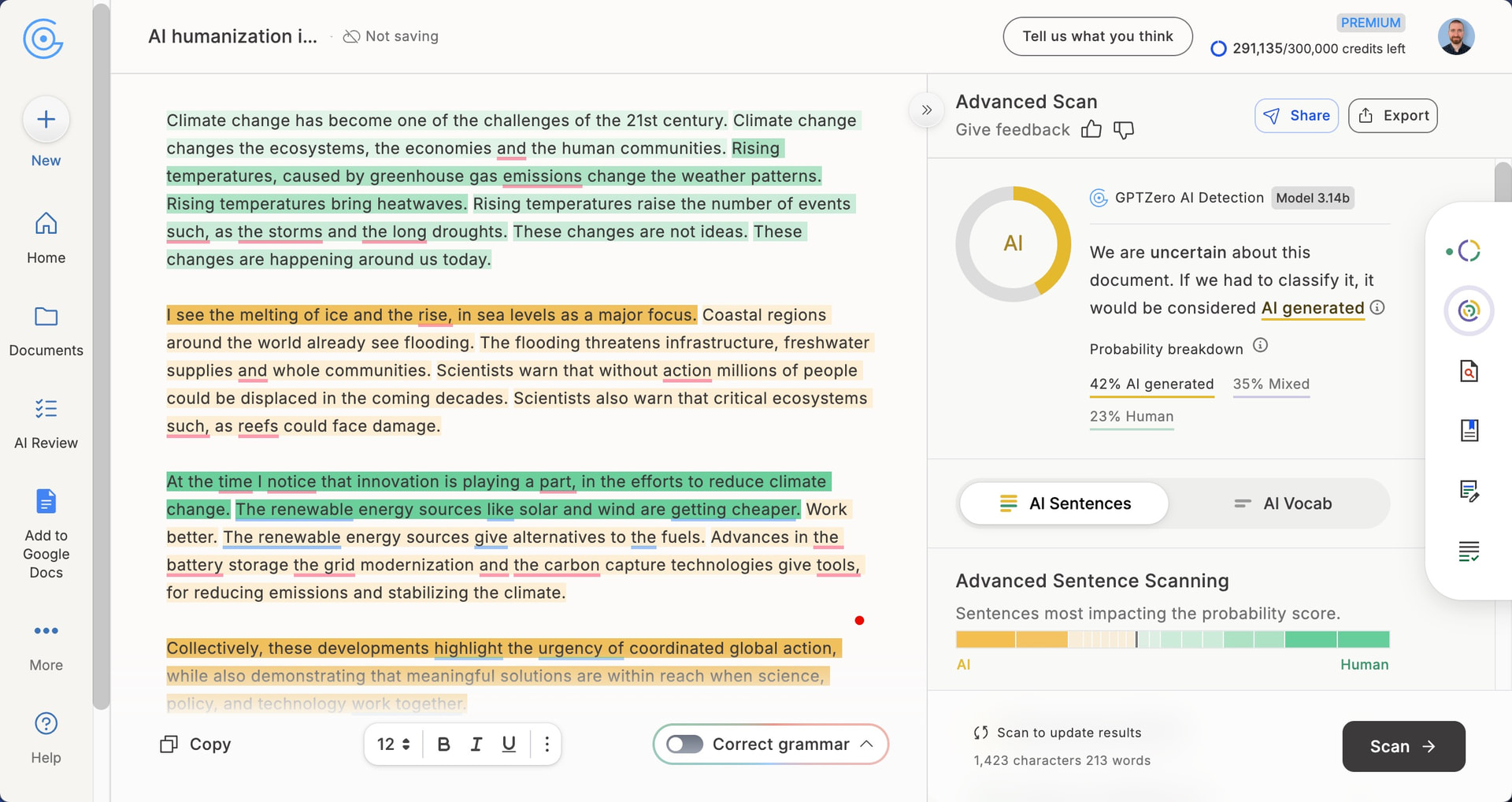
The “More Readable” setting, which Undetectable AI recommends for blogs, marketing content, and most AI detectors, actually performed worse in my testing. The first text jumped to 24.59% on ZeroGPT and 93% on GPTZero. The second text achieved an impressive 2.75% on ZeroGPT but still hit 100% on GPTZero. The third text scored 48.43% on ZeroGPT and 72% on GPTZero.
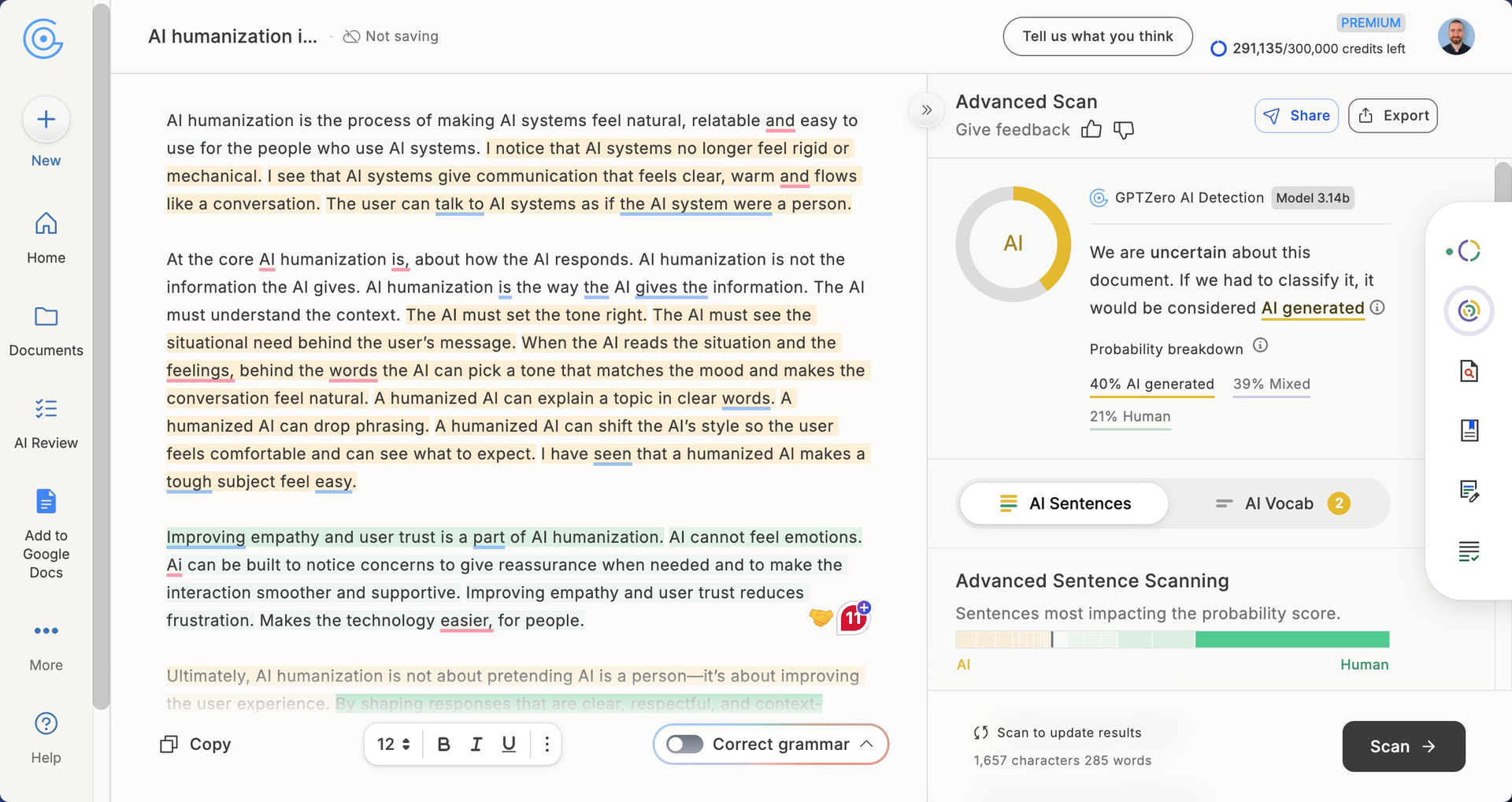
What excites me most about these results is the untapped potential that you can unlock. Paid subscribers gain access to the Stealth model (designed specifically for bypassing detection) and the Undetectable model (their flagship offering that promises the highest success rates). You can additionally combine the premium models with the five reading levels (High School, University, Doctorate, Journalist, Marketing), nine purpose modes, and the three Human Level settings, and you have an enormous configuration space to optimize for your specific needs.
Based on the available advanced models, the extra settings, and especially the free tier’s performance, I would expect the premium models to deliver near-perfect detection evasion when properly configured. The question now becomes whether this detection performance comes at the cost of writing quality, or whether Undetectable AI can deliver both. Let’s examine the outputs more closely.
How Well Does Undetectable AI Maintain Writing Quality?
After carefully reviewing all six humanized outputs (three in each mode), I discovered that Undetectable AI employs some unusual transformation strategies that produce readable but noticeably flawed text.
More Human Mode
Writing Quality Score: 5/10
The “More Human” mode achieves its lower detection scores through aggressive restructuring that unfortunately introduces several major problems. The most distinctive (and problematic) pattern is the insertion of first-person statements throughout the text. Phrases like “I notice that,” “I see that,” and “I have seen that” appear repeatedly across all three samples in a way that creates an odd, unnatural reading experience.
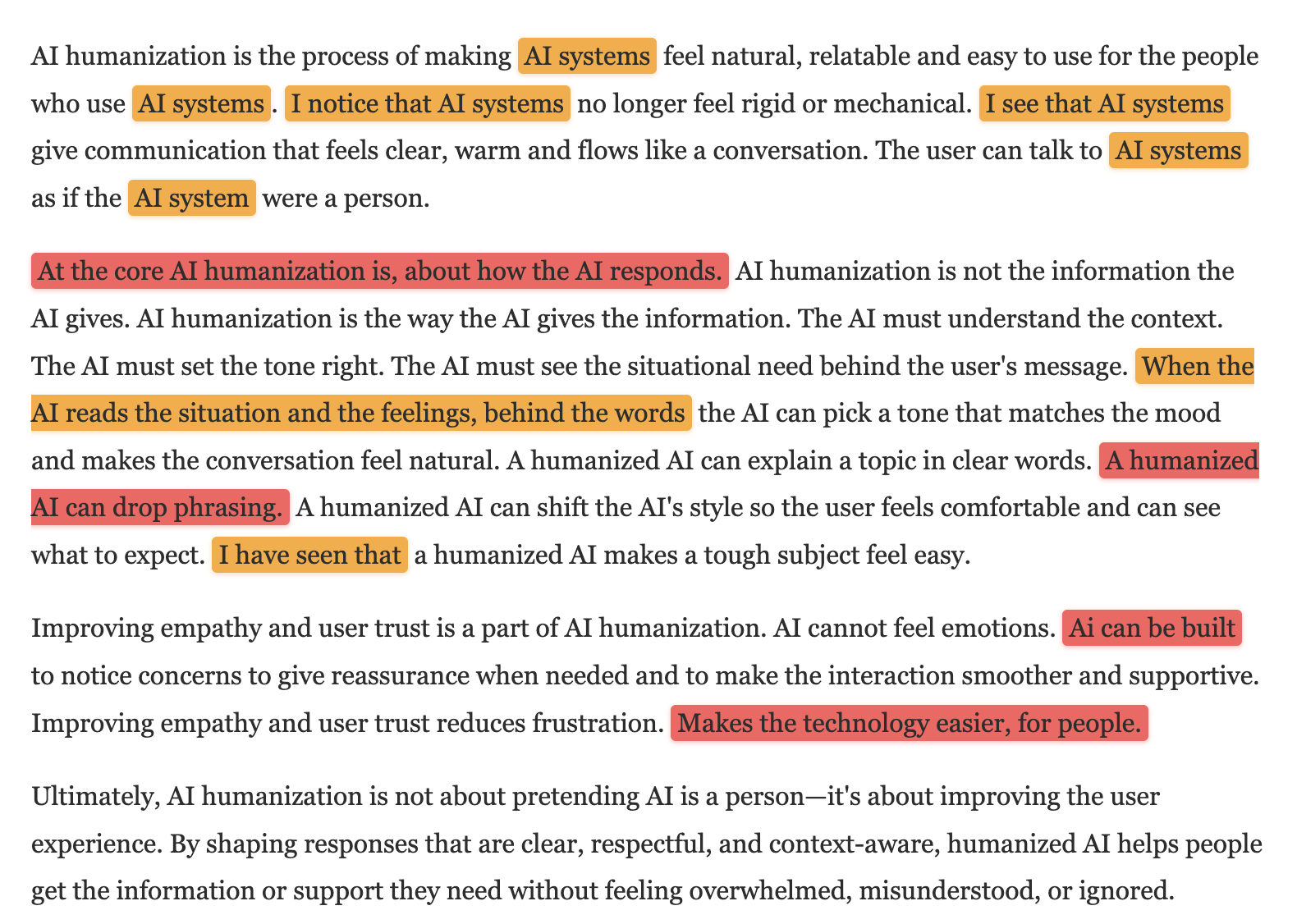
In the first text, the phrase “AI systems” appears four times in the opening paragraph alone, and “AI humanization” is repeated throughout when pronouns would suffice. The text also contains grammatical errors including a capitalization mistake (“Ai can be built”) and awkward comma placement (“At the core AI humanization is, about how the AI responds”). The sentence fragment “Makes the technology easier, for people” stands out because it lacks a subject.
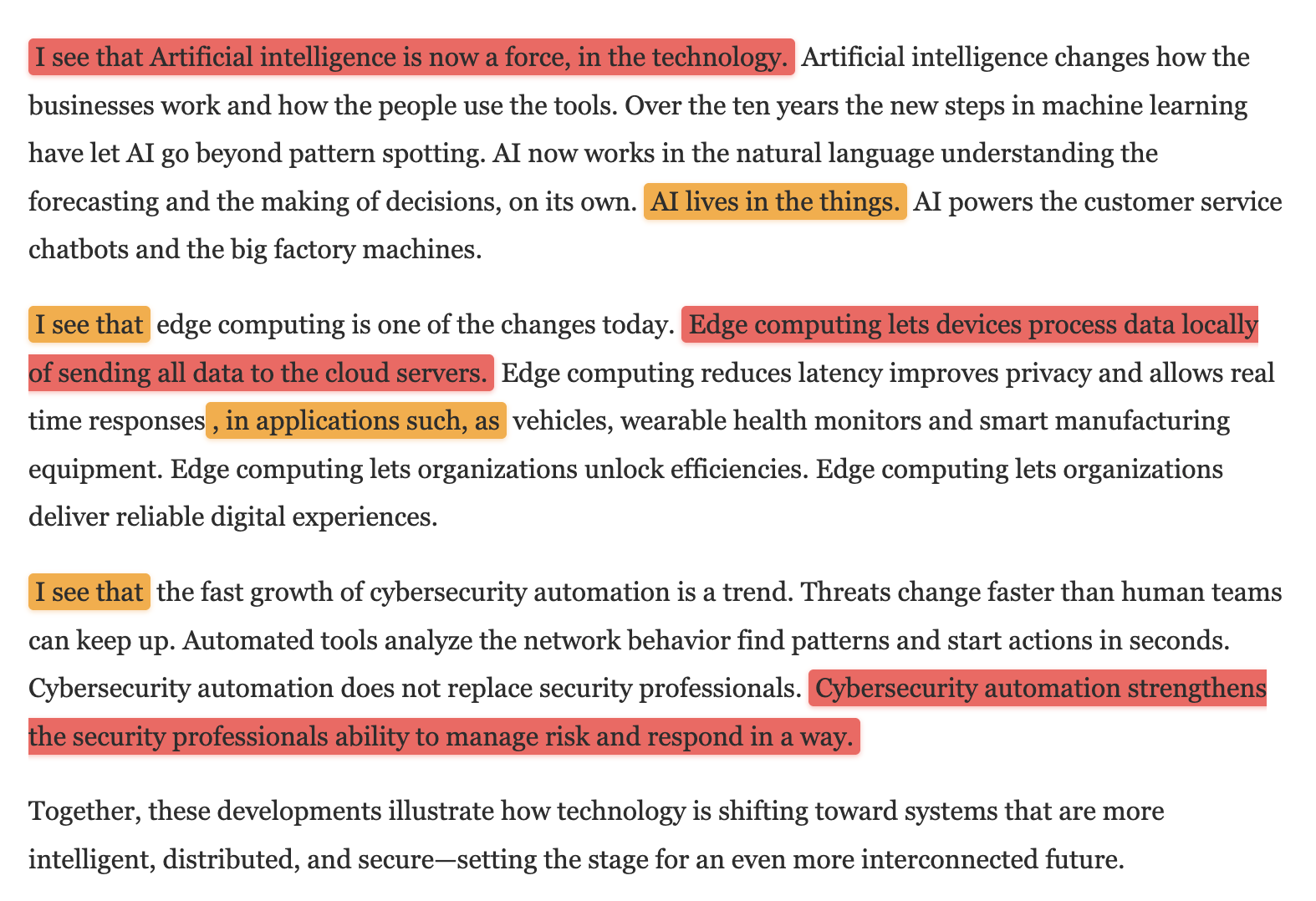
The second text suffers from similar issues. The opening “I see that Artificial intelligence is now a force, in the technology” is grammatically broken and nearly incomprehensible. A missing word appears in “Edge computing lets devices process data locally of sending all data to the cloud servers” where “instead of” was clearly intended but truncated to just “of.” The text also contains an incomplete thought: “Cybersecurity automation strengthens the security professionals ability to manage risk and respond in a way.” In what way?
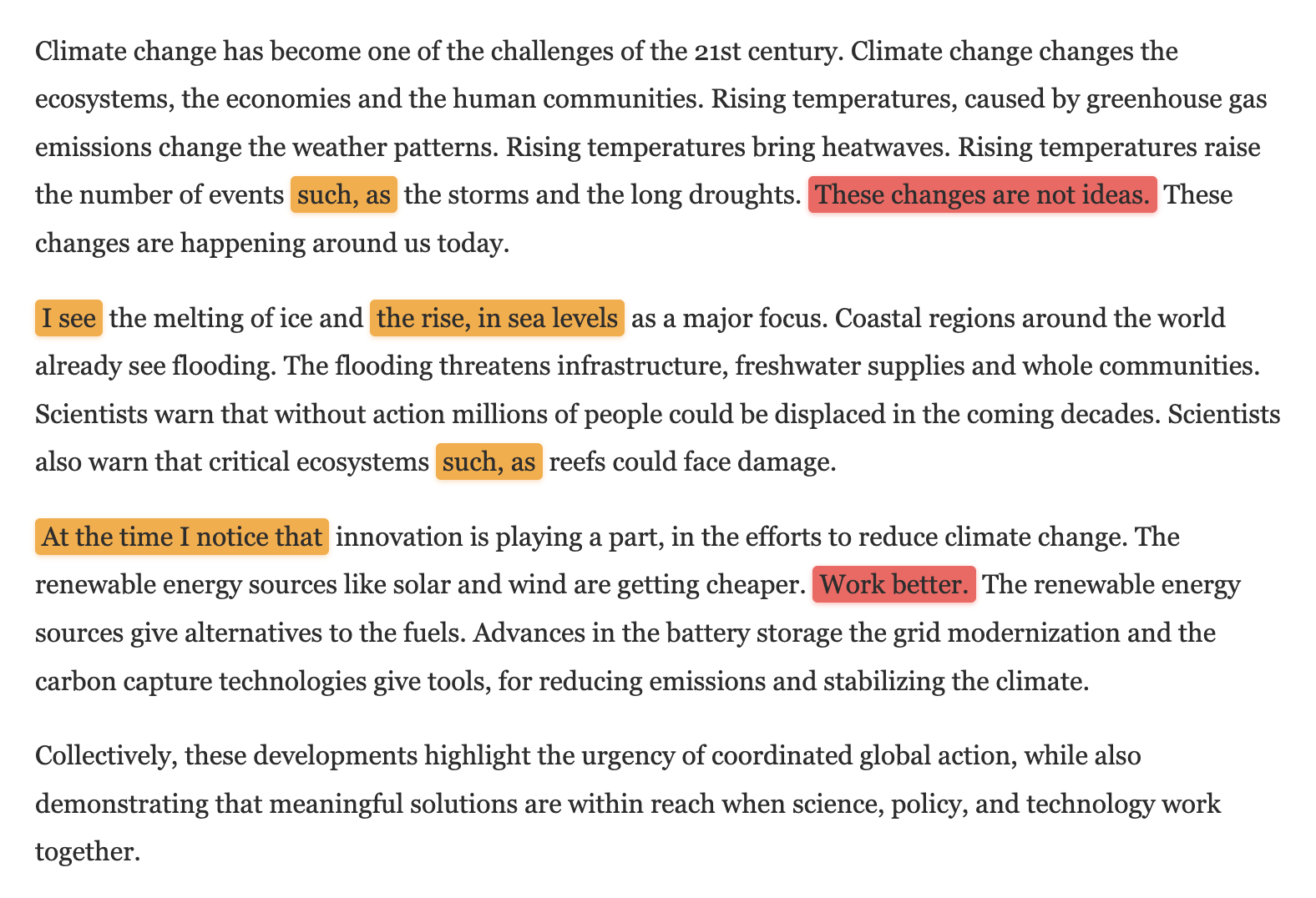
The third text follows the same patterns with awkward comma insertions (“the rise, in sea levels”) and sentence fragments (“Work better.”). The phrase “These changes are not ideas” lacks clarity when the intended meaning was probably “These changes are not theoretical.” Despite these issues, I noticed that Undetectable AI preserved the em-dash in the final paragraph, which is surprising given that em-dashes have become strongly associated with AI-generated content and most humanizers actively remove them.
This is the fundamental tension with Undetectable AI. The detection scores are genuinely impressive for a free tier, easily among the top three I have encountered across this entire review series. But when you actually read the output, it is full of missing words, broken grammar, sentence fragments, and bizarre first-person insertions that make the text unusable without heavy editing. Compare that to what I found during my Clever AI Humanizer review, where the tool delivered competitive detection scores while keeping its output at an 8/10 writing quality.
More Readable Mode
Writing Quality Score: 5.5/10
The “More Readable” setting produces marginally cleaner output but shares most of the same fundamental problems. The first-person insertions remain (“I notice that,” “I think,” “I have seen that”), and the repetition issues also persist but are somewhat reduced.
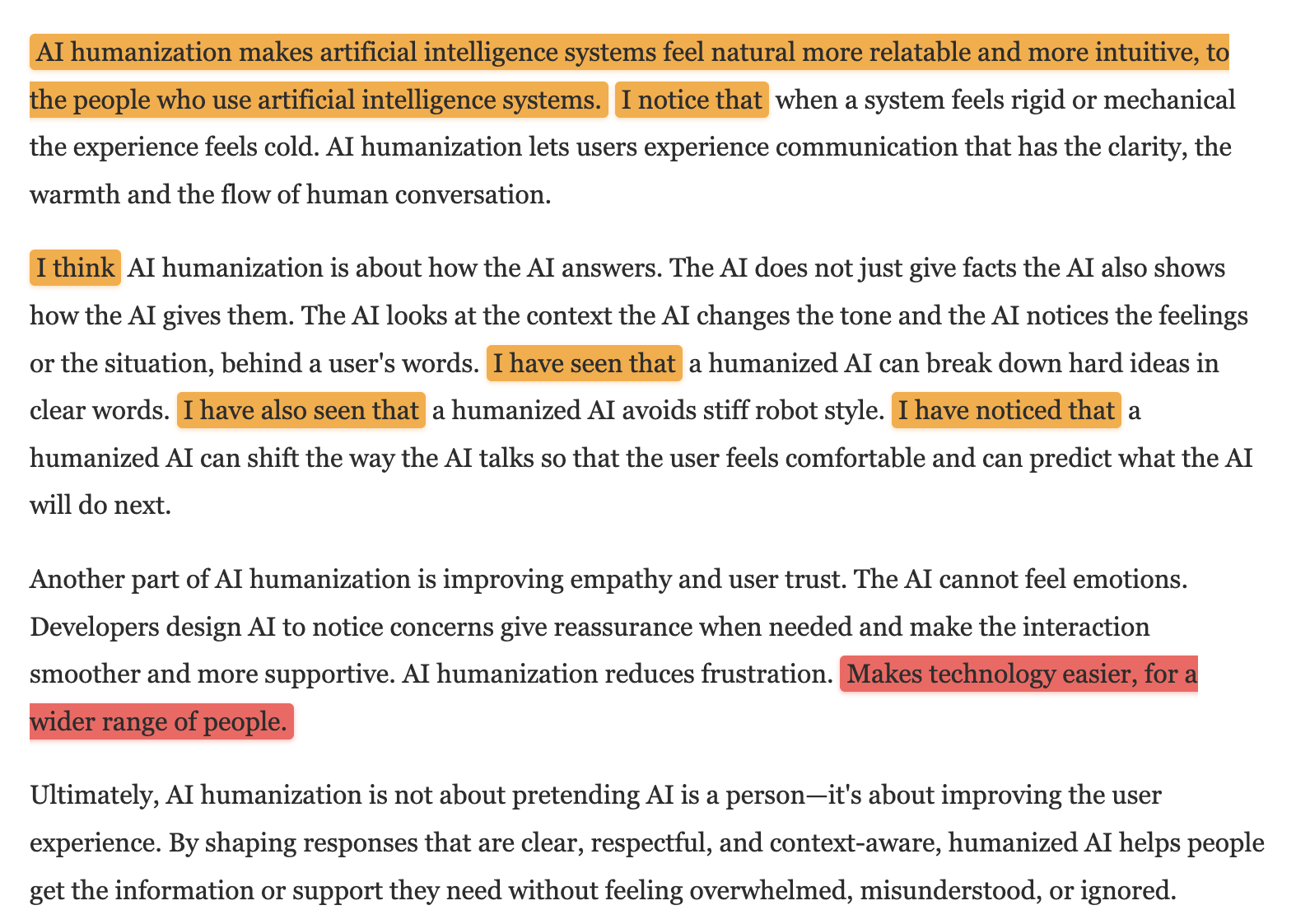
The first text opens more smoothly than its “More Human” counterpart, but still contains awkward constructions like “AI humanization makes artificial intelligence systems feel natural more relatable and more intuitive, to the people who use artificial intelligence systems.” The double use of “artificial intelligence systems” in a single sentence is clunky, and the comma before “to the people” is incorrectly placed.
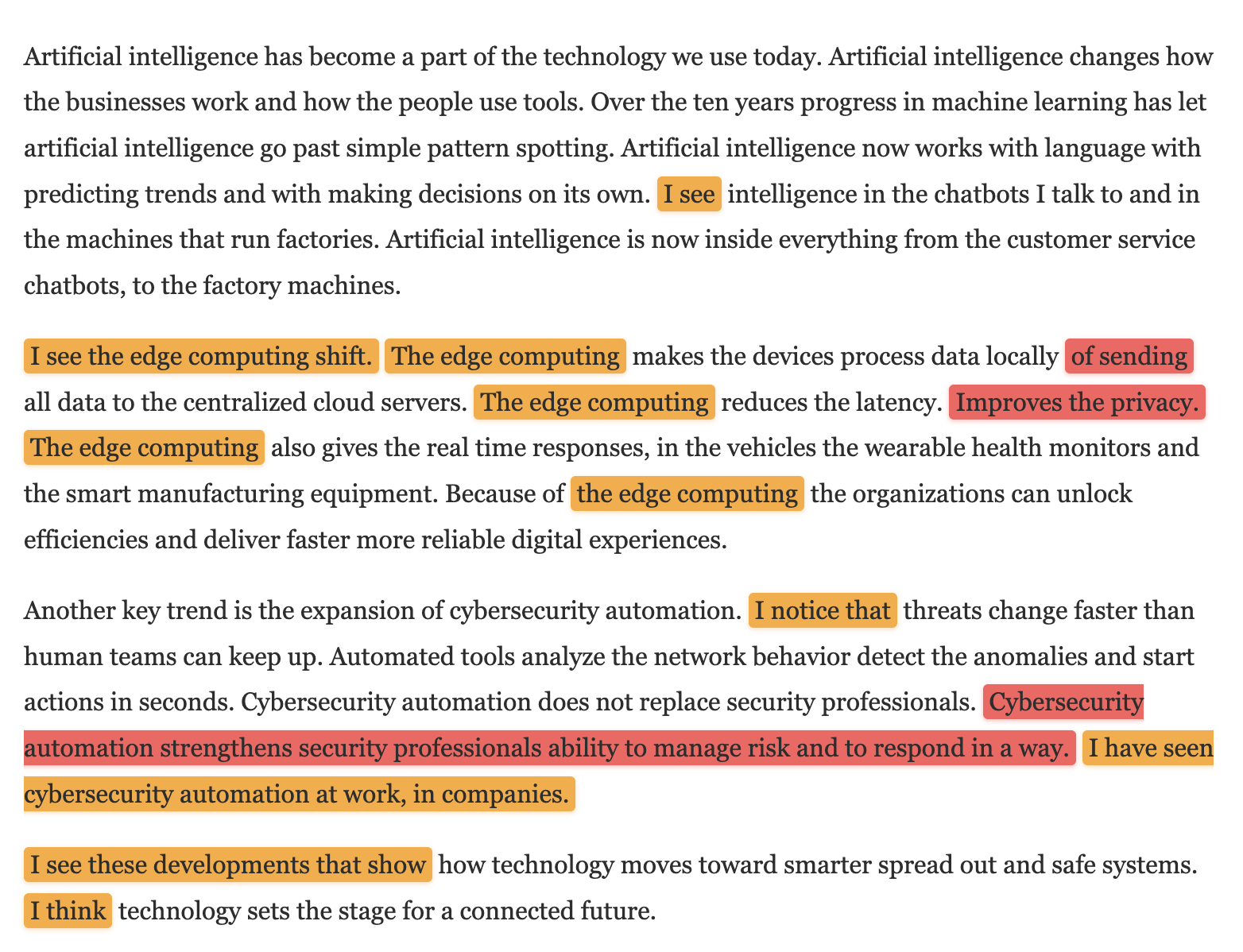
The second text introduces a strange pattern of adding unnecessary articles before technical terms. “The edge computing” appears five times when standard English would simply use “edge computing” without the article. This creates sentences like “The edge computing makes the devices process data locally” that sound like they were written by a non-native speaker. The same missing word issue appears here: “of sending” instead of “instead of sending.”
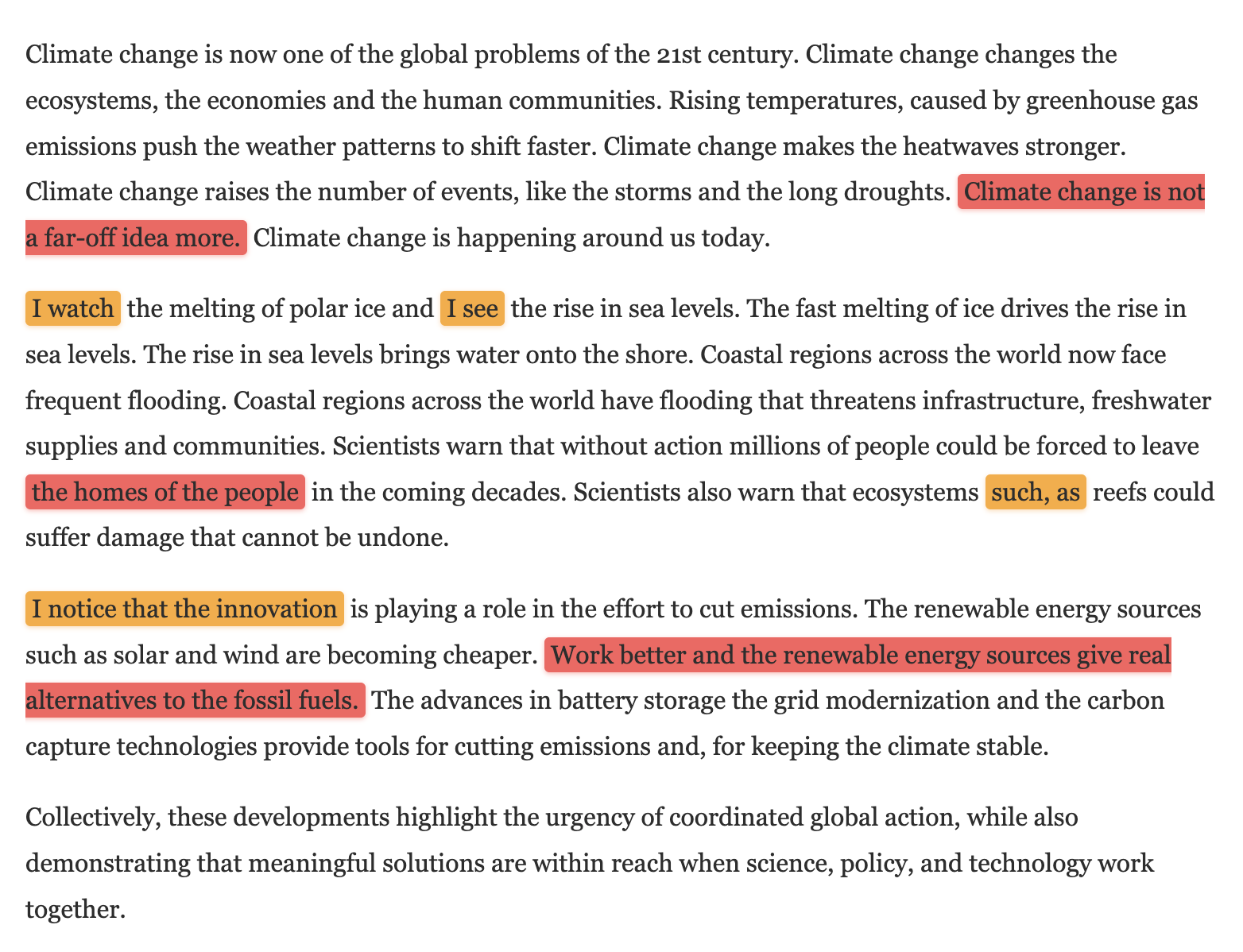
The third text contains perhaps the most awkward construction across all outputs: “Scientists warn that without action millions of people could be forced to leave the homes of the people in the coming decades.” The phrase “the homes of the people” is both redundant and grammatically unusual when “their homes” would be natural and concise. Sentence fragments also appear (“Work better and the renewable energy sources give real alternatives”).
How Much Does Undetectable AI Cost?
Undetectable AI uses a flexible slider-based pricing system that lets you select exactly how many words you need per month, which is different than what most competitors do (they usually offer fixed tiers with predetermined word limits). Annual billing provides substantial savings compared to monthly payments.
| Words/Month | Monthly Price | Yearly Price | Yearly Savings |
|---|---|---|---|
| 10,000 | N/A | $5.00/mo ($60/year) | N/A |
| 20,000 | $19.00 | $9.50/mo ($114/year) | 50% |
| 50,000 | $42.00 | $21.25/mo ($255/year) | 49% |
| 120,000 | $89.00 | $44.92/mo ($539/year) | 50% |
| 300,000 | $179.00 | $89.92/mo ($1,079/year) | 50% |
| 380,000 | $209.00 | $104.42/mo ($1,253/year) | 50% |
The yearly discount hovers around 50% across all tiers. For context, HumanizeAI.io offers 75-80% yearly discounts but delivers 100% detection rates on every test, while Aihumanize.io provides 60% off annual plans with inconsistent results. Undetectable AI’s pricing sits in a reasonable middle ground given its superior detection performance.
All paid plans include access to the premium Stealth and Undetectable humanizer models, unlimited AI detection scans, the Human Auto Typer feature (which simulates human typing patterns), writing level matching, and API access.
Undetectable AI promises to refund the cost of humanization if any output gets flagged as AI-generated by detectors, so the company seems really confident in their premium models’ performance (the guarantee applies only to content processed with the paid models, not the free Basic Public tier I tested).
The Business tier offers custom pricing for organizations that need bulk credits, non-expiring word allocations, white labeling options, and redistribution rights.
Compared to similar services, Undetectable AI’s pricing is competitive but not cheap. Walter Writes AI charges $8/month (yearly) for 30,000 words, while Grubby AI offers 30,000 words at $14.99/month annually. However, neither of those tools matched Undetectable AI’s detection evasion performance in my testing.
Does Undetectable AI Respect User Privacy?
According to Undetectable AI’s privacy policy and terms of service, the company collects an extensive range of personal data:
-
Account information: name, email address, postal address, phone number, user ID, and password
-
Demographic data: date of birth, gender, occupation, education level, and income level
-
Technical information: IP address, device type, browser type, location data
-
Payment details: credit card information and PayPal account data (processed through third parties)
-
Social media information: profile data if you use social login
-
Usage data: pages visited, time spent on pages, cookies, and behavioral tracking
The demographic data collection is unusually comprehensive for a text humanization service. Collecting income level, education level, and occupation goes beyond what most competitors request. The privacy policy does not explain why this information is necessary for humanizing text.
Your data may be shared with business partners, affiliates, and third parties for marketing purposes. The policy also notes that information may be transferred internationally, but it does not specify which countries beyond stating that servers are located in the United States.
Remember how I wrote that Undetectable AI promises to refund the cost of humanization if any output gets flagged as AI? Well, the terms of service tell a slightly different story. All purchases are non-refundable unless your humanized content provably scores below 75% human on a reputable AI detector, and you must request the refund within 30 days of the incident. So the promise is technically true, but it’s not as great as it may seem at first.
On the positive side, the company explicitly states they do not process sensitive personal information, and California residents have specific rights under the CCPA. The documents are professionally written and comprehensive, which suggests legitimate legal review rather than copied templates.