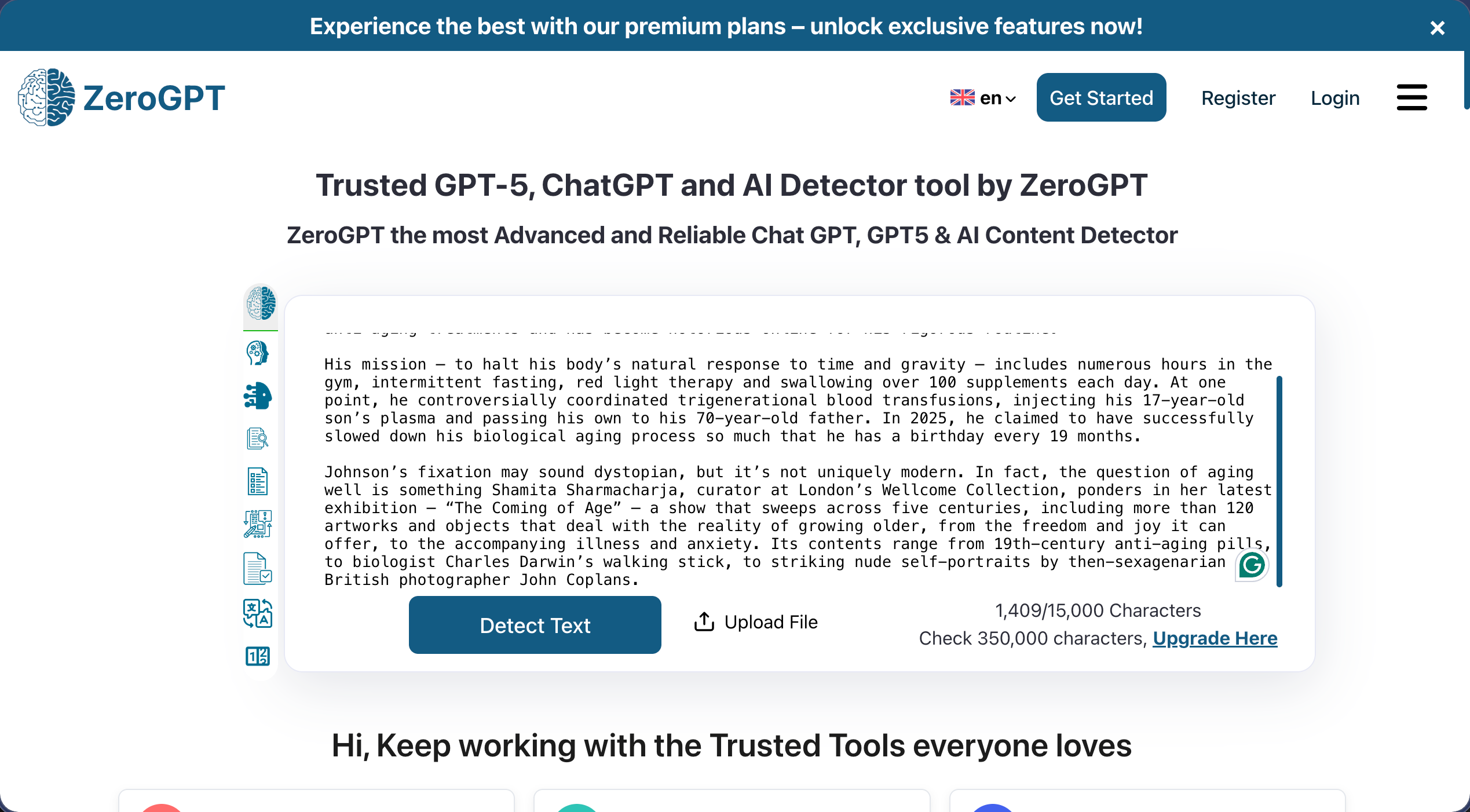
ZeroGPT is one of the most popular AI detectors on the market right now, and it has a lot to do with the fact that its free tier is one of the most generous available, with 15,000 characters per scan and no account required to get started. But not everything that’s free is worth your time, so I ran ZeroGPT through the same tests I use for every detector in this series to see if the results hold up against the competition.
How I tested ZeroGPT: I scanned each sample from my standard test set through ZeroGPT individually. The AI group was nine freshly generated samples, three each from ChatGPT (5.2), Claude (Opus 4.6), and Gemini (3 Pro), covering artificial intelligence, climate change, and technology trends. The human group was ten pieces from sources that predate the public availability of large language models. I recorded the percentage score for every scan.
| Pros | Cons |
|---|---|
| Perfect AI detection results | Worst false positive results of any detector in this series |
| Fantastic free tier | Does not properly handle formatting in pasted text |
| Affordable paid plans | Vague and clearly template-based privacy policy |
| Sentence-level highlighting and PDF export | FAQ and legal documents contradict each other on data usage |
| Supports batch file uploads on paid plans | Refund window is only 6 to 10 hours (!!!) |
| Three months data retention after account termination | |
How Accurate Is ZeroGPT At Detecting AI Content?
| AI Model | Topic | ZeroGPT Score |
|---|---|---|
| ChatGPT (5.2) | AI Humanization | 100% AI |
| ChatGPT (5.2) | Climate Change | 100% AI |
| ChatGPT (5.2) | Technology Trends | 100% AI |
| Claude (Opus 4.6) | AI Humanization | 100% AI |
| Claude (Opus 4.6) | Climate Change | 100% AI |
| Claude (Opus 4.6) | Technology Trends | 100% AI |
| Gemini (3 Pro) | AI Humanization | 100% AI |
| Gemini (3 Pro) | Climate Change | 100% AI |
| Gemini (3 Pro) | Technology Trends | 100% AI |
All AI-generated samples were rated by ZeroGPT as 100% AI-generated, which is as good as what GPTZero and Originality AI achieved. Winston AI and Undetectable AI were close behind at 99%, while Grammarly and QuillBot both had weak spots, particularly with ChatGPT and Gemini content.
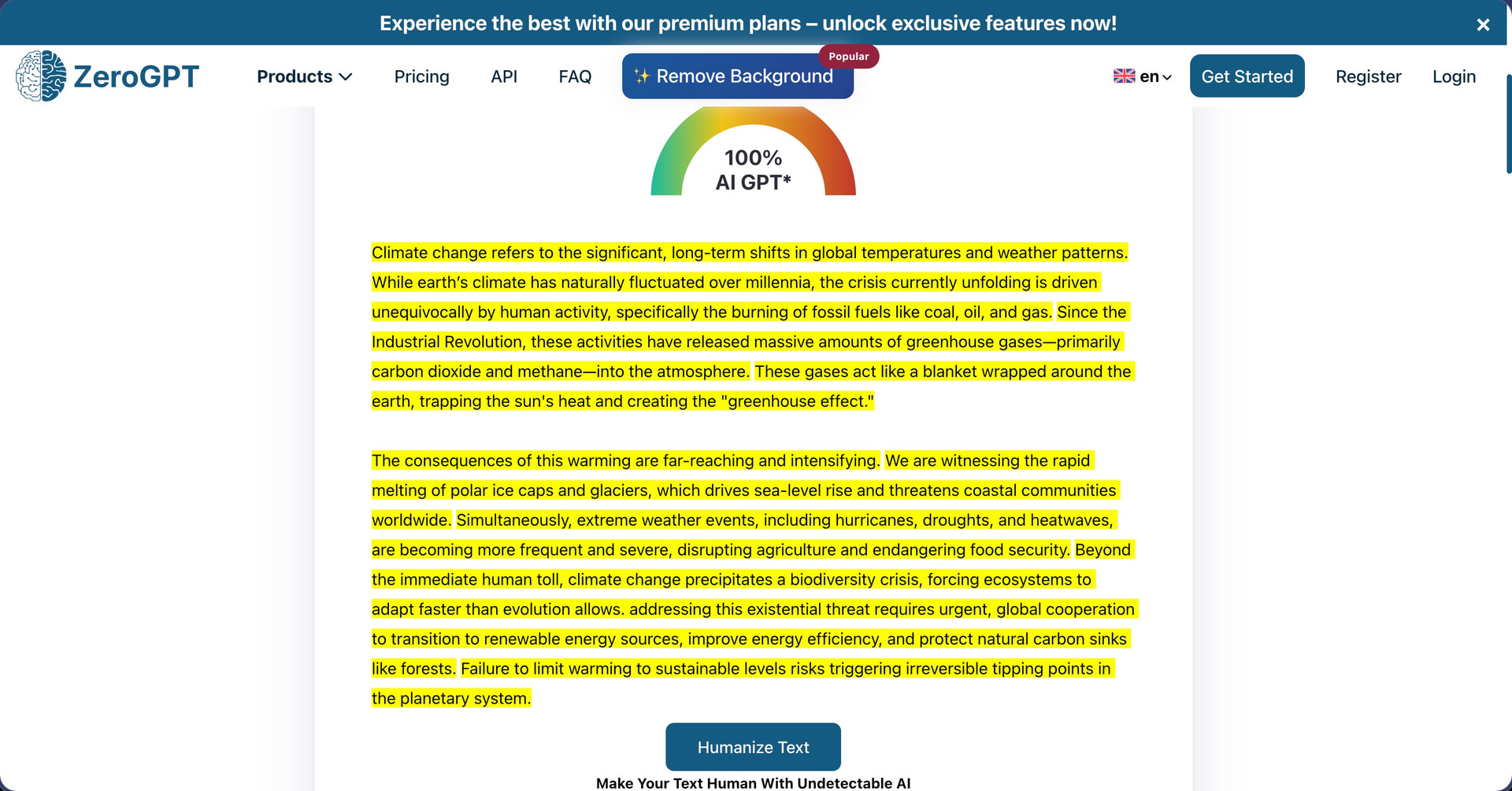
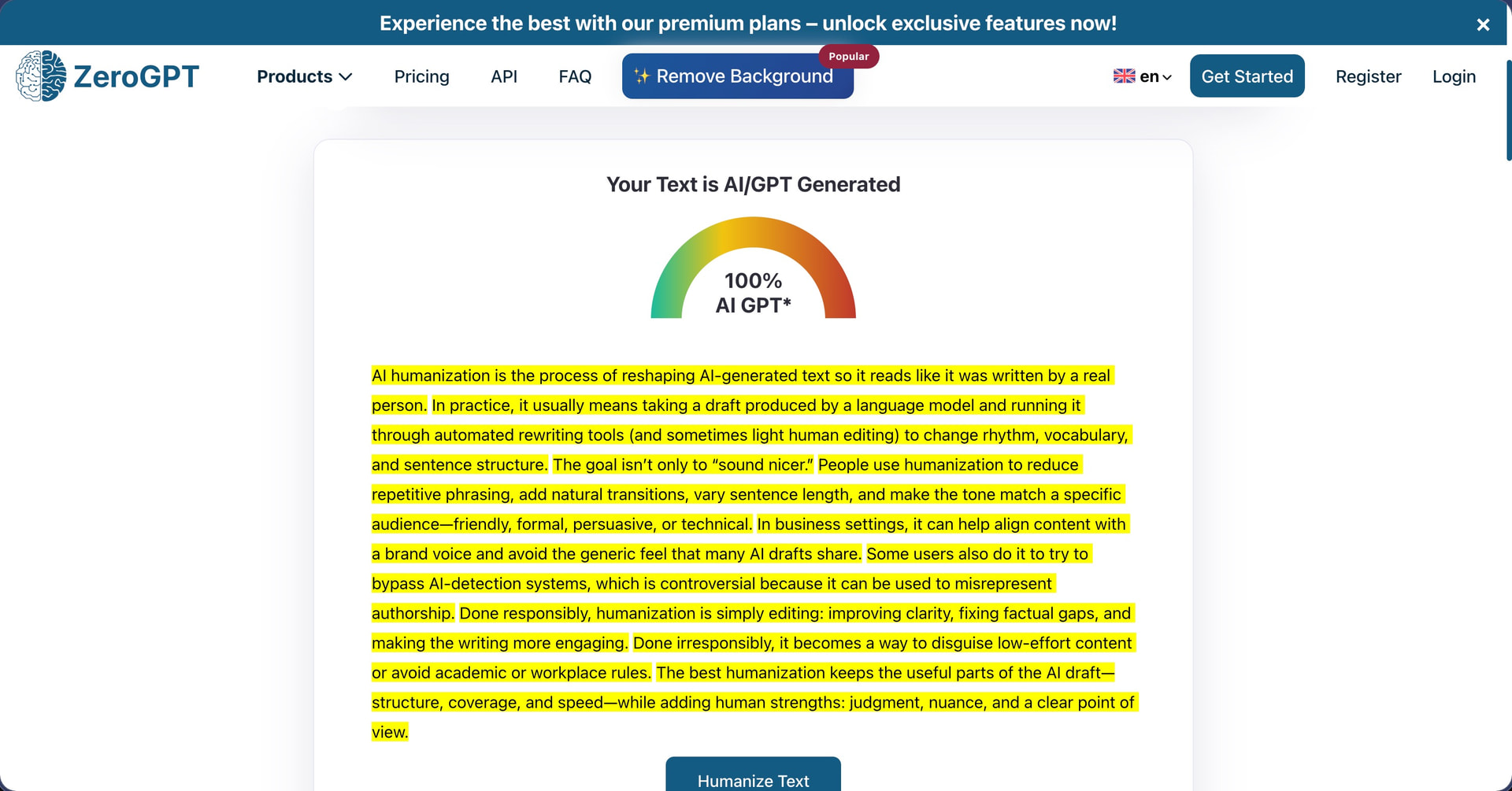
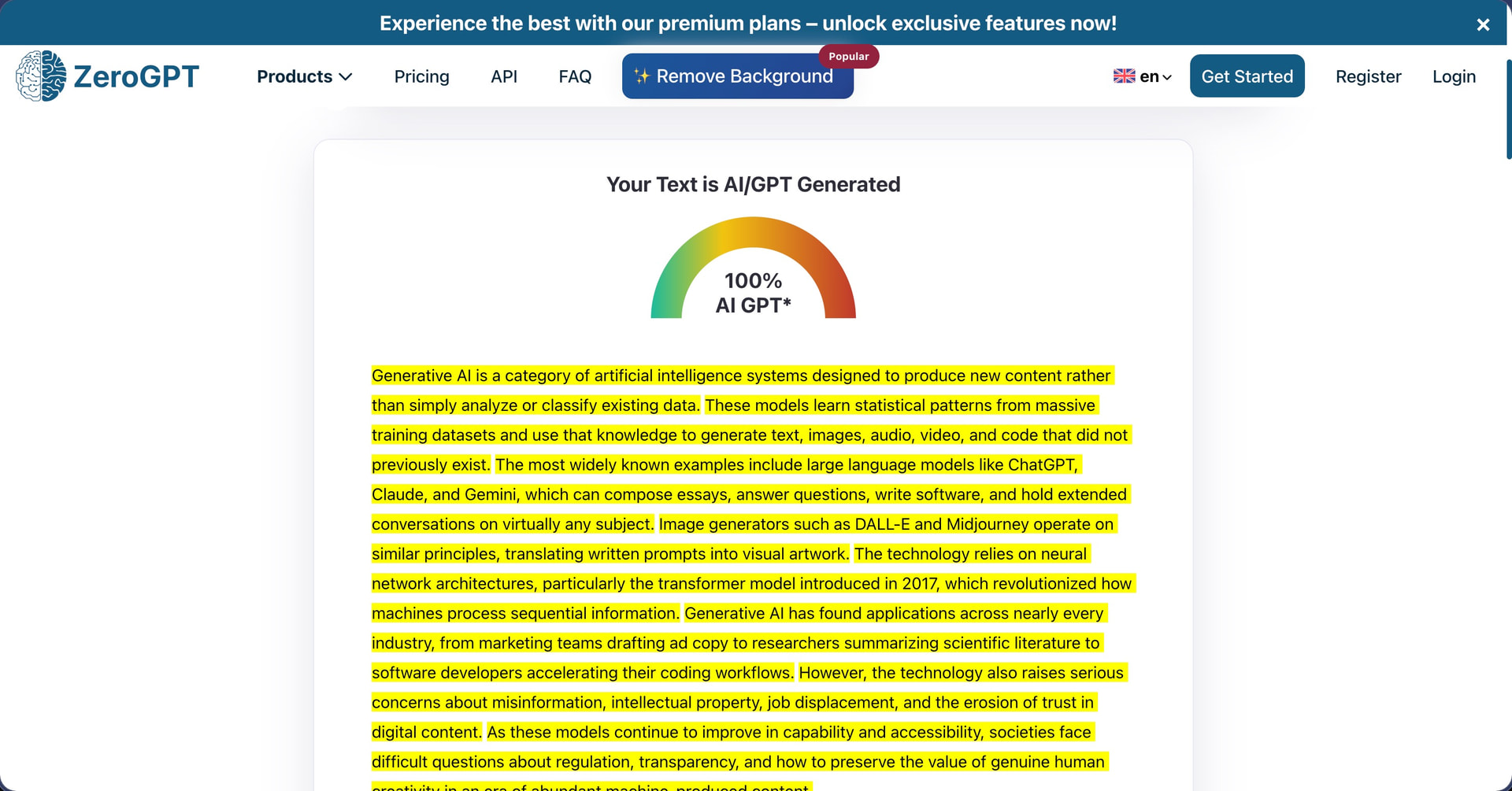
One thing I noticed about the results page is that right below the detection score, ZeroGPT displays a “Humanize Text” button powered by Undetectable AI. So the same interface that tells you a piece of text is AI-generated also offers to help you make it undetectable. It’s a similar setup to what Undetectable AI does with its own detector, where the detection side feeds into the humanization product. ZeroGPT also includes sentence-level highlighting that marks which portions of the text are flagged, a PDF export option, and an “Instructions for Educators and Evaluators.”
Does ZeroGPT Produce False Positives?
| Content | Source | Year | ZeroGPT Score |
|---|---|---|---|
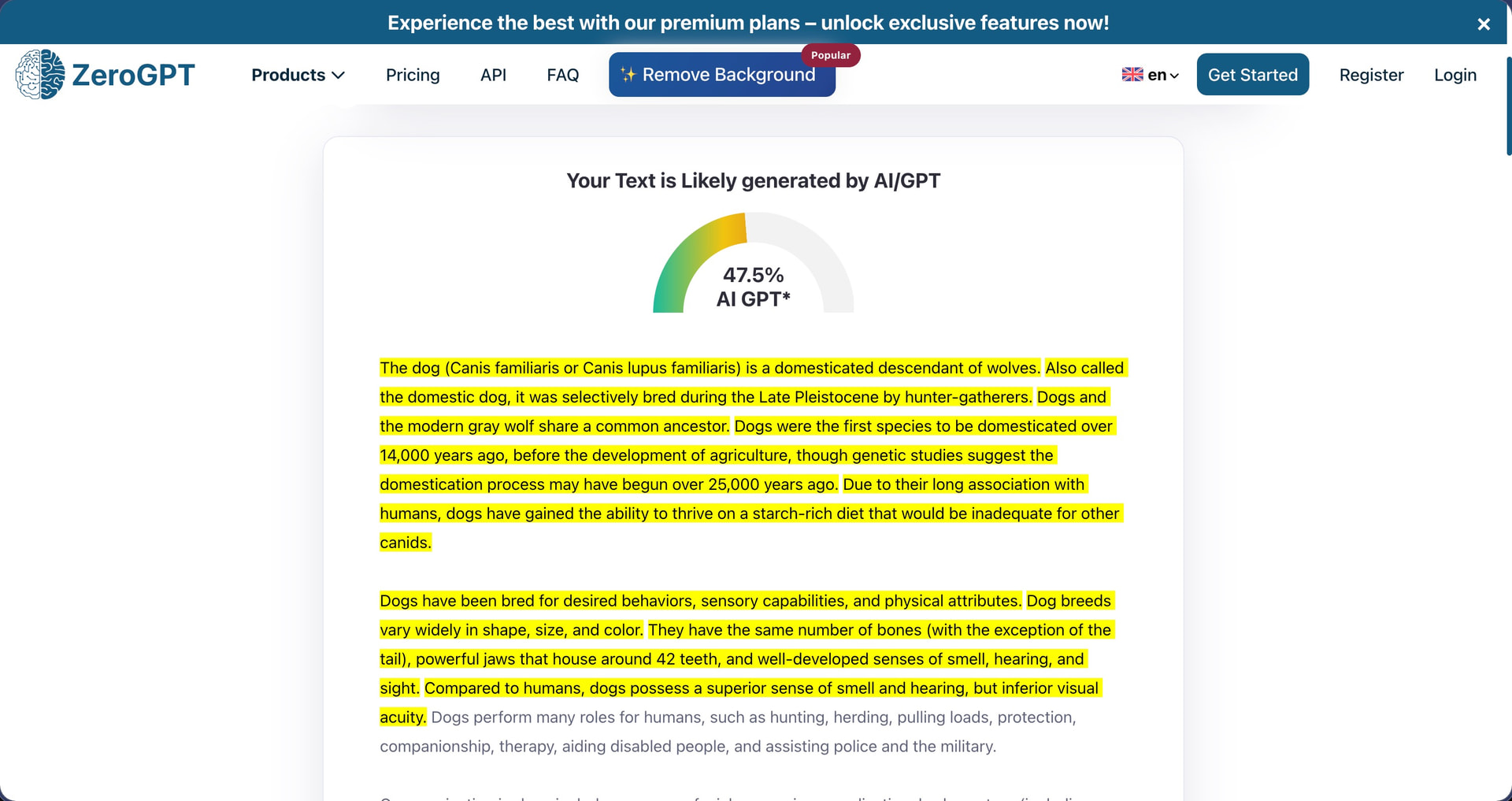
| Dog | Wikipedia | Ongoing (est. 2003) | 47.5% AI |
| Gamergate (controversy) | Wikipedia | Ongoing (est. 2014) | 69.9% AI |
| Alice’s Adventures in Wonderland | Project Gutenberg | 1865 | 95.7% AI |
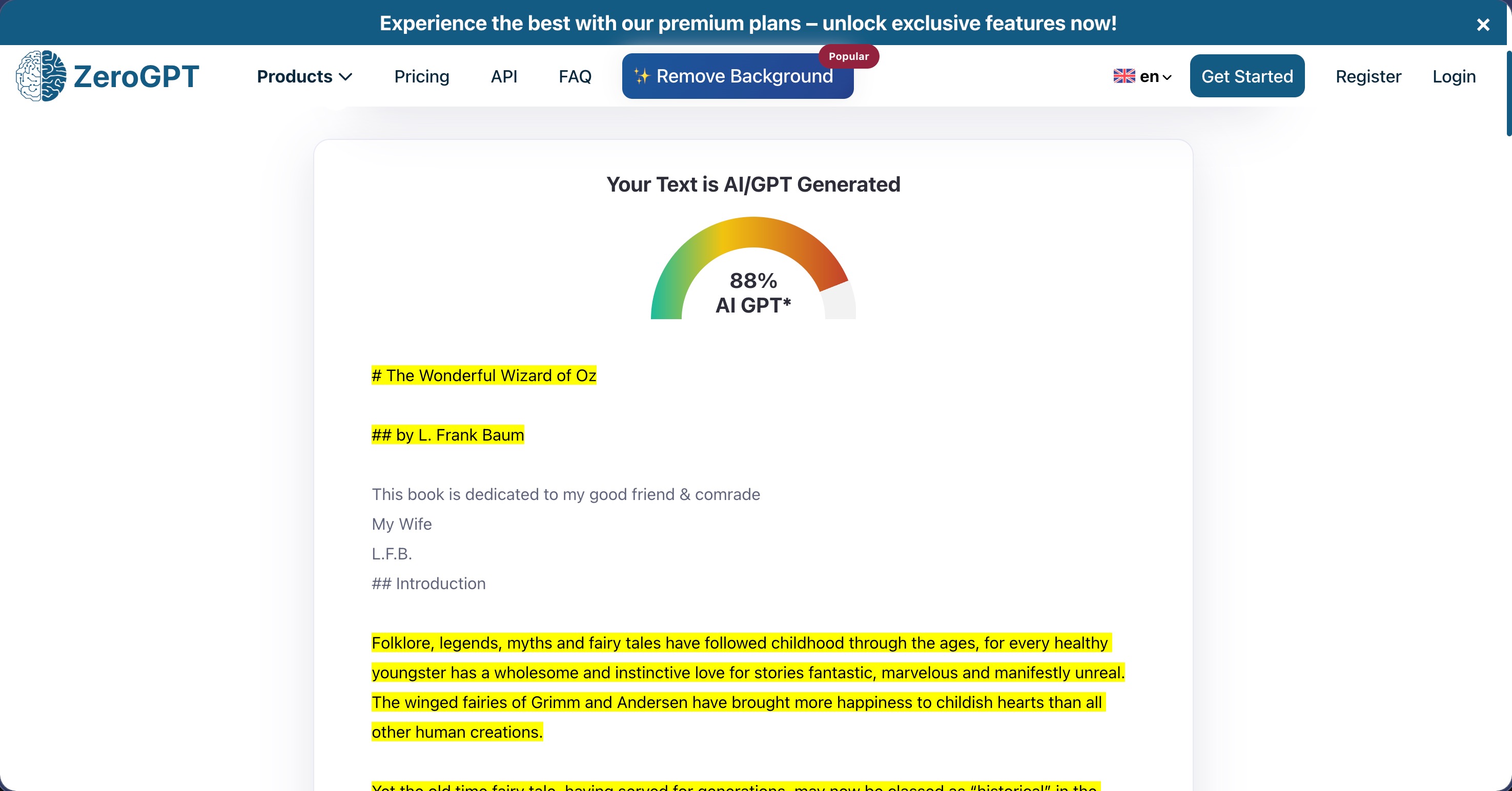
| The Wonderful Wizard of Oz | Project Gutenberg | 1900 | 88% AI |
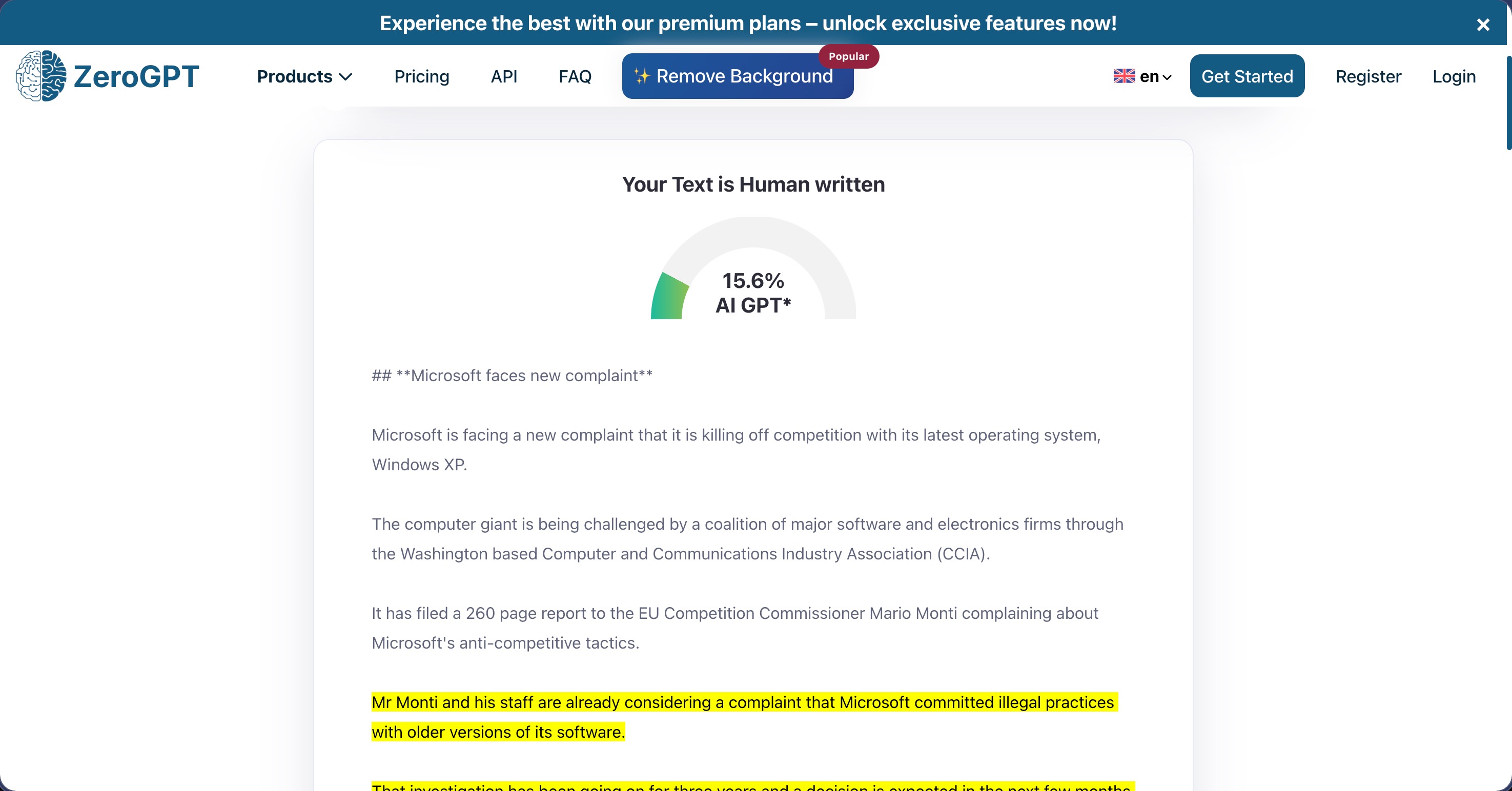
| Microsoft faces new complaint | BBC News | 2003 | 15.6% AI |
| Elite forces storm Moscow theatre | The Guardian | 2002 | 6% AI |
| Attention Is All You Need | NeurIPS | 2017 | 11.6% AI |
| Bayesian Model Selection in Social Research | Academic journal | 1995 | 4.7% AI |
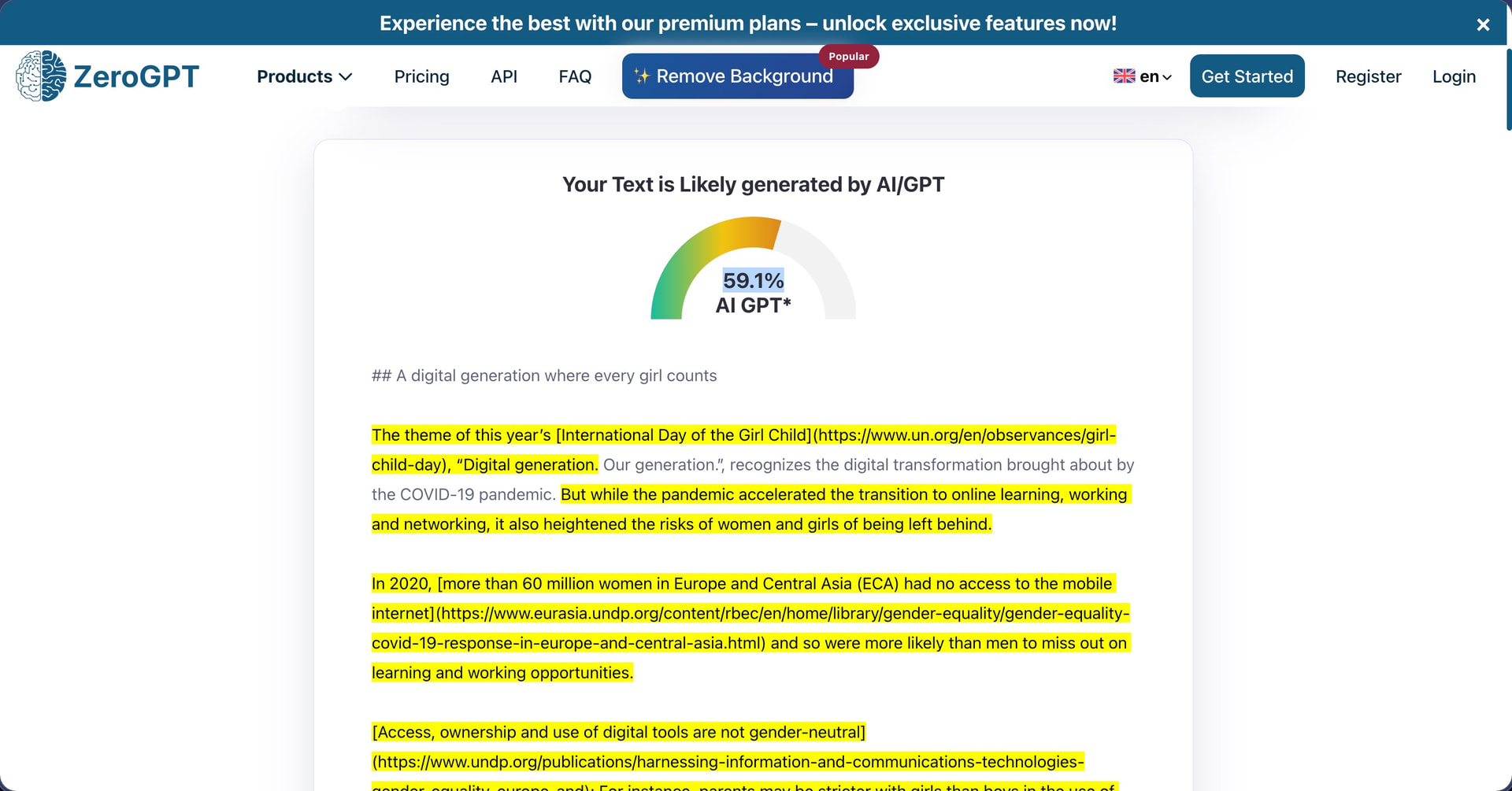
| A digital generation where every girl counts | UNDP Blog | 2019 | 59.1% AI |
| Customizing Windows Vista, Part 1 | PC Magazine | 2007 | 25.6% AI |
This is the worst false positive performance of any detector I have tested in this series. Not a single human-written sample came back with a clean 0% AI score. Every piece of content, regardless of age, format, or writing style, was falsely accused of being AI generated to some degree.
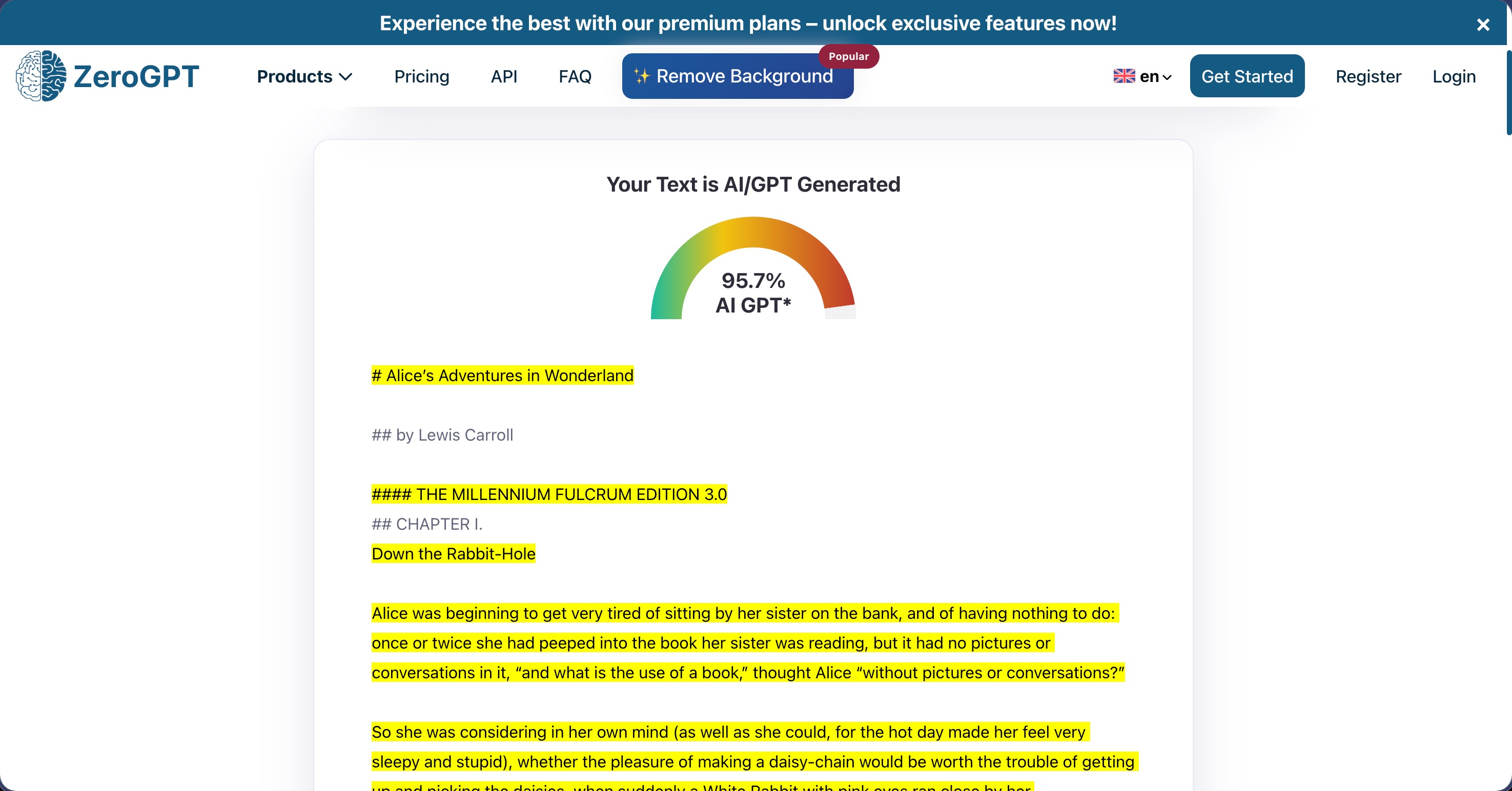
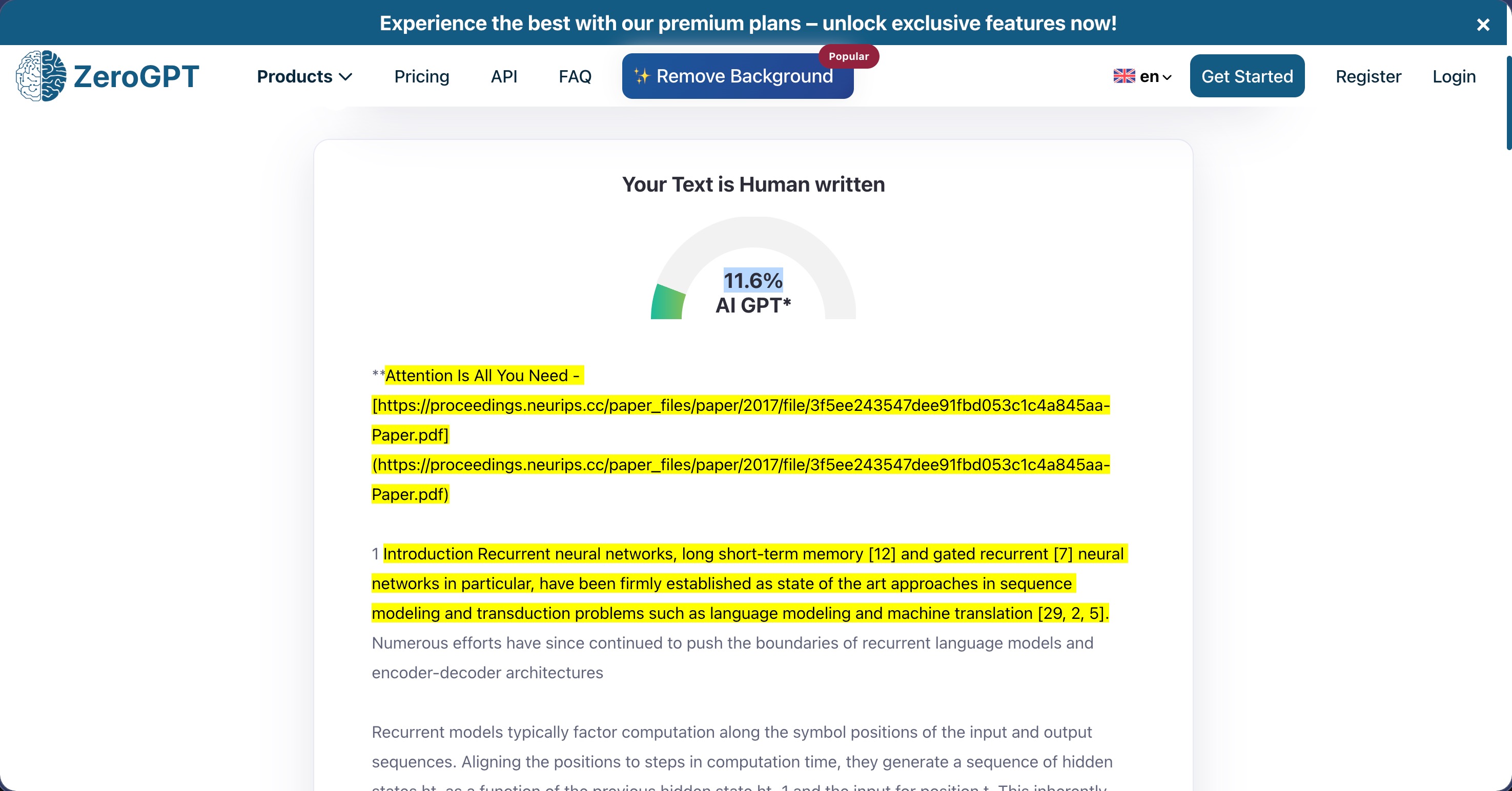
For example, Lewis Carroll’s Alice’s Adventures in Wonderland, published in 1865, was scored at 95.7% AI. The Wonderful Wizard of Oz from 1900 came in at 88%. GPTZero, Originality AI, Winston AI, Grammarly, and QuillBot all scored both of these texts at or near 0% AI.
While my sample news articles and academic papers performed better in relative terms, their original authors would most certainly not be happy to learn that between 4.7% and 15.6% of their work was flagged as AI-written.
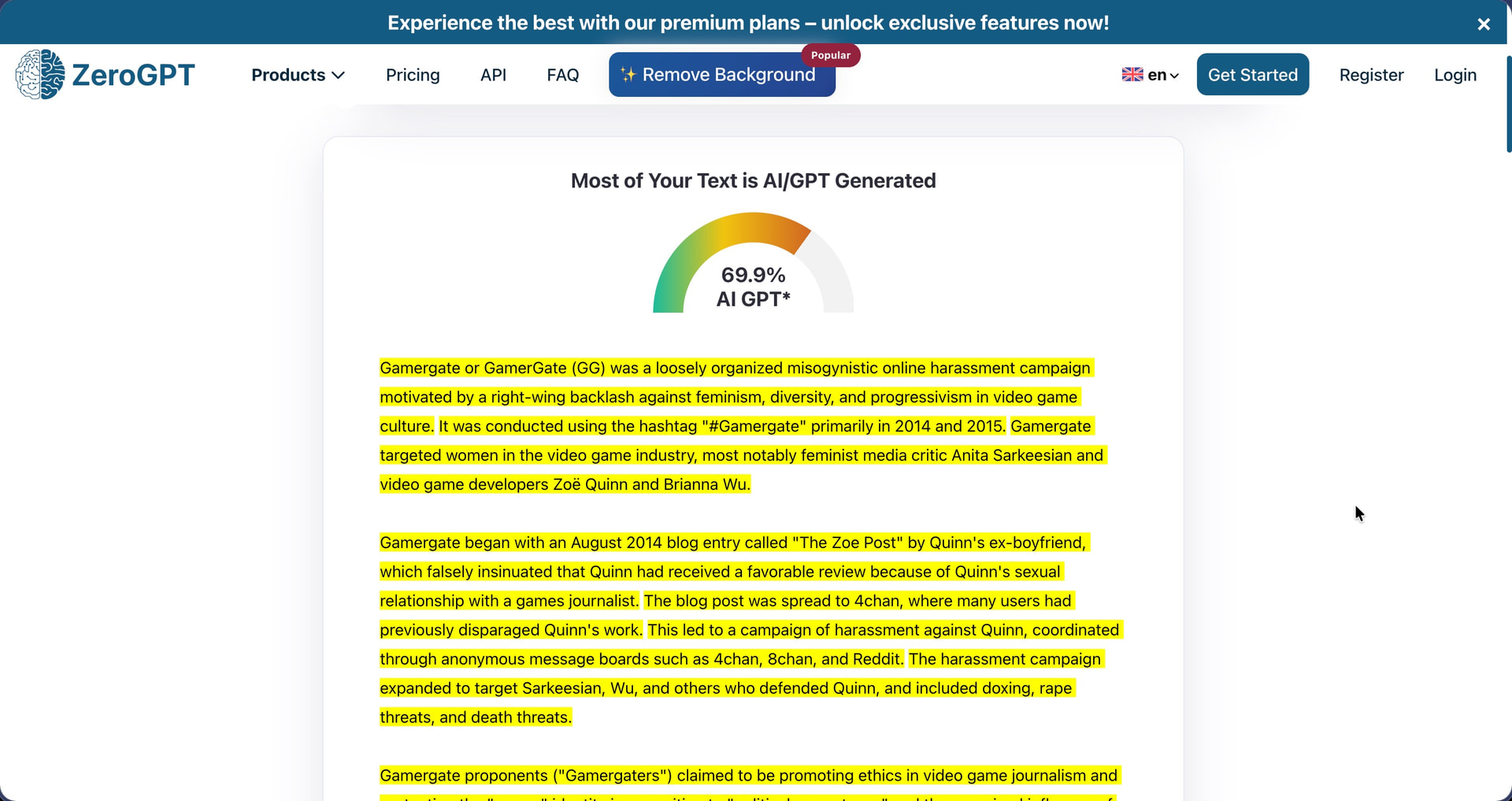
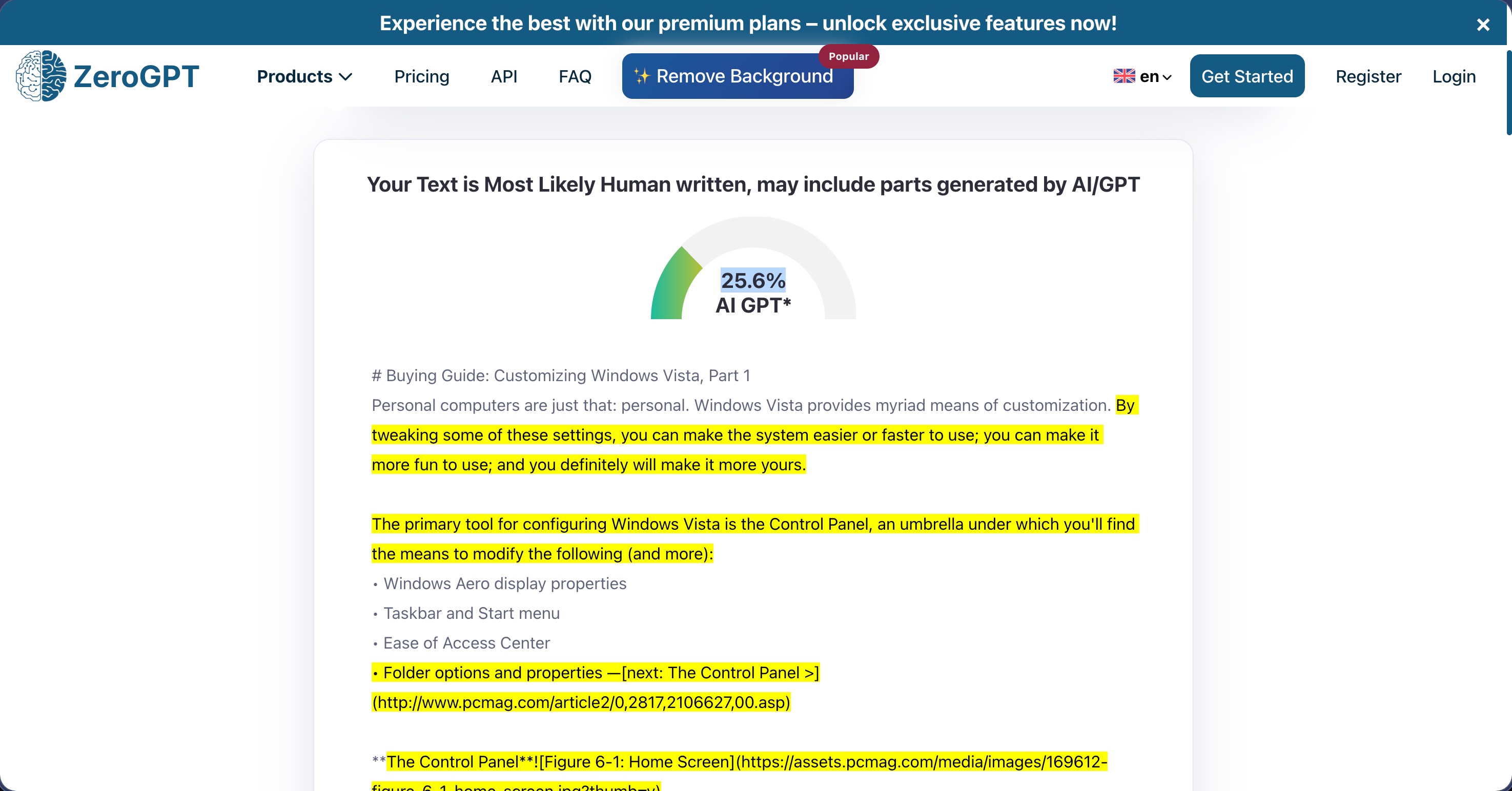
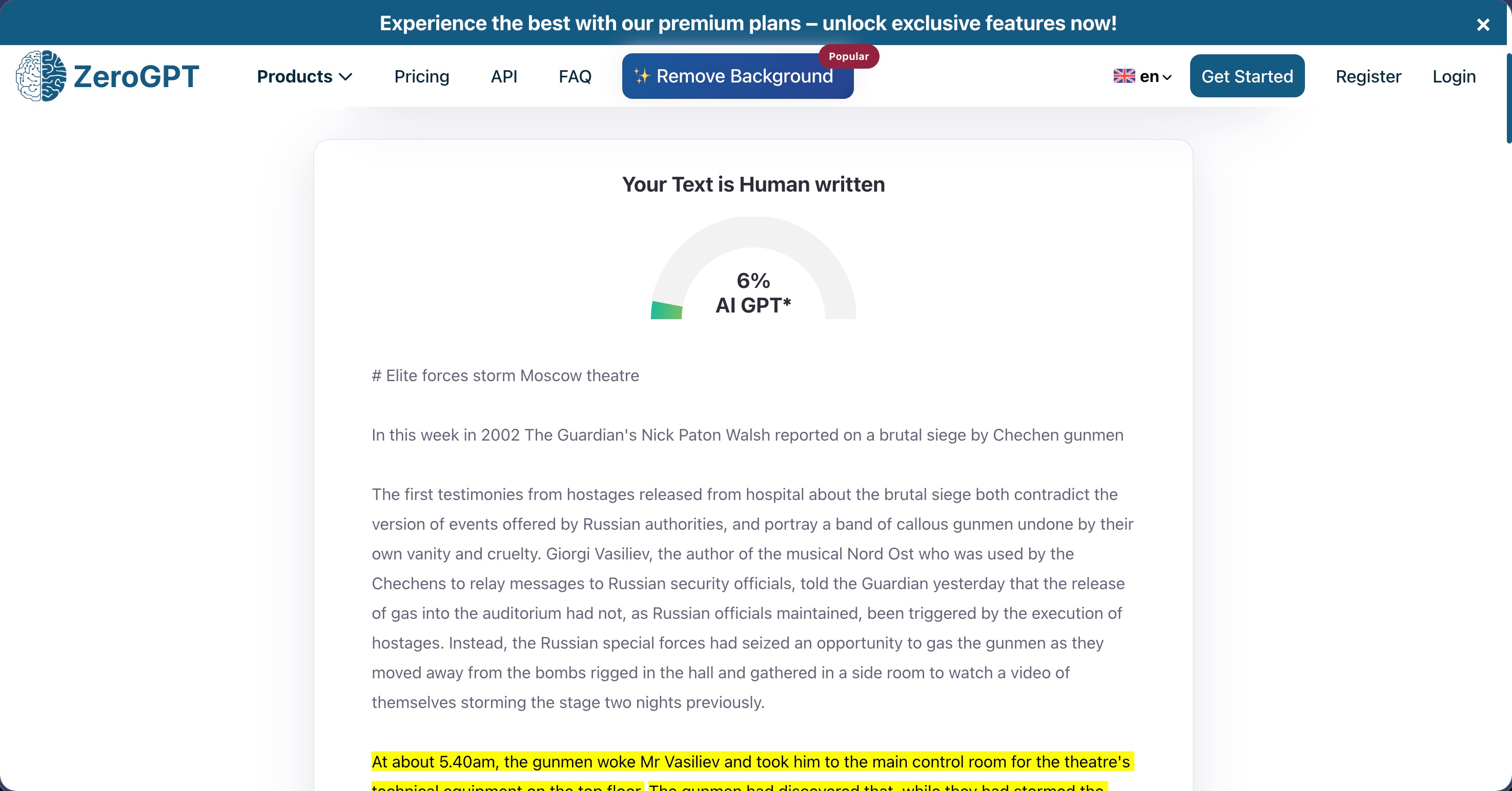
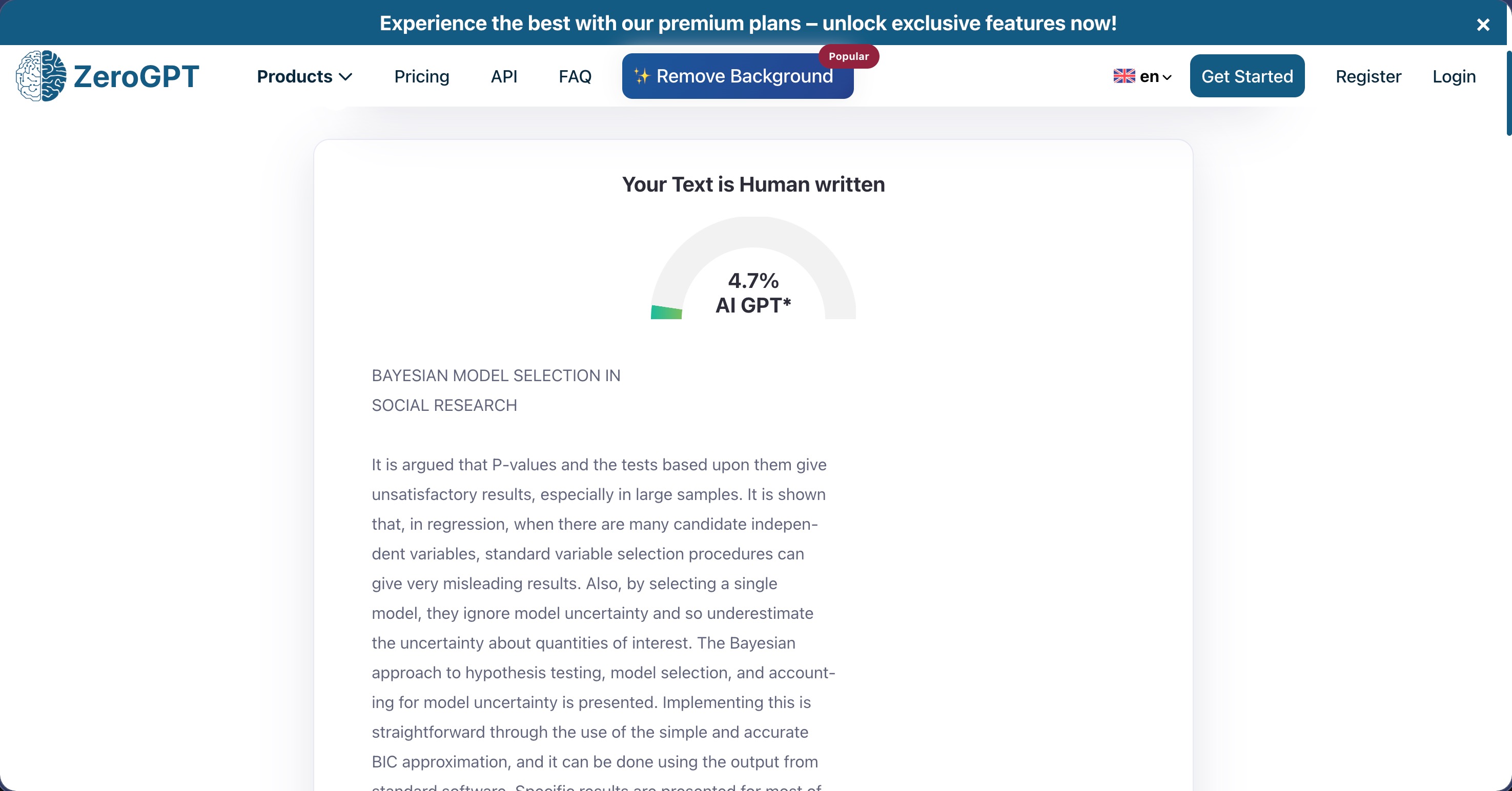
Here, it’s worth mentioning that ZeroGPT doesn’t properly strip formatting from pasted text. I verified that the presence of markdown links, for example, noticeably increases how much of the text the detector considers AI-written. I can easily imagine a college professor copying a student’s essay into ZeroGPT with stray formatting still attached, and getting an inflated score that leads to a wrongful accusation. GPTZero, which I reviewed recently, doesn’t have this problem.
How Much Does ZeroGPT Cost?
ZeroGPT is one of the most generous detectors in this series when it comes to free access. The 15,000-character scan limit with no account required means that if you’re a casual user checking the occasional essay or blog post, the tool feels almost completely free.
| Plan | Monthly Price | Annual Price | AI Detection Limit |
|---|---|---|---|
| Free | $0 | $0 | 15,000 characters/scan |
| Pro | $9.99/mo | $7.99/mo | 100,000 characters/scan |
| Plus | $19.99/mo | $14.99/mo | Higher than Pro |
| Max | $26.99/mo | $18.99/mo | ~150,000 characters/scan |
The Pro plan at $7.99/month (annual) is the entry point for paid features, and it includes 50 batch file checks, detection history, and PDF report generation. The Plus and Max plans increase those limits further, and Max adds access through WhatsApp and Telegram, which is unusual for an AI detector, and I personally don’t think an instant messenger can provide a good user experience for doing AI detection tests.
Compared to the other paid detectors in this series, ZeroGPT’s pricing is more affordable. GPTZero’s cheapest paid plan is $12.99/month, Winston AI starts at $10/month, and Originality AI charges $12.95/month for credits covering 200,000 words.
It would be even better if ZeroGPT also offered a one-time purchase option like Originality AI does, but nobody’s perfect, I guess. As a result, you’re either on the free tier or paying monthly.
Does ZeroGPT Respect User Privacy?
ZeroGPT’s privacy policy and terms of service are worth reading carefully because there are some contradictions between what the FAQ says and what the legal documents actually allow.
The FAQ page states that text you check on ZeroGPT is “not saved, shared, published online, or used to train” the AI detection model, which sounds reassuring. But the terms of service grant ZeroGPT (operated by Olive Works LLC, registered in Casper, Wyoming) broad rights over the site and its content.
At the same time, the privacy policy is a generic template that reads like it was written for a basic blog rather than a tool where users paste potentially sensitive text. Based on it, ZeroGPT collects the following data:
-
Account information: name, company name, address, email address, and telephone number.
-
Technical data: IP address, browser type, Internet Service Provider, date and time stamps, referring/exit pages, and click data.
-
Cookie data: session cookies, preference cookies, and advertising cookies from Google and Freestar.
-
Social media data: name, email address, friends list, and profile picture if you register through a social login.
What’s missing from this list is any mention of the text you paste into the detector. The privacy policy says nothing about how scanned content is handled, stored, or discarded. At least it does mention that ZeroGPT runs ads through Google and Freestar, so advertising cookies are unsurprisingly active on the site.
The refund policy is strict. Monthly plans can only be refunded within 6 hours of purchase, and yearly plans within 10 hours. Refunds must be requested by email to support@zerogpt.com with your order ID, email address, plan type, and purchase time.
On the positive side, ZeroGPT says it deletes personal information within three months of account termination, which is shorter than what most competitors commit to, so at least there’s that.