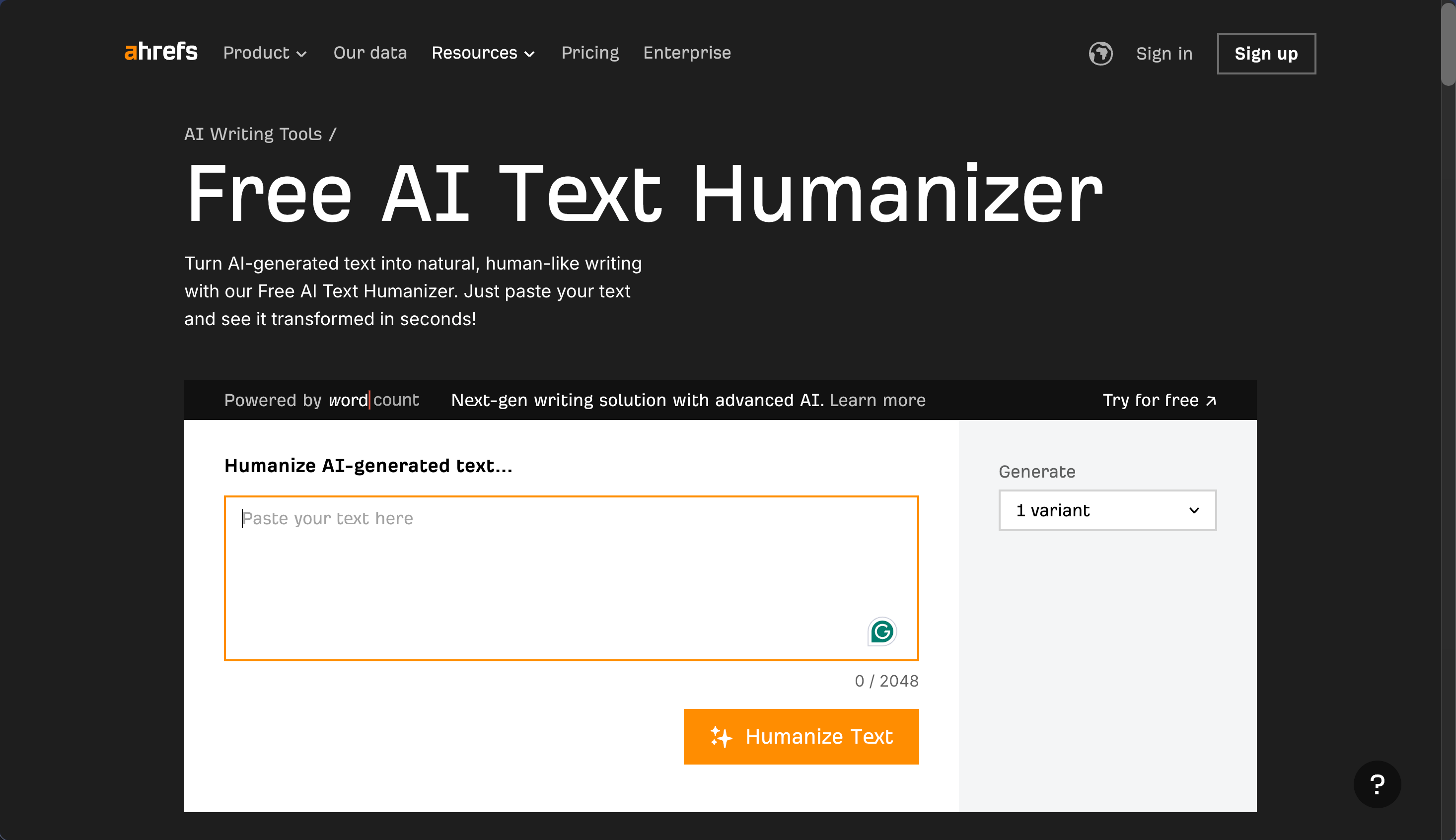
You might be familiar with Ahrefs as one of the most popular SEO toolkits on the market. What you might not know is that Ahrefs has quietly expanded into AI writing tools, including a free AI Text Humanizer that promises to “turn AI-generated text into natural, human-like writing.” The tool is part of Ahrefs’ broader suite of writing utilities (which includes a paraphraser, grammar checker, and AI content detector) and is powered by their Word Count platform. But can an SEO company’s humanizer actually deliver results, or is this just a marketing play to capture traffic in a trending niche?
How I test: I generated three AI content samples using the latest ChatGPT model, each approximately 200 words and focused on different topics. I established baseline detection scores by running the original AI-generated texts through both GPTZero and ZeroGPT, then processed each sample using Ahrefs AI Humanizer. I re-tested the humanized outputs through both detection platforms to measure how effectively the tool reduced AI detection scores. I also manually evaluated the grammar quality and readability of all humanized text. You can find the raw test data for this review here.
| Pros | Cons |
|---|---|
| Clean, grammatically correct output | 100% AI detection on all tests |
| No nonsensical phrases or made-up words | No customization options beyond variant count |
| Free part of broader (paid) writing toolkit | Fails to remove em-dashes and other obvious AI markers |
| Multiple variant generation (up to 5 at once) | Free tier prohibits commercial use |
| Submitted text may be used for AI model training | |
| No clear data retention policy for humanized text |
How Well Did Ahrefs AI Humanizer Perform?
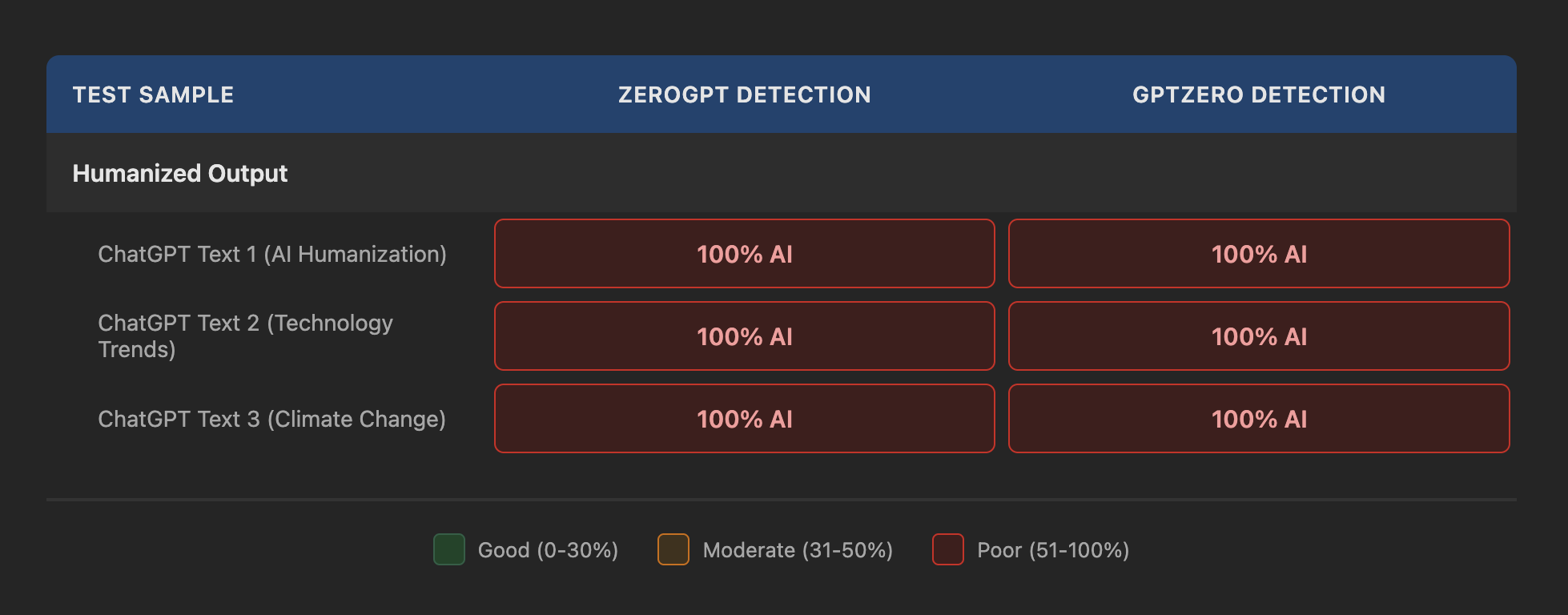
The humanization capabilities of Ahrefs AI Humanizer were disappointing across the board. All three humanized outputs were flagged at 100% AI detection by both GPTZero and ZeroGPT. Not a single test showed any meaningful reduction in AI detection scores, which means the humanization process had essentially zero effect on fooling either detector.
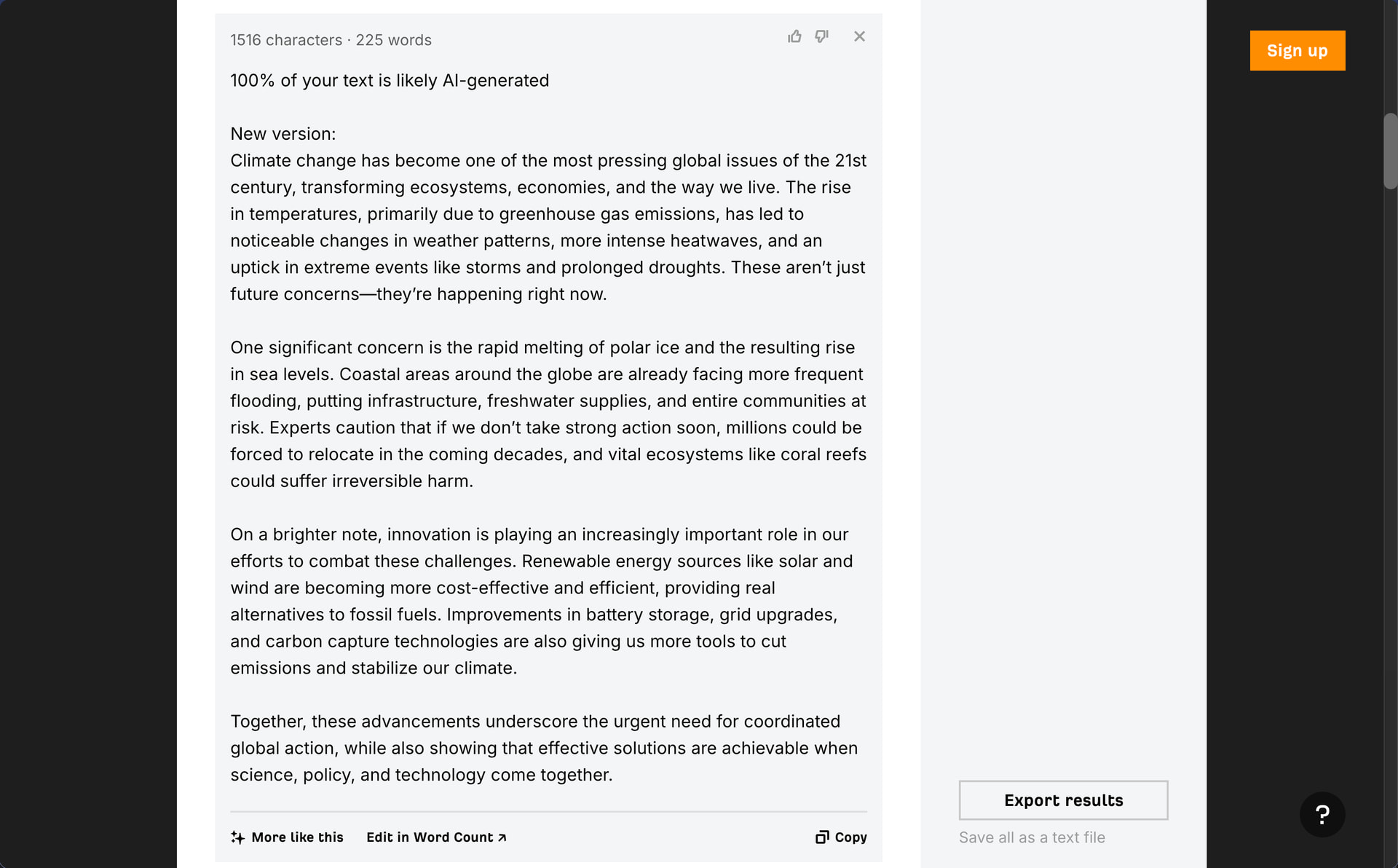
What makes this even more puzzling is that Ahrefs’ own interface displays detection feedback above the humanized output. After processing my text, the tool showed “100% of your text is likely AI-generated” right above the supposedly humanized result. In other words, the humanizer produces output that its own parent platform immediately flags as entirely AI-written. This creates a strange user experience where you watch the tool generate “humanized” text while simultaneously being told that the output is completely detectable.
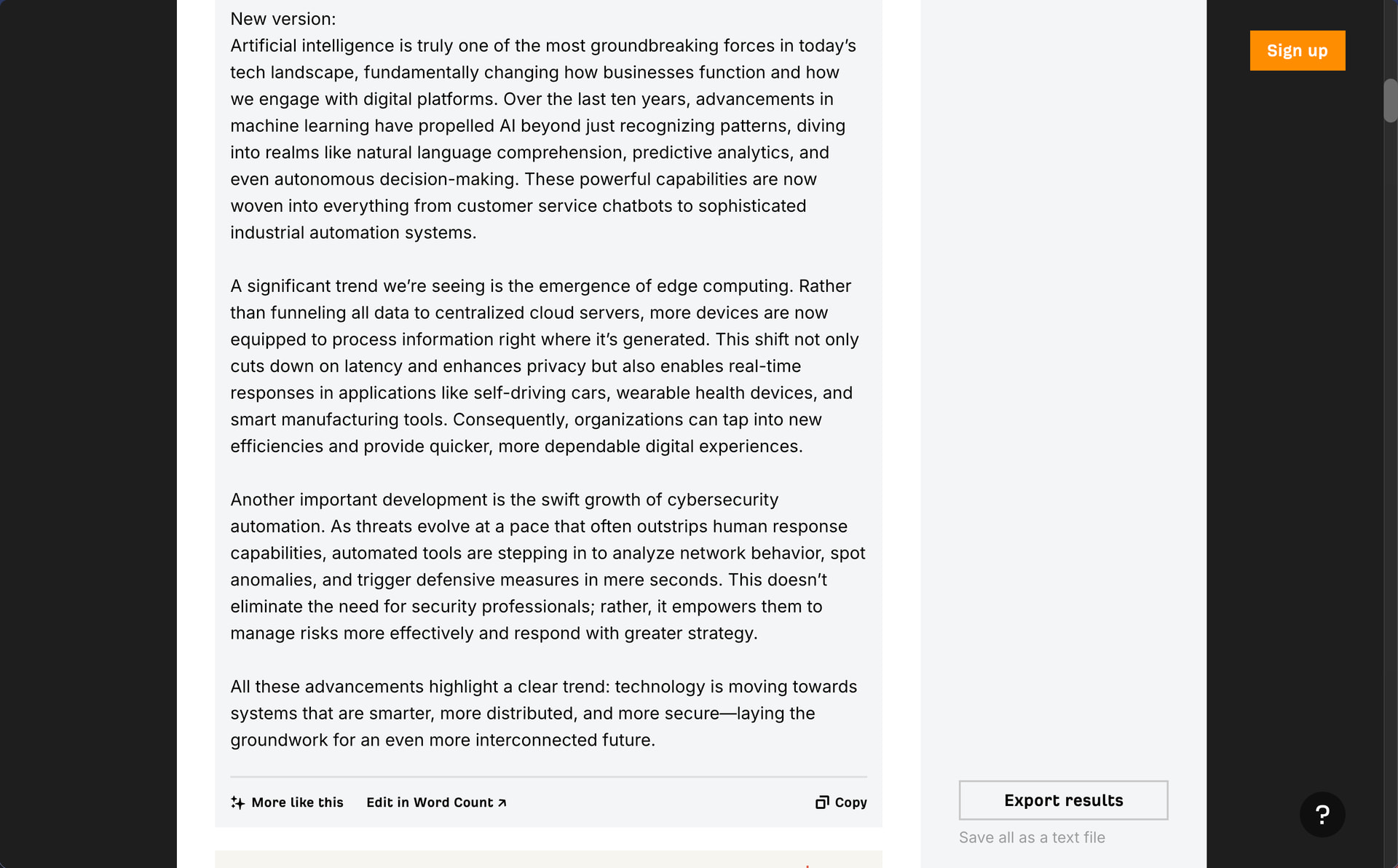
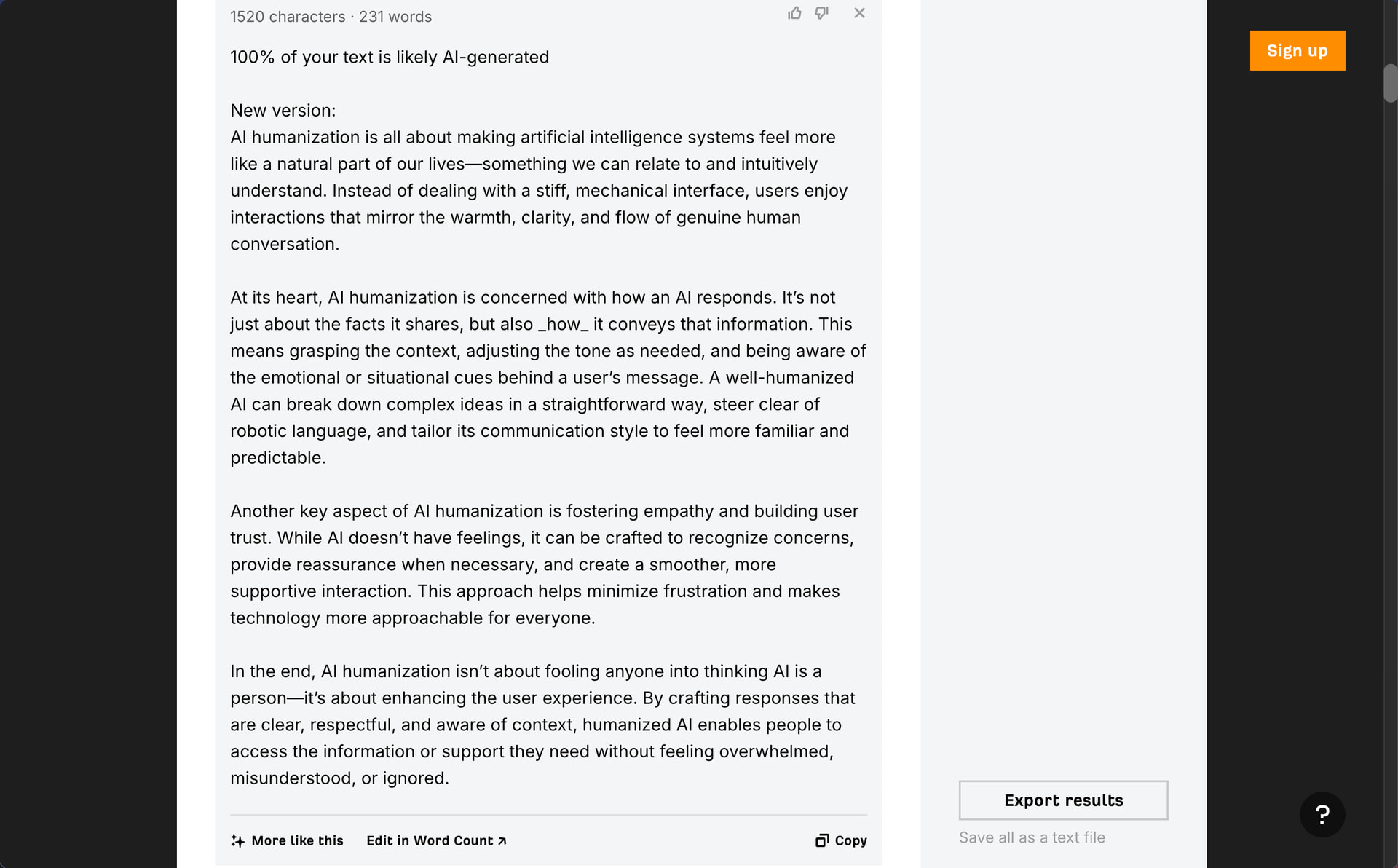
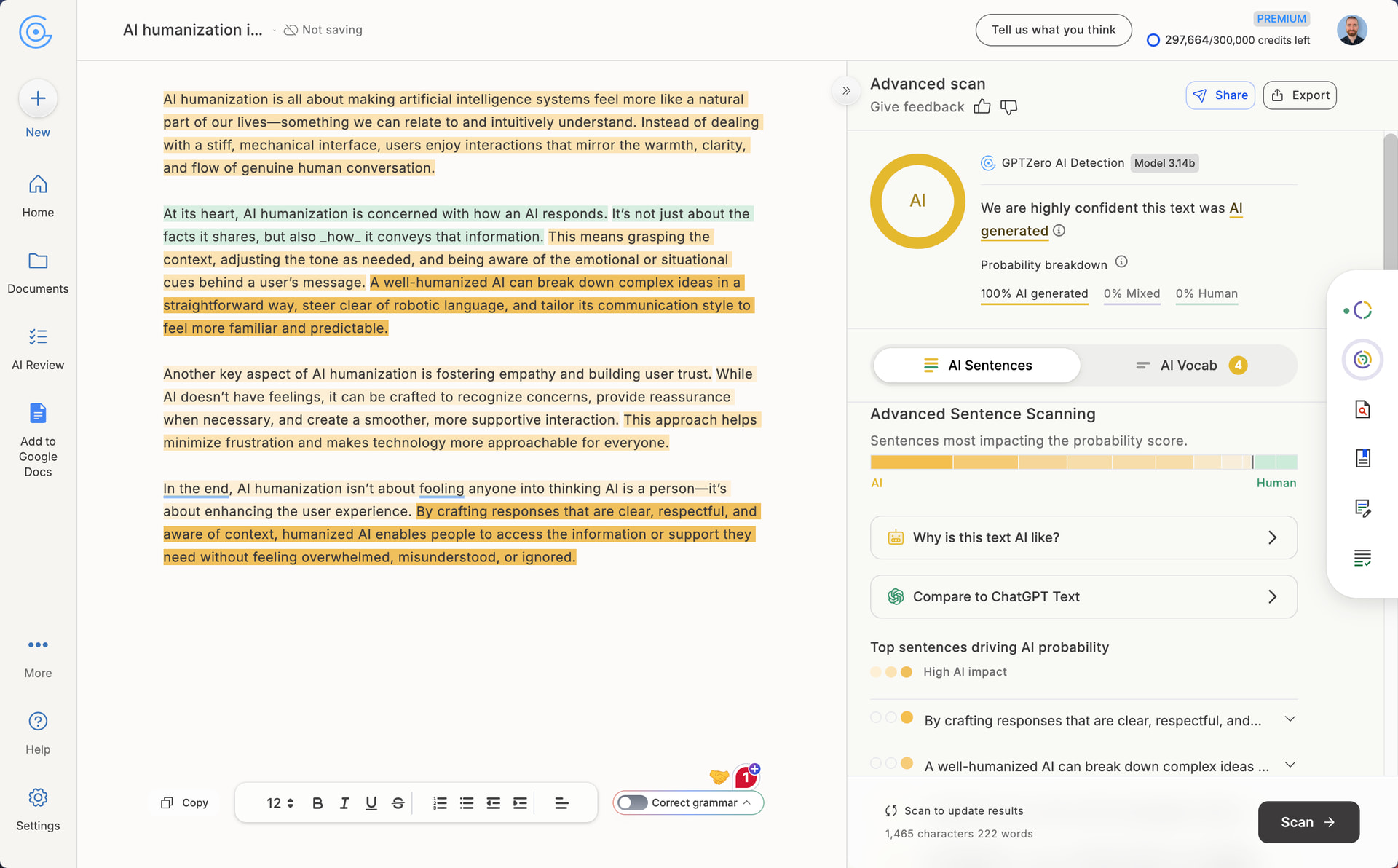
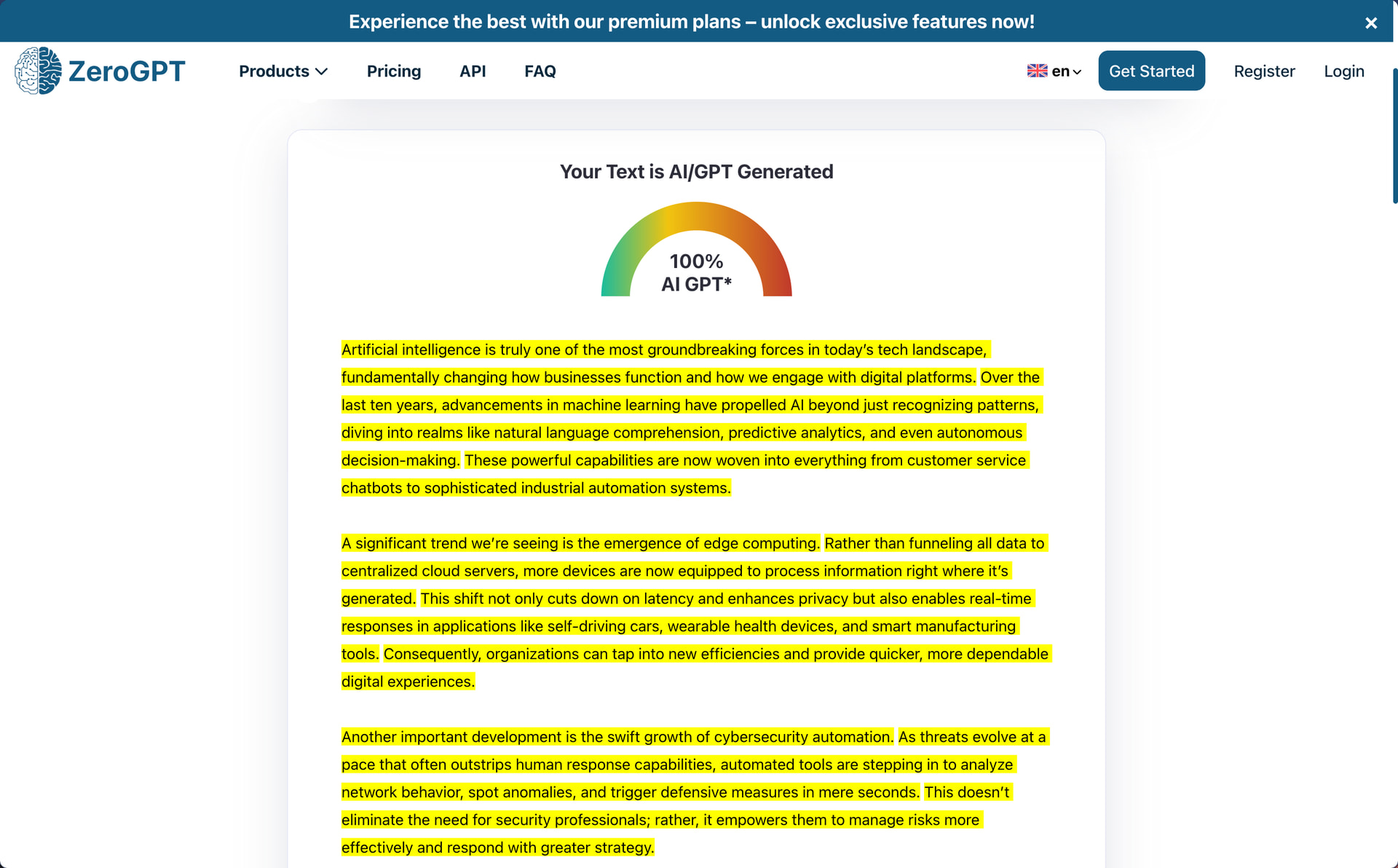
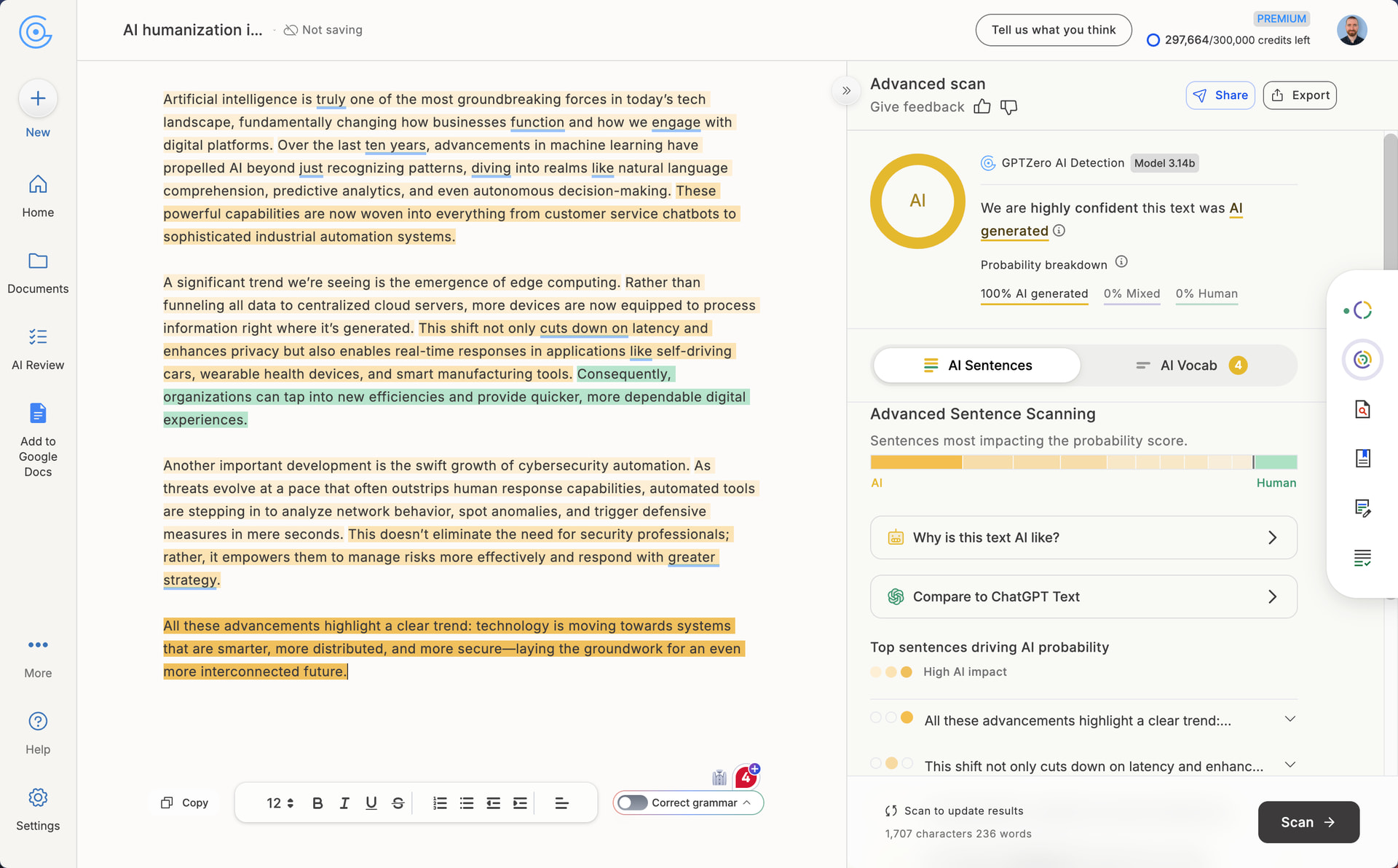
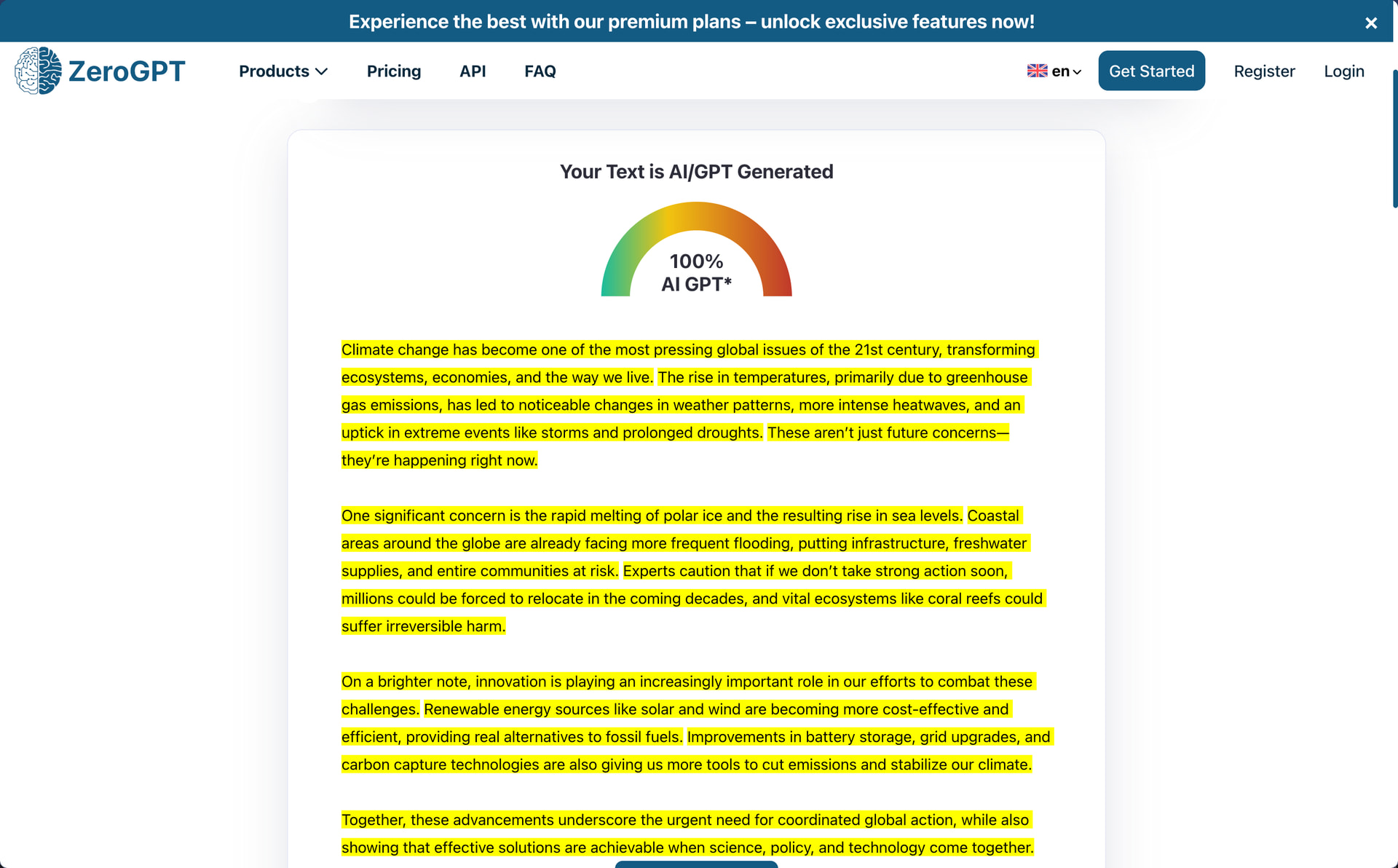
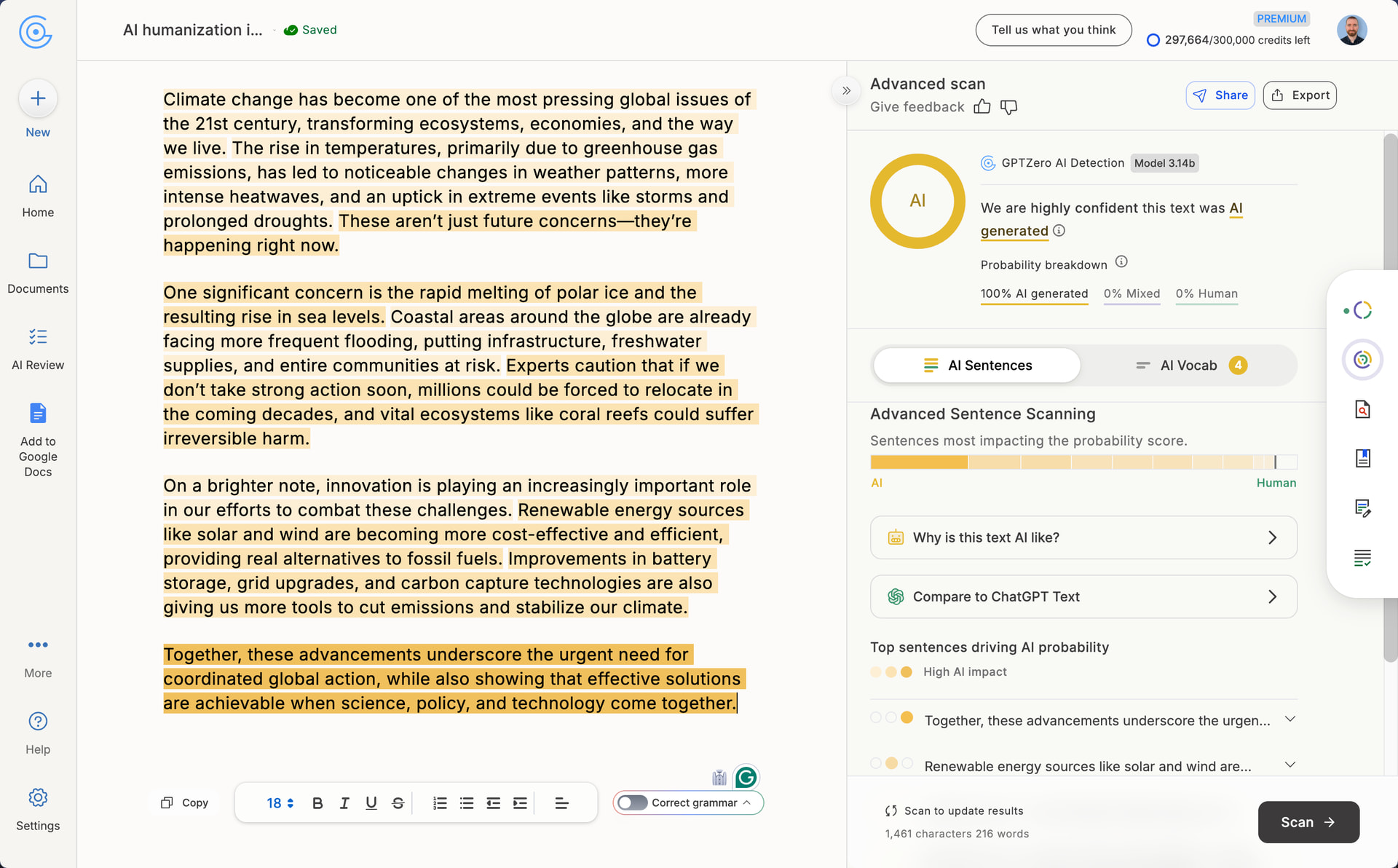
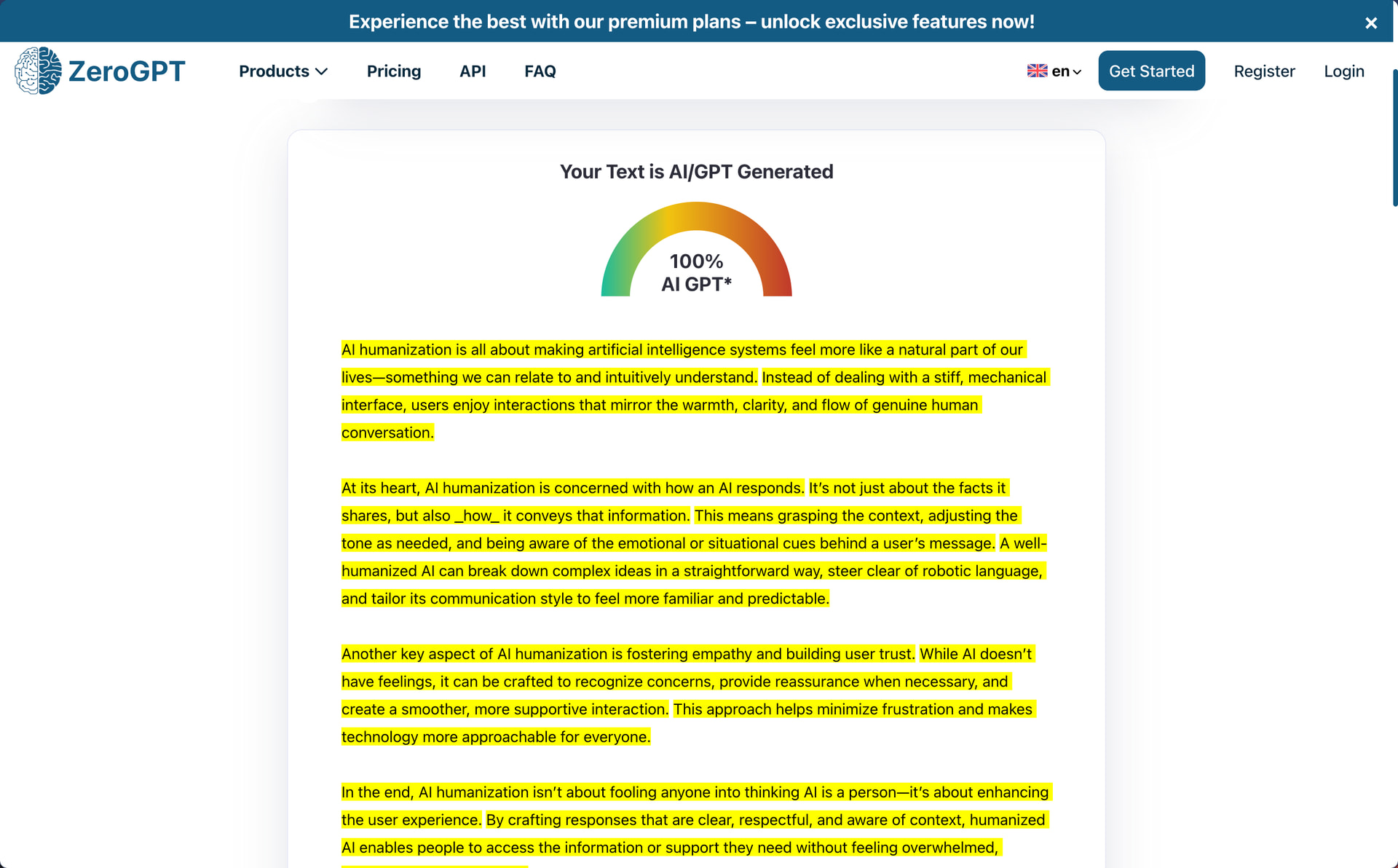
The tool itself is extremely bare-bones compared to other humanizers I have reviewed. The only customization option available is choosing how many humanized variants you want the tool to generate (up to five at once). In theory, this could be useful because different variations might produce different detection outcomes, giving you options to choose from. However, in practice, almost every single variant I generated was marked as 100% AI by Ahrefs’ own detector, and external detectors confirmed the same results.
Only during one test did Ahrefs generate a variant that its own system marked as 0% AI-generated. I ran that same text through GPTZero and ZeroGPT, and both external detectors flagged it at 100% AI detection regardless of what Ahrefs’ internal assessment claimed. It seems that the AI writing detection part of the humanizer is just as unreliable as the AI humanizer itself.
At this point in the review series I have tested nearly twenty humanizers, and a pattern has become very clear: tools that flag their own output as AI-generated are not even pretending to solve the problem. At least most competitors display falsely optimistic internal scores (while others like My Clever AI Humanizer focus only on their core product).
How Well Does Ahrefs AI Humanizer Maintain Writing Quality?
Writing Quality Score: 7/10
Despite failing completely at its primary job of bypassing AI detection, Ahrefs AI Humanizer does produce reasonably clean output. The humanized texts are grammatically correct, logically structured, and free from the nonsensical phrases and made-up words that plague many competing tools.
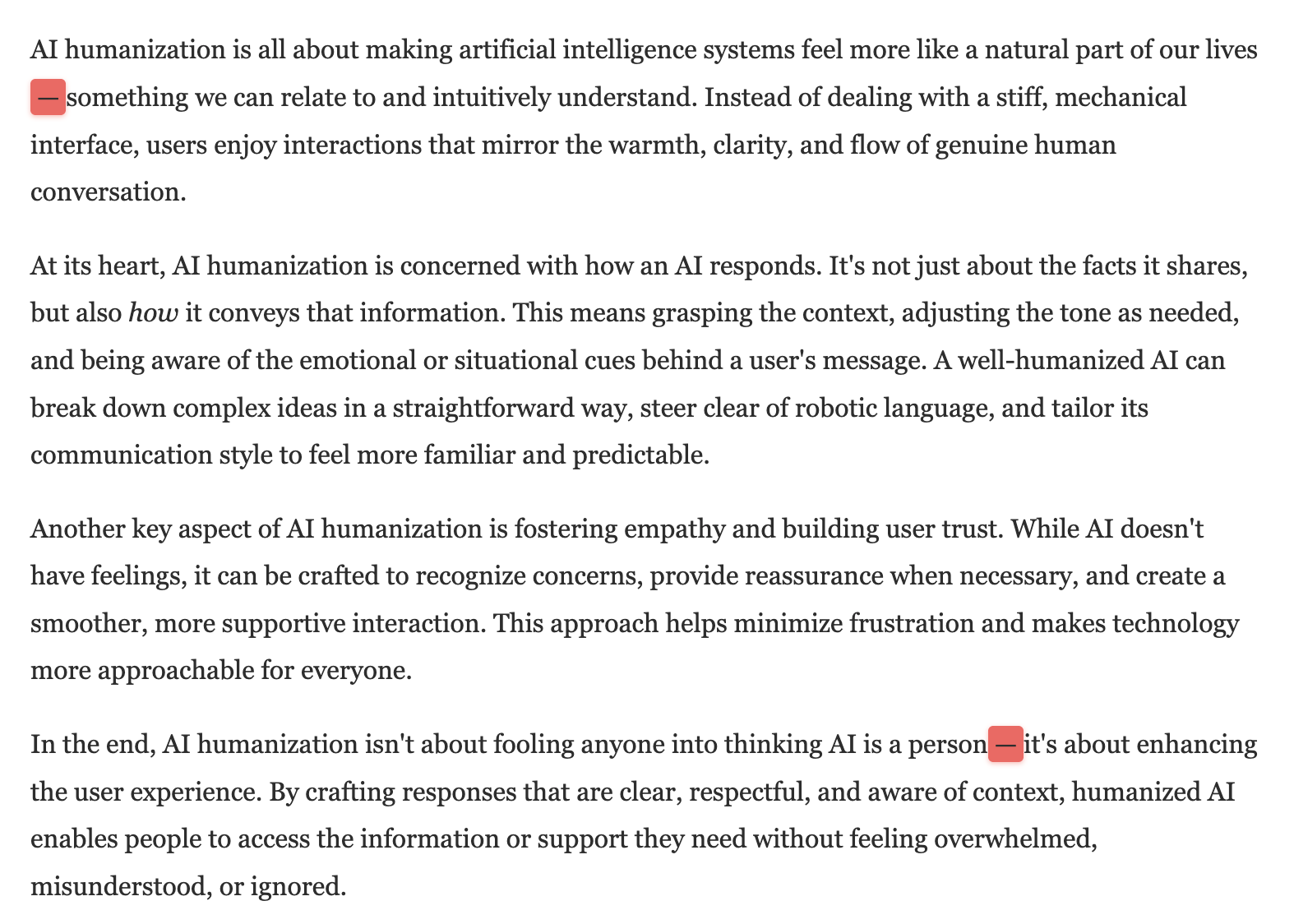
The first text about AI humanization reads smoothly, and there are no broken sentences or jarring word choices. The only problem I noticed was the em-dash in the opening sentence (“feel more like a natural part of our lives—something we can relate to”). Em-dashes have become strongly associated with AI-generated content, and most humanizers specifically target them for removal or replacement.
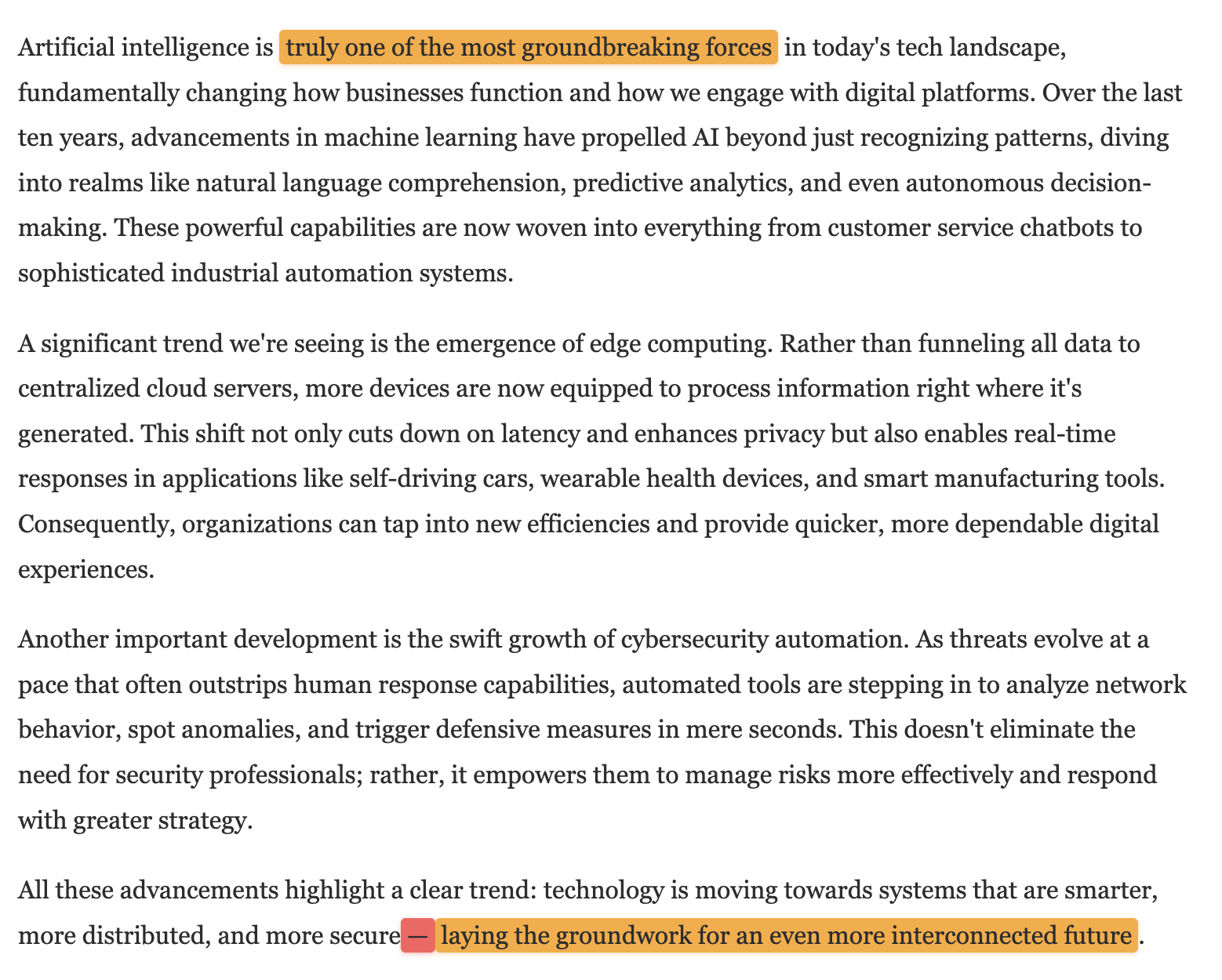
The second text about technology trends maintains this grammatical cleanliness with sentences like “Rather than funneling all data to centralized cloud servers, more devices are now equipped to process information right where it’s generated.” Again, though, em-dashes appear multiple times throughout (including in the closing line), and the tool makes no effort to remove them.
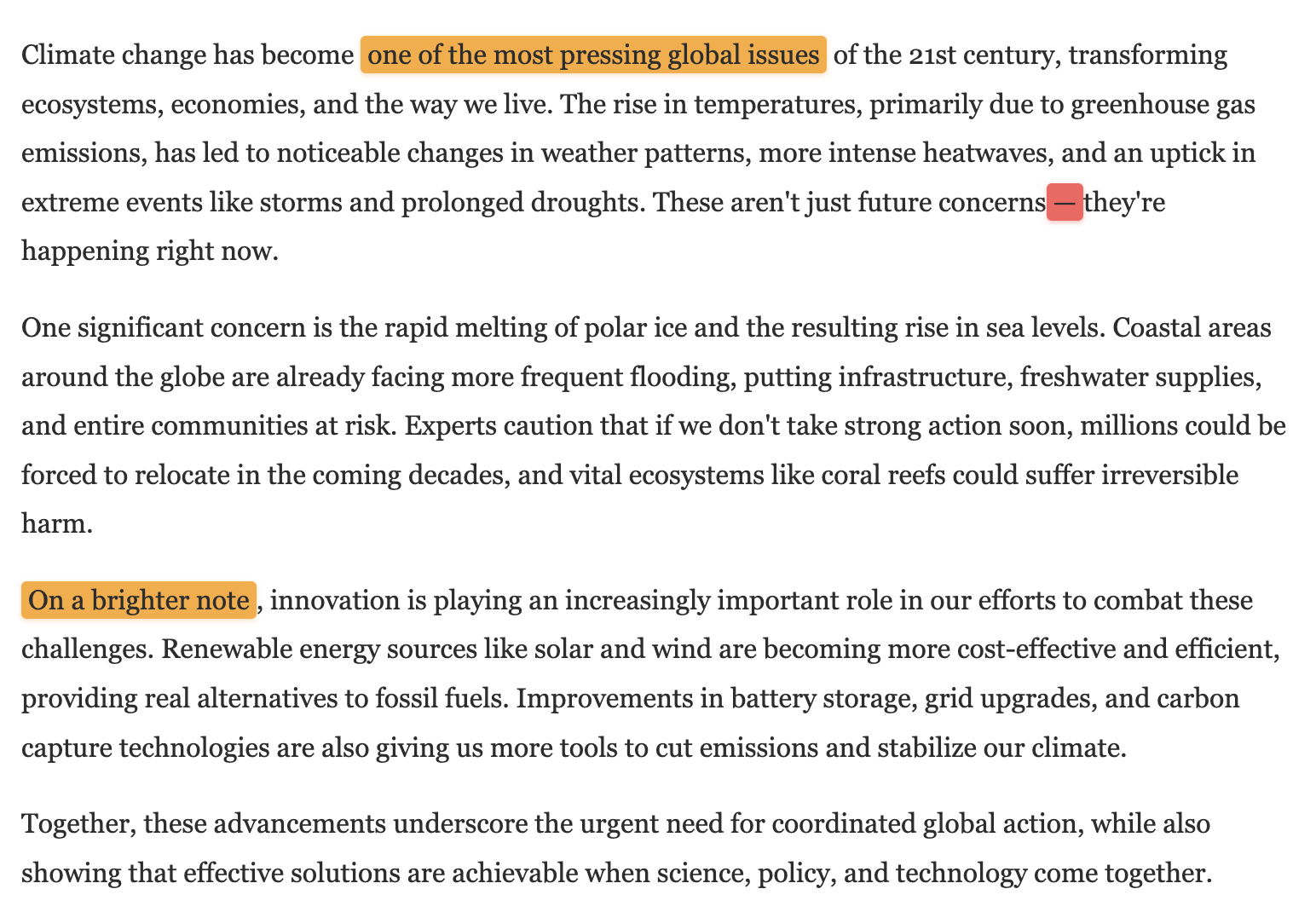
The third text covering climate change follows the same pattern. The writing itself is coherent and well-organized, but it opens with classic AI phrasing, such as “one of the most pressing global issues.”
In theory, you could use the multiple variants feature to generate several versions of your text, then manually piece together the best sentences from each output while fixing obvious issues like em-dashes and overused AI phrases to achieve detection scores better than 100% (which, admittedly, is not a high bar to clear). However, the workflow would be extremely far from the one-click humanization experience that users expect and that Ahrefs advertises.
How Much Does Ahrefs AI Humanizer Cost?
Ahrefs AI Humanizer is part of the company’s Word Count platform, which bundles multiple AI writing tools together under a single subscription model. The humanizer itself is accessible on the free tier, but not without some limitations.
| Plan | Monthly Price | Yearly Price | AI Features | Commercial Use |
|---|---|---|---|---|
| Free | $0 | $0 | Basic, limited | No |
| Pro | $19 | $9.90 ($118.80/year) | Advanced, unlimited | Yes |
The Free plan provides access to basic AI features with limited usage and explicitly prohibits commercial use of the output. So if you are planning to use humanized content for business purposes (blog posts, marketing materials, client work), you technically need to upgrade to Pro even if the free tier meets your volume needs.
The Pro plan removes usage limits and unlocks commercial rights along with “advanced AI writing” features. At $19 per month (or $9.90 per month when billed annually), the pricing is comparable to dedicated humanizers like Aihumanize.io’s Pro plan ($25/month) or HumanizeAI.io’s Premium tier ($30/month).
However, dedicated AI humanizers at least attempt to offer detection bypass features, multiple humanization modes, and specialized settings. Ahrefs gives you a simple text box with no customization beyond variant count. Paying $9.90 to $19 per month for a humanizer that produces 100% detectable output is difficult to justify when the free tier already demonstrates the tool’s limitations, so I personally wouldn’t even think about it unless I was also interested in the rest of the Word Count platform.
Does Ahrefs AI Humanizer Respect User Privacy?
Many dedicated AI humanizers that appear to use generic legal templates (sometimes with embarrassing oversights like mentioning passport details for a text processing tool, I’m looking at you HumanizeAI.io). The good news is that Ahrefs presents a comprehensive, professionally written privacy policy that covers all the bases. According to the privacy policy, the company collects:
-
Account information: name, email address, username, password, phone number
-
Technical data: browser type, device information, IP address, time zone
-
Usage data: pages visited, access times, referral URLs, interaction patterns
-
Payment information: transaction details processed through third-party providers like Stripe
-
Cookies: session cookies, preference cookies, and analytics tracking
The policy is transparent about data storage, stating that personal data is “transferred to and stored in the United States” with encryption via Cloudflare during transmission. Ahrefs also complies with both GDPR and CCPA regulations and provides a designated Data Protection Officer for privacy inquiries.
You should know that the policy explicitly states Ahrefs may use collected data “to develop new products and services” and “to improve products and services built on artificial intelligence, such as through training of our machine learning models.” So any text you submit to the humanizer could potentially be used for AI training purposes. The only major thing the policy does not clarify is how long humanized text is retained after processing or whether it is deleted immediately.