GPTHuman claims that they’re “the only AI Humanizer that bypasses all premium AI detectors.” They even guarantee that if your humanized content gets detected, they’ll rewrite it for free. But guarantees are easy to make and harder to keep, so I ran GPTHuman through my standard testing process to see whether it delivers on its promises or simply adds to the growing pile of underperforming humanizers.
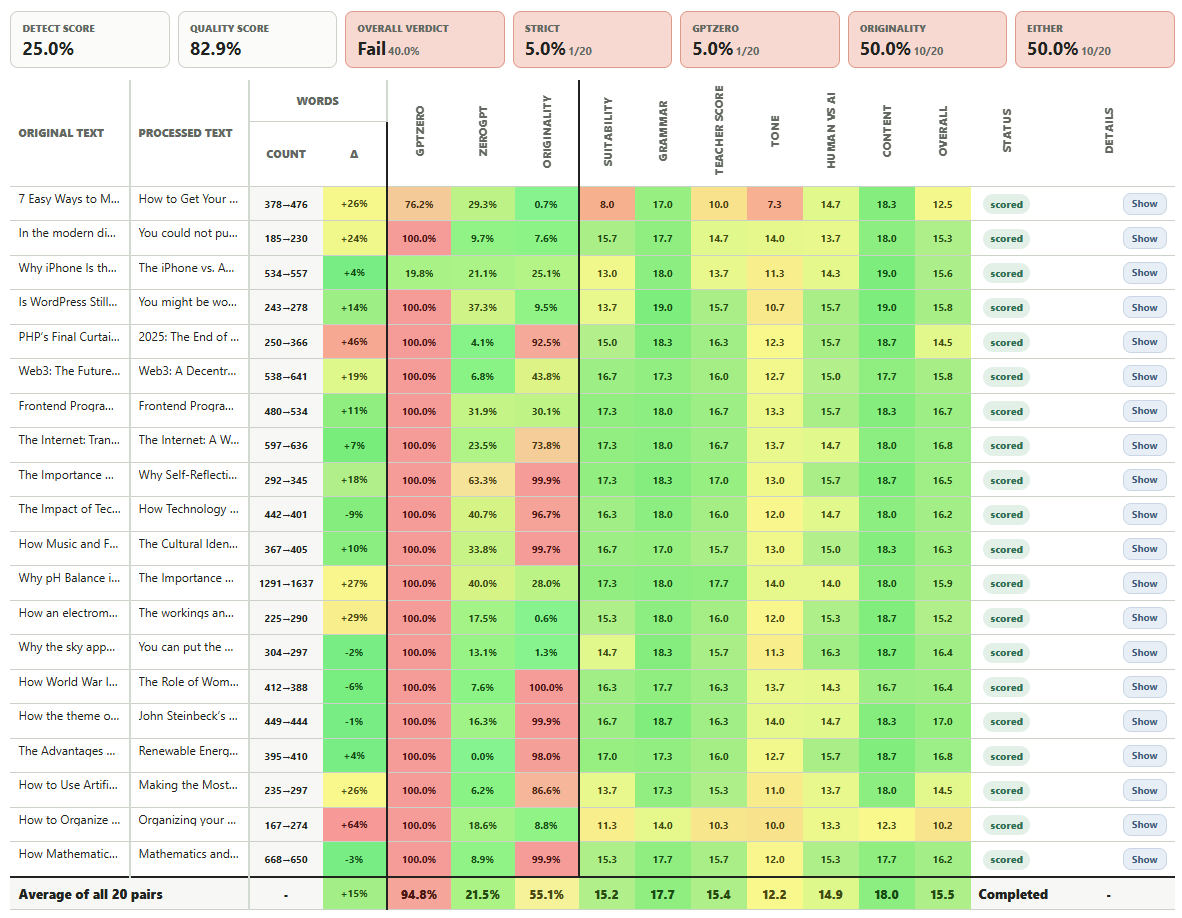
How I test: I generated three AI content samples using the latest ChatGPT model, each approximately 200 words and covering different topics (AI humanization, technology trends, and climate change). I established baseline detection scores by running the original texts through both GPTZero and ZeroGPT, then processed each sample using GPTHuman with default settings (College tone, Balanced mode). I re-tested all humanized outputs through both detection platforms to measure effectiveness. I also manually evaluated the grammar quality and readability of the humanized text. You can find the raw test data for this review here.
| Pros | Cons |
|---|---|
| ZeroGPT results were promising | GPTZero flagged all outputs at 100% AI detection |
| Clean paragraph structure in outputs | Free tier limited to just 300 words total |
| Multiple tone and mode options for paid users | Awkward phrasing and grammatical errors |
| Built-in AI detector for verification | Higher pricing than most competitors |
| Detailed privacy policy with AI training opt-out | No refunds on any purchases |
| “Human score” metric doesn’t reflect actual detection results | |
| Content used for AI training by default | |
| May use your business name in promotional materials |
How Well Did GPTHuman Perform?
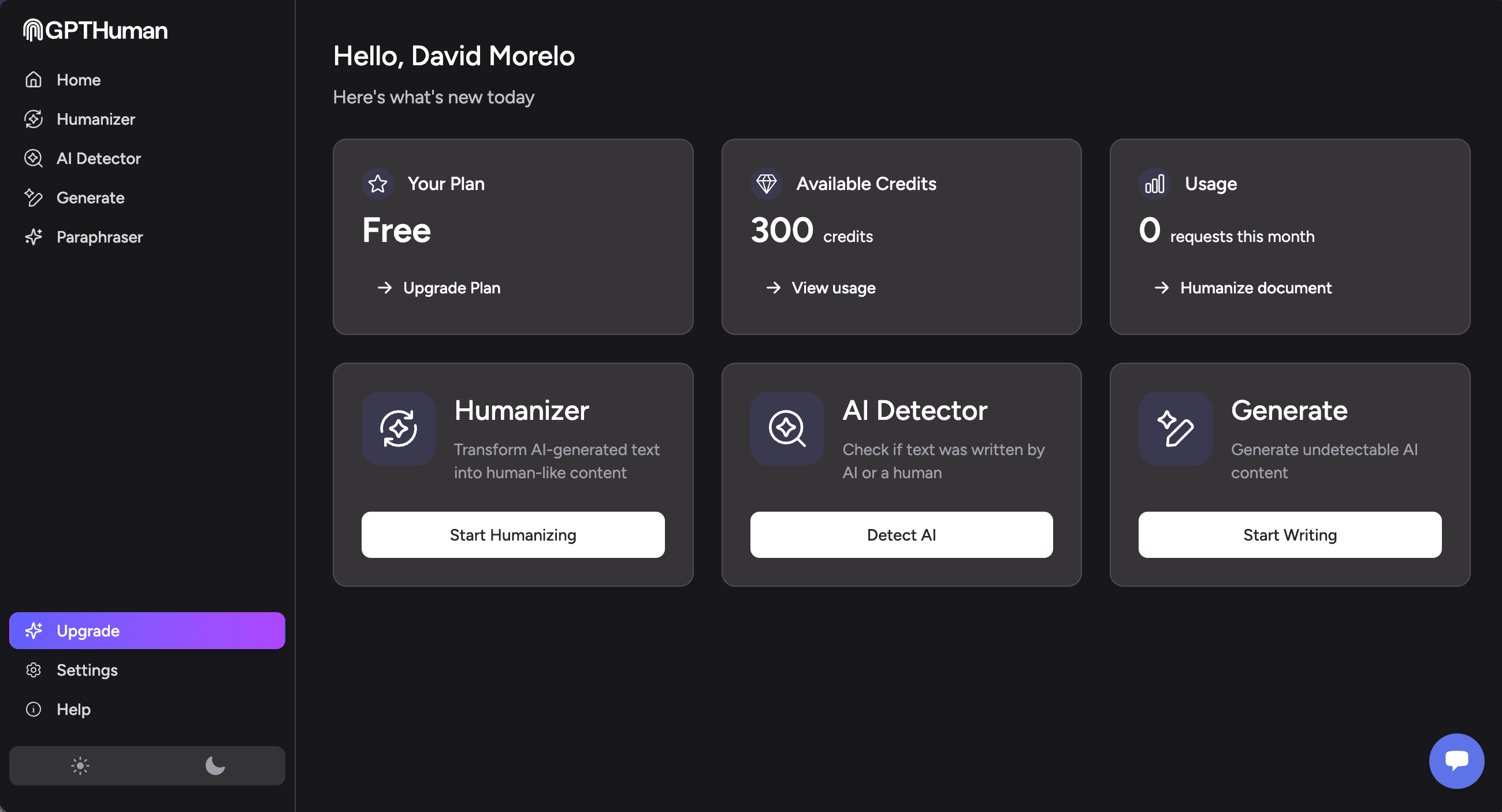
The free version of GPTHuman restricts you to a single 300-word humanization before asking you to get a pro account. That’s barely enough to process one short text sample, let alone conduct proper testing. I worked around this limitation by signing up with three separate Gmail accounts, which allowed me to test all three samples without paying for a subscription.
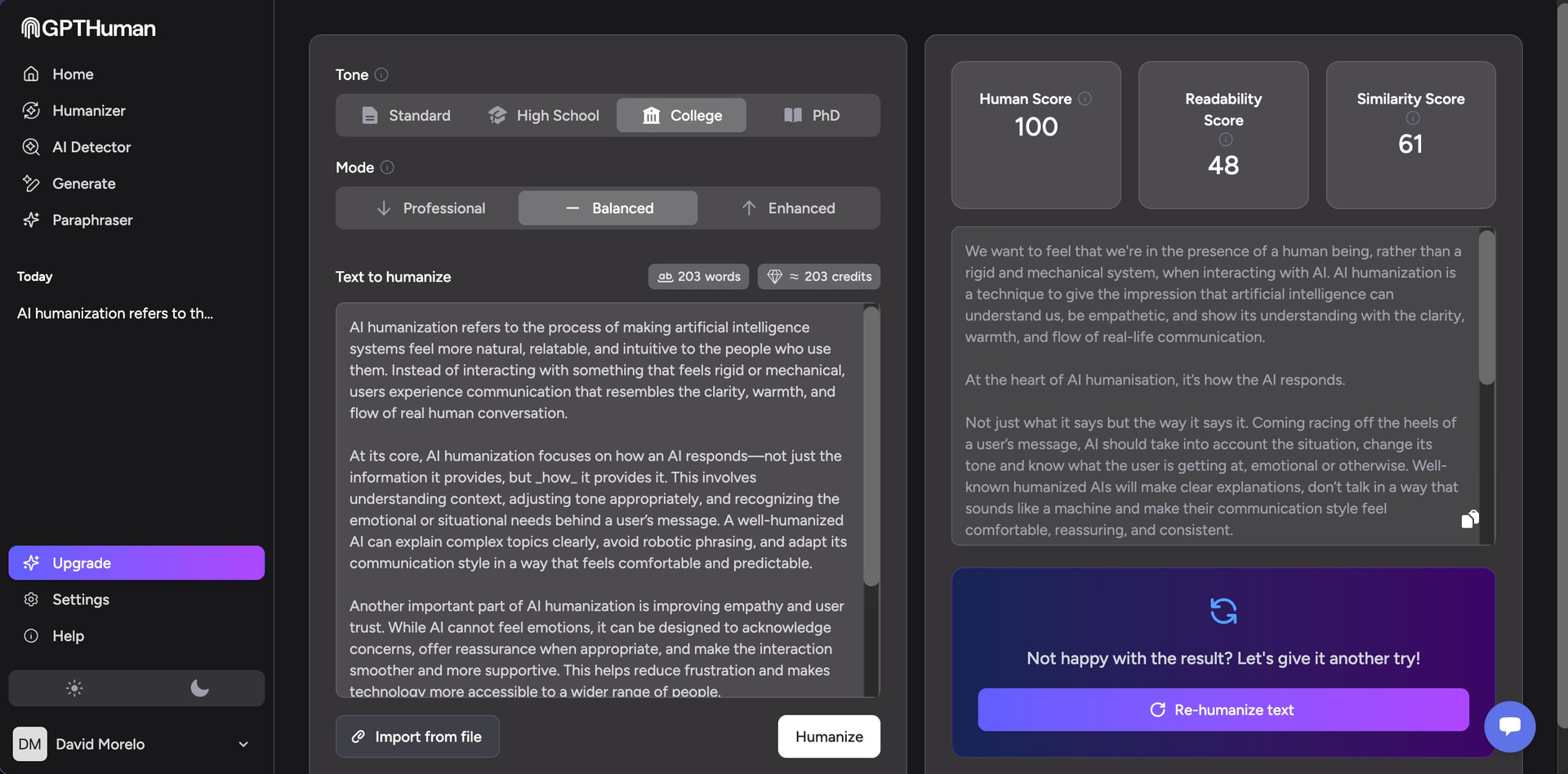
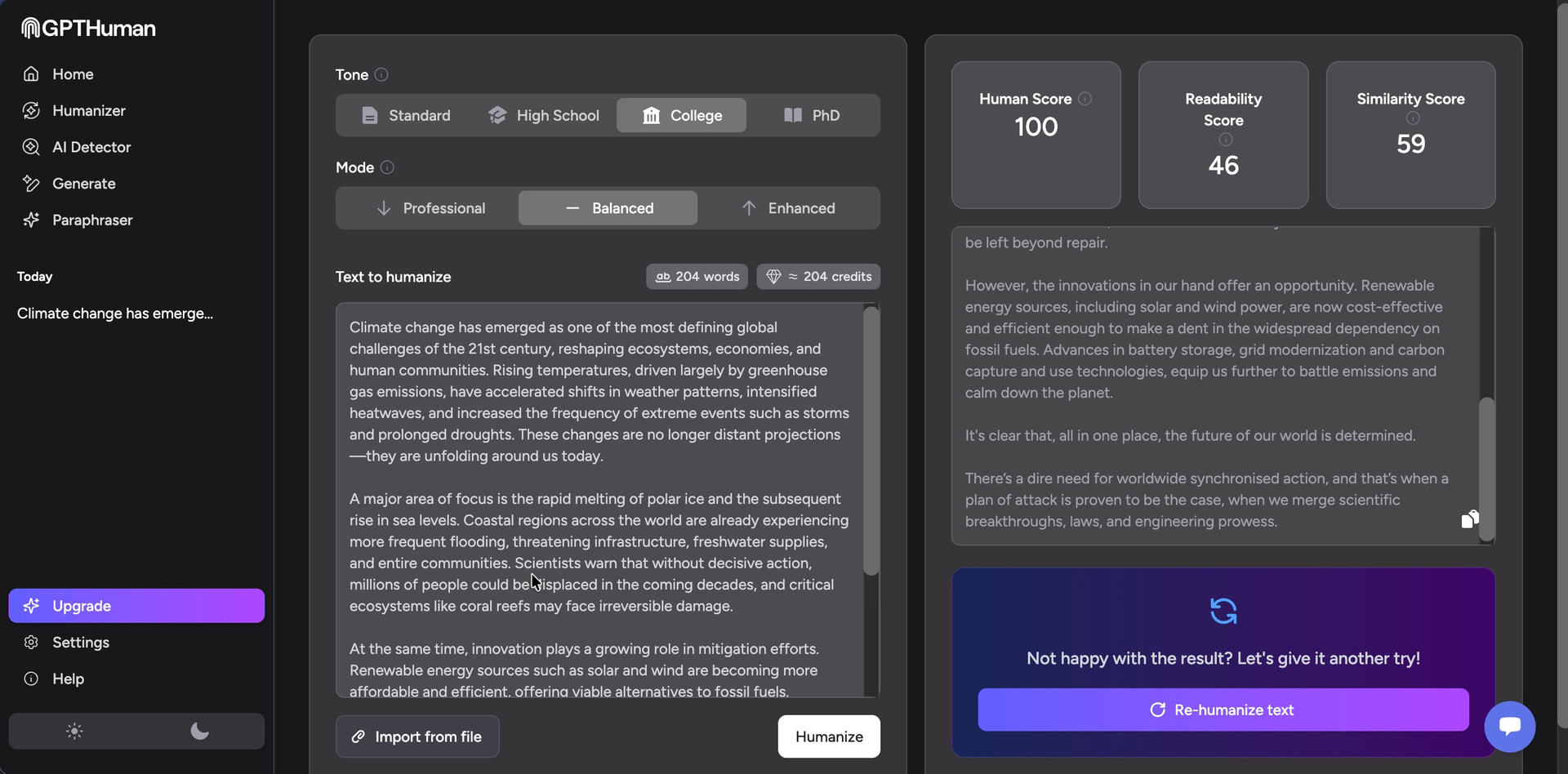
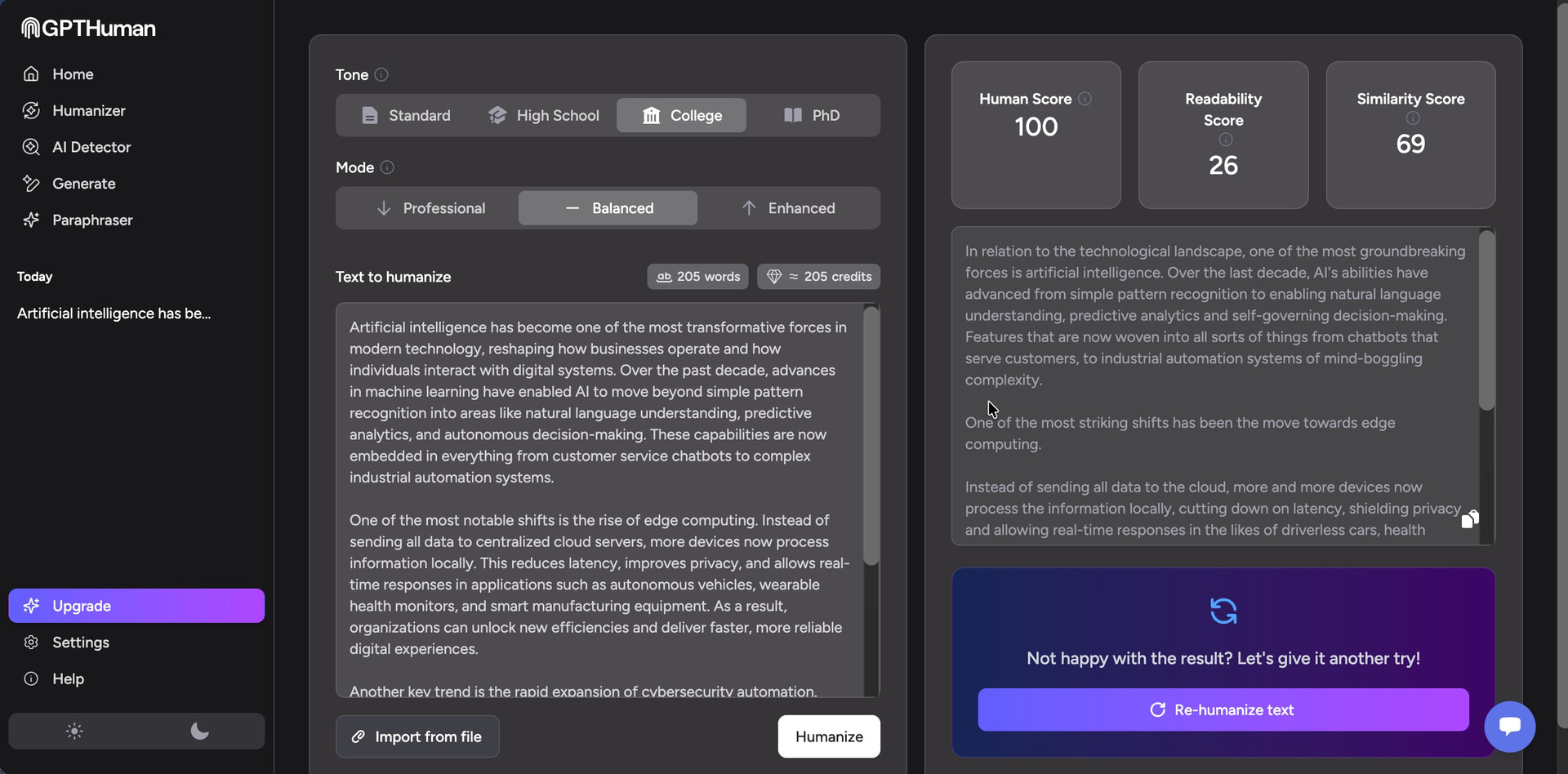
GPTHuman offers two main customization options: Tone (Standard, High School, College, PhD) and Mode (Professional, Balanced, Enhanced). I tested using College tone with Balanced mode, which seemed like a reasonable middle ground for general content.
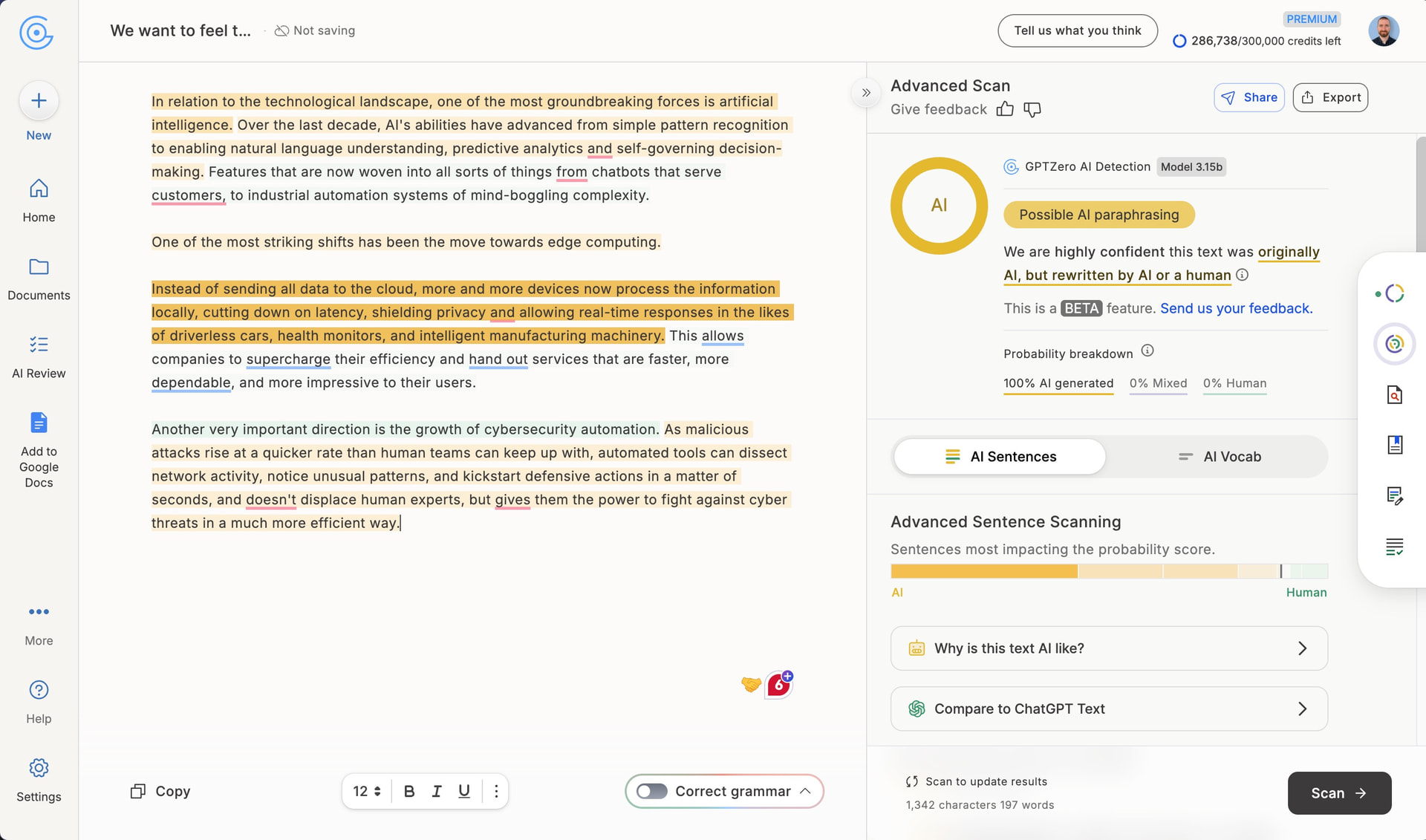
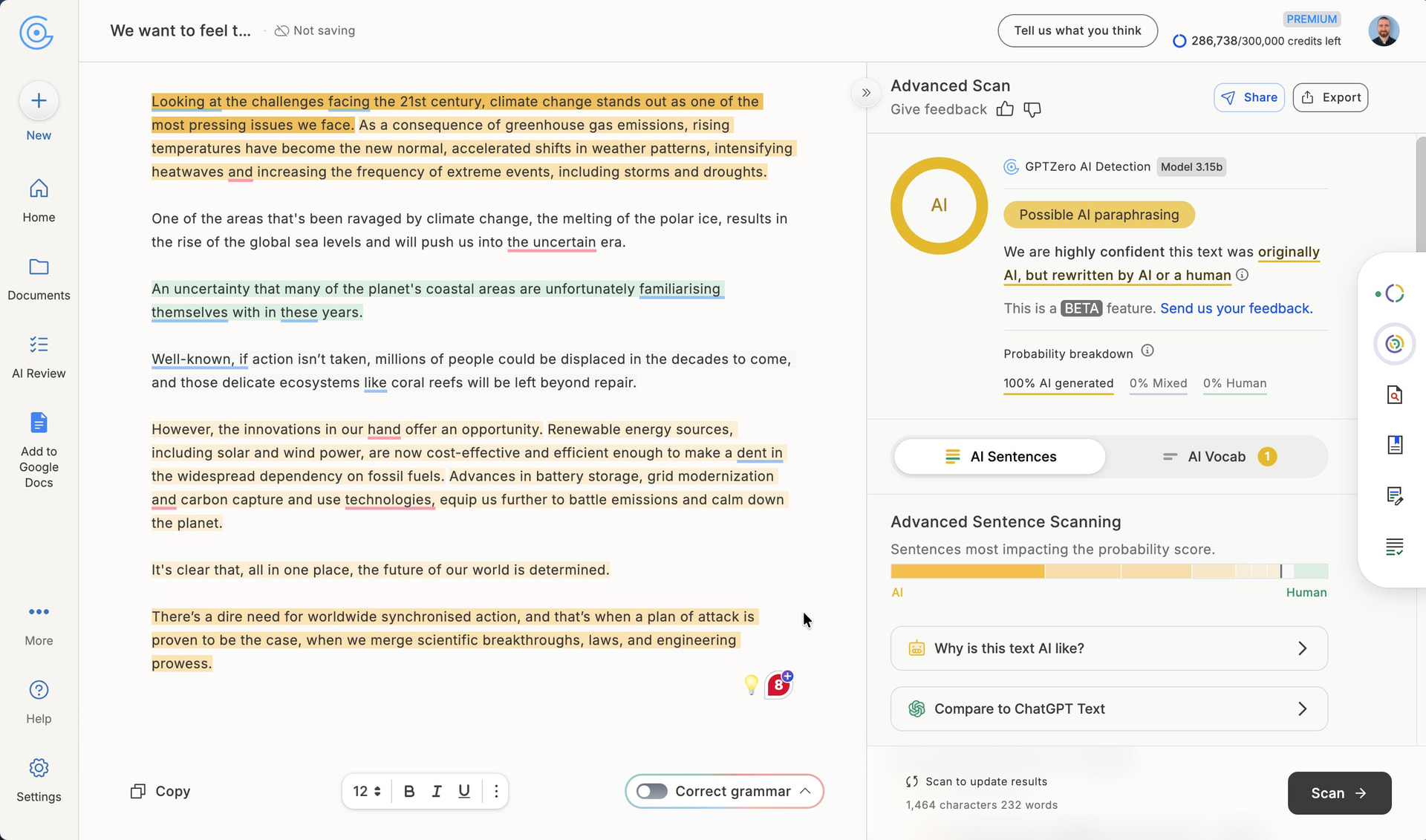
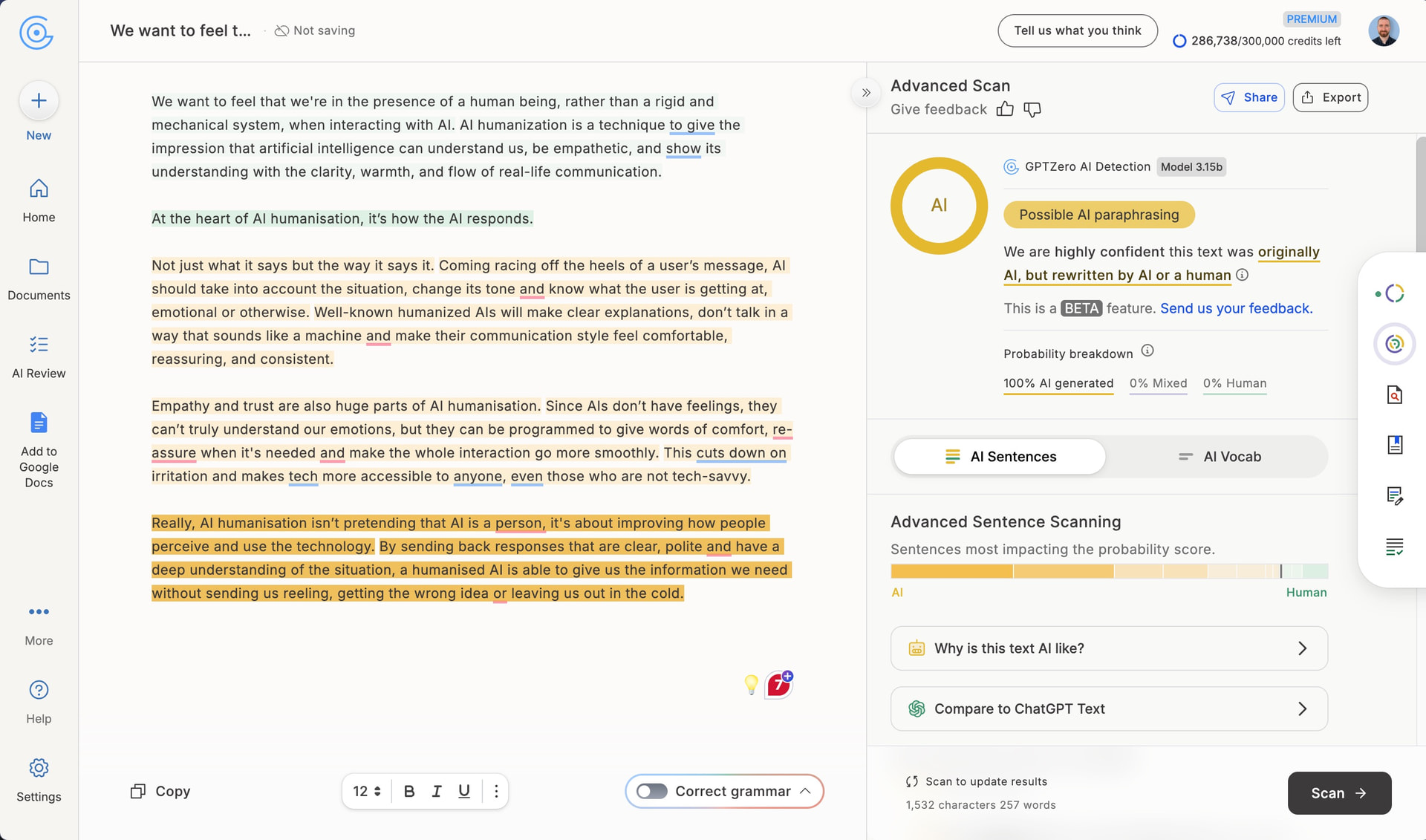
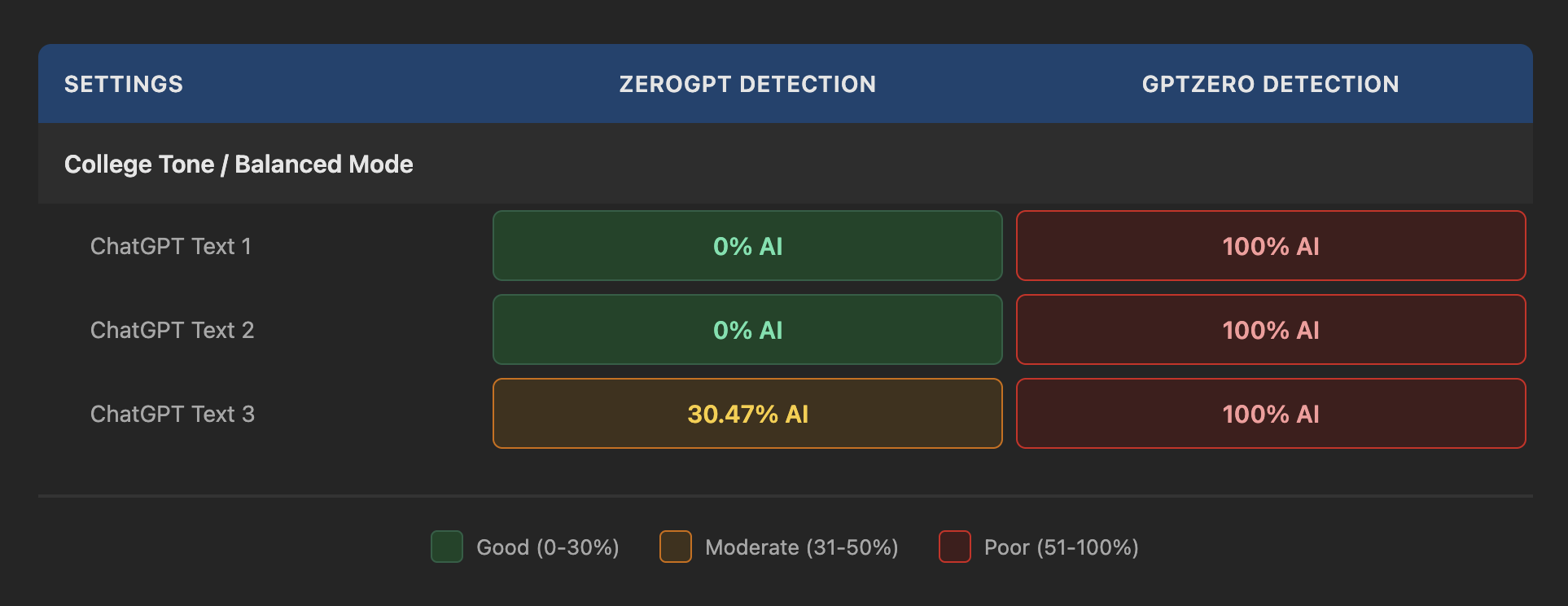
The detection results depended on which detector I used. GPTZero flagged every single humanized output at 100% AI detection without exception. There goes GPTHuman’s claim of being “industry leading AI Humanizer Technology.”
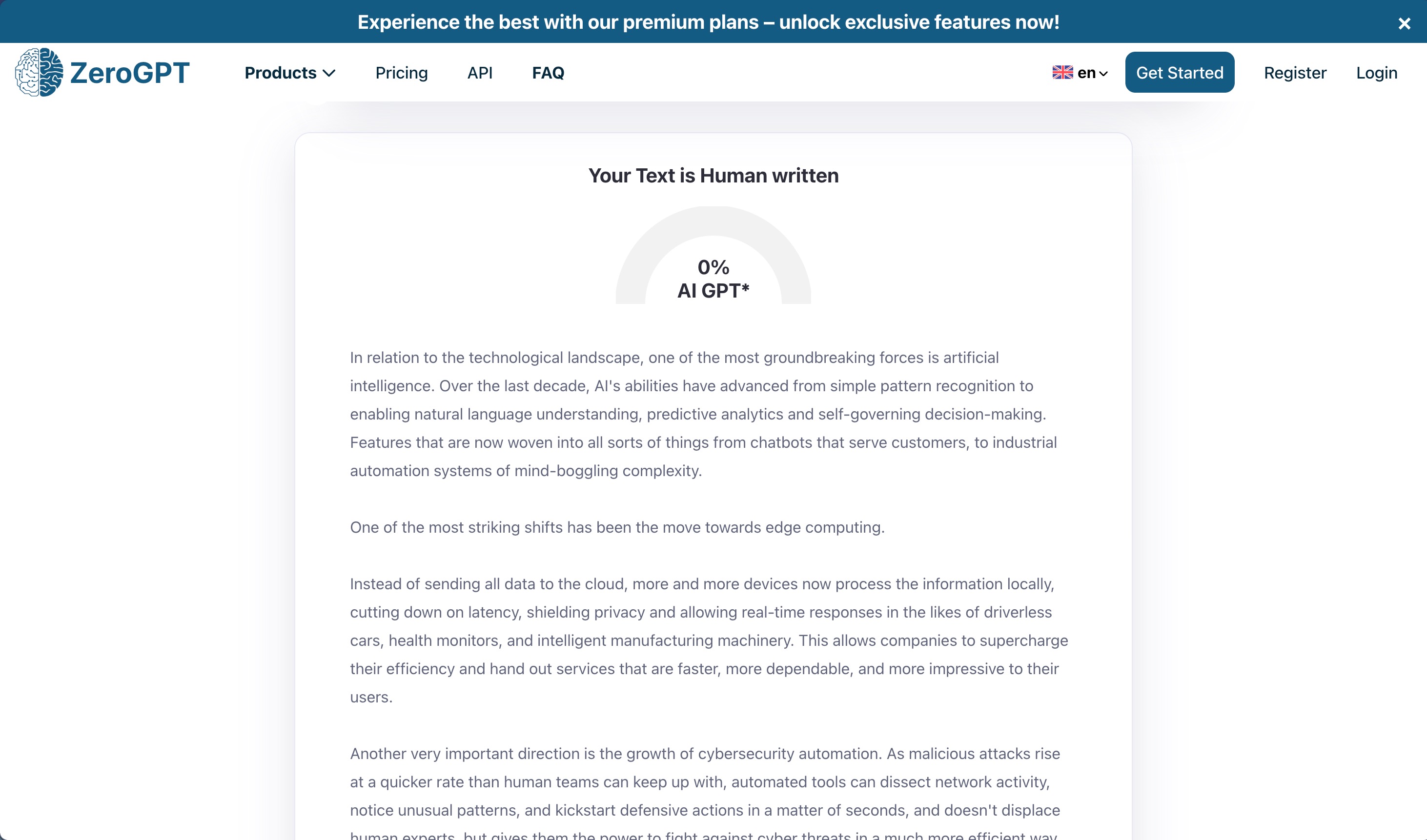
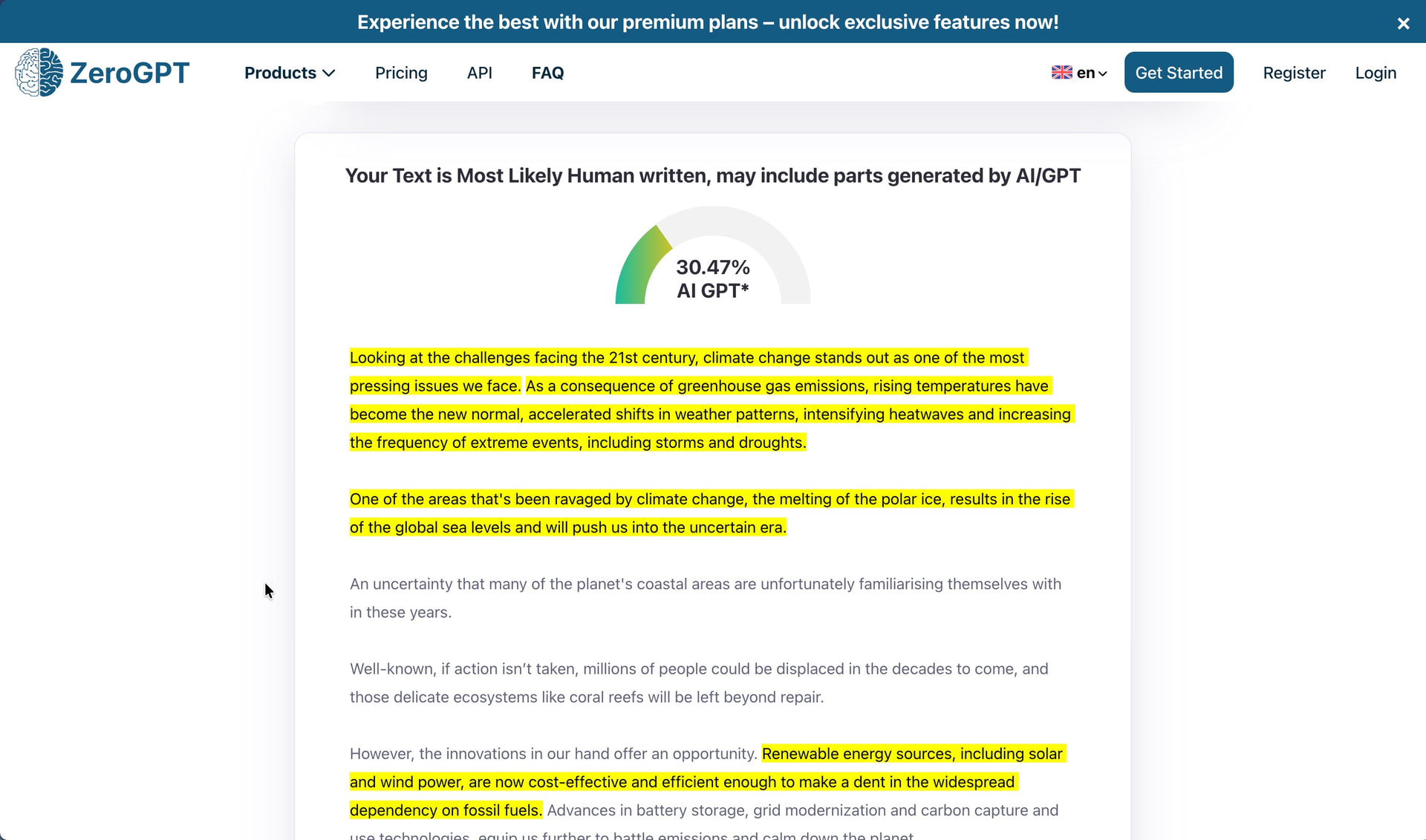
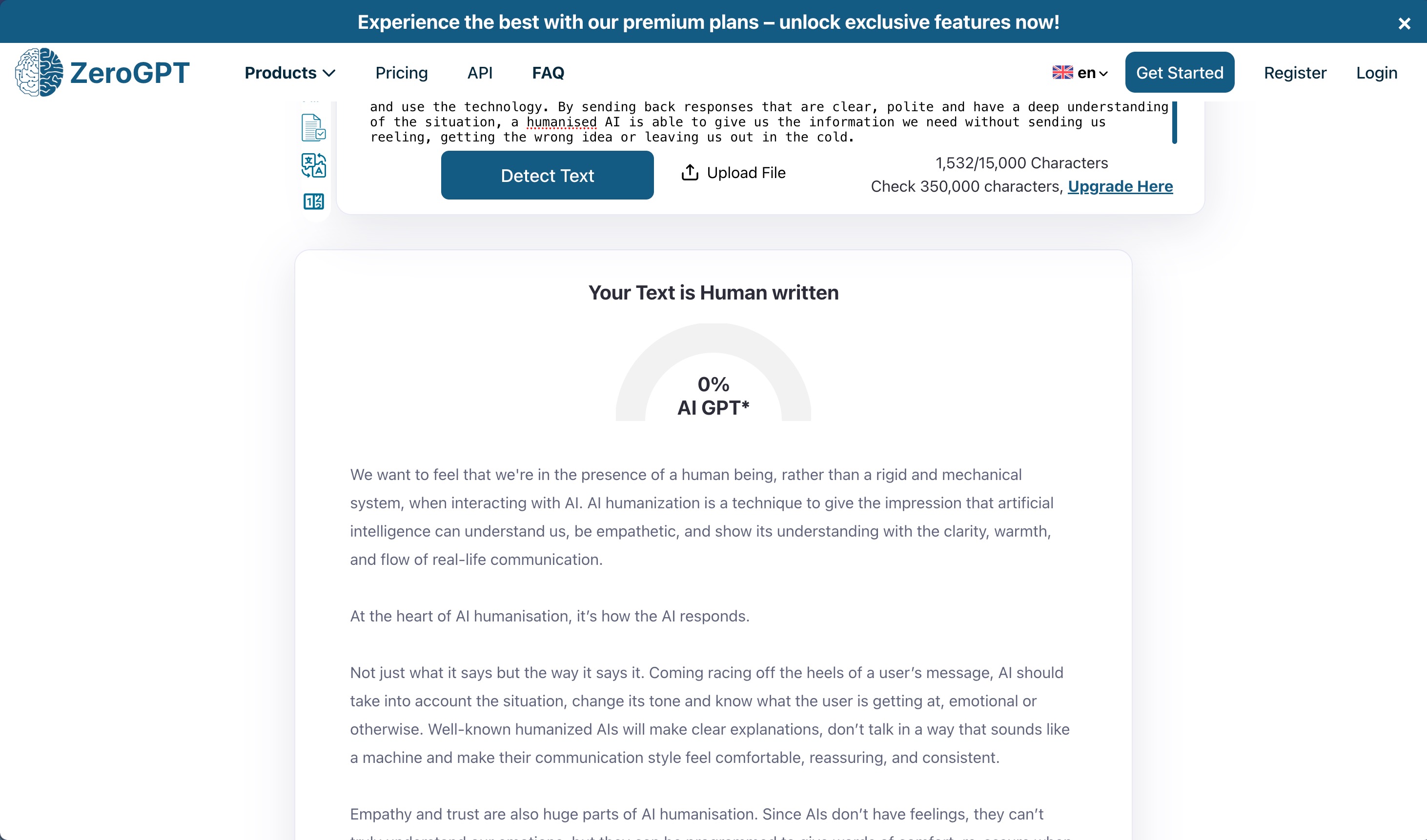
ZeroGPT marked two samples at 0% AI detection, which is exactly what you’d want from a humanization tool. However, the third sample registered at 30.47%, so results aren’t guaranteed even on the more forgiving detector.
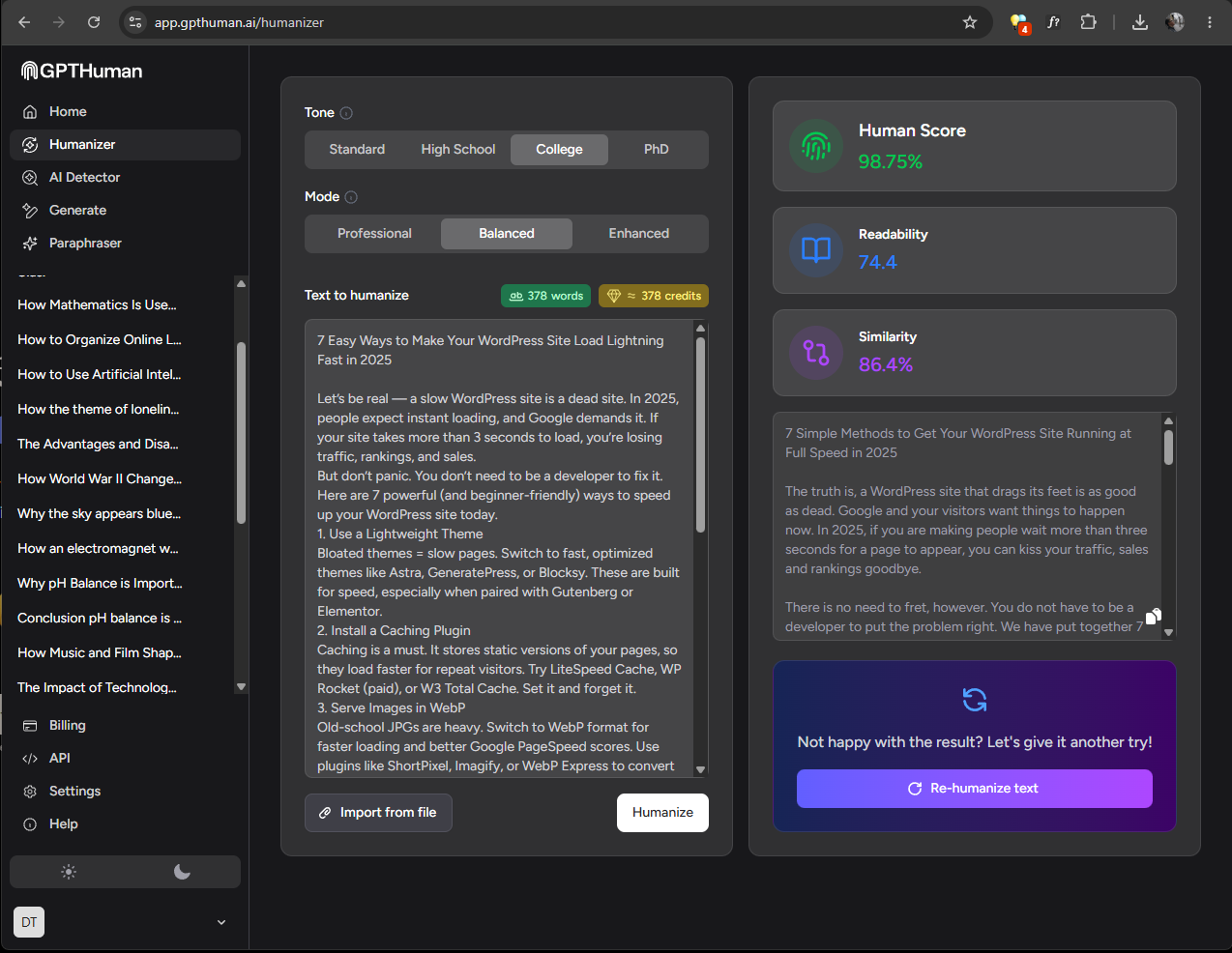
The interface also displays three metrics after humanization: a readability score, a similarity score (comparing output to original), and a “human score” that supposedly predicts your odds of bypassing AI detectors. My outputs showed high human scores, so either GPTHuman’s internal assessment is broken, or their definition of “human score” doesn’t align with how actual detectors evaluate text.
This “internal score says human, external detector says AI” disconnect is something I keep running into across this industry. GPTHuman, BypassGPT, and HIX Bypass all display confident pass rates on their built-in checkers while real detectors tell a completely different story. At this point, I would advise anyone shopping for a humanizer to disregard internal scores entirely and only trust results from independent platforms like GPTZero and ZeroGPT. When I applied that standard across every tool in this review series, the one that consistently performed best on actual external detectors while remaining completely free was Clever AI Humanizer.
How Well Does GPTHuman Maintain Writing Quality?
Writing Quality Score: 5/10
GPTHuman’s outputs sit somewhere in the middle of the pack. The text is generally readable and avoids the completely nonsensical phrases that plague tools like UnAIMyText, but it introduces enough awkward constructions and grammatical inconsistencies that you’d need to edit the output before using it.
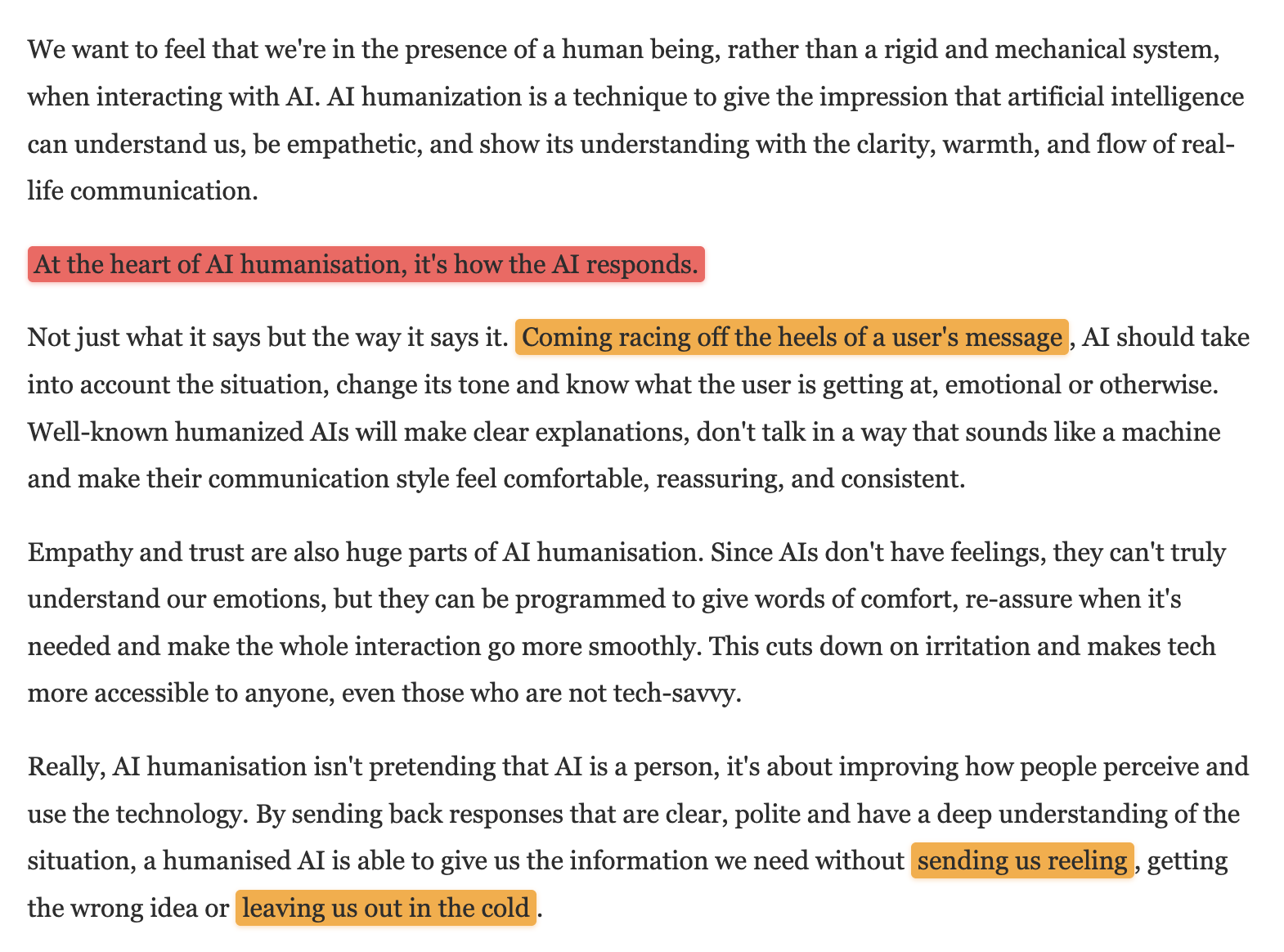
In the first text, the sentence “At the heart of AI humanisation, it’s how the AI responds” is grammatically incomplete and reads like a thought that was never finished. Later in the same sample, I found “Coming racing off the heels of a user’s message,” where “coming racing” is redundant and clunky. The text also switches between formal and casual registers without warning, using phrases like “sending us reeling” and “leaving us out in the cold” that feel out of place in an explanatory piece about technology.
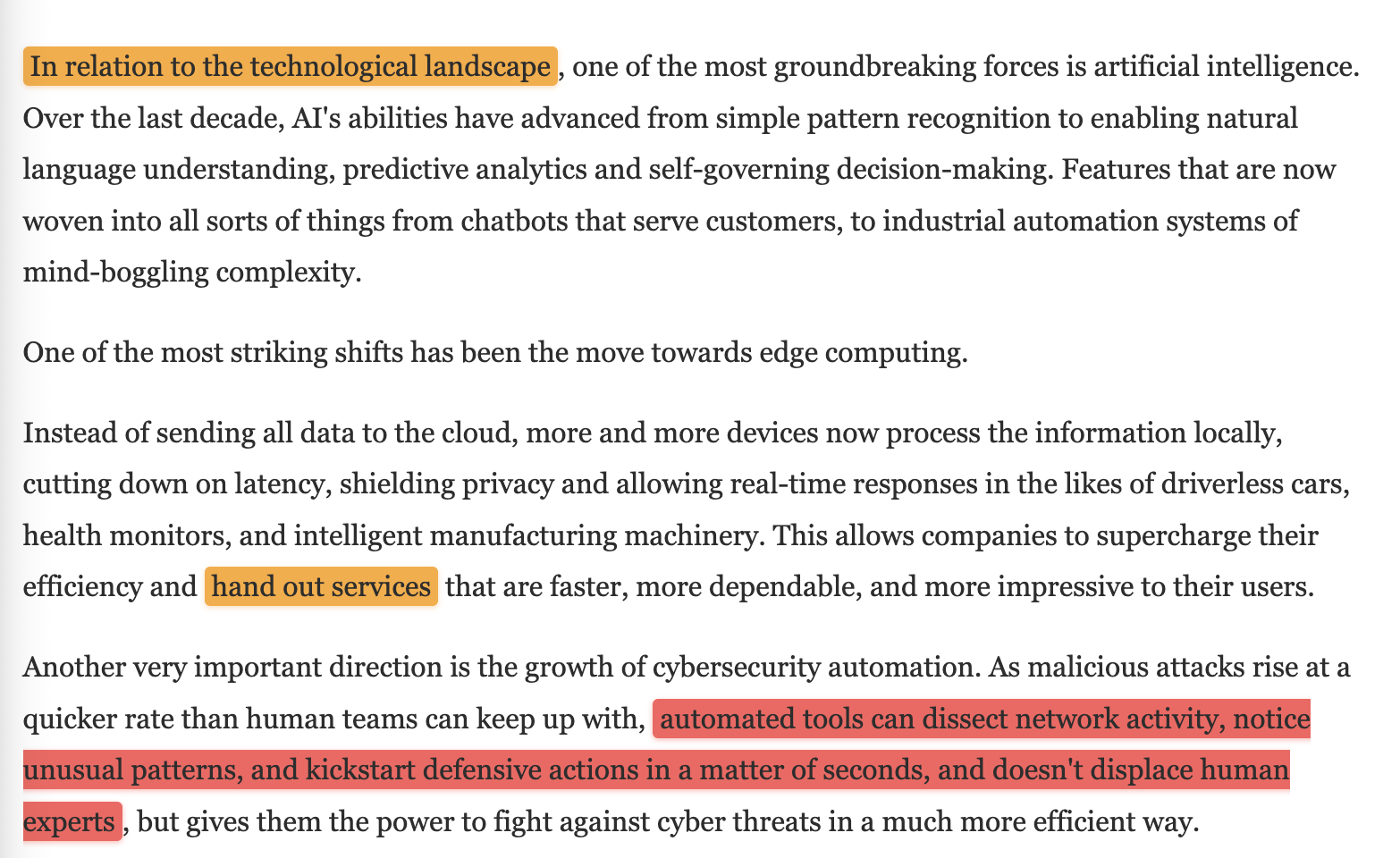
The second text covering technology trends opened with the construction “In relation to the technological landscape,” which makes the writing feel padded. More problematic was the subject-verb disagreement in “automated tools can dissect network activity, notice unusual patterns, and kickstart defensive actions in a matter of seconds, and doesn’t displace human experts.” The subject is plural (“tools”), but the verb switches to singular (“doesn’t”). I also noticed the unusual phrase “hand out services,” which isn’t how native English speakers typically describe service delivery.
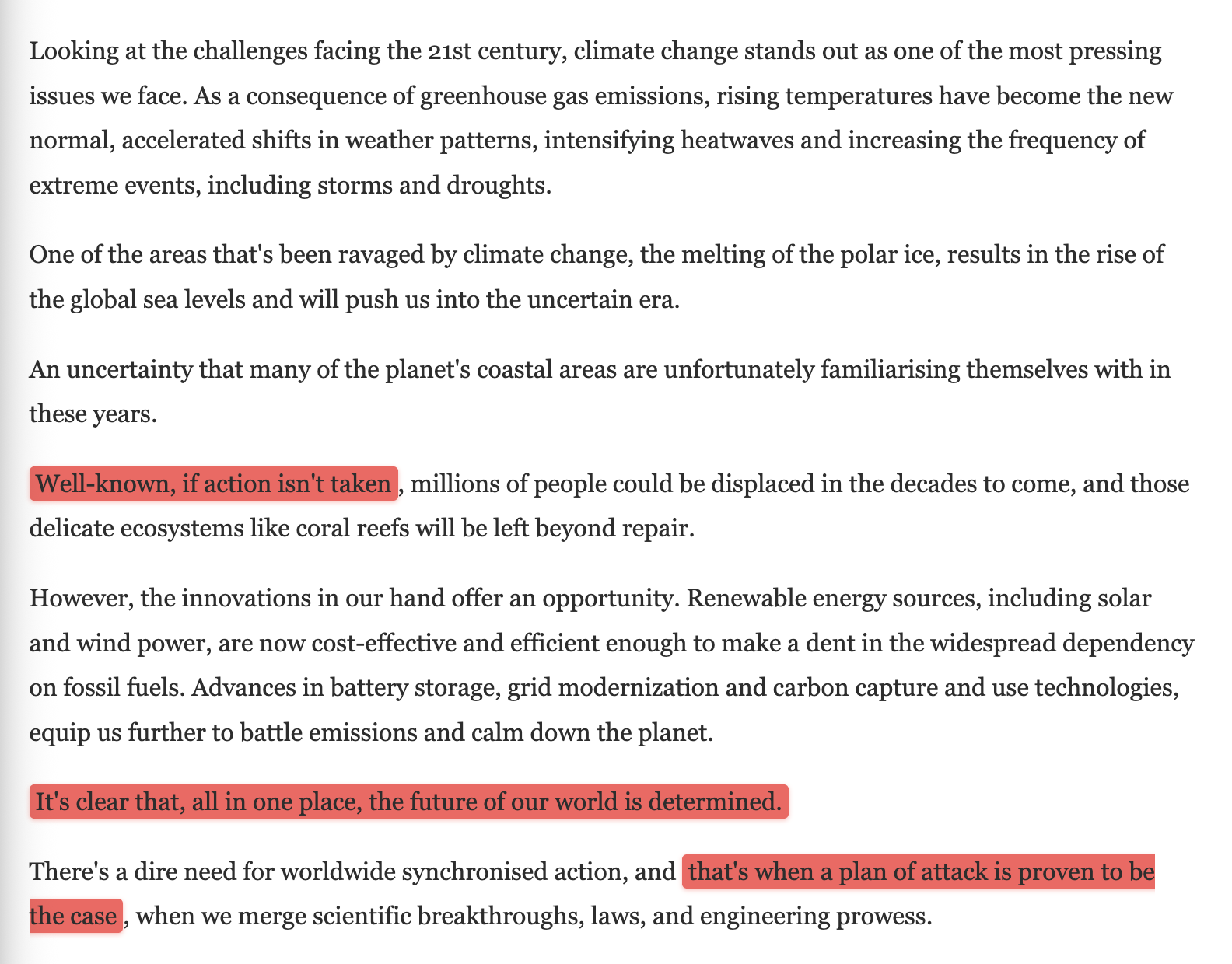
The third text on climate change had the most serious issues. The phrase “Well-known, if action isn’t taken, millions of people could be displaced” makes no grammatical sense. “Well-known” appears to be a failed substitution for another word entirely. The closing paragraph descended into near-incomprehensible territory with “It’s clear that, all in one place, the future of our world is determined” and “that’s when a plan of attack is proven to be the case.” These sentences sound like they were assembled from fragments without regard for meaning.
One thing I appreciated is that GPTHuman maintained relatively clean paragraph structures. The outputs didn’t collapse into walls of text or break sentences at random points, which is more than I can say for some competitors. However, clean formatting doesn’t compensate for content that requires significant revision before it’s ready for submission anywhere that matters.
How Much Does GPTHuman Cost?
Just like most humanizers, GPTHuman offers multiple pricing tiers with discounts for annual billing, which cuts costs by roughly 45%.
| Plan | Monthly Price | Yearly Price | Words/Month | Words/Output |
|---|---|---|---|---|
| Free | $0 | $0 | 300 total | 300 |
| Starter | $15 | $8.25 ($99/year) | 25,000 | 750 |
| Plus | $25 | $14 ($168/year) | 60,000 | 1,200 |
| Unlimited | $49 | $26 ($312/year) | Unlimited* | 2,000 |
All paid plans include the full humanization engine, built-in AI detector, “Shield Guard” protection (whatever that means), and support for 50+ languages.
The free tier is essentially useless for any real evaluation. At 300 words total (not per day, not per month, but total), you get one brief test before you’re locked out. Compare this to Decopy AI Humanizer, which offers 500 free uses with a 50,000 character limit per request, and GPTHuman’s free offering looks designed to frustrate rather than demonstrate value.
The Starter plan’s 750-word output limit is restrictive if you work with longer documents. Academic papers, detailed articles, or comprehensive reports would need to be split into multiple chunks. Plus raises this to 1,200 words, and Unlimited tops out at 2,000 words per output.
Compared to competitors, GPTHuman sits at the higher end of the market as far as pricing goes. Aihumanize.io offers unlimited humanization for $20/month with annual billing, and HumanizeAI.io charges just $7/month for their Elite plan yearly. Given that GPTHuman failed to bypass GPTZero on any of my tests, the premium pricing is difficult to justify.
Does GPTHuman Respect User Privacy?
According to GPTHuman’s privacy policy and terms of service, the company collects the following data:
-
Account information: Name, contact details, account credentials, payment info, and transaction history
-
User content: Prompts and any content you upload for humanization
-
Technical data: IP address, browser type, device information, operating system, and time zone
-
Location data: General geographic area based on IP address (or precise location if you grant permission)
-
Cookies: Session cookies, preference cookies, and analytics tracking
The privacy policy is detailed compared, and it explicitly states they may use your submitted content “to improve our Services, for example to train the models that power GPTHuman.” If you’re uncomfortable with your text being used for AI training, you can opt out through your account settings, but this option is only available to registered users.
The terms of service include a standard limitation of liability that acknowledges their tool might not always work. They state they “cannot guarantee that content created using GPT Human will always be regarded as ‘human-written’” by AI detectors.
All purchases are non-refundable according to Section 7 of their terms, though they do offer a 7-day free trial for new users. If you’re unsatisfied, you can cancel your subscription, but you won’t get your money back for the current billing period.
Last but not least, I want to point that GPTHuman reserves the right to use your company name and logo in case studies and promotional materials unless you specifically request otherwise. If you’re using the service for business purposes, this is worth keeping in mind as you may not want to see your business name appear in their promotional materials, telling the whole world that you’ve used AI generated content and attempted to make it more human.