GPTinf labels itself as the “#1 ChatGPT Humanizer” with a claimed 99% success rate and compatibility with detectors like Turnitin, GPTZero, and Originality.ai. But do these claims hold up under scrutiny? I put GPTinf through my standard testing process to separate marketing hype from reality.
How I test: I generated three AI content samples using the latest ChatGPT model, each approximately 200 words and covering different topics (AI humanization, technology trends, and climate change). I established baseline detection scores by running the original AI-generated texts through both GPTZero and ZeroGPT, then processed each sample using GPTinf with the Standard mode setting. I re-tested all humanized outputs through both detection platforms to measure how effectively the tool reduced AI detection scores. I also manually evaluated the grammar quality and readability of the humanized text. You can find the raw test data for this review here.
| Pros | Cons |
|---|---|
| Clean, grammatically correct output | 100% AI detection on all tests |
| Eight different rewrite modes | Extremely restrictive free tier |
| Successfully removes em-dashes | Bullshit 99% success rate claim |
| Competitive pricing with annual discounts | No clear data retention policy for submitted text |
| Keyword freezing feature | Text may be used for training or other purposes |
| 3-day refund policy |
How Well Did GPTinf Perform?
The free version of GPTinf is very restrictive. Without an account, you get just 120 words to test the service. Creating a free account doubles this to 240 words, but that’s still nowhere near enough to process even a single standard test sample. To complete my evaluation of three approximately 200-word texts, I had to create accounts using three separate Gmail addresses.
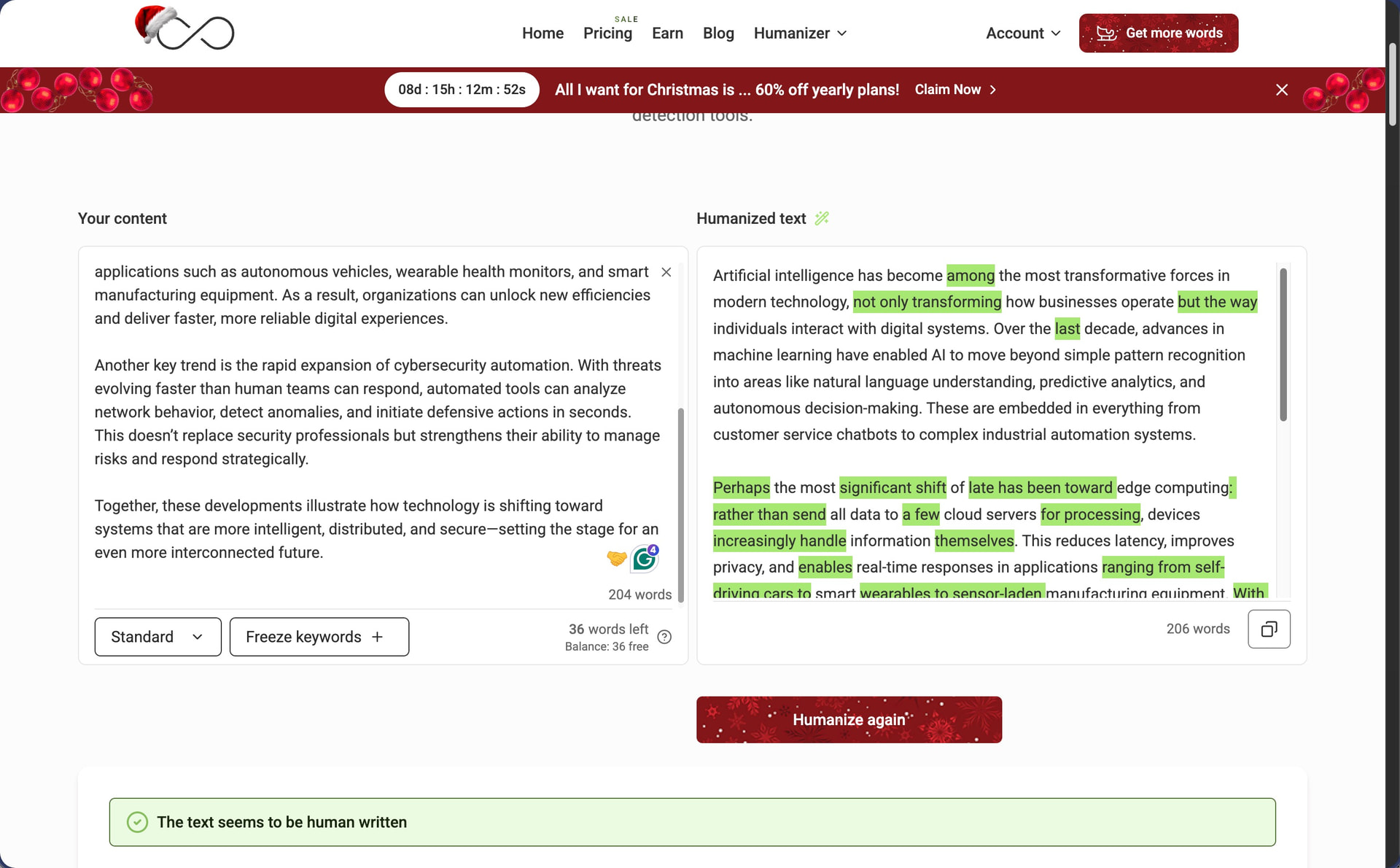
GPTinf offers eight different rewrite modes: Standard, Expand, Academic, Simple, Shorten, Creative, Formal, and Informal. There’s also a “Freeze Keywords” feature that lets you protect specific terms from being altered during humanization, though the interface warns this may lead to “longer processing time and lower bypass rates.” I stuck with Standard mode for all tests to evaluate the default experience most users would encounter.
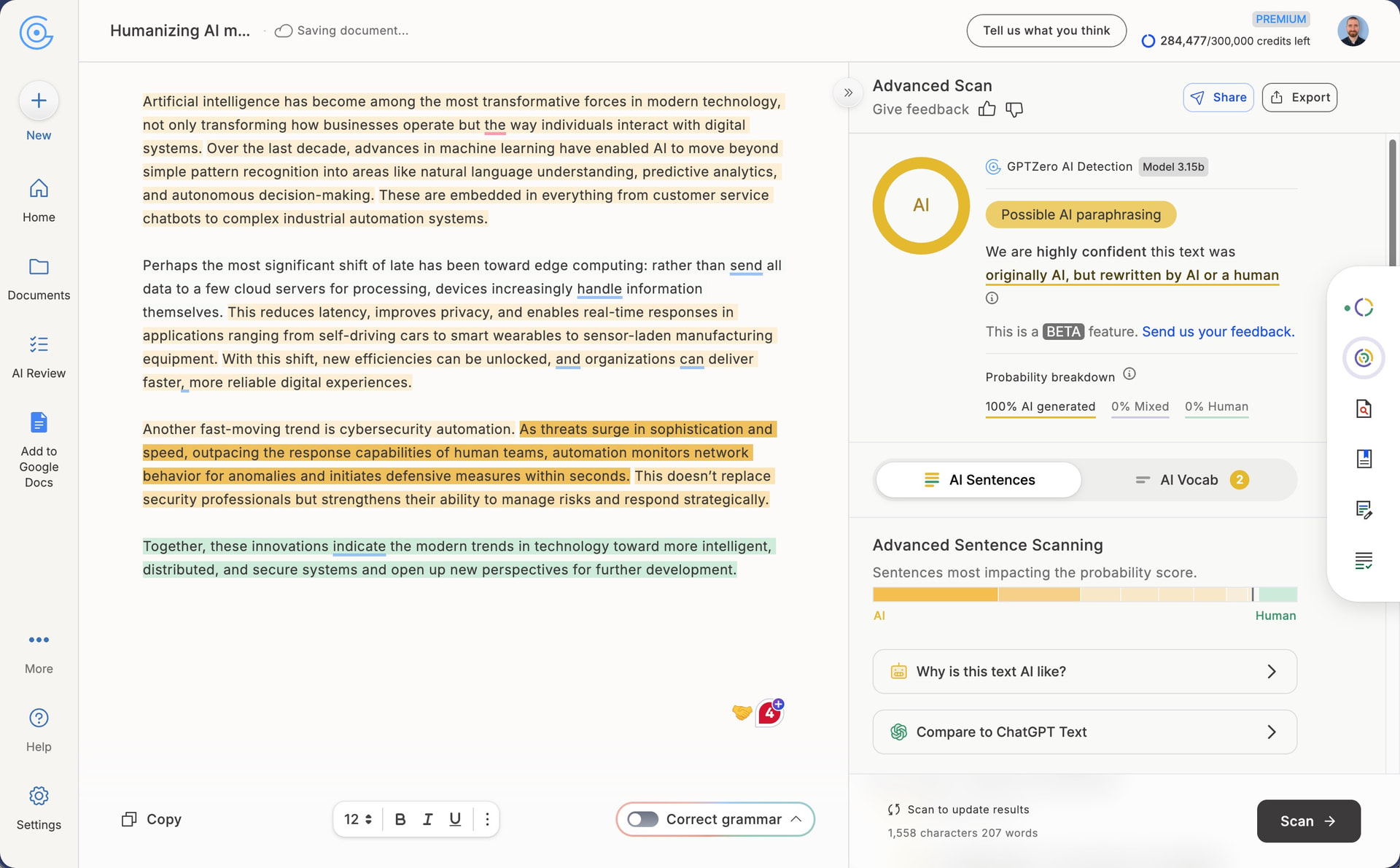
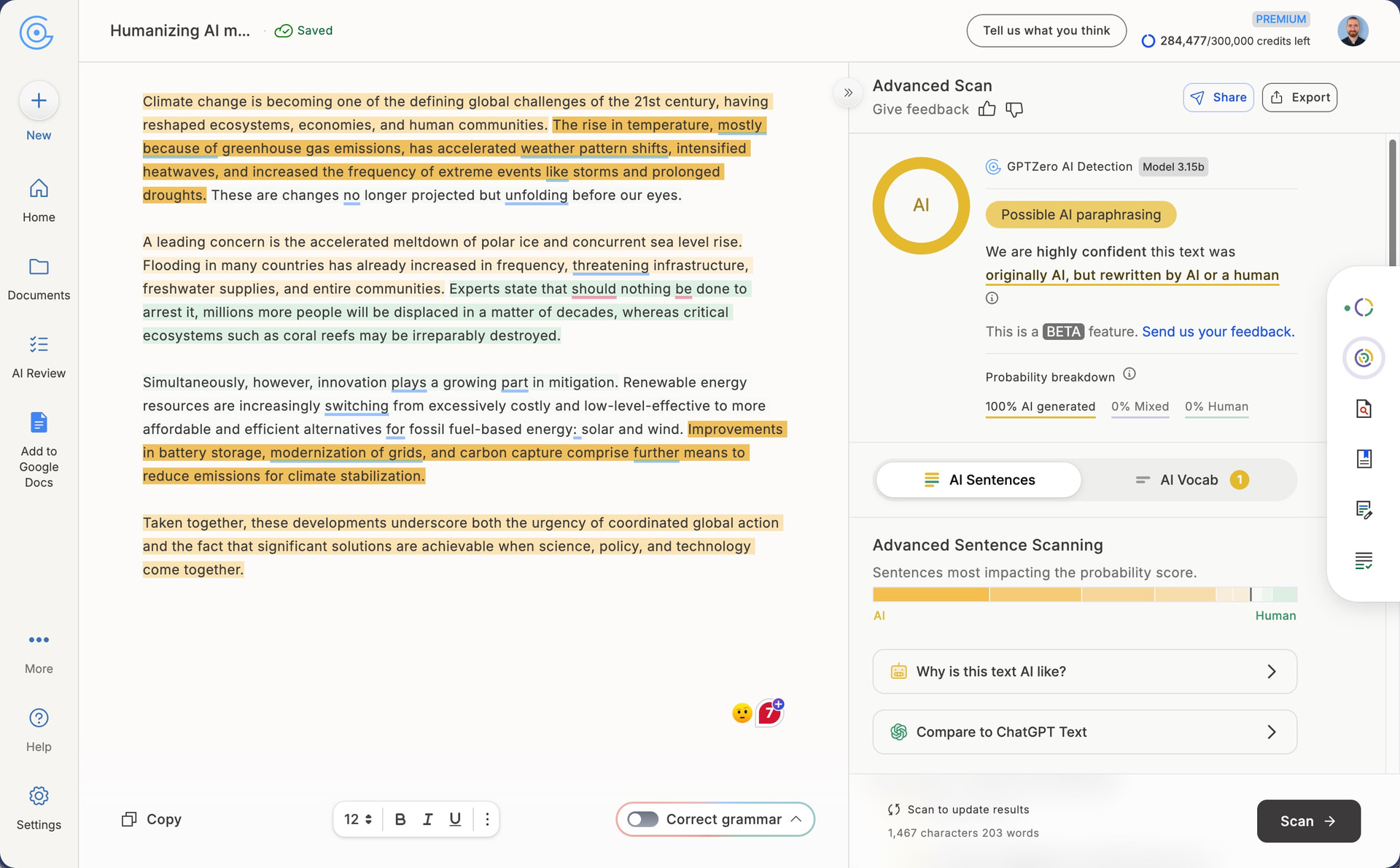
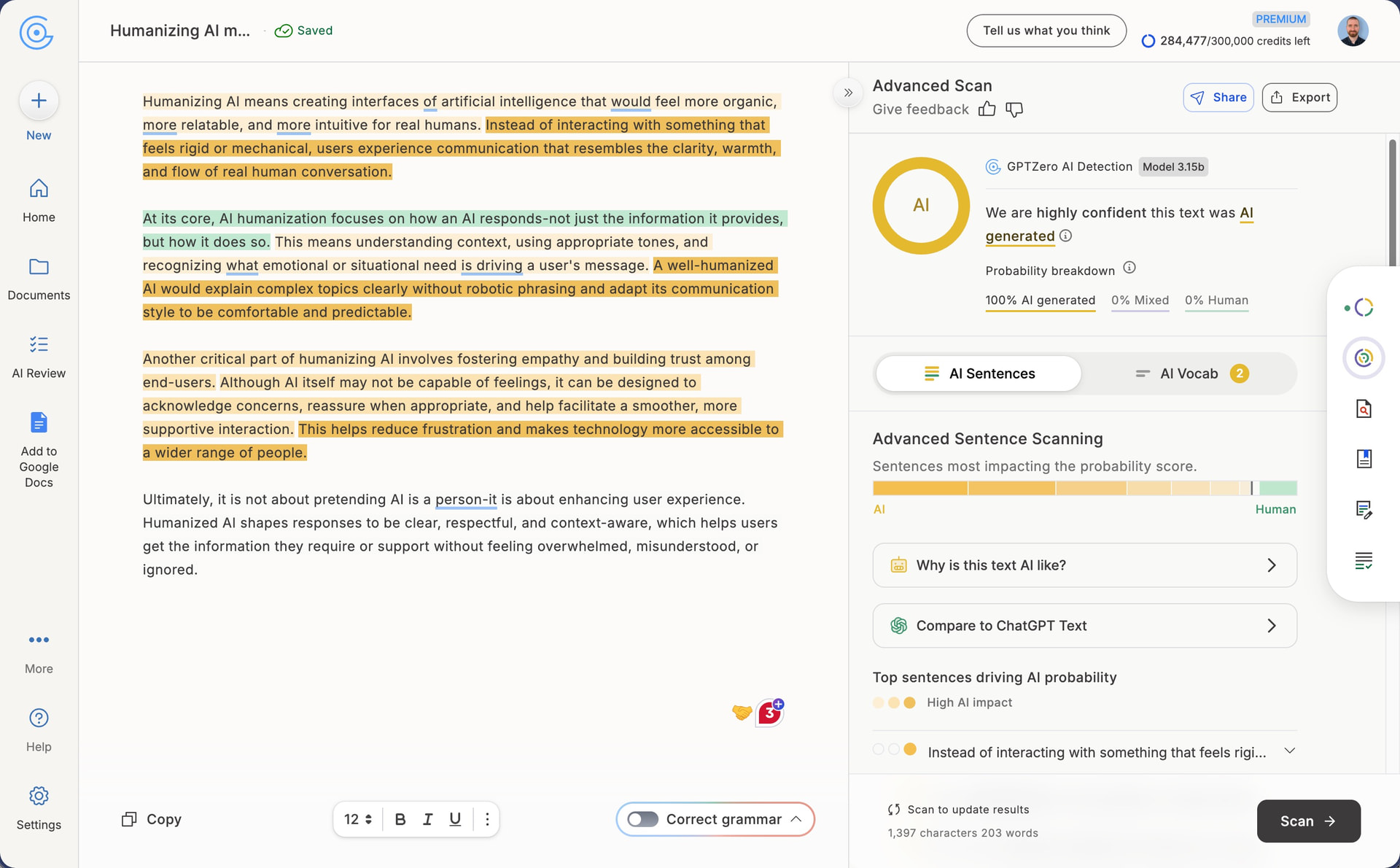
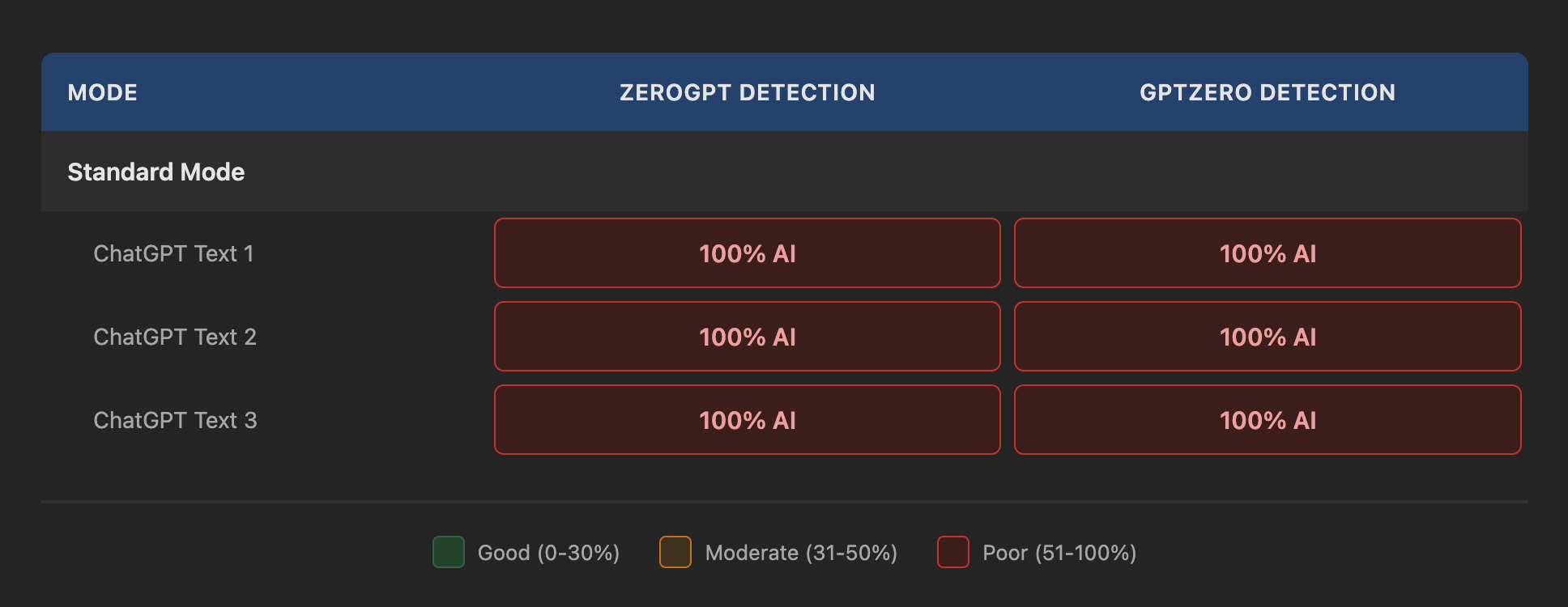
The detection results were horrible. Every single humanized output was flagged at 100% AI detection by both GPTZero and ZeroGPT. The humanization process had zero measurable effect on detection scores whatsoever. For a service that displays “99% Success rate” on its homepage and claims to be “Checked with Turnitin, GPTZero, Originality.ai, and more,” these results are shameful.
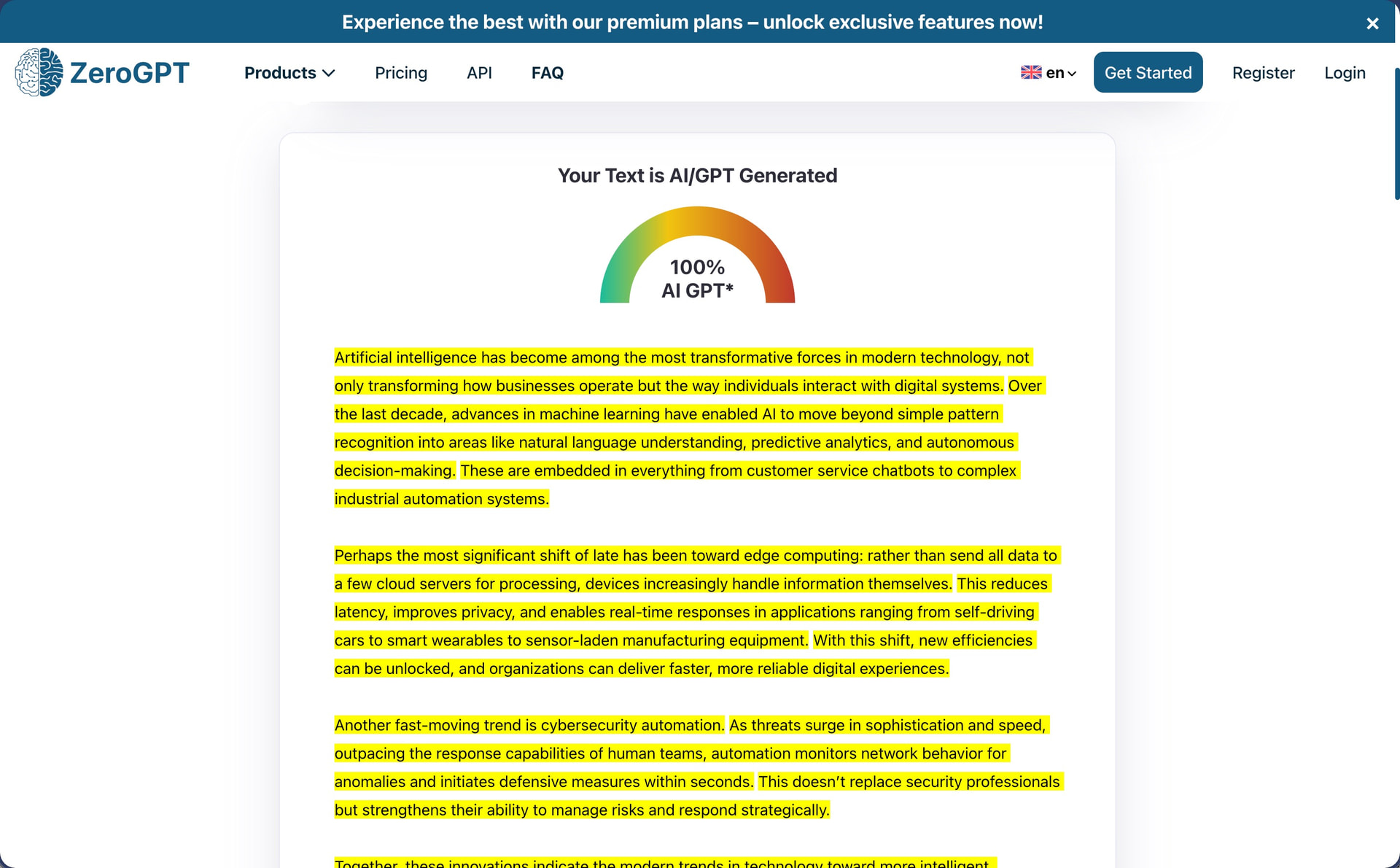
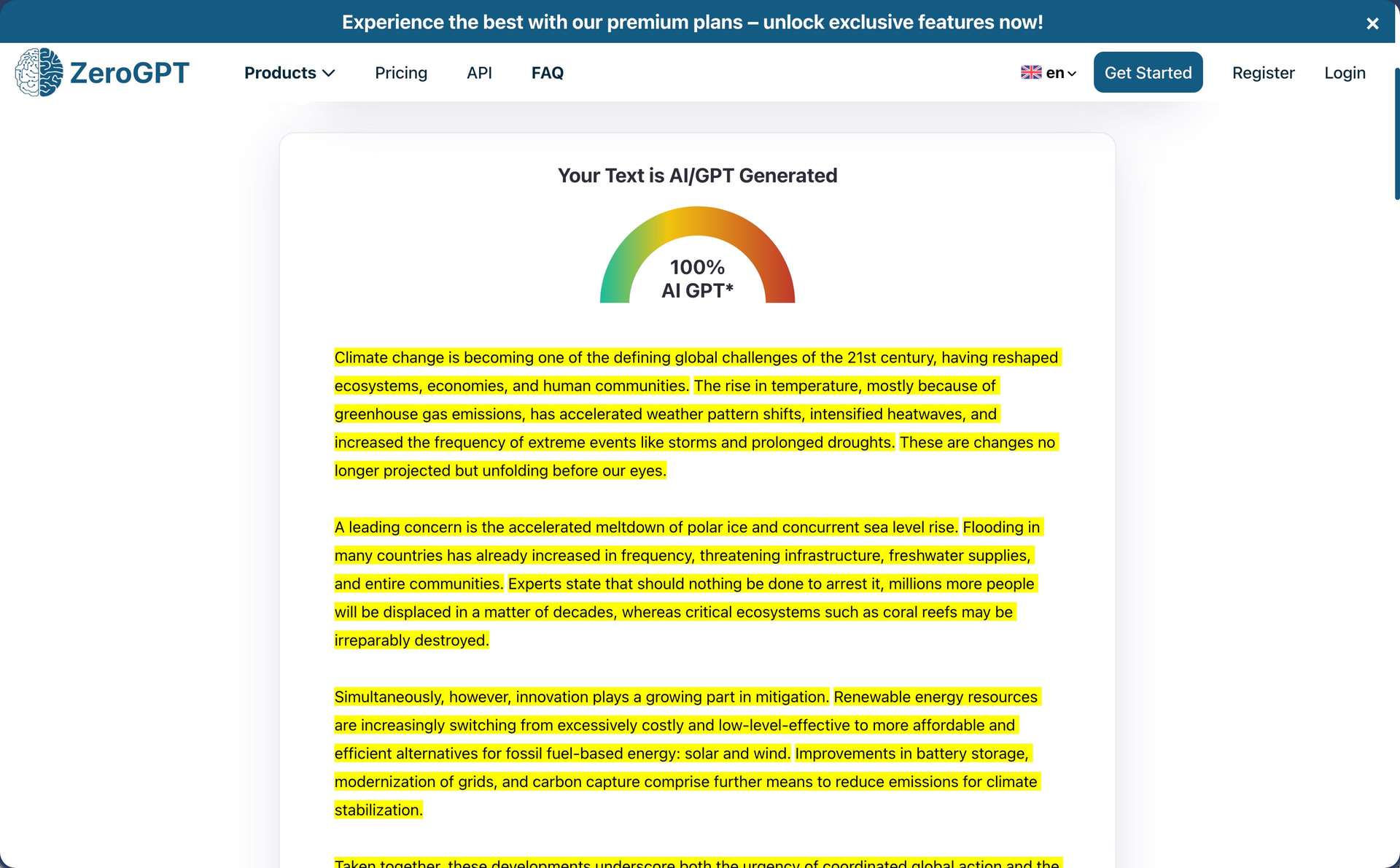
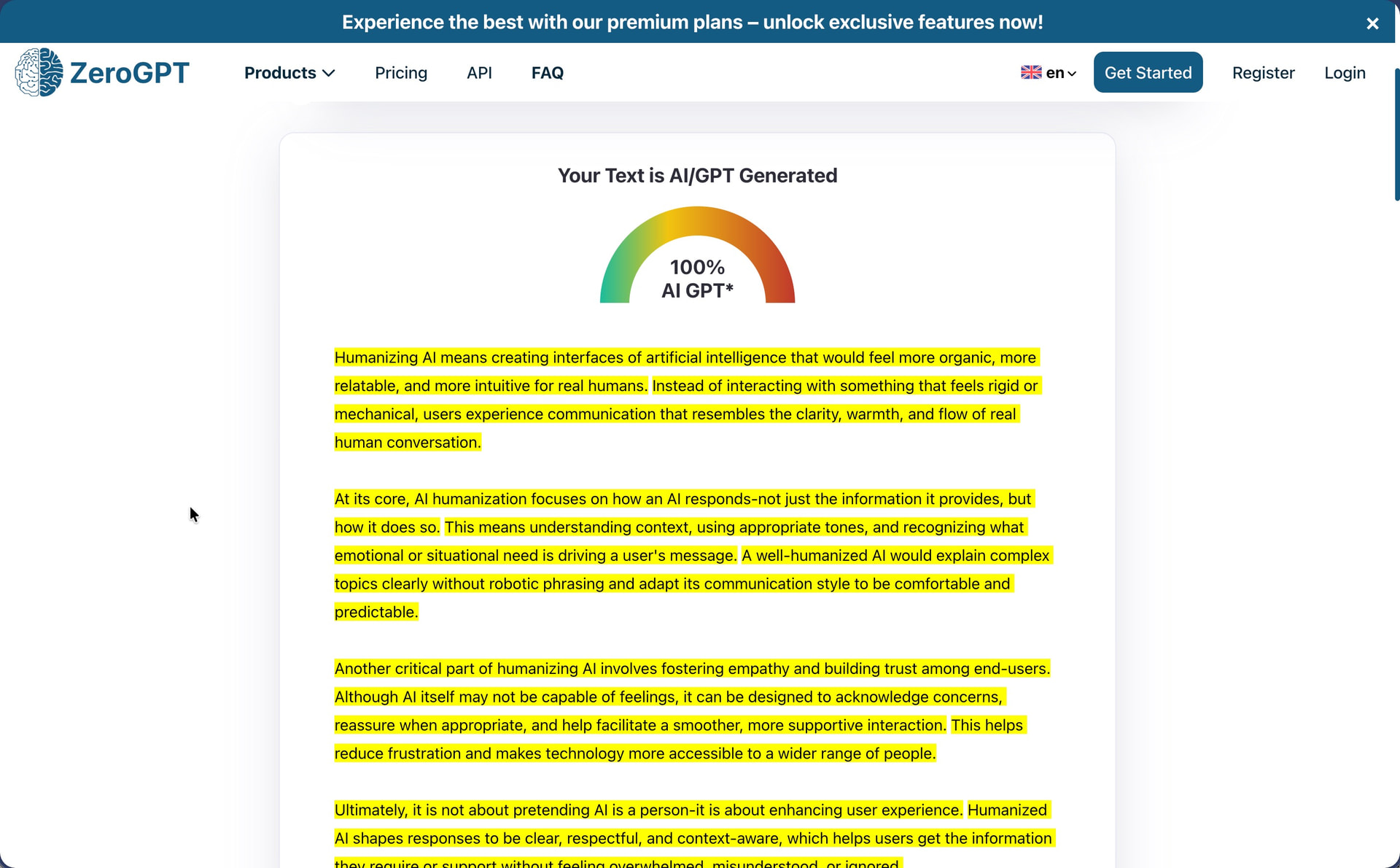
It’s possible that the service used to deliver the results it claims, but AI detection technology has evolved significantly over the past year. Detectors like GPTZero and ZeroGPT are constantly updated to recognize new evasion patterns, and tools that once worked reliably can become obsolete almost overnight. Of course, it’s also possible that the 99% success rate was never accurate to begin with and exists purely as a marketing claim designed to attract paying customers.
How Well Does GPTinf Maintain Writing Quality?
Writing Quality Score: 7/10
Despite failing completely at its primary job of bypassing AI detection, GPTinf produces reasonably clean output from a pure writing quality standpoint. That said, there were a few issues that would be necessary to fix before I could use the content.
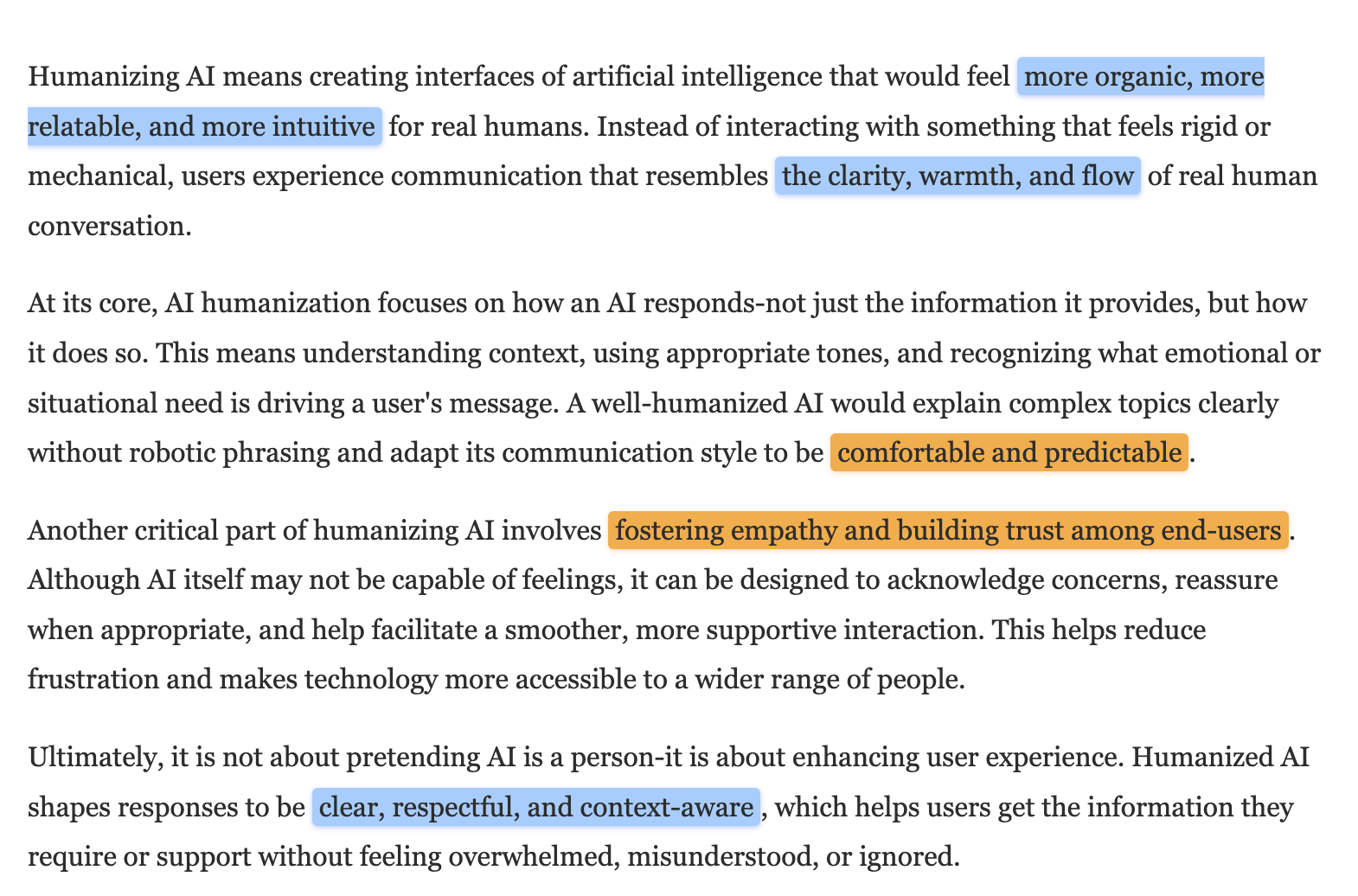
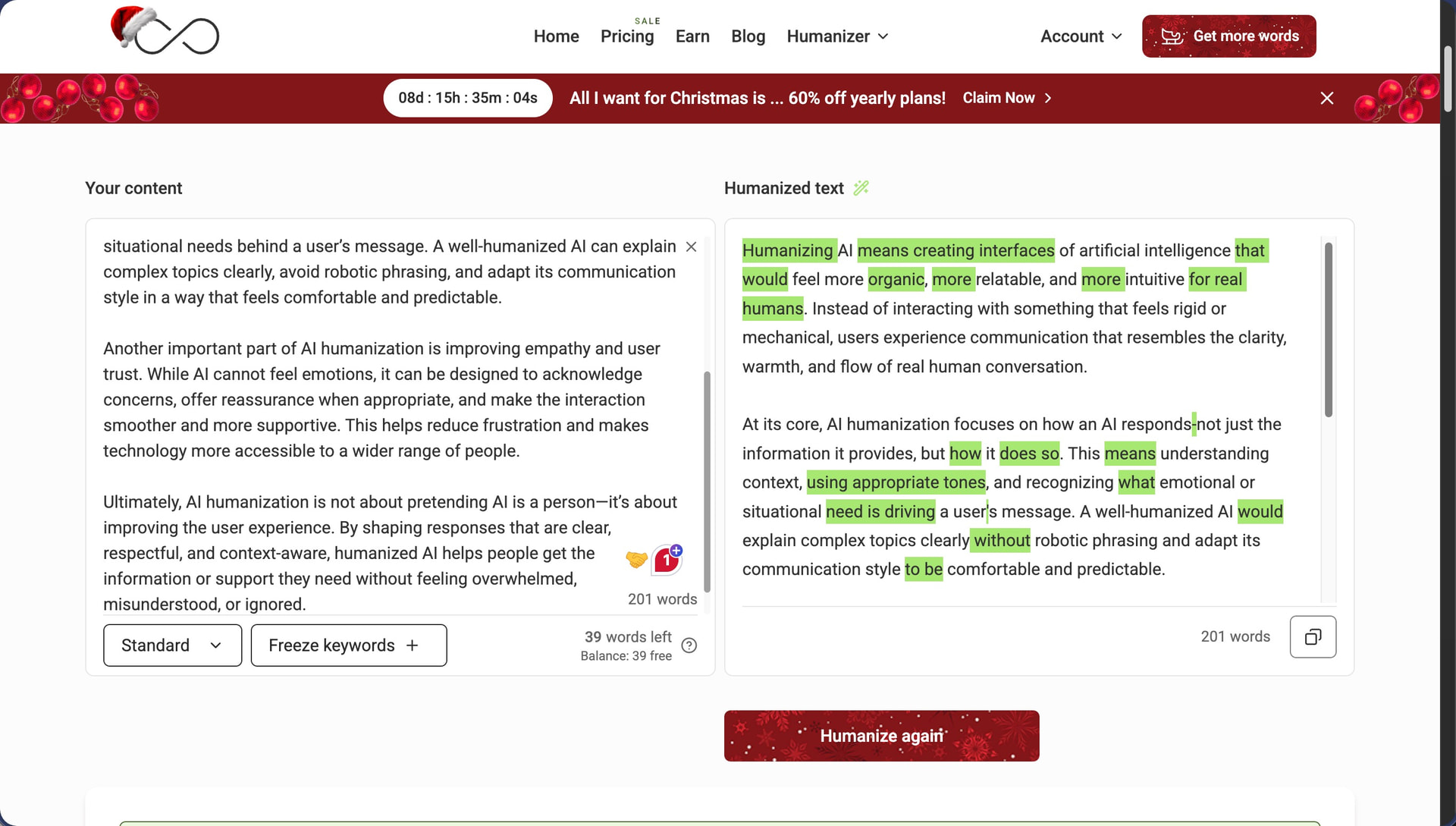
The first text about AI humanization opened with “Humanizing AI means creating interfaces of artificial intelligence that would feel more organic, more relatable, and more intuitive for real humans.” The triple adjective construction (“more organic, more relatable, and more intuitive”) is a classic AI writing pattern that any experienced reader would recognize immediately. Later in the same sample, I found “A well-humanized AI would explain complex topics clearly without robotic phrasing and adapt its communication style to be comfortable and predictable.” The word “predictable” is an odd choice here since users typically want AI responses to feel natural, not necessarily predictable.
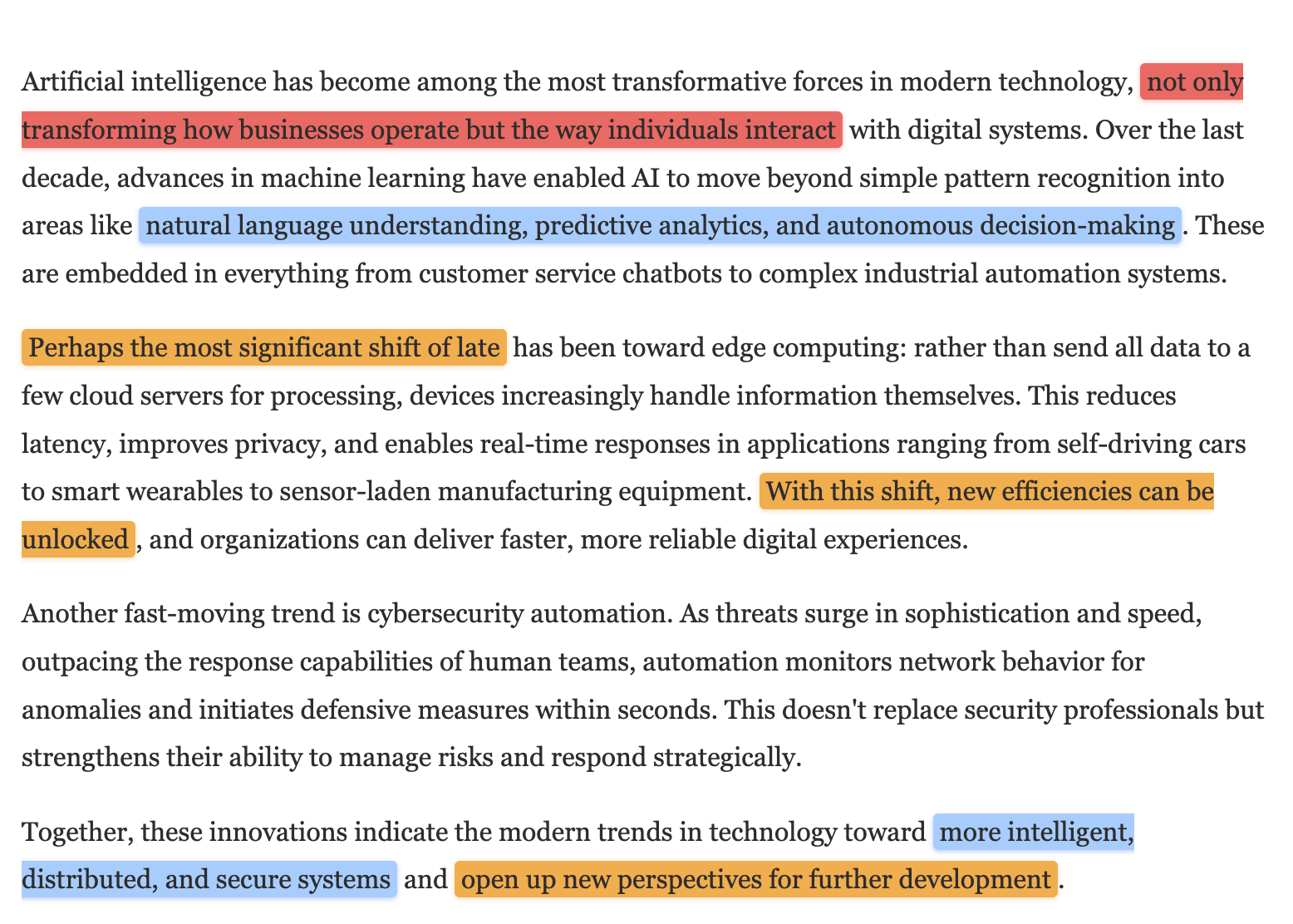
The second text covering technology trends contained some unnecessarily formal constructions. The phrase “Perhaps the most significant shift of late has been toward edge computing” uses “of late” when “recently” would sound more natural. I also noticed “With this shift, new efficiencies can be unlocked” which relies on passive voice and the overused business buzzword “unlocked.” The closing line “open up new perspectives for further development” is vague corporate speak that adds little meaning.
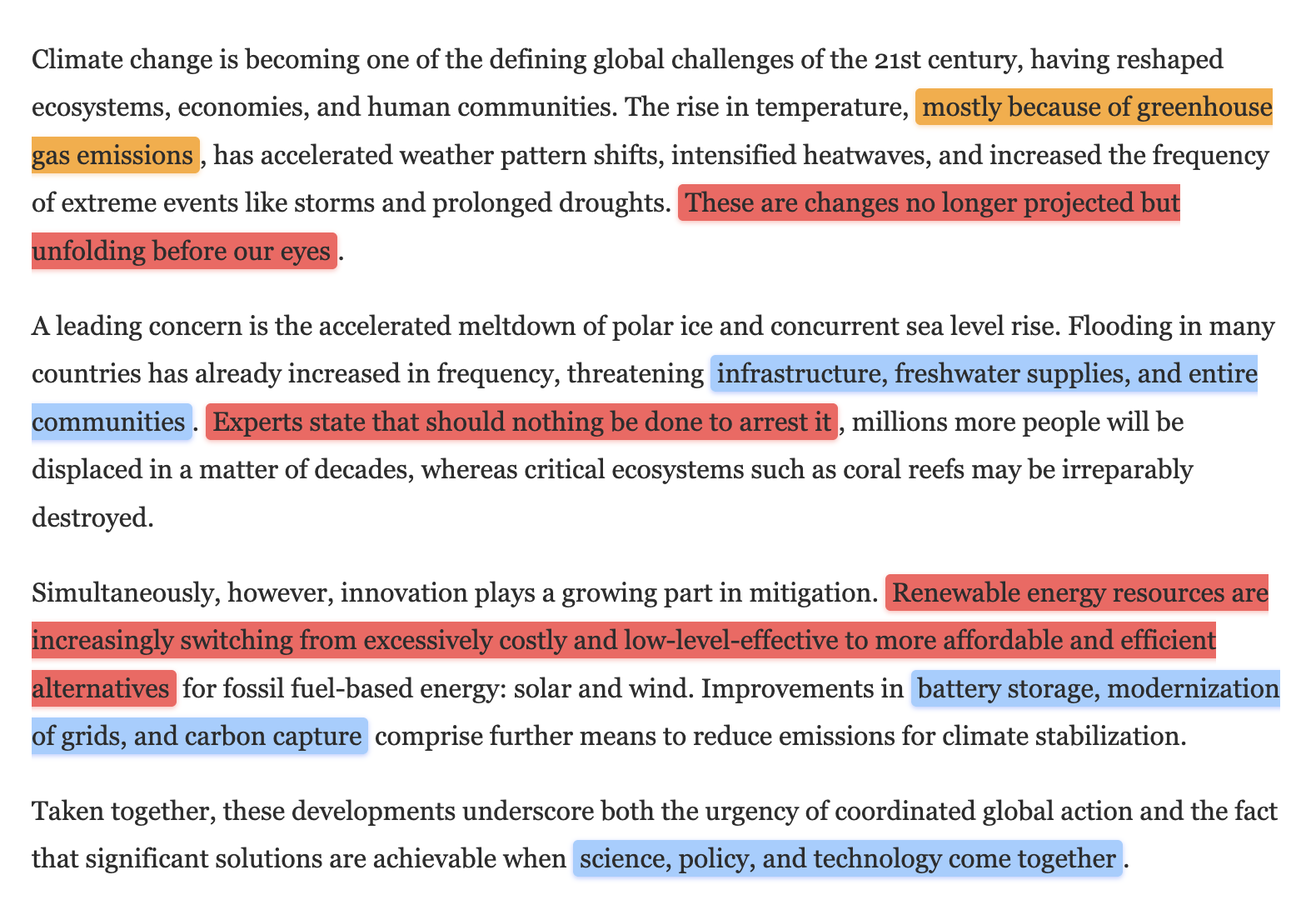
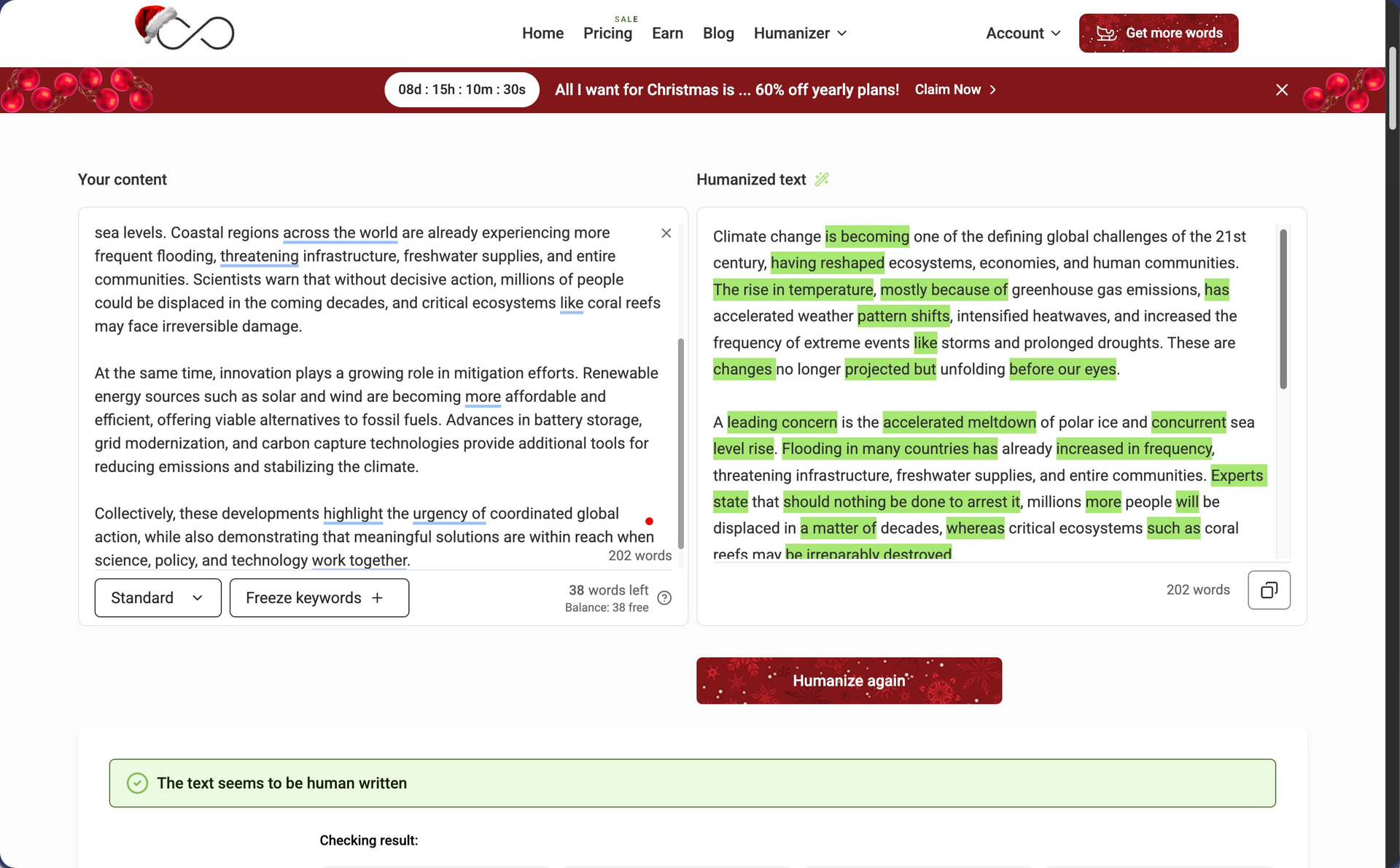
The third text on climate change was the cleanest of the three but still had issues. The construction “mostly because of greenhouse gas emissions” uses “mostly” when “primarily” or “largely” would be more precise for scientific writing. The phrase “These are changes no longer projected but unfolding before our eyes” attempts a dramatic flourish but reads awkwardly due to the missing word after “changes.” I also spotted “Experts state that should nothing be done to arrest it” which uses overly formal syntax when simpler phrasing like “Experts warn that without intervention” would communicate the same idea more naturally.
One positive thing I’ve noticed is that GPTinf successfully removed em-dashes from the output and replaced them with other punctuation. Unfortunately, removing one AI marker while leaving the text 100% detectable suggests the tool addresses surface-level patterns without tackling the deeper structural issues that detectors identify. For a tool that pairs em dash removal with deeper structural changes and actually moves detection scores, take a look at my Clever AI Humanizer review. That tool cleared ZeroGPT across the board and cracked GPTZero as well, all without asking for a credit card.
How Much Does GPTinf Cost?
GPTinf offers three pricing tiers with discounts for annual billing. At the time of testing, the service was running a holiday promotion advertising up to 60% off yearly plans.
| Plan | Monthly Price | Yearly Price | Words/Month | Features |
|---|---|---|---|---|
| Lite | $7.99 | $3.99 ($47.88/year) | 5,000 | All rewrite modes, unlimited keyword freezing, built-in AI detector |
| Pro | $18.75 | $9.99 ($119.88/year) | 25,000 | Everything in Lite plus priority email support |
| Unlimited | $41.99 | $23.99 ($287.88/year) | Unlimited | Everything in Pro plus top-tier support and first access to new features |
The annual discounts are substantial because they cut costs by roughly 50% across all tiers. The Lite plan drops from $7.99 to $3.99 per month, Pro falls from $18.75 to $9.99, and Unlimited decreases from $41.99 to $23.99. All paid plans include access to every rewrite mode, unlimited keyword freezing, unlimited AI detector checks, and the built-in detection tool.
Compared to competitors, GPTinf is at the lower end of the market. Services like WriteHuman charge $12 monthly for their Basic plan with annual billing, while Phrasly asks $12.99 per month for unlimited access.
Does GPTinf Respect User Privacy?
GPTinf is operated by Zhdan A. V., a sole proprietor registered in Lviv, Ukraine. According to their privacy policy and terms of service, the company collects the following range of data:
-
Personal information: Names, email addresses, phone numbers, mailing addresses, usernames, passwords, billing addresses, and debit/credit card numbers
-
Usage data: IP address, browser type, device information, operating system, language preferences, referring URLs, and location data
-
Tracking data: Cookies for sessions, preferences, and analytics
-
Social login data: Profile information from Google or other social media accounts if you choose to register that way
The privacy policy states they collect “any inputs on the website,” which presumably includes the text you submit for humanization. However, the policy doesn’t specify how long this content is retained or whether it’s deleted after processing.
By using the service, you provide “an unrestricted, unlimited, irrevocable, perpetual, non-exclusive, transferable, royalty-free, fully-paid, worldwide right” to use, copy, reproduce, distribute, and create derivative works from your submissions. This language is more aggressive than what I’ve seen from many competitors and could theoretically allow them to use your text for training or other purposes.
The refund policy is relatively fair compared to other humanizers. GPTinf offers refunds within 3 days of payment, with processing completed within 7 business days. You can cancel your subscription at any time, with cancellation taking effect at the end of the current billing period.
Your data may be transferred to and processed in the United States, regardless of where you’re located. For European users, the privacy policy acknowledges GDPR requirements and provides a data subject request form for exercising your rights.