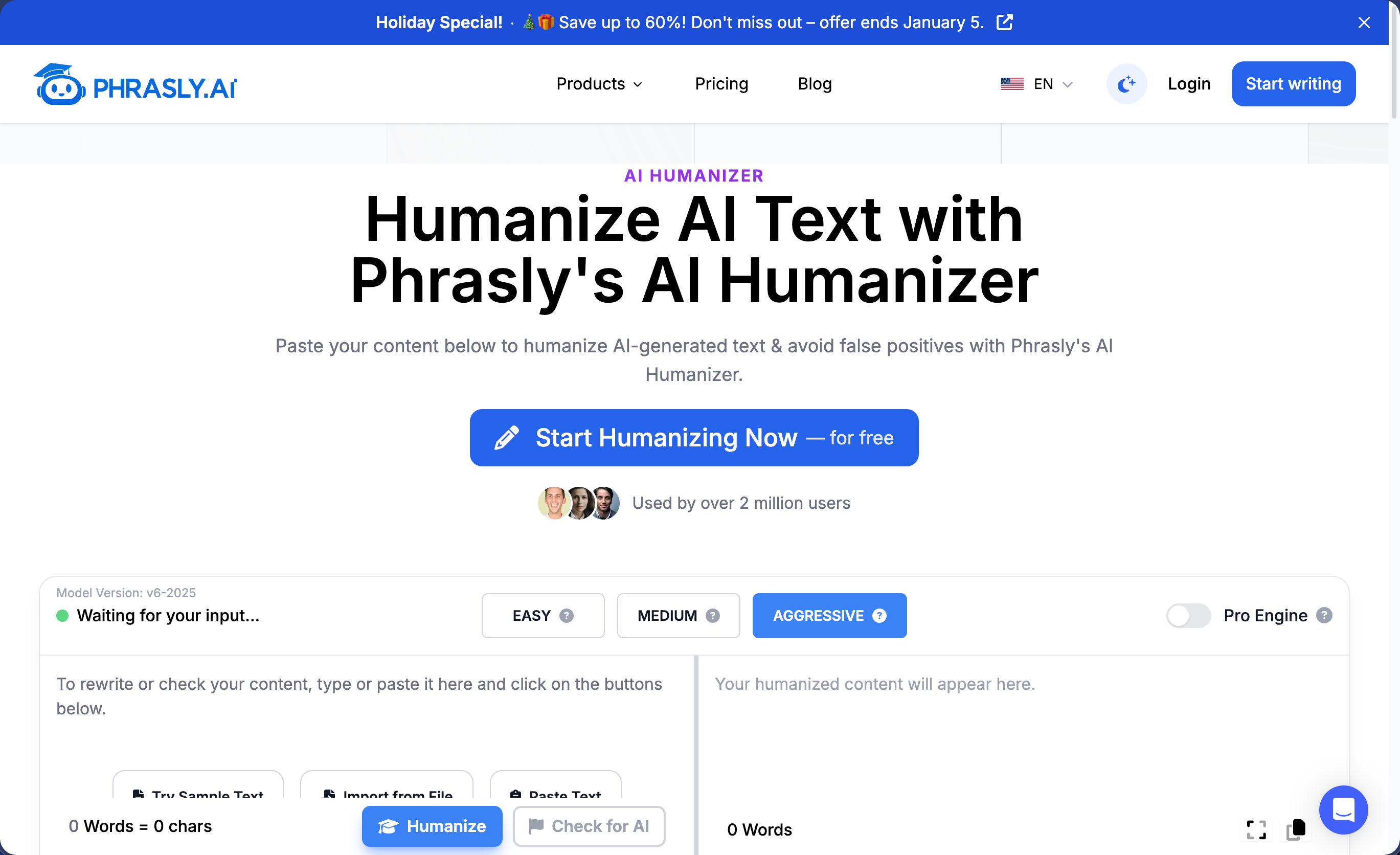
Phrasly claims to have built proprietary AI models trained on over a million pages of human writing instead of just repackaging a SOTA model like GPT-5 or Claude Sonet 4.5. They also boast compliance with TurnItIn and “all major AI detection systems,” so my expectations were naturally high. Unfortunately, they were quickly met with one of the most restrictive free tiers I’ve encountered during my testing of AI humanizers so far.
How I test: I generated one AI content sample using ChatGPT (approximately 200 words about AI humanization), processed it through Phrasly using the Aggressive humanization strength, then ran the output through both GPTZero and ZeroGPT to measure detection bypass effectiveness. I also evaluated the grammar and readability of the humanized text. You can find the raw test data for this review here.
| Pros | Cons |
|---|---|
| Clean, grammatically correct output | 100% AI detection on both GPTZero and ZeroGPT |
| Multiple humanization strength options | Extremely restrictive IP-based free tier |
| Sentence-level variation feature | Aggressive refund policy |
| US-based company with clear legal documentation | Harsh chargeback penalties including potential legal action |
| Text expansion may cause issues with word limits |
How Well Did Phrasly AI Humanizer Perform?
The humanizer provides three strength levels: Easy (optimized for blog writers and SEO content with the best readability), Medium (balanced approach that Phrasly claims is “confirmed to comply with TurnItIn and academic AI detectors”), and Aggressive (highest humanization rate, recommended for most text despite potential quality tradeoffs). There’s also a Pro Engine available exclusively to paid subscribers, which supposedly delivers “fully human outputs” with 10x the capability of the basic engine.
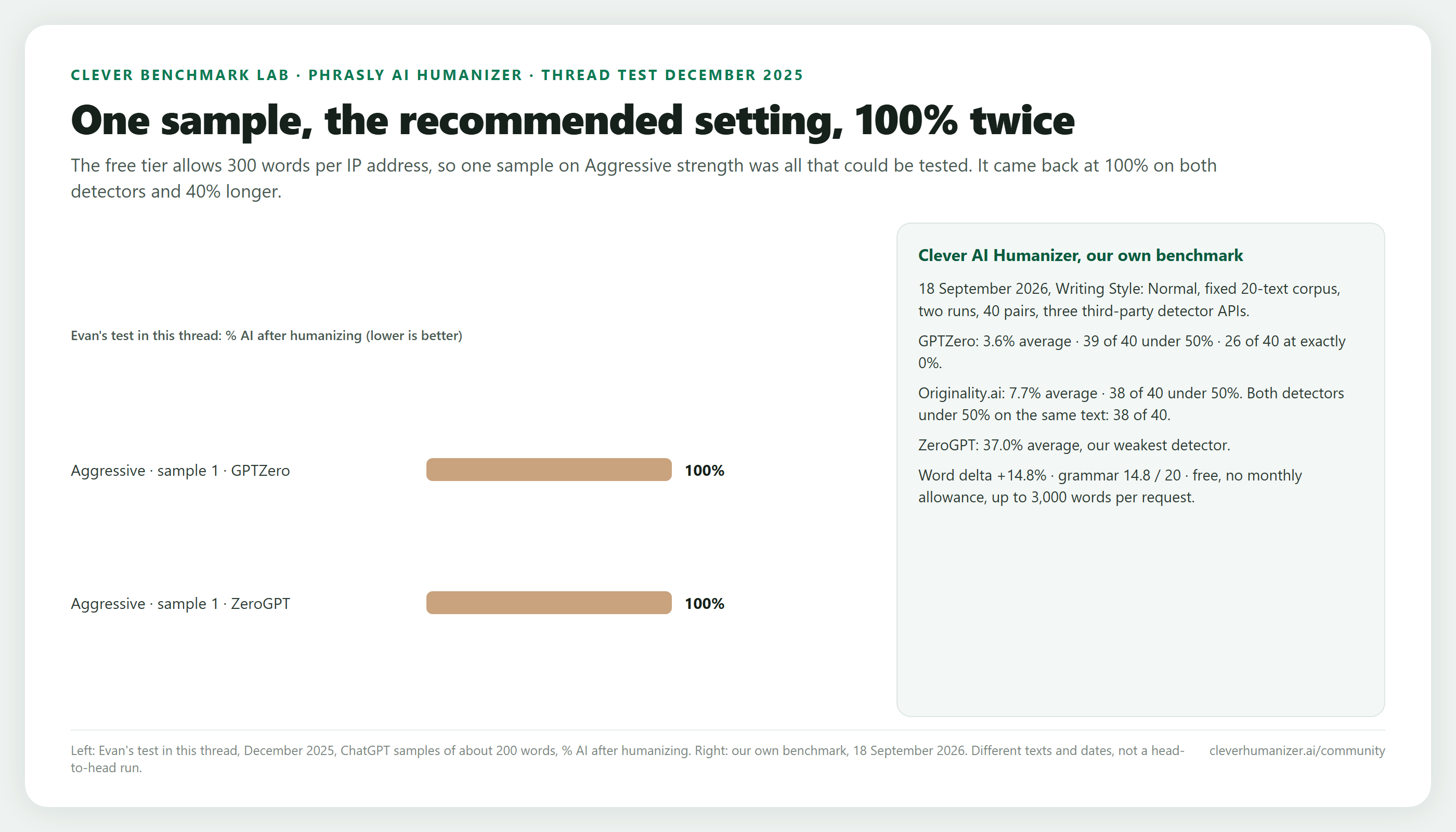
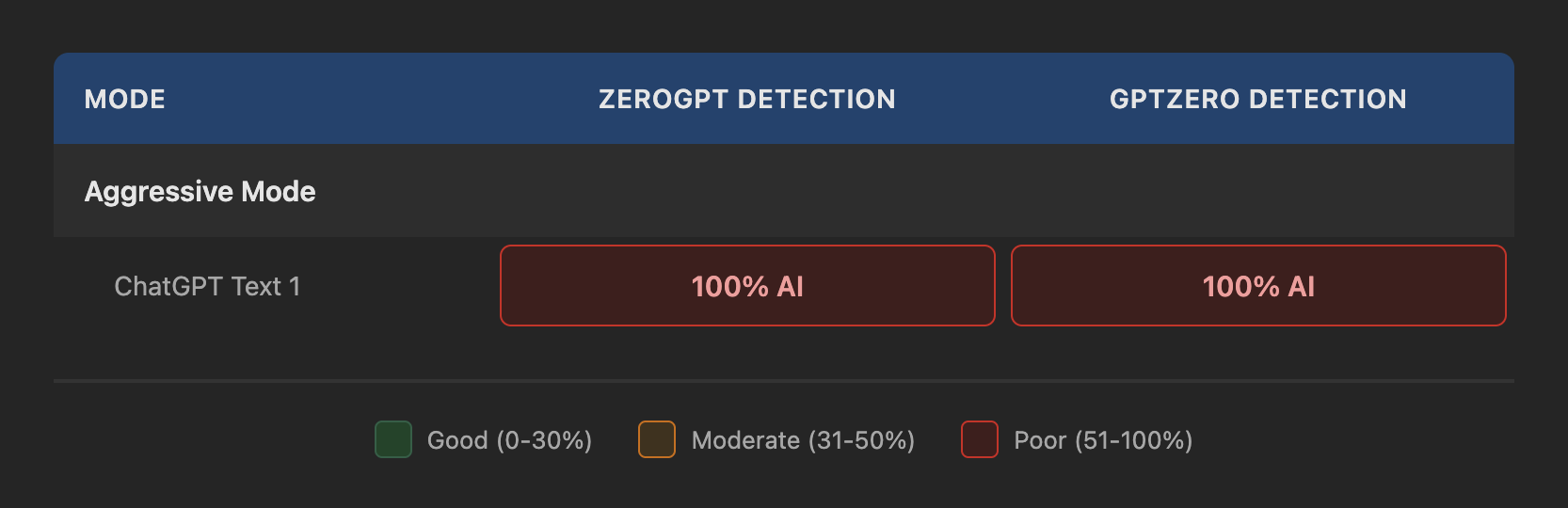
I tested a single sample using the Aggressive setting since Phrasly themselves recommend it for maximum detection bypass. The results from my single test were disappointing. Both GPTZero and ZeroGPT flagged the humanized output at 100% AI detection. The humanization had zero measurable effect on detection scores. The interface also lets you click on any output sentence to access alternative variations, which could theoretically help you fine-tune problematic passages, but don’t expect to improve detection scores meaningfully.
A 100% AI score on both detectors using the most aggressive setting is about as bad as it gets. I have now tested over a dozen humanizers, and the ones that fail this completely tend to rewrite at the vocabulary level without disrupting the sentence patterns that detectors actually key in on. The tools that do break through, even partially, approach the problem differently. One example is in my Clever AI Humanizer review.
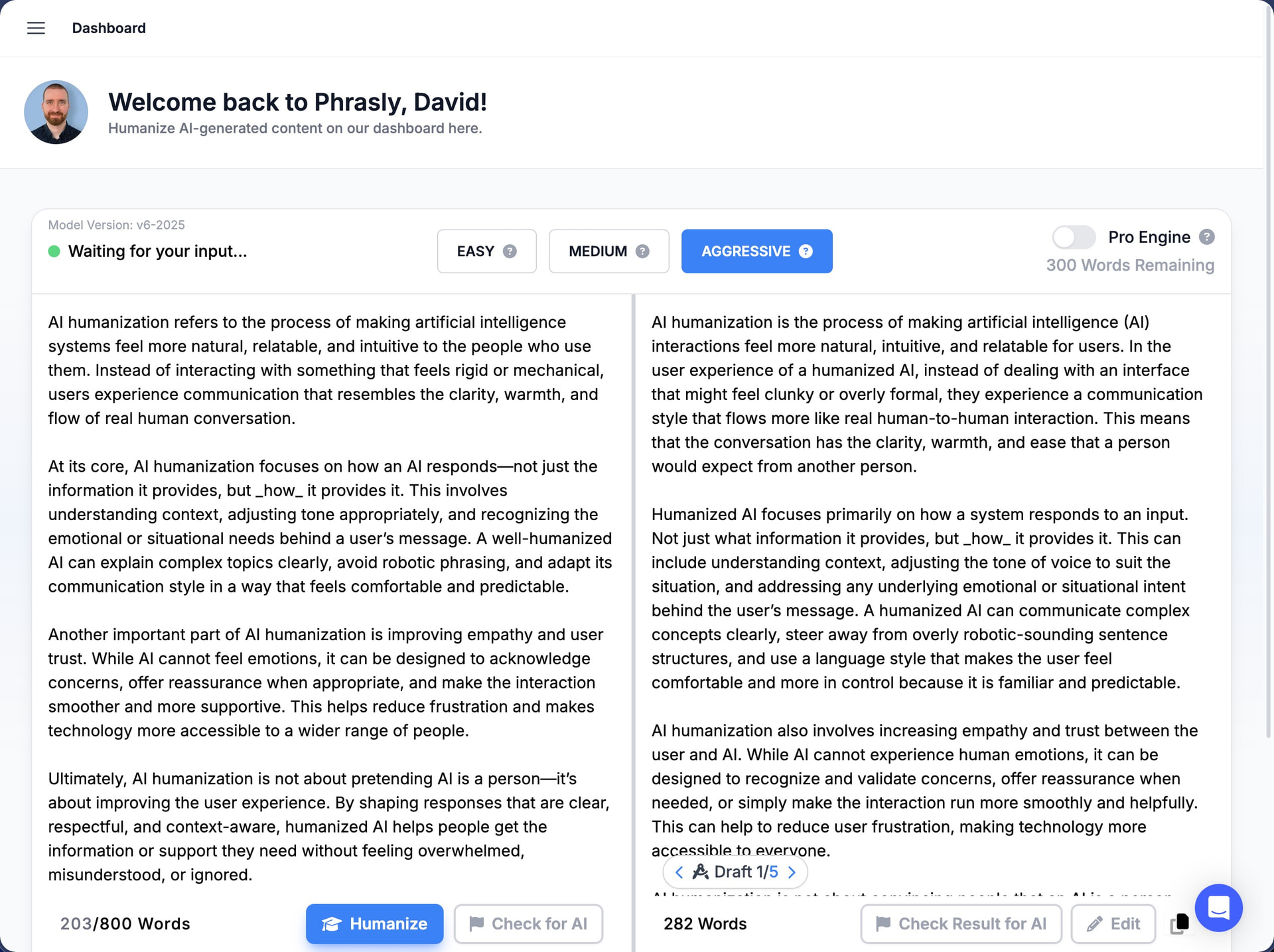
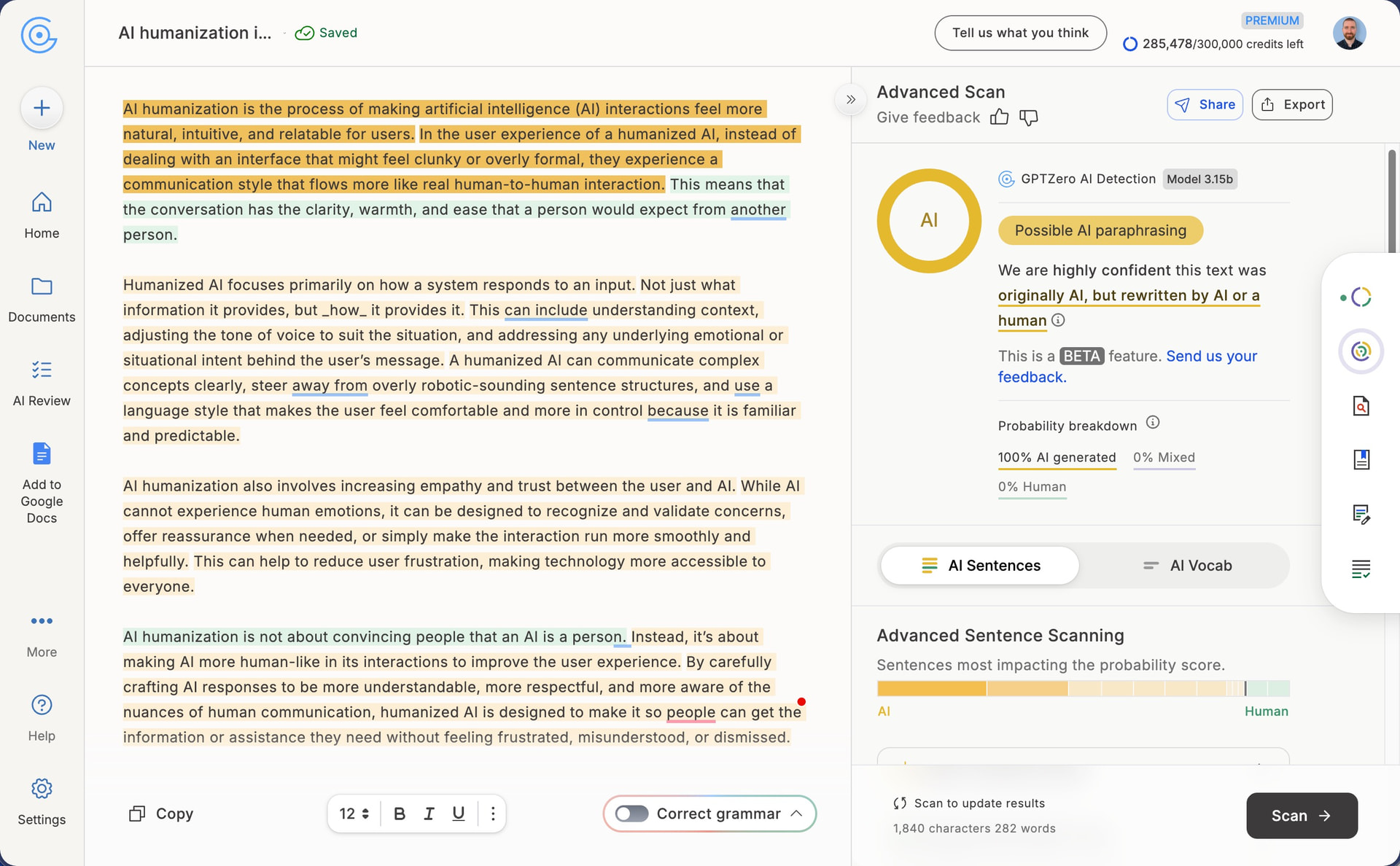
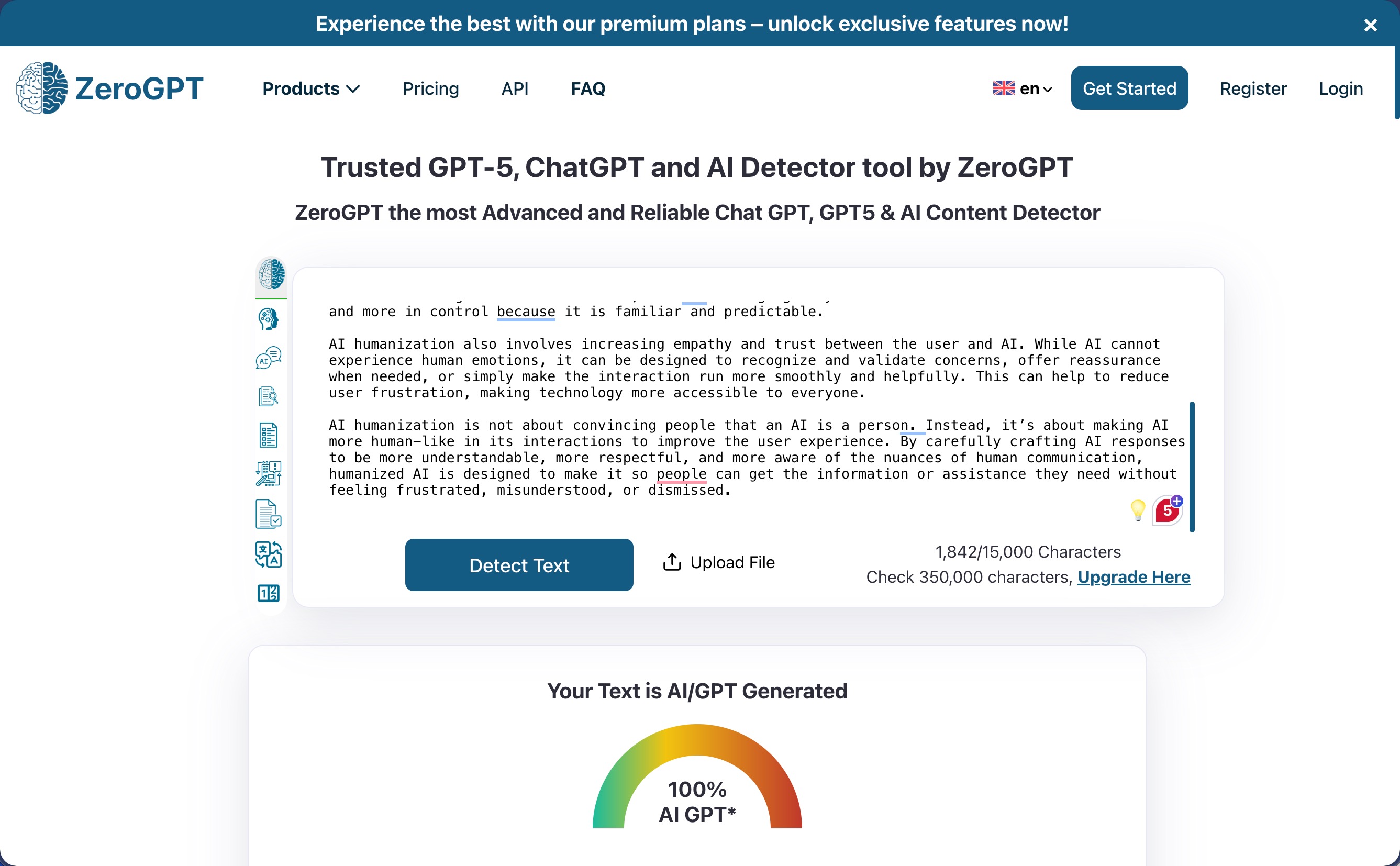
You might wonder why I only tested a single sample when my standard methodology involves three. Well, the service caps free users at just 300 words total, and they enforce this limit by tying it to your IP address rather than your account.
As such, creating a new email and signing up fresh accomplishes absolutely nothing because the restriction follows your internet connection, not your login credentials. Other humanizers like GPTHuman or WriteHuman also have tight free limits, but at least you can work around them by creating multiple accounts for testing purposes. With Phrasly, your only options are cycling through VPNs or simply paying up before you’ve had any real chance to evaluate whether the service actually works.
How Well Does Phrasly AI Humanizer Maintain Writing Quality?
Writing Quality Score: 7/10
Despite failing completely at bypassing AI detection, Phrasly’s output is clean from a pure writing quality standpoint. The humanized text reads smoothly, maintains logical flow, and avoids grammatical errors.
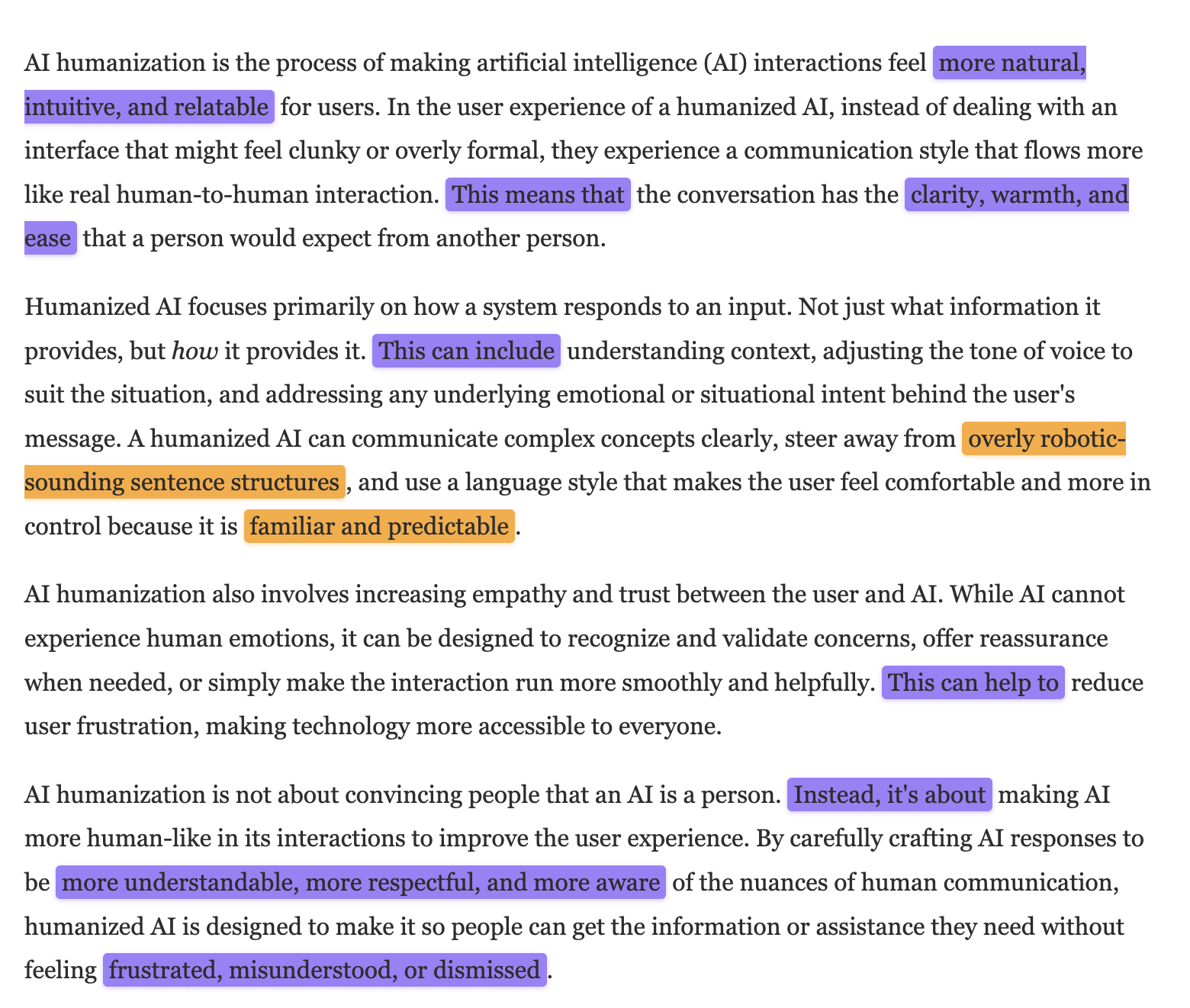
Sentences like “Humanized AI focuses primarily on how a system responds to an input” and “AI humanization is not about convincing people that an AI is a person” are clear, direct, and grammatically sound. The text maintains a consistent academic tone throughout without abruptly and inappropriately using informal words and phrases.
However, the output still carries some indications of AI-generated content. For example, the phrases “more natural, intuitive, and relatable” and “clarity, warmth, and ease” follow the classic AI pattern of stacking three adjectives or nouns in a row. The text also relies heavily on formal constructions such as “This can include,” “This means that,” and “Instead, it’s about.”
I also noticed that Phrasly significantly expanded the text. My original input was approximately 200 words, but the humanized output ballooned to over 280 words. The text expansion could be a problem if you’re working within specific word limits for assignments or publications.
How Much Does Phrasly AI Humanizer Cost?
Phrasly keeps its pricing structure relatively simple compared to competitors who offer three or four tiers. There’s a Free plan and a single paid Unlimited plan:
| Plan | Monthly Price | Yearly Price | Words | Words/Process | Content Generation |
|---|---|---|---|---|---|
| Free | $0 | $0 | 300 total | 300 | 3 credits |
| Unlimited | $19.99 | $12.99 ($155.88/year) | Unlimited | 2,500 | 15 credits/month |
The Free plan is barely functional for evaluation purposes. You get 300 words total for humanization and access only to the basic humanization engine. Once you exhaust this allowance, you’re done unless you pay.
The Unlimited plan removes word caps entirely and raises the per-process limit to 2,500 words, which is reasonable for longer documents. You also get 15 monthly credits for Phrasly’s AI content generator and access to the Pro Engine that promises significantly better humanization results.
At $12.99 per month with annual billing, Phrasly sits in the mid-range of the market. HumanizeAI.io offers their Elite plan for just $7/month annually, while Aihumanize.io charges $20/month for unlimited humanization.
Does Phrasly AI Humanizer Respect User Privacy?
Phrasly is operated by Phrasly LLC, a Delaware-registered company based in Dover. Their privacy policy and terms of service are detailed and professionally written. Here’s what the company collects:
-
Personal data: Names, email addresses, usernames, passwords, and contact preferences
-
Payment data: Processed through Stripe (Phrasly doesn’t store card details directly)
-
Usage data: IP address, browser type, device information, pages visited, and time spent on pages
-
Location data: General geographic information based on your IP address
-
Cookies: Session cookies, preference cookies, and analytics tracking
The terms of service contain an ethics statement where Phrasly claims to “firmly condemn the use of our tool for academic dishonesty or cheating.” The statement serves primarily as legal cover because the actual product (just like most other AI humanizers) is clearly designed for exactly the use case they claim to oppose.
Another thing you should know is that if you initiate a payment dispute through your bank or card provider, Phrasly reserves the right to immediately terminate your account, permanently ban you from creating new accounts, and pursue legal action for “fraudulent chargebacks.” They also retain any funds returned to them to offset administrative costs.
You can request a refund within 14 days, but only if there has been “absolutely no usage on your account whatsoever.” Any humanization, any API call, any use of any feature immediately voids your refund eligibility. Given how the free tier works (or rather, doesn’t), this means most users will have used their 300-word allowance before deciding to upgrade, making refunds essentially impossible to obtain.