Walter Writes AI is an AI humanizer aimed at SEO teams, students, educators, and professionals who want their writing to bypass AI detection tools like Turnitin and GPTZero. The paid version features detector-specific bypass levels, multiple readability settings, and a built-in AI checker, but the free version I tested offers only basic functionality. I managed to work around this restriction by creating multiple Gmail accounts, but anyone with longer documents would be completely unable to evaluate the service before paying. Despite these hurdles, I completed my standard testing process to see whether Walter Writes AI lives up to its claim of producing “undetectable rewrites.”
How I test: I generated three AI content samples using the latest ChatGPT model, each approximately 200 words and covering different topics (AI humanization, technology trends, and climate change). I established baseline detection scores by running the original AI-generated texts through both GPTZero and ZeroGPT, then processed each sample using Walter Writes AI with General mode and University readability settings. I re-tested the humanized outputs through both detection platforms to measure how effectively the tool reduced AI detection scores. I also manually evaluated the grammar quality and readability of all humanized text. You can find the raw test data for this review here.
| Pros | Cons |
|---|---|
| Clean, grammatically correct output | Free tier limited to just 300 words total |
| No nonsensical phrases or made-up words | Inconsistent detection results |
| Multiple readability and purpose options for paid users | Em-dashes and repetitive phrasing left in output |
| Built-in AI detection scoring | Per-request word limits on all plans |
| Competitive annual pricing | Aggressive chargeback and refund policies |
| Vague data retention for submitted text |
How Well Did Walter Writes AI Perform?
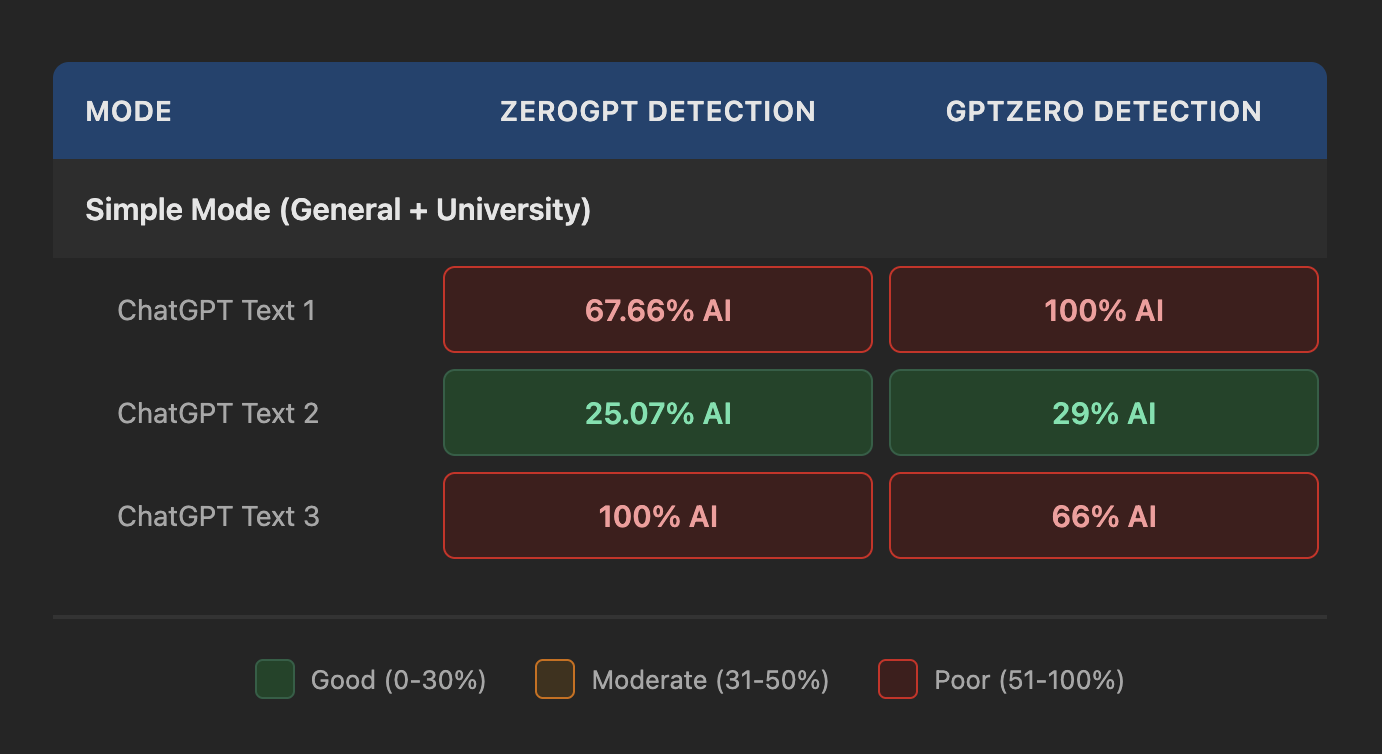
The detection results from Walter Writes AI’s free tier were very inconsistent across my three test samples. The first text scored 100% AI on GPTZero and 67.66% on ZeroGPT. The second text performed better with just 29% on GPTZero and 25.07% on ZeroGPT, which is impressive for a basic humanization mode. The third text reversed patterns again with 66% on GPTZero but 100% on ZeroGPT.
The inconsistency makes it difficult to predict outcomes for any given piece of content. One sample achieves near-human scores while another gets flagged at 100% by the same detector. That said, achieving sub-30% detection on both platforms (as the second sample did) is better than what many free humanizers manage to deliver.
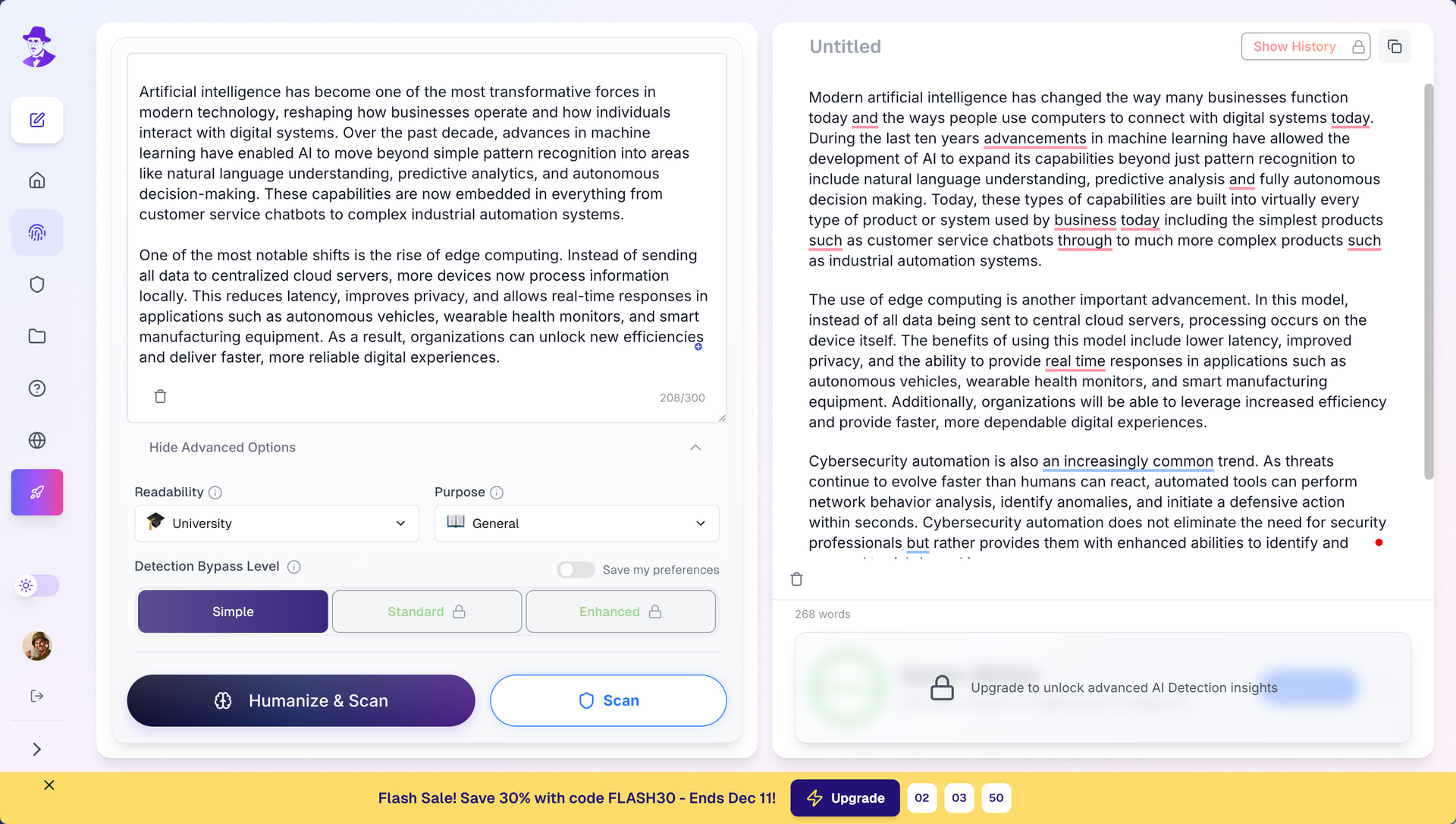
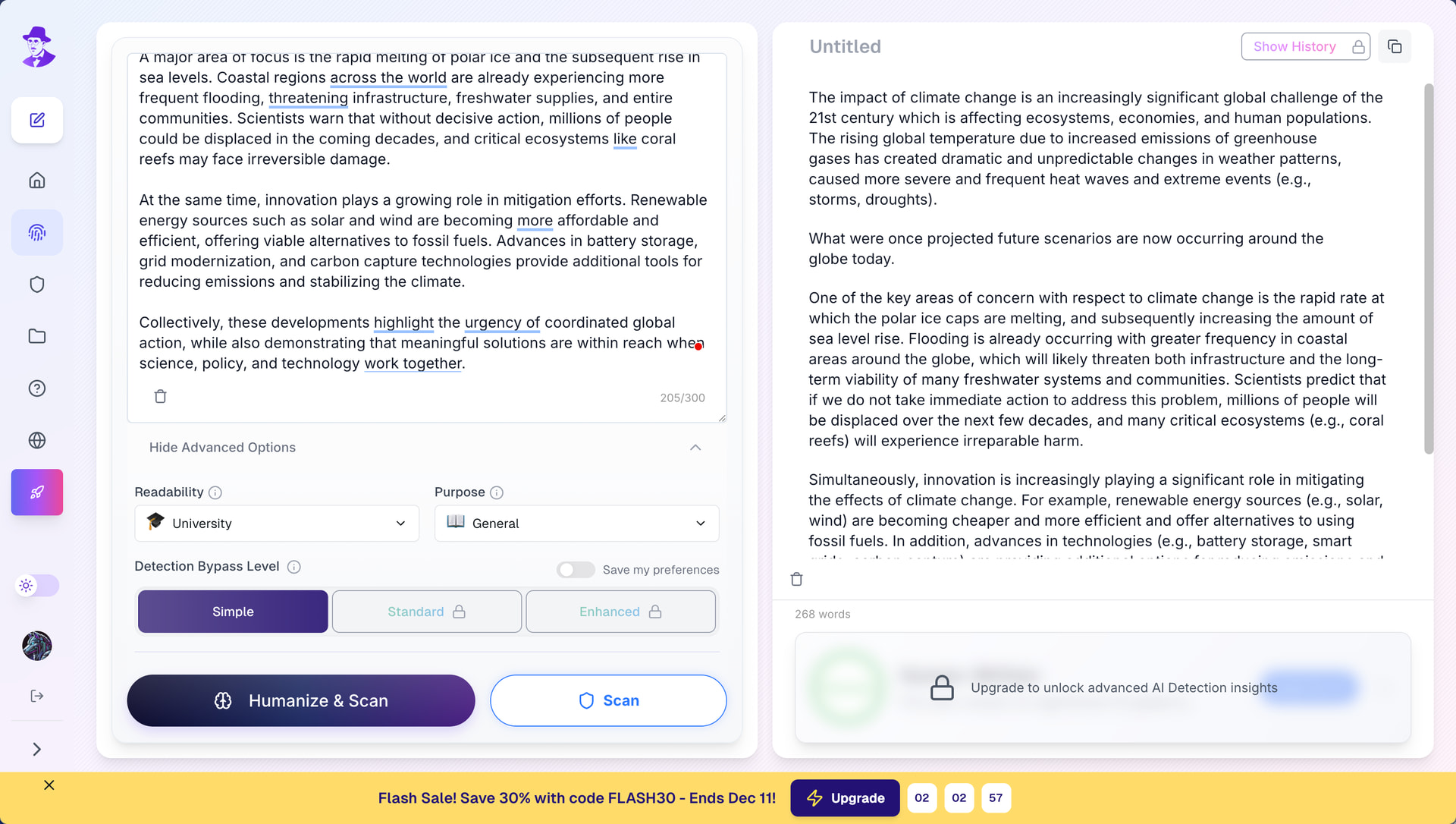
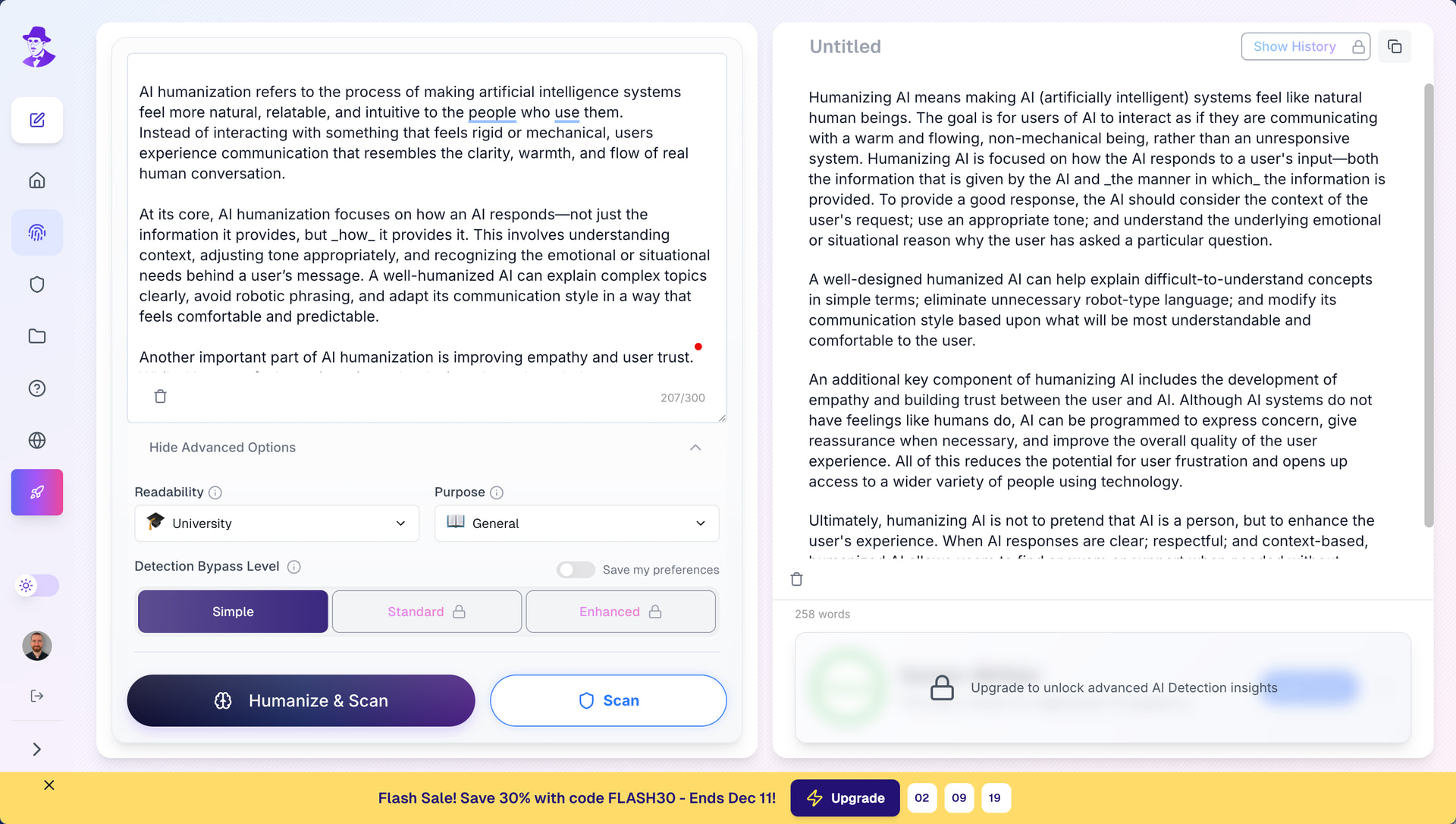
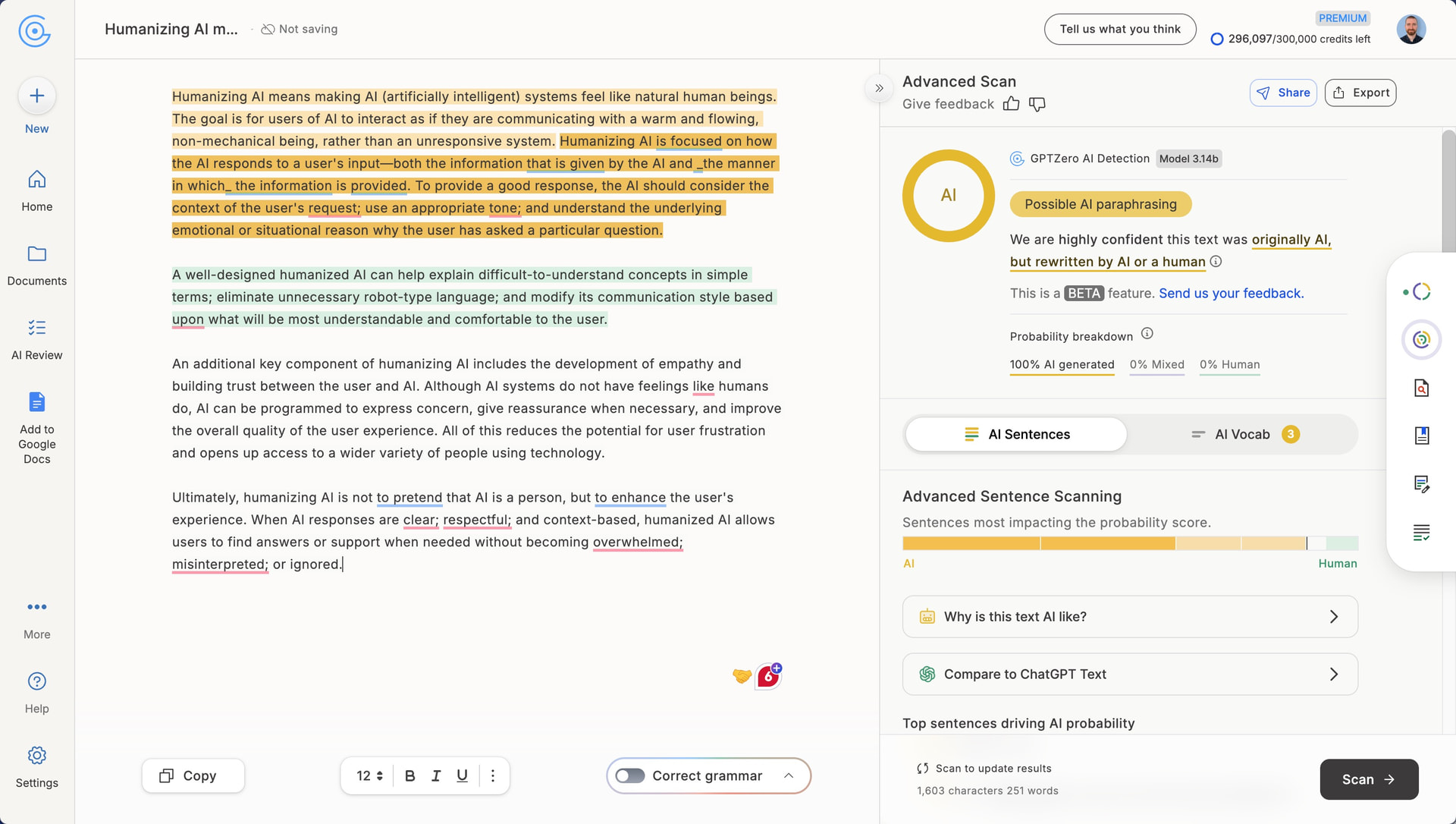
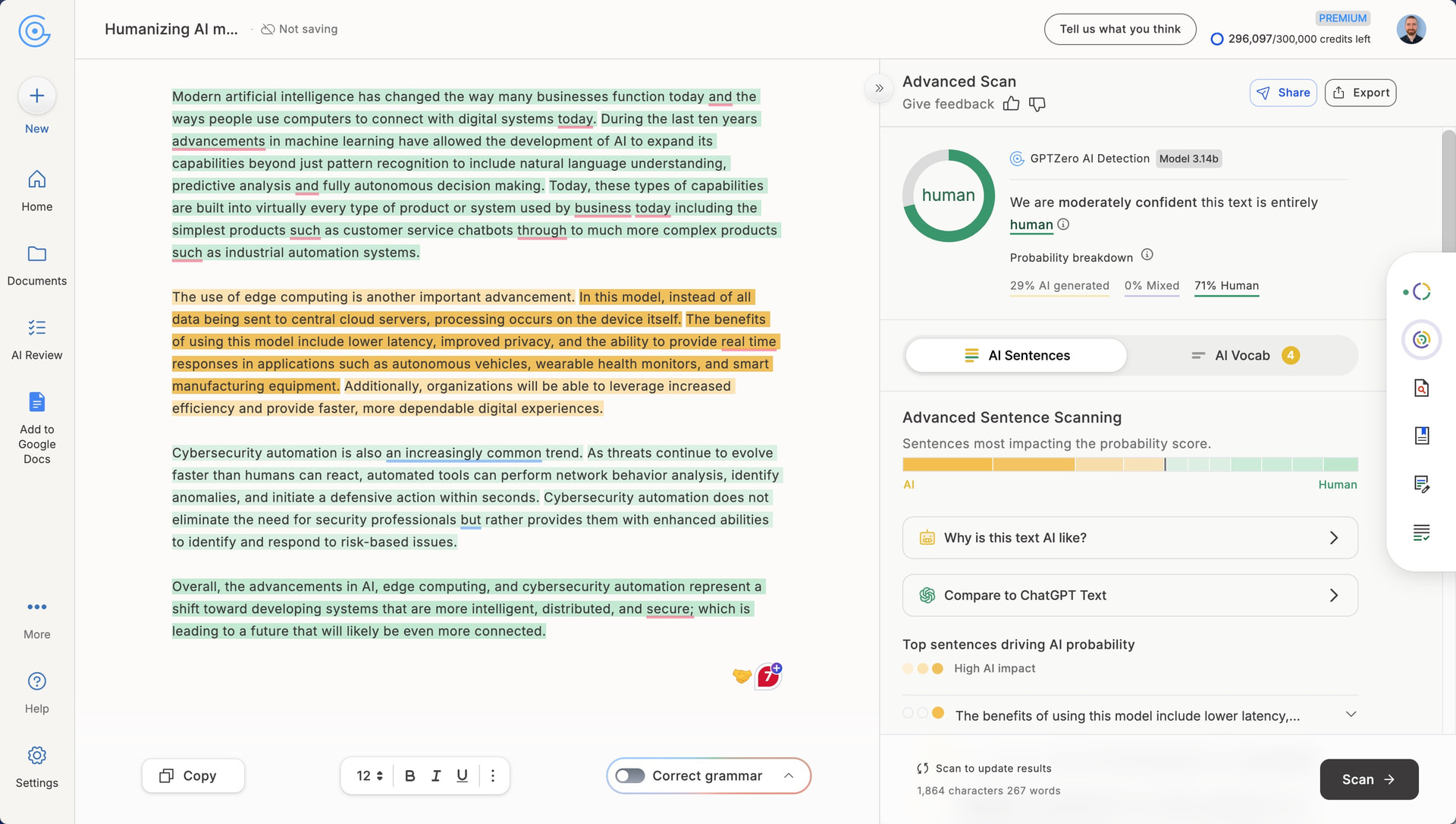
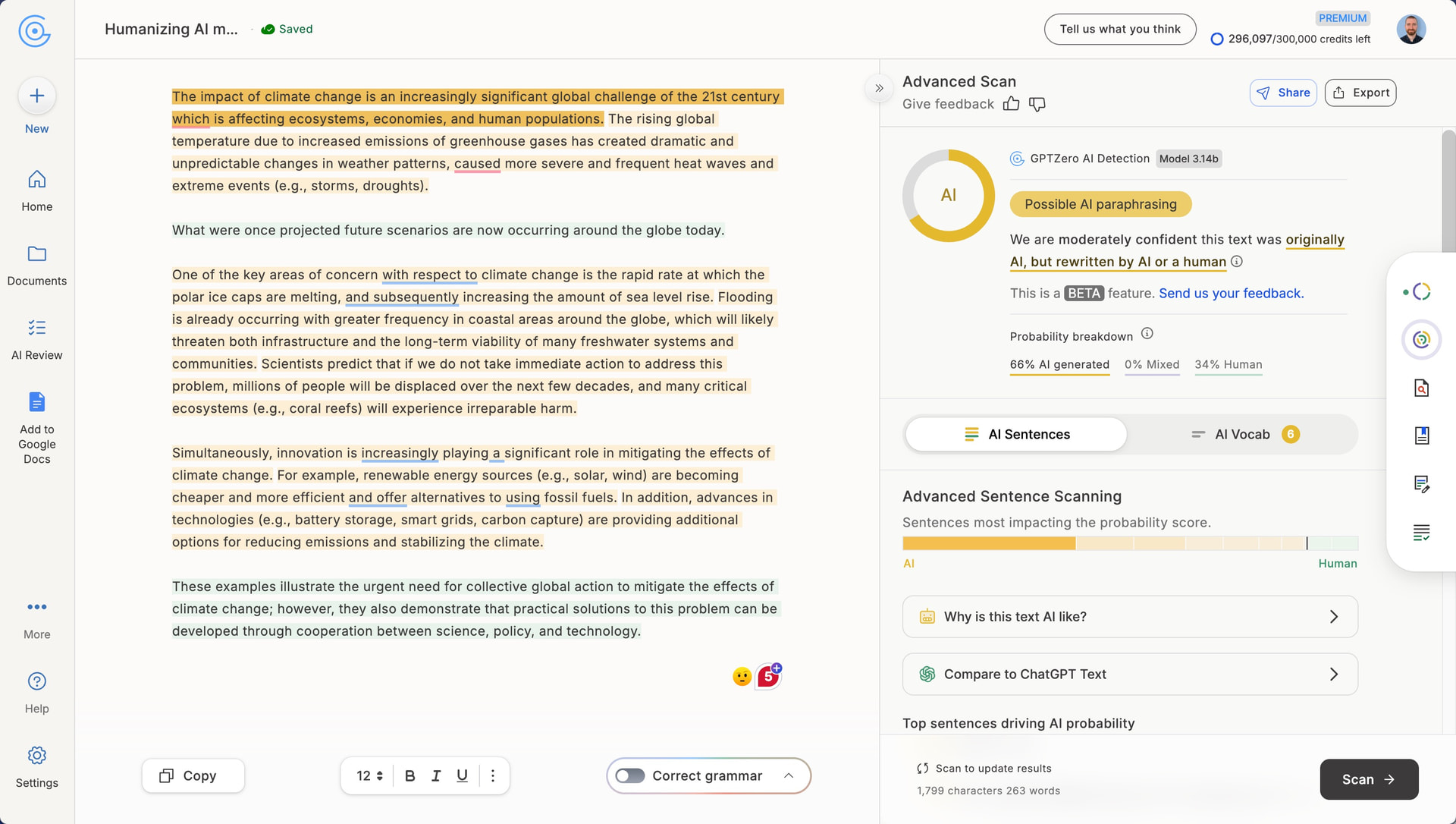
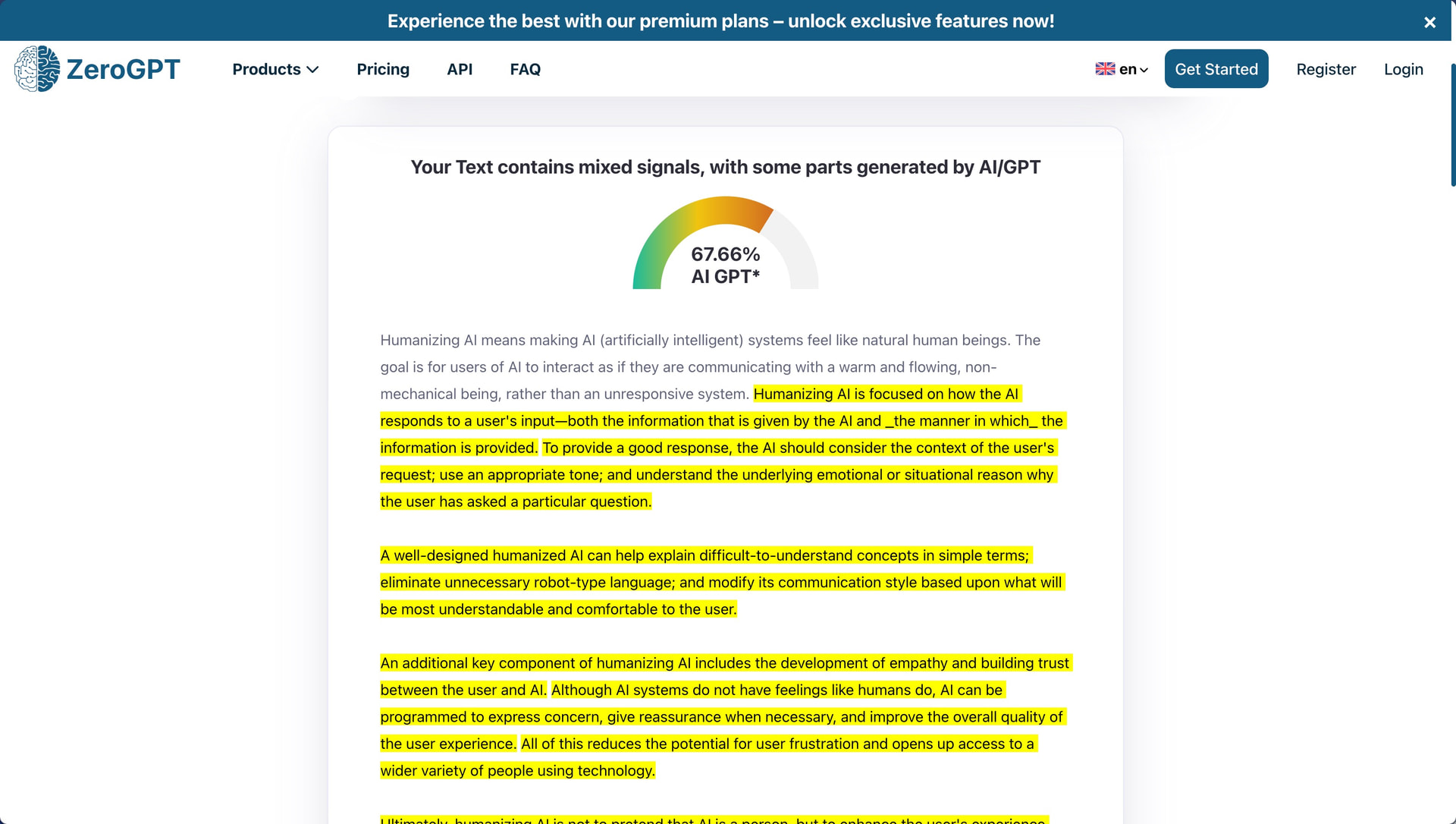
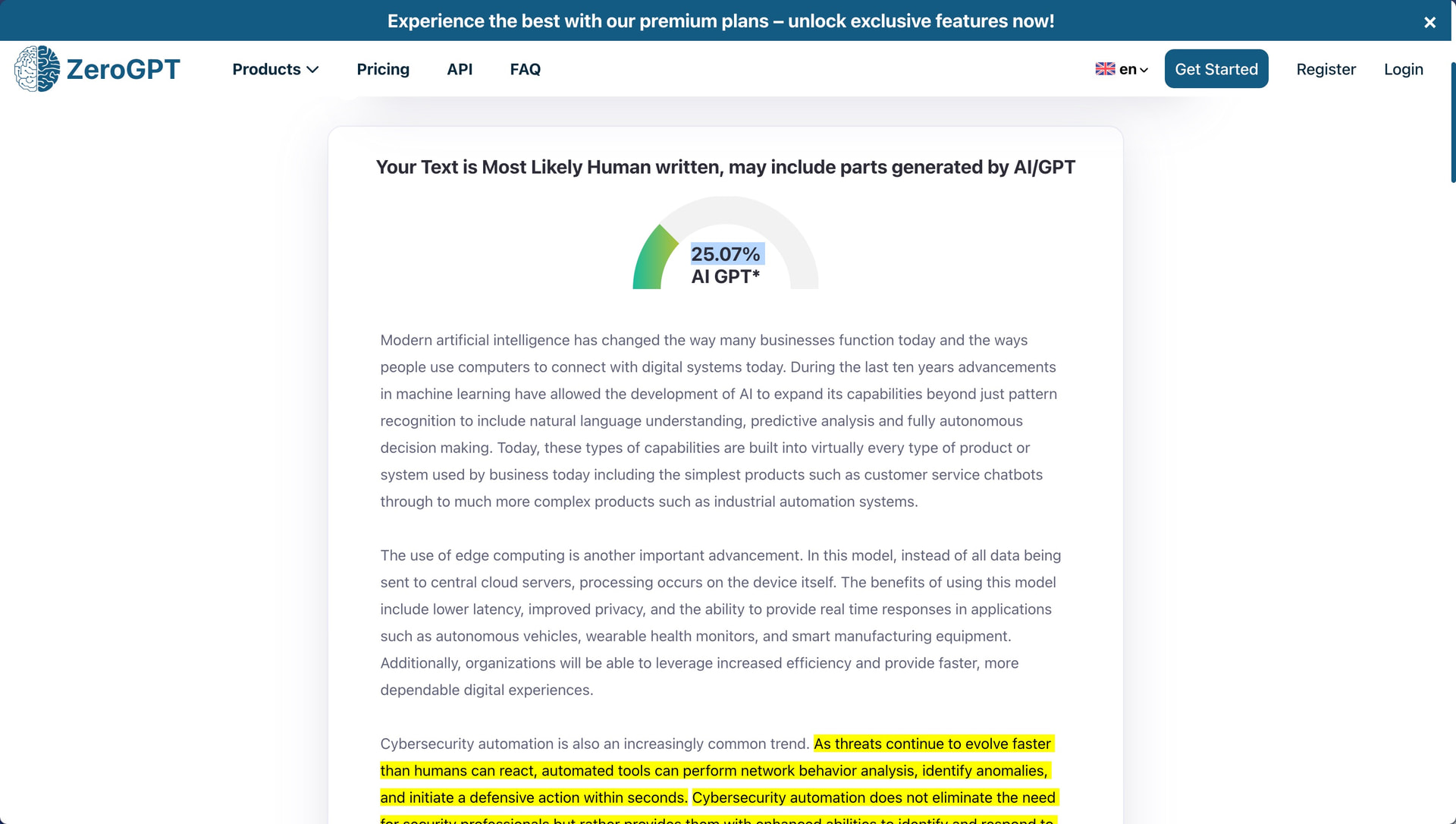
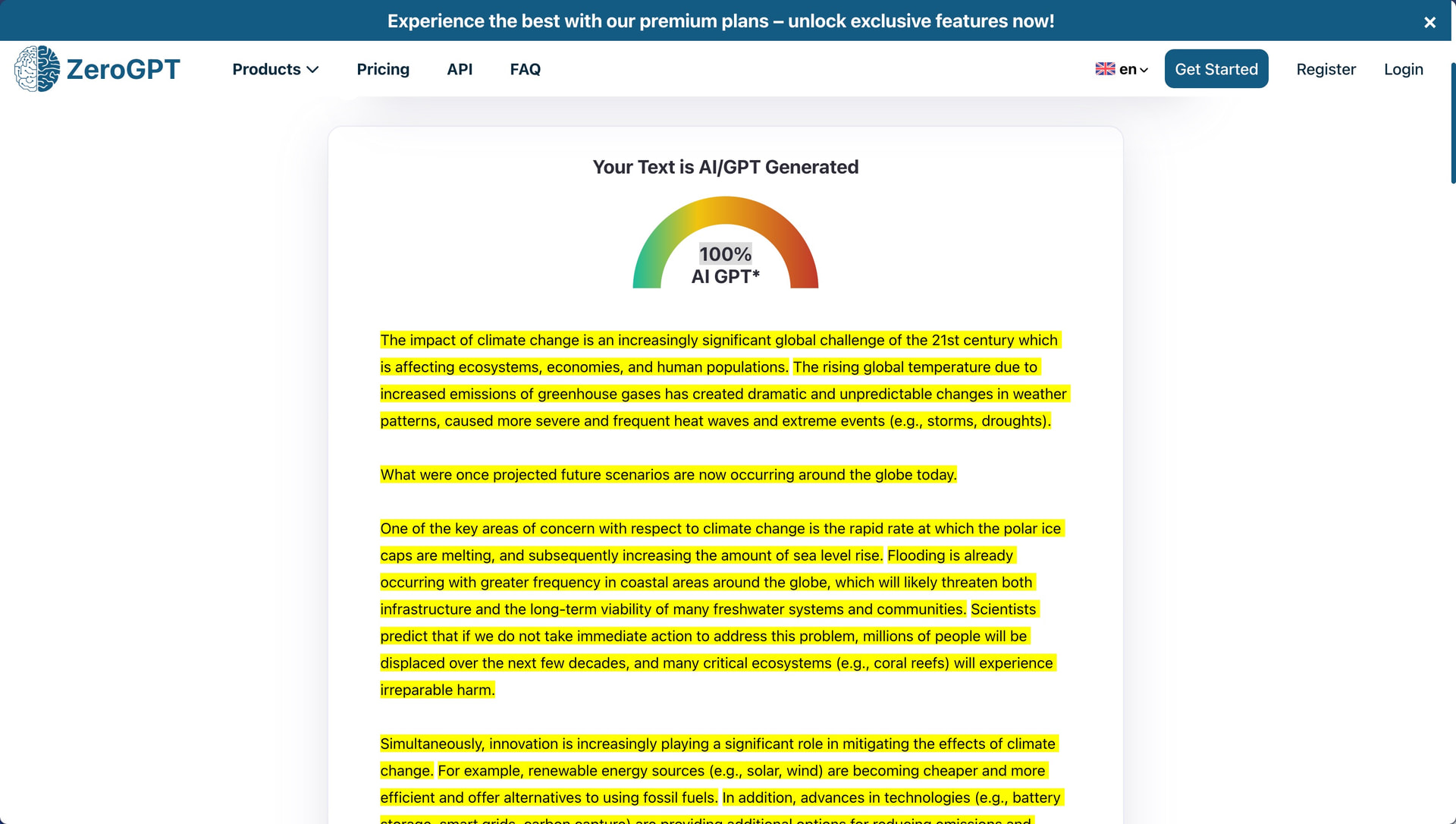
Of course, I tested using the most basic settings available: General purpose with University readability and no access to the higher detection bypass levels (I was limited to using Simple mode, which promises to pass “most AI detectors” with light edits). Paid subscribers unlock two additional bypass tiers that could significantly improve these results:
-
Standard mode (recommended for most cases) applies moderate rewriting designed to pass stricter detectors like Turnitin and GPTZero.
-
Enhanced mode employs heavy rewriting for the strictest detection scenarios.
Paid users also gain access to specialized purpose modes including Academic, Essay, Legal, and Business, along with additional readability options like Doctorate, Journalist, and Marketing.
However, more aggressive humanization typically comes with tradeoffs. Heavy rewriting often introduces awkward phrasing, unnatural word choices, or grammatical errors that undermine the very purpose of humanization. Whether Walter Writes AI maintains quality at the Simple humanization level is something we will examine next.
How Well Does Walter Writes AI Maintain Writing Quality?
Writing Quality Score: 7/10
Walter Writes AI outputs noticeably cleaner text than many humanizers I have reviewed. The humanized samples are grammatically sound, logically structured, and free from the made-up words and nonsensical constructions that plague tools like UnAIMyText or HumanizeAI.io. That said, the outputs are not flawless, and each sample contained issues that would benefit from manual editing.
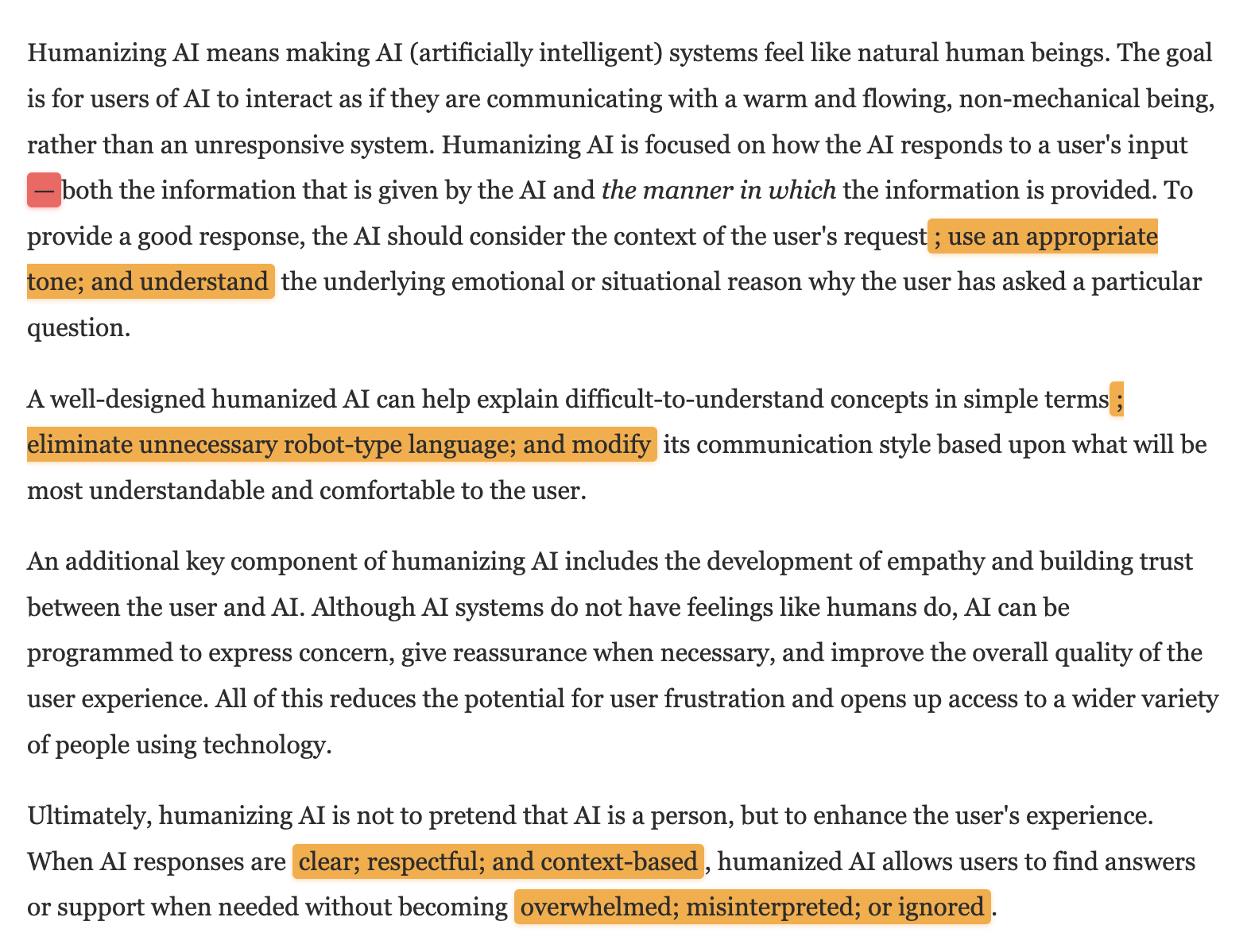
In the first text about AI humanization, semicolons appeared in places where commas would be standard: “use an appropriate tone; and understand the underlying emotional or situational reason” and “clear; respectful; and context-based.” This semicolon pattern repeated throughout the sample and reads as somewhat robotic despite being technically defensible. The text also retained em-dashes, which have become strongly associated with AI-generated content and are typically removed by more sophisticated humanizers.
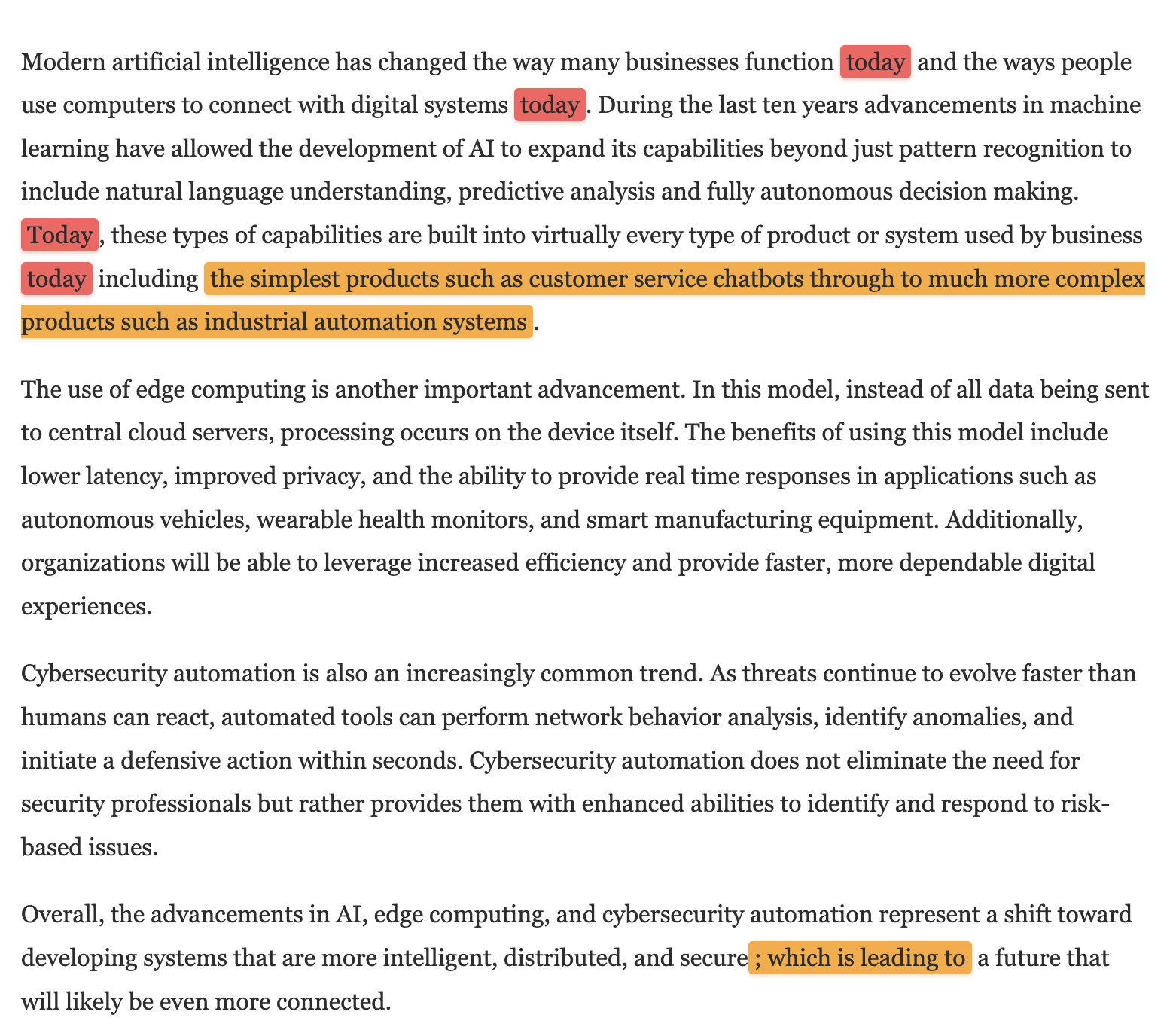
The second text on technology trends had a major repetition problem. The word “today” appears four times within three sentences: “the way many businesses function today and the ways people use computers to connect with digital systems today. During the last ten years… Today, these types of capabilities are built into virtually every type of product or system used by business today.” The same text also used “products” three times in a single sentence when describing business applications.
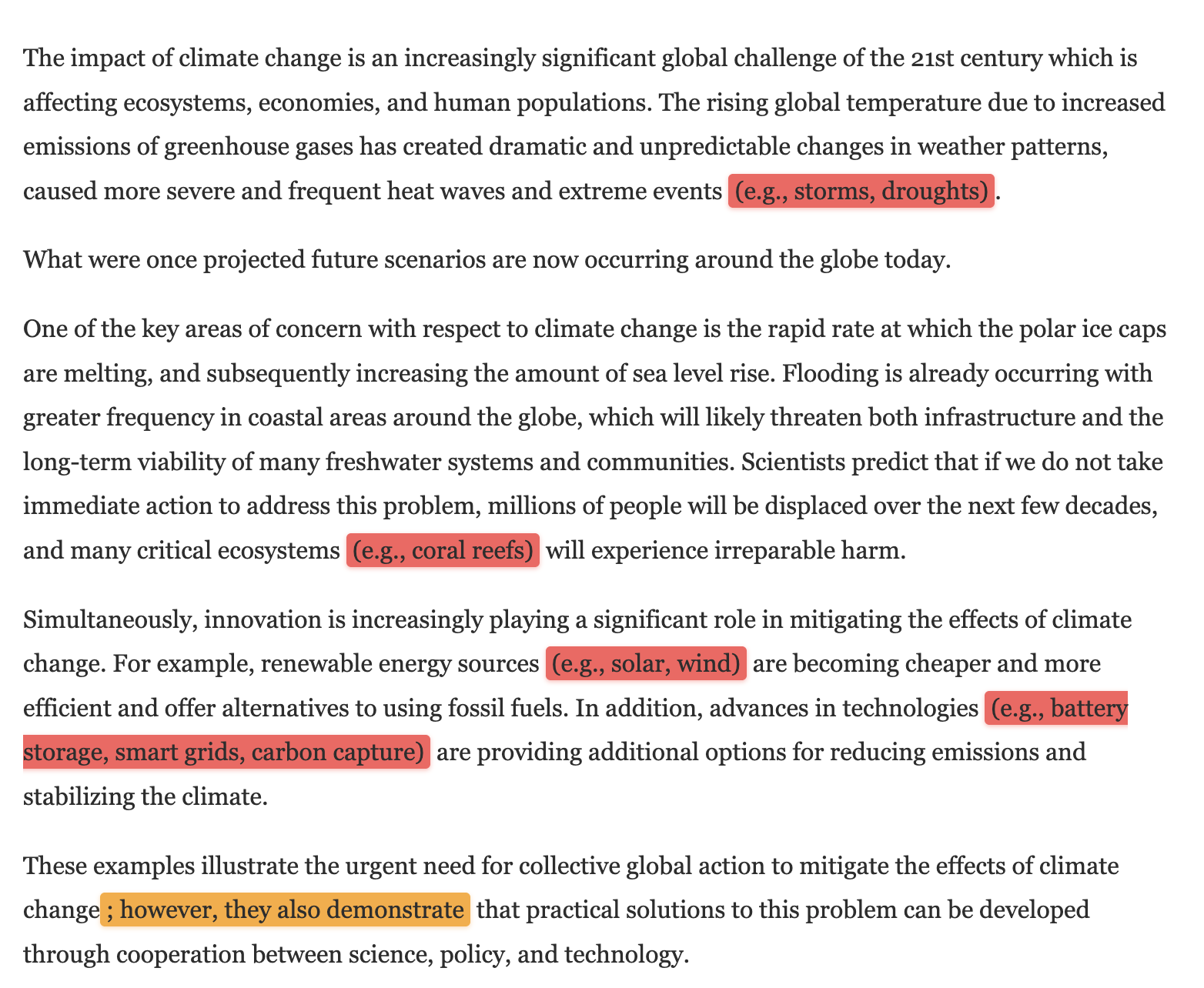
The third text covering climate change was the cleanest of the three. It flowed naturally with appropriate paragraph structure and logical progression. My only real complaints were the heavy reliance on parenthetical examples (e.g., storms, droughts) (e.g., solar, wind) (e.g., battery storage, smart grids, carbon capture), which appears frequently in AI-generated content and might itself trigger detection flags. A more natural approach would integrate examples into sentences rather than bracketing them repeatedly.
Overall, Walter Writes AI is in a strange middle ground. The writing quality at 7/10 is genuinely above average for this industry, and the fact that the tool avoids introducing typos, nonsensical phrases, or broken grammar puts it ahead of most competitors I have reviewed. The problem is that clean writing paired with unreliable detection scores creates a tool you can trust to read well but not to pass. I have only come across a handful of humanizers that deliver on both fronts simultaneously, and the standout among them was the one I covered in my Clever AI Humanizer review, which matched Walter’s writing quality while posting far more consistent detection results across both GPTZero and ZeroGPT, all at no cost.
How Much Does Walter Writes AI Cost?
Walter Writes AI offers three pricing tiers with discounts for annual billing:
| Plan | Monthly Price | Yearly Price | Words/Month | Words/Request |
|---|---|---|---|---|
| Starter | $12 | $8 ($96/year) | 30,000 | 750 |
| Pro | $23 | $13 ($156/year) | 70,000 | 1,500 |
| Unlimited | $47 | $26 ($312/year) | Unlimited | 2,000 |
Annual billing reduces costs by 33% to 45% depending on the tier. The Starter plan drops from $12 to $8 monthly, Pro falls from $23 to $13, and Unlimited decreases from $47 to $26. All plans include the advanced humanization engine, built-in AI detector, 80+ language support, and access to all bypass levels (Simple, Standard, Enhanced).
You should know that even the Unlimited plan limits individual submissions at 2,000 words, which means longer documents must be processed in multiple chunks. The Starter plan’s 750-word limit is especially restrictive for users working with academic papers or detailed articles. Competitors like Aihumanize.io offer up to 3,000 words per request on their top tier.
However, by far the biggest problem is how stringy the free trial is. At just 300 words total, you can barely test a single short paragraph before hitting the wall. Users are essentially forced to commit to a paid plan without properly testing whether the service meets their needs.
At least Walter Writes AI provides a 3-day refund policy for first-time subscribers, but it comes with conditions: you must request the refund within three days and keep total word usage under 1,500 words. Subscription renewals are explicitly non-refundable, so missing your cancellation window locks you into another billing cycle.
Does Walter Writes AI Respect User Privacy?
According to Walter Writes AI’s privacy policy and terms of service, the company collects the following data for a web-based service:
-
Browser type, IP addresses, internet service provider, and operating system
-
Landing/referring/exit pages, date/time stamps, and clickstream data
-
Email address and payment information (processed through third-party providers)
-
Cookies for session management, preferences, and analytics
One notable section is the Academic Integrity Policy, which states the company does “not condone or support any form of academic dishonesty” while simultaneously marketing directly to students who want to bypass AI detection. The policy explicitly disclaims responsibility for “plagiarism accusations, poor grades, disciplinary action, or dismissal from academic programs.”
The terms also include an unusually aggressive chargeback policy. Filing a payment dispute results in immediate account termination, permanent ban from creating new accounts, and potential legal action for “fraudulent chargebacks.”
The disclaimer section admits they “do not guarantee that content generated through our services will always avoid detection” by AI tools, which is honest but worth noting given their marketing claims.
Data retention policies remain vague as they state only that information is kept “as long as necessary” without specifying how long submitted text is stored or whether it gets deleted after processing.