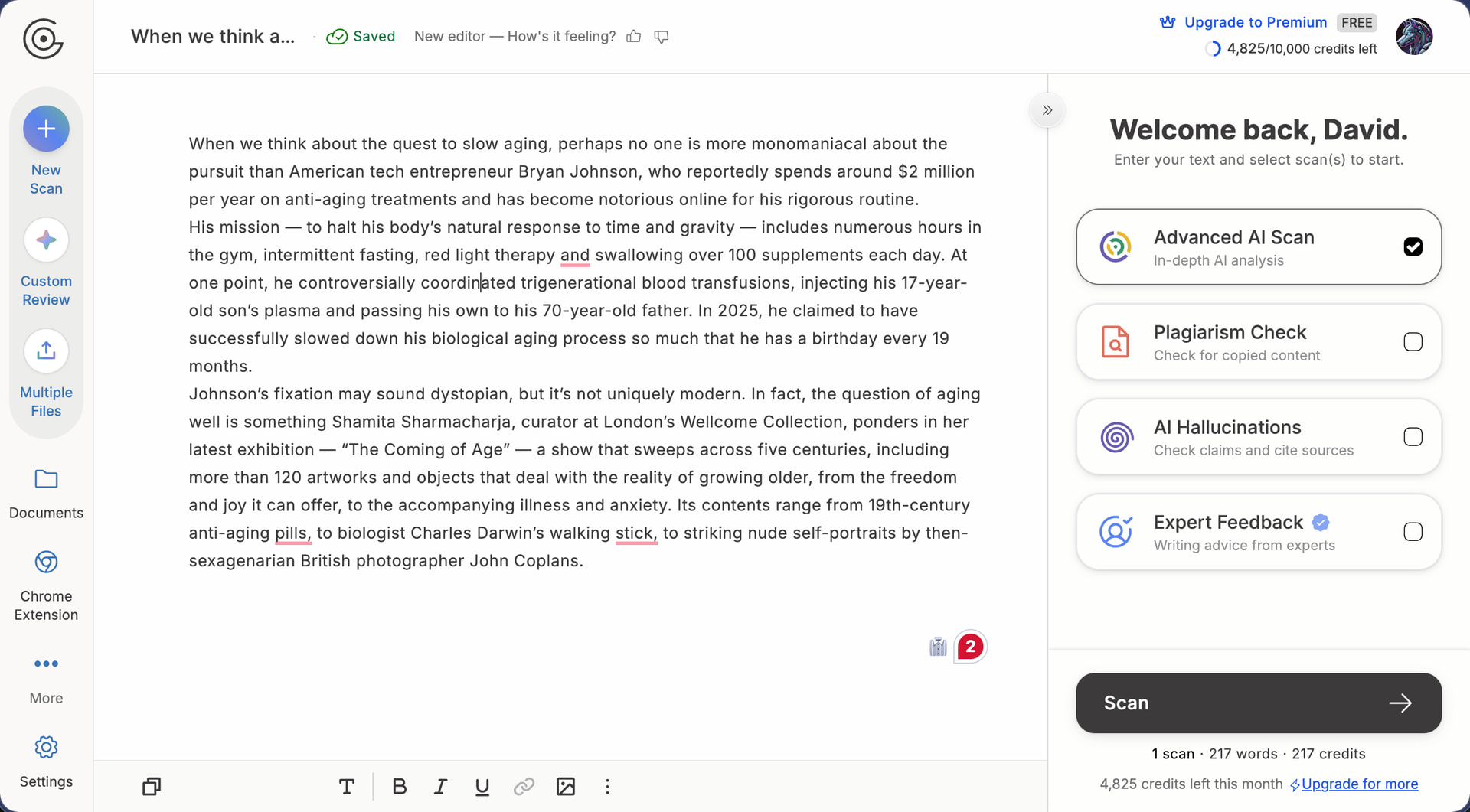
GPTZero was launched in 2023, when a Princeton computer science student built an AI detection tool as a thesis project. The tool went viral almost overnight, and it’s now one of the most popular products of its kind, serving more than 10 million users around the world. The company’s FAQ page describes GPTZero as “finetuned for student writing and academic prose,” and TechCrunch called it “the best and most reliable AI detector.” Those are strong credentials on paper, so I wanted to see whether the results hold up when I test it the same way I test every other detector in this series.
How I tested GPTZero: I put together the same two groups of content I use across all my reviews and scanned each piece through GPTZero one by one. Nine AI-generated samples made up the first group, with three each from ChatGPT (5.2), Claude (Opus 4.6), and Gemini (3 Pro), all covering three topics: artificial intelligence, climate change, and technology trends. The second group was ten human-written pieces pulled from sources that predate large language models. I recorded GPTZero’s percentage score and classification for every scan.
| Pros | Cons |
|---|---|
| Perfect AI detection | May be too lenient on borderline content (unconfirmed) |
| Perfect false positive performance | Occasionally unclear privacy policy |
| Great free tier | |
| Reasonable pricing | |
| You retain full ownership of your content | |
| Chrome extension for quick checks | |
| Multilingual detection on paid plans |
How Accurate Is GPTZero’s AI Detector At Catching AI Content?
| AI Model | Topic | GPTZero Score |
|---|---|---|
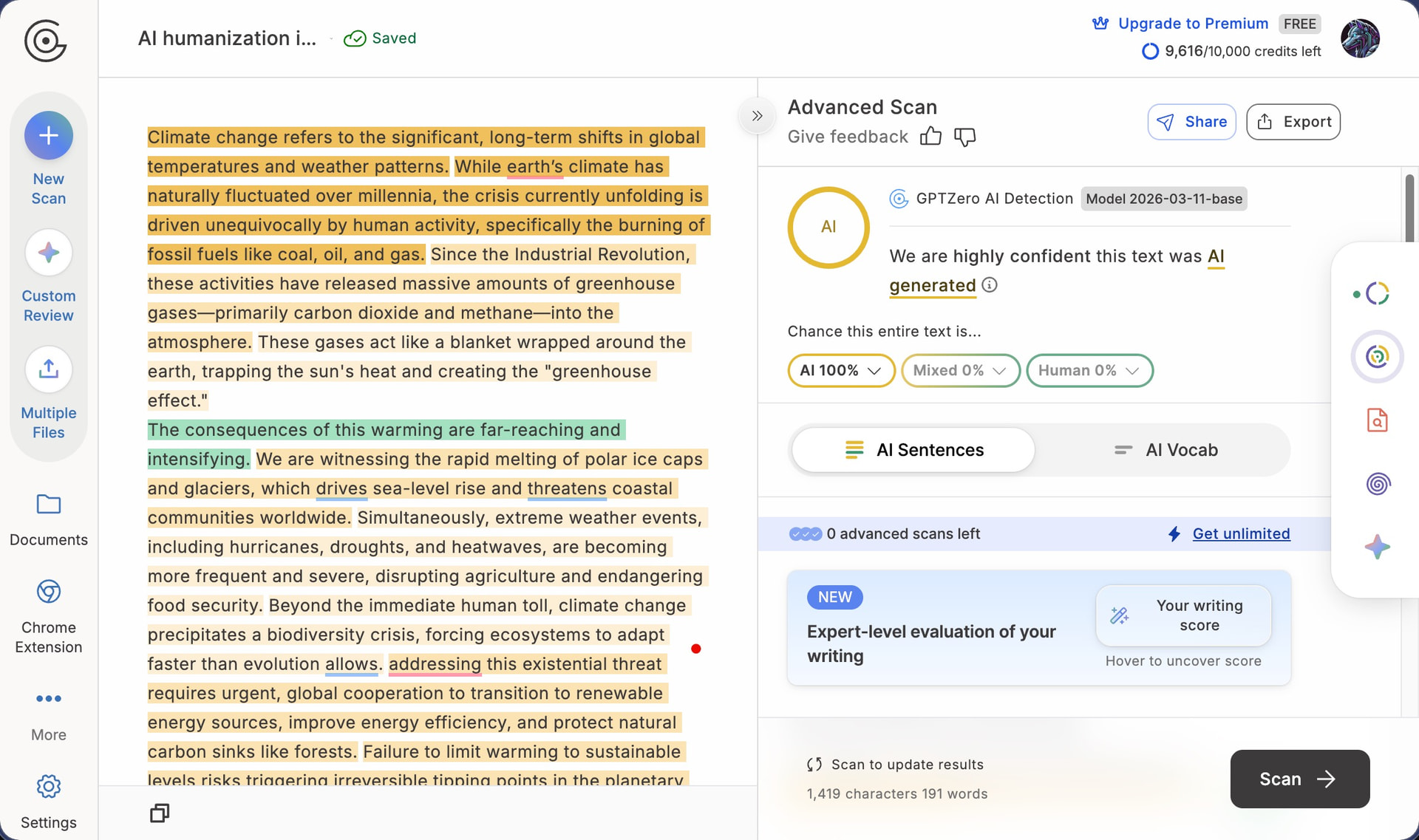
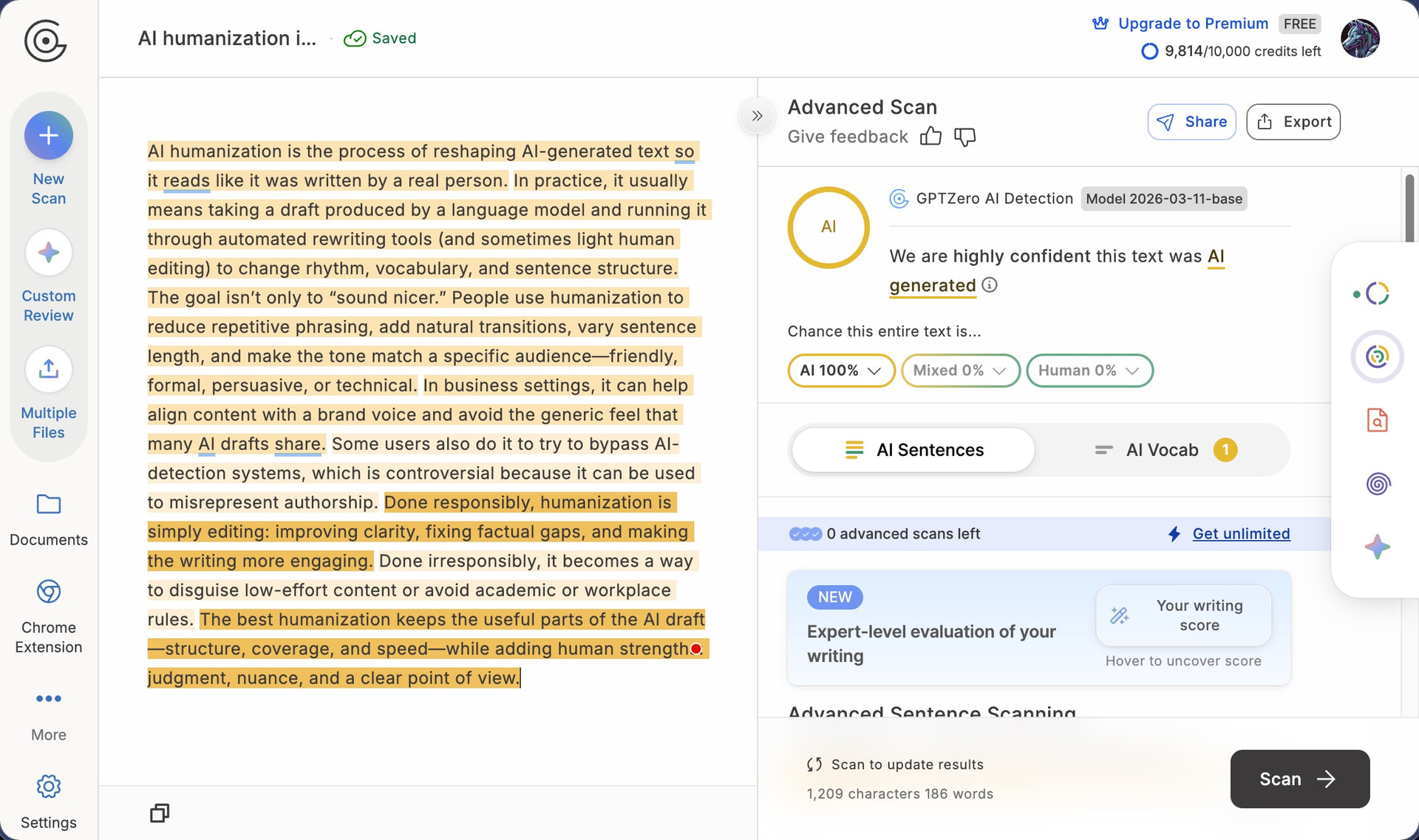
| ChatGPT (5.2) | AI Humanization | 100% AI |
| ChatGPT (5.2) | Climate Change | 100% AI |
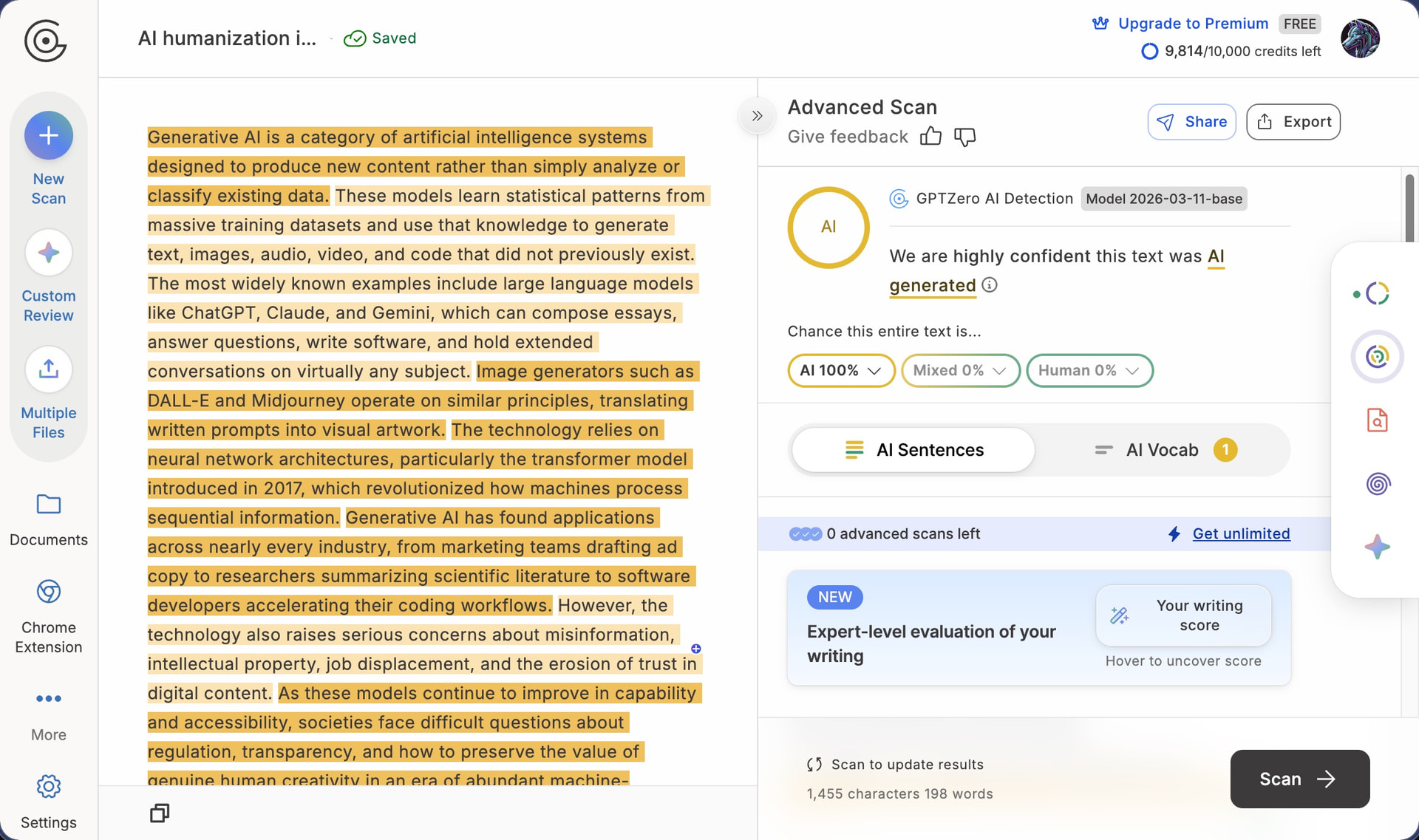
| ChatGPT (5.2) | Technology Trends | 100% AI |
| Claude (Opus 4.6) | AI Humanization | 100% AI |
| Claude (Opus 4.6) | Climate Change | 100% AI |
| Claude (Opus 4.6) | Technology Trends | 100% AI |
| Gemini (3 Pro) | AI Humanization | 100% AI |
| Gemini (3 Pro) | Climate Change | 100% AI |
| Gemini (3 Pro) | Technology Trends | 100% AI |
Every AI-generated sample was rated at 100% AI. There was absolutely no variation between models or topics. As such, GPTZero joins Originality AI as the only other detector in this series to return a perfect 100% on all nine samples. Winston AI and Undetectable AI came close at 99%, while Grammarly and QuillBot both had trouble with certain models.
I should point out, though, that these samples were copy-pasted straight from the AI models with no editing or rewriting. Catching text like this is the easy part, and most halfway decent detectors can do it. The harder question is whether GPTZero can tell human writing apart from AI writing without wrongly accusing the human of plagiarism, and that’s what I’ll look at next.
Does GPTZero’s AI Detector Produce False Positives?
| Content | Source | Year | GPTZero Score |
|---|---|---|---|
| Dog | Wikipedia | Ongoing (est. 2003) | 0% AI |
| Gamergate (controversy) | Wikipedia | Ongoing (est. 2014) | 0% AI |
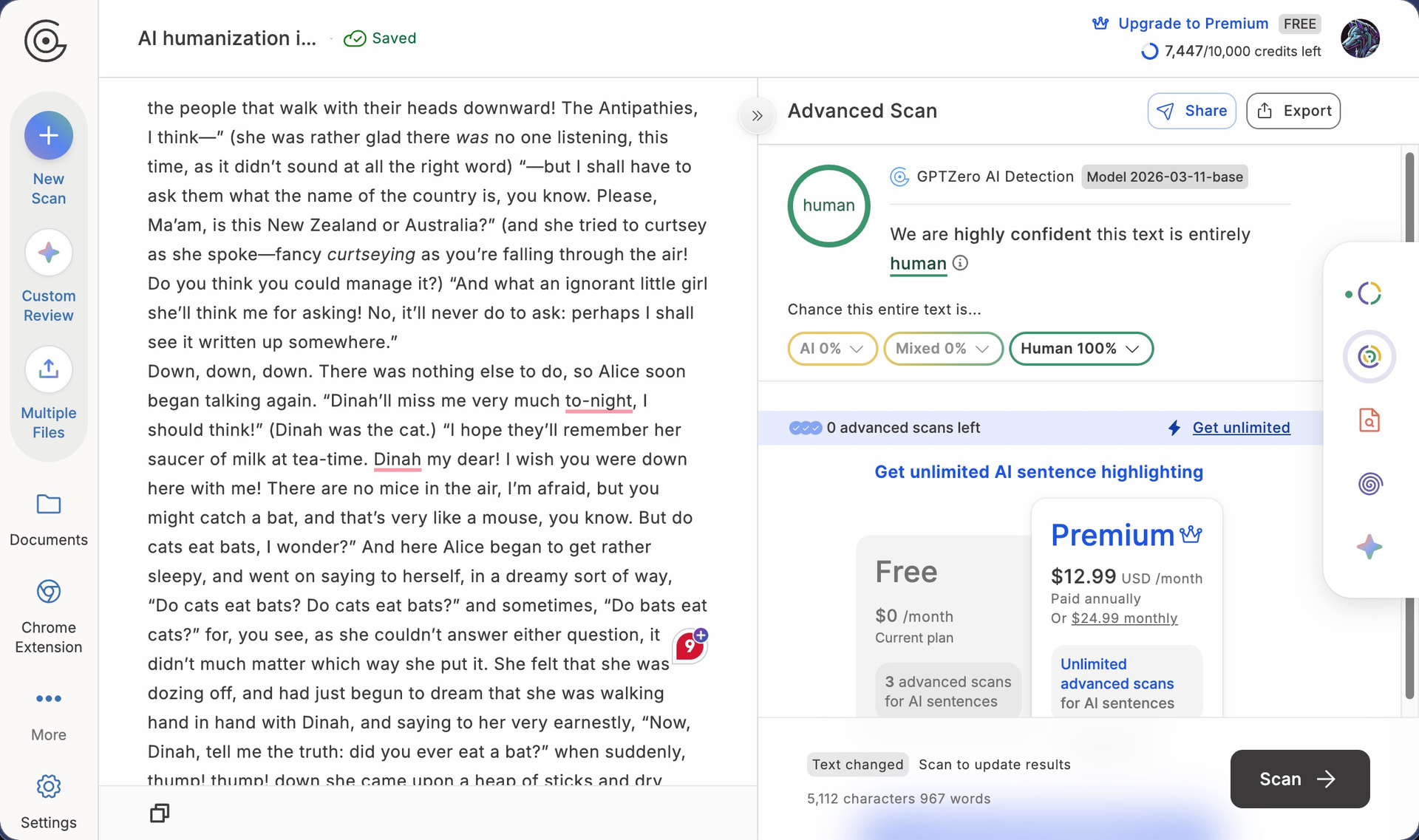
| Alice’s Adventures in Wonderland | Project Gutenberg | 1865 | 0% AI |
| The Wonderful Wizard of Oz | Project Gutenberg | 1900 | 0% AI |
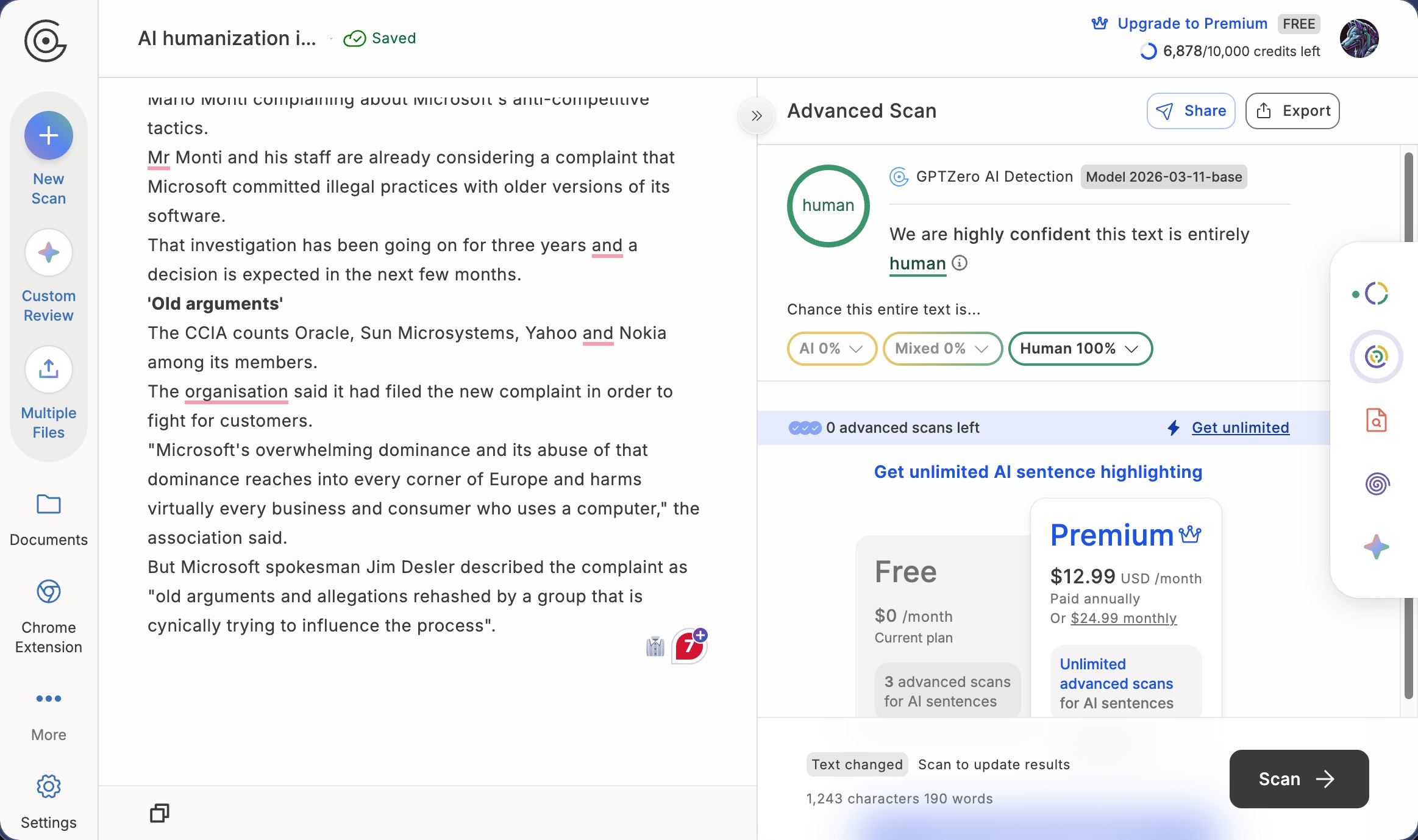
| Microsoft faces new complaint | BBC News | 2003 | 0% AI |
| Elite forces storm Moscow theatre | The Guardian | 2002 | 0% AI |
| Attention Is All You Need | NeurIPS | 2017 | 0% AI |
| Bayesian Model Selection in Social Research | Academic journal | 1995 | 0% AI |
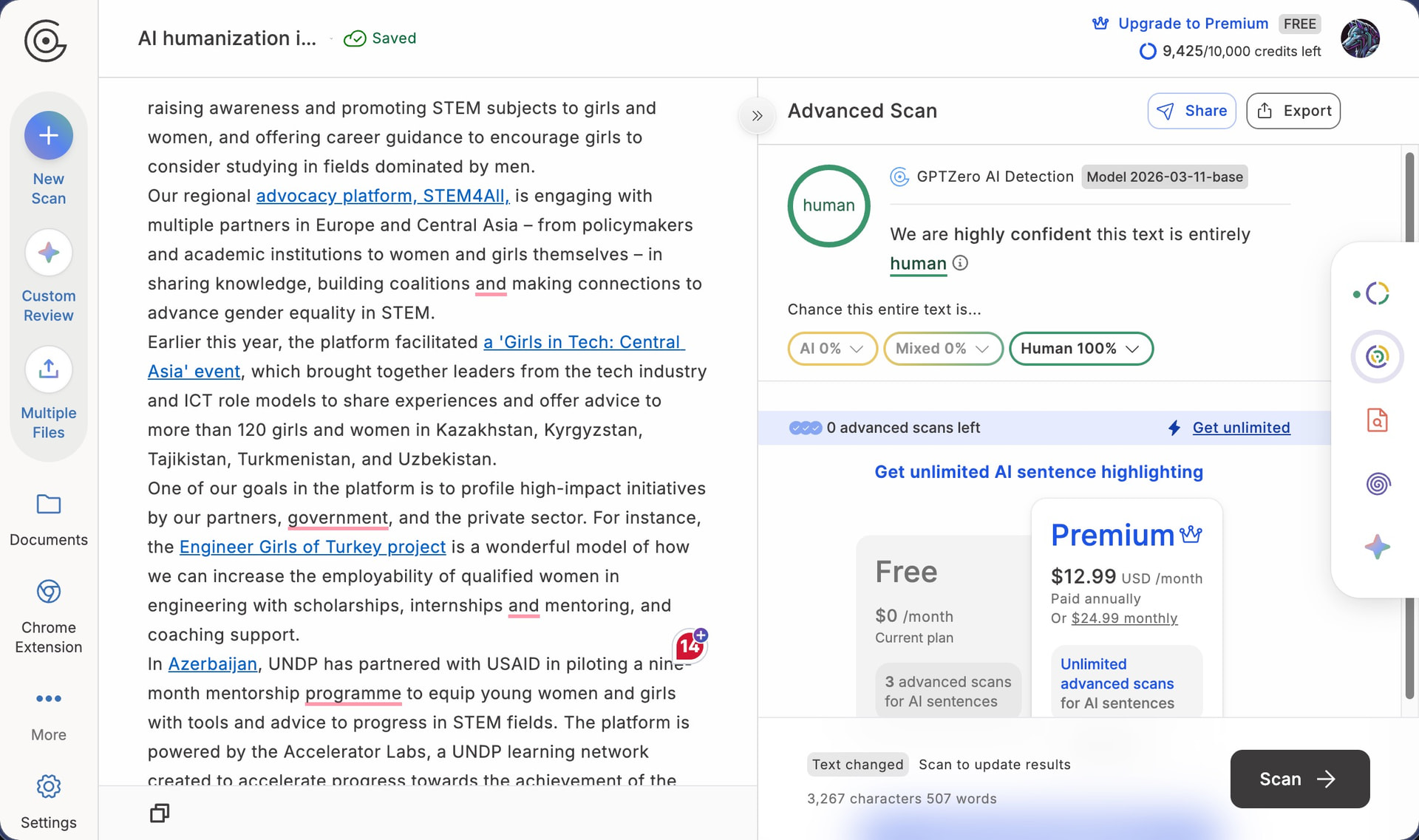
| A digital generation where every girl counts | UNDP Blog | 2019 | 0% AI |
| Customizing Windows Vista, Part 1 | PC Magazine | 2007 | 0% AI |
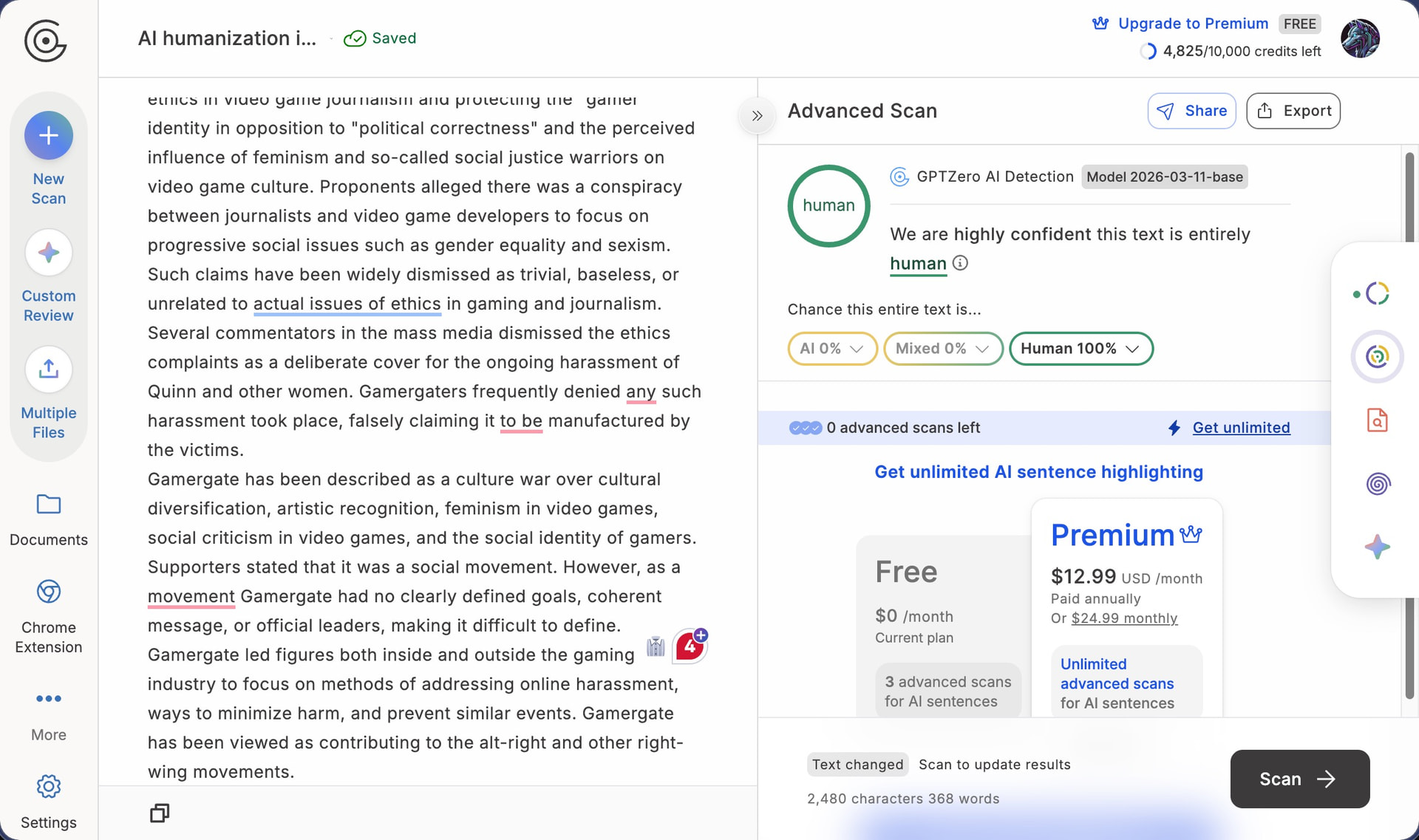
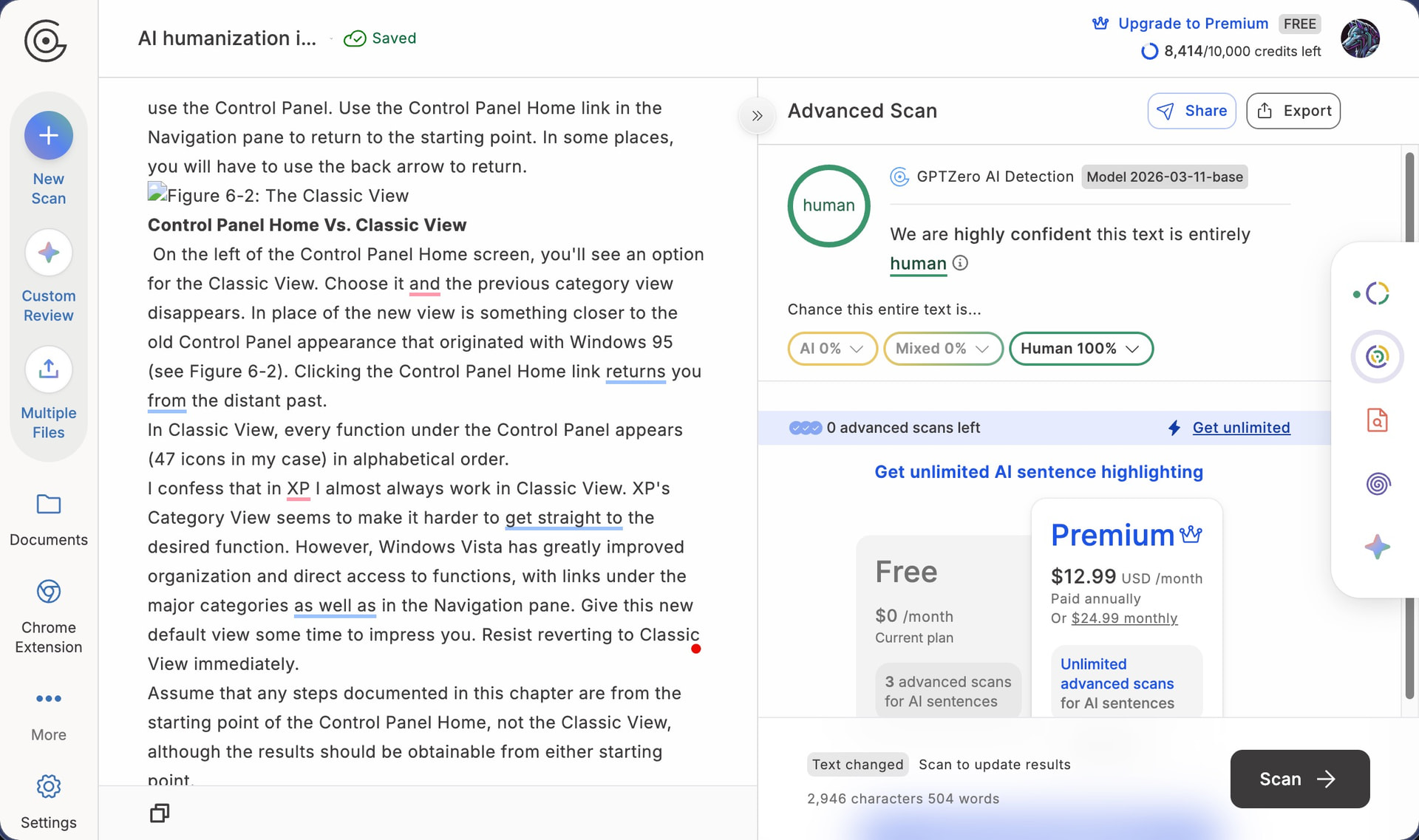
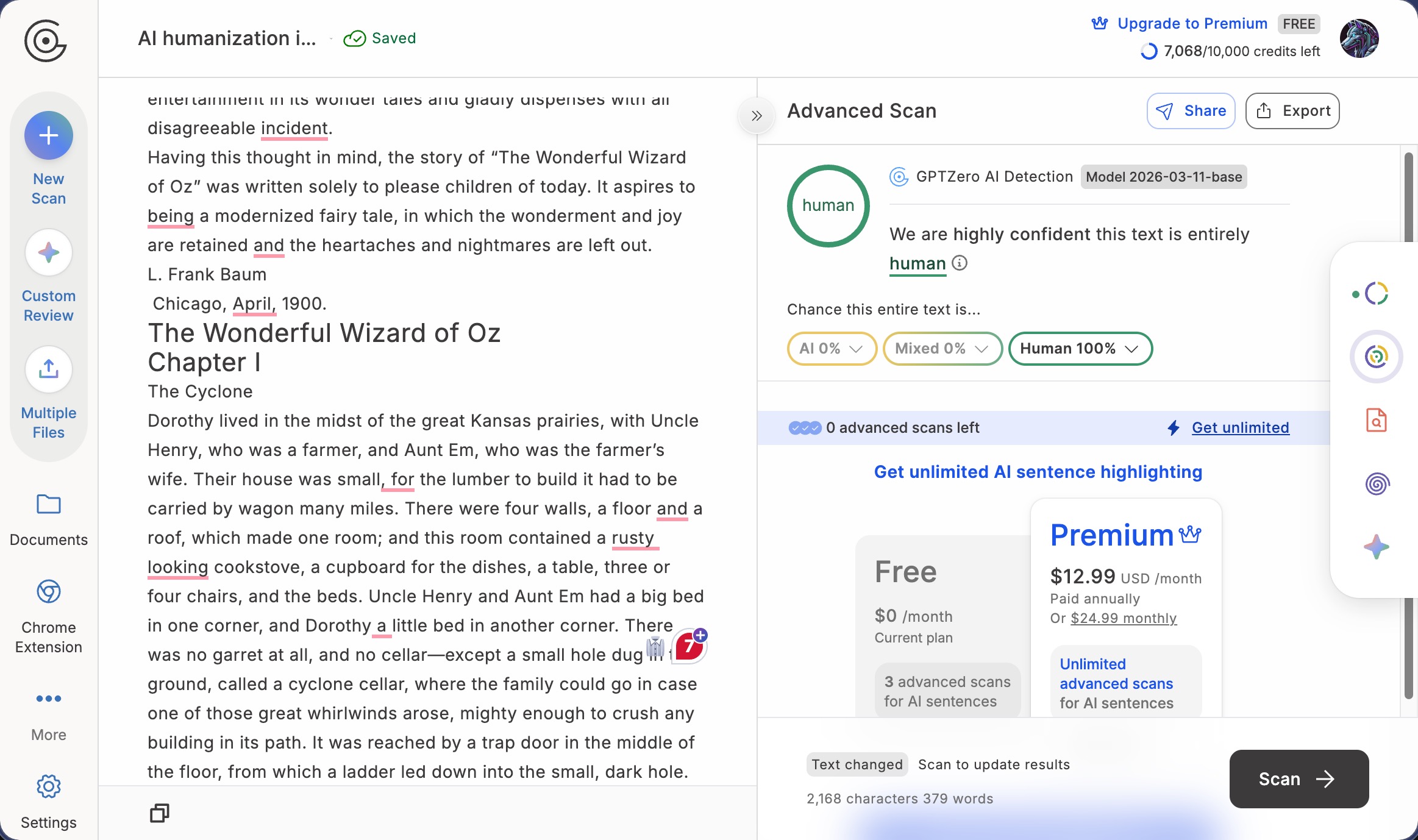
I did not expect to see every human-written sample come back at 0% AI. No other detector in this series has managed a perfect score on false positives with my test set, and several have had serious problems with it.
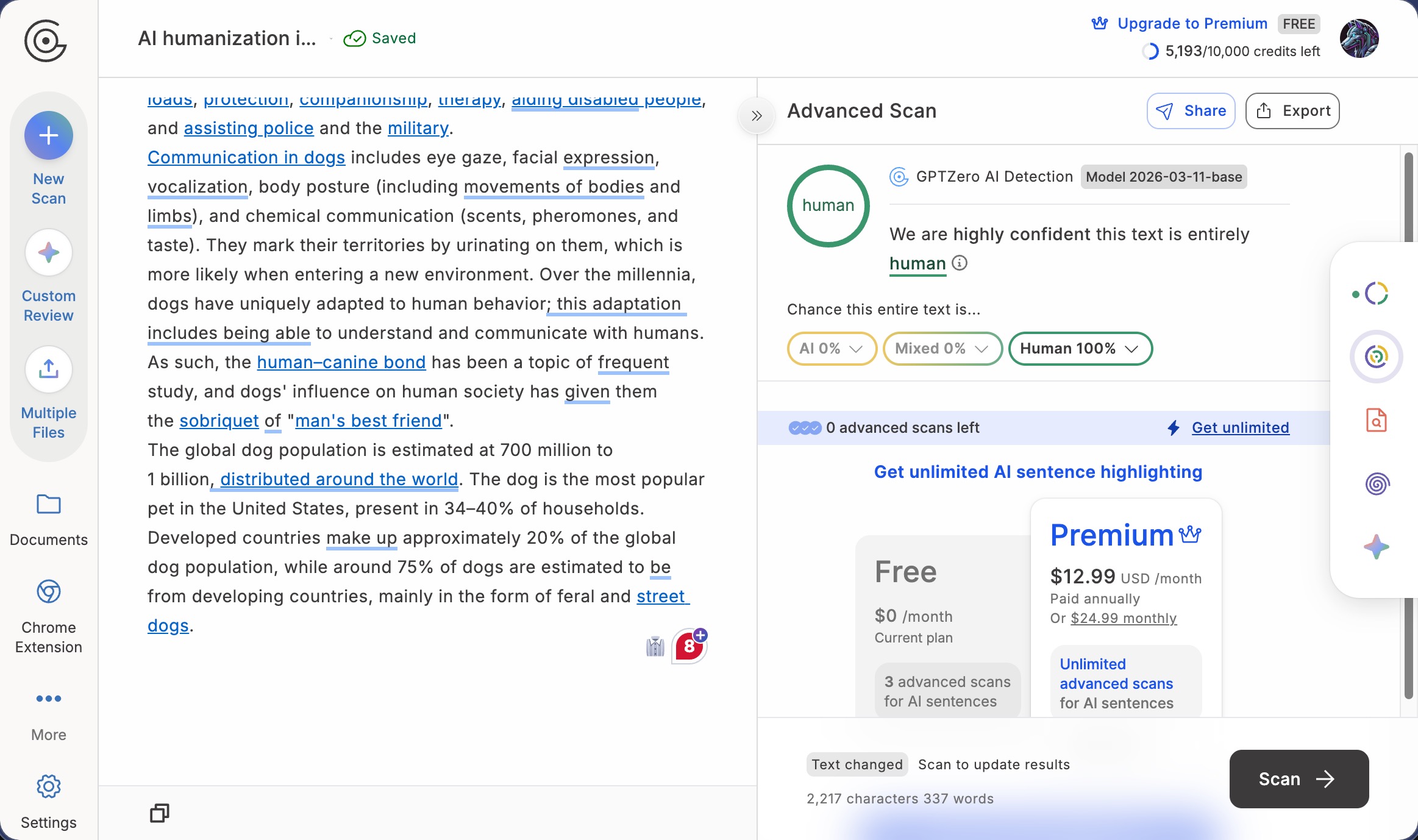
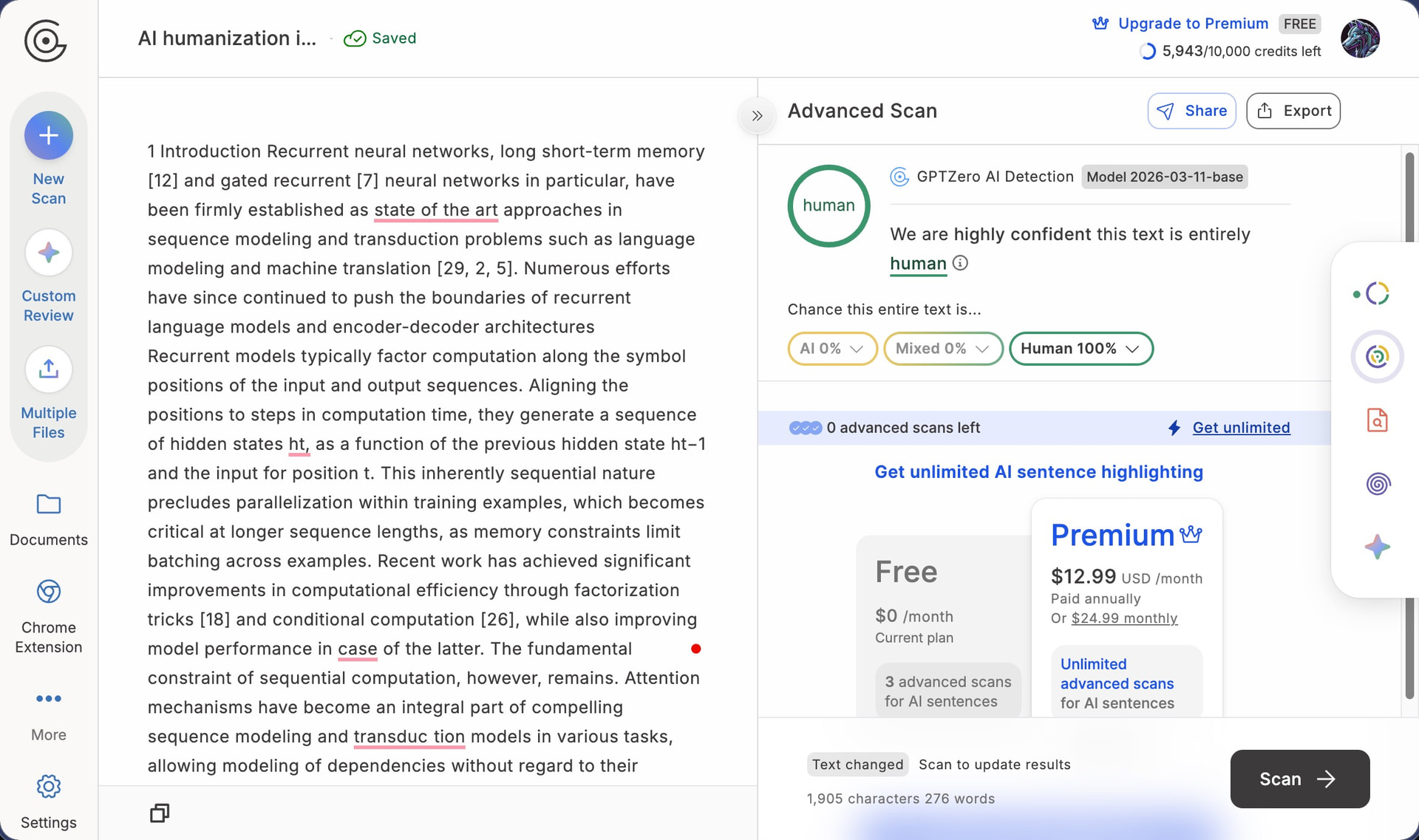
The Wikipedia article about dogs has been a trap for almost every detector I have reviewed. Originality AI scored it at 99% AI, which is about as wrong as a detector can get on verified human content. Undetectable AI labeled it “AI Paraphrased” at 73%. Winston AI gave it 90% human, which passes but barely. GPTZero returned a flat 0% AI. The same goes for the Gamergate controversy article, which Winston AI scored at just 3% human, effectively calling it AI-generated. GPTZero had no issue with it.
However, I wonder if GPTZero is genuinely better at telling human writing from AI writing, or if the model is just set to a lower sensitivity.
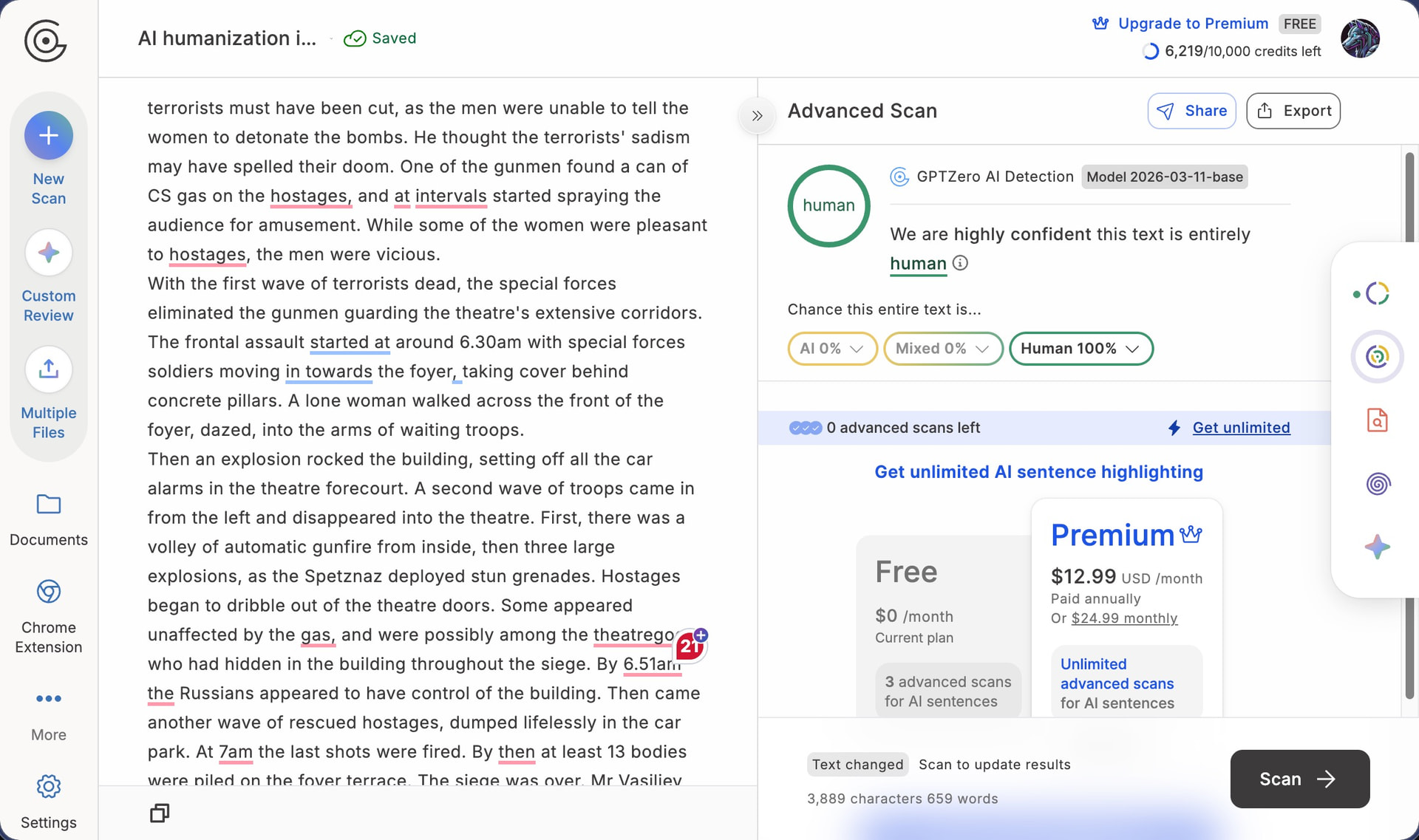
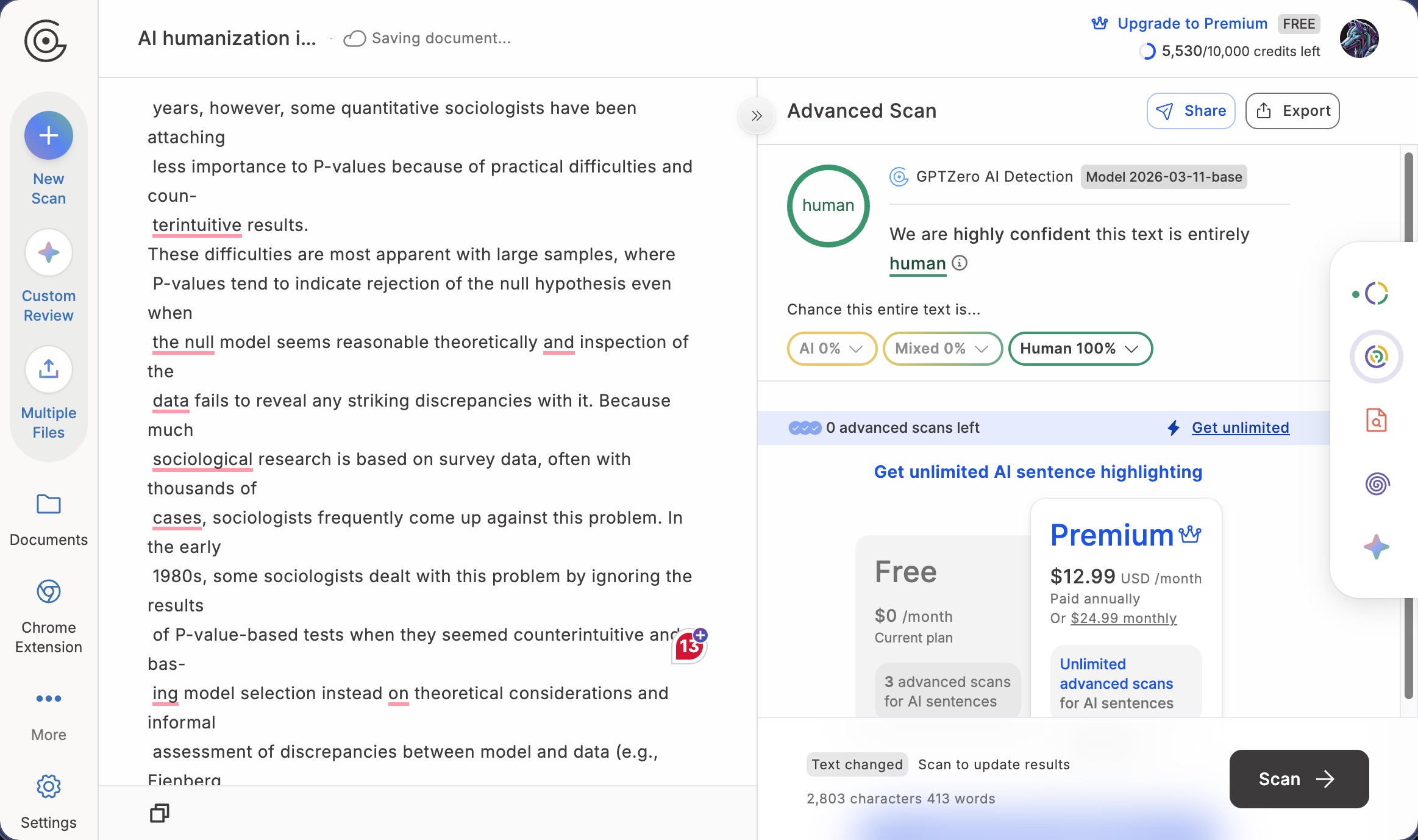
Since false accusations of AI use are a huge problem right now, it would be fairly logical to make their detection model lean toward giving the benefit of the doubt. For example, where other detectors might return a 20% or 30% AI score on slightly ambiguous text, GPTZero could round the results down to zero. Of course, I have no way to really confirm or deny this, and GPTZero’s own FAQ says the classifier has edge cases “with both instances where AI is classified as human, and human is classified as AI.” That said, I’ve seen many FAQs say many different things that were far removed from reality.
How Much Does GPTZero’s AI Detector Cost?
GPTZero has a free tier that’s limited to 10,000 words per month with a basic scan. You also get three advanced scans and five uses of the Chrome extension’s AI highlighting feature.
| Plan | Monthly Price | Annual Price | Word Limit |
|---|---|---|---|
| Free | $0 | $0 | 10,000/month |
| Premium | $23.99/mo | $12.99/mo | 300,000/month |
| Professional | $45.99/mo | $24.99/mo | 500,000/month |
The Premium plan at $12.99/month (annual) gets you 300,000 words per month, advanced AI scans, multilingual detection, and downloadable reports. The Chrome extension also becomes fully unlocked.
The Professional plan at $24.99/month (annual) further increases the word limit to 500,000 and adds batch file scanning (up to 250 files at once), page-by-page scanning, and LMS integration.
Honestly, I think GPTZero’s free plan is excellent, and I personally use it often to check my own work so that I have at least some idea as to what I can expect when it comes to false AI usage accusations. In comparison, Winston AI’s free option is a 14-day trial that expires. Originality AI has no free tier at all.
The paid plans sit in the middle compared to the other paid detectors in this series. For example, Winston AI starts at $10/month (annual) for 80,000 words, which is cheaper per month but comes with fewer words. Originality AI’s $12.95/month Pro plan gives you 200,000 words worth of credits, so GPTZero’s 300,000-word Premium plan offers more volume at roughly the same price.
Does GPTZero Respect User Privacy?
GPTZero’s privacy policy and terms of service are both fairly standard, and GPTZero Inc. is registered in New Jersey and lists a New York mailing address, with a Data Protection Officer reachable at alex@gptzero.me.
The privacy policy lists the following data categories as collected:
-
Account information: names, email addresses, phone numbers, usernames, passwords, job titles, and billing addresses.
-
Payment data: processed through PayPal and Stripe (GPTZero does not store card numbers directly).
-
Content for AI detection: text you paste or upload into the detector.
-
Technical data: IP address, browser type, device information, operating system, and location.
-
Usage data: pages viewed, feature usage, interaction patterns, and timestamps.
-
Cookie data: session cookies, preference cookies, and third-party tracking for analytics and advertising.
-
Social media data: profile information if you register through a social media account.
I want to bring your attention to a short section called “User-Submitted Data.” This section says that “text and file contents submitted by API subscribers directly by API [is] not stored nor used for product improvement.” That’s good news for API users, but it’s interesting that only API subscribers are mentioned. What happens to text submitted through the website by regular users? No answer.
The good news is that the terms of service are more reassuring on ownership. Section 10 (Contribution License) states that you retain full ownership of all of your contributions and any intellectual property rights. In practice, this means GPTZero cannot claim your scanned text as its own or resell it, which is a better deal than what some competitors offer. Grammarly, for example, grants itself a broad license to “use, store, reproduce, publish, publicly display, modify, and create derivative works” from your content.